In Controlled Environment Agriculture (CEA), airflow is an essential component of successful indoor crop production. CEA airflow refers to the intentional movement and circulation of air within growing environments such as greenhouses, vertical farms, and growth chambers. The physical characteristics of air (temperature, humidity, carbon dioxide concentration, and velocity) directly influence plant physiology, pest dynamics, disease occurrence, and resource use efficiency. As such, proper airflow design and management are critical for ensuring uniformity of growing conditions, optimising plant health, and maintaining economic viability.
The Role of Air Movement in Plant Physiology
Airflow serves several essential functions in plant development. At a basic physiological level, it facilitates transpiration, the process by which water is drawn up through the plant and evaporated from leaf surfaces. Steady air movement helps maintain the vapour pressure deficit (VPD), which governs the rate of transpiration. If the air remains stagnant, transpiration slows, nutrient uptake is impaired, and plants may exhibit symptoms of stress despite adequate irrigation and nutrient availability.
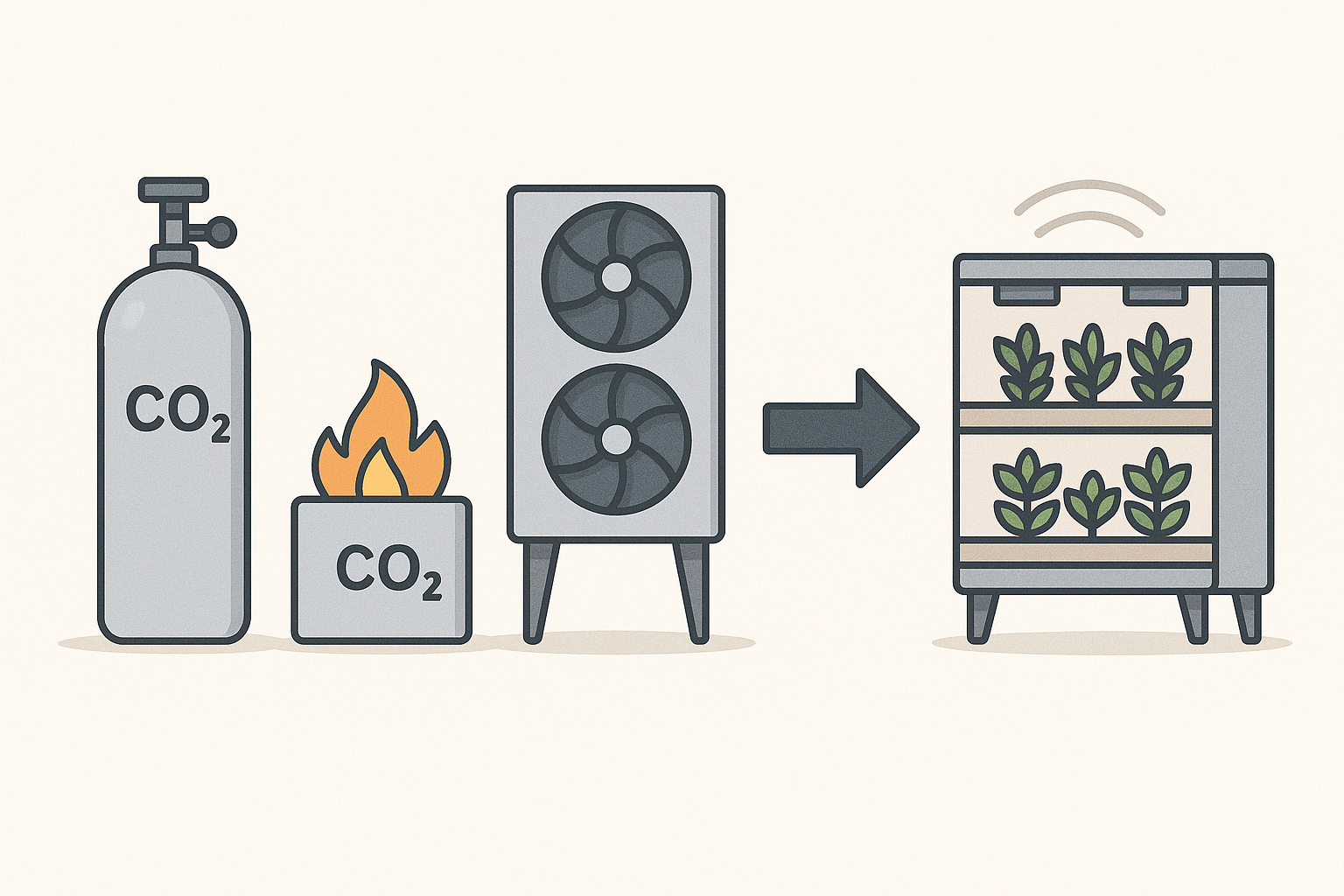
Moreover, airflow supports the gas exchange necessary for photosynthesis. Carbon dioxide (CO₂), a key input for this process, must diffuse from the surrounding air to the stomata on plant leaves. Without adequate air movement, localised depletion zones can develop around leaves, reducing the availability of CO₂ and thus limiting photosynthetic efficiency. This is particularly important in dense vertical farming setups, where canopy layering can restrict natural convective currents.
Temperature and Humidity Uniformity
CEA environments are highly sensitive to spatial variation in temperature and relative humidity. Stratification, a phenomenon where warmer air rises and cooler air settles, can create uneven microclimates within the same growing area. Similarly, zones of high humidity may develop in corners or beneath plant canopies if airflow is insufficient. These microclimates can lead to inconsistent crop development and complicate the calibration of climate control systems such as heating, ventilation, and dehumidification.
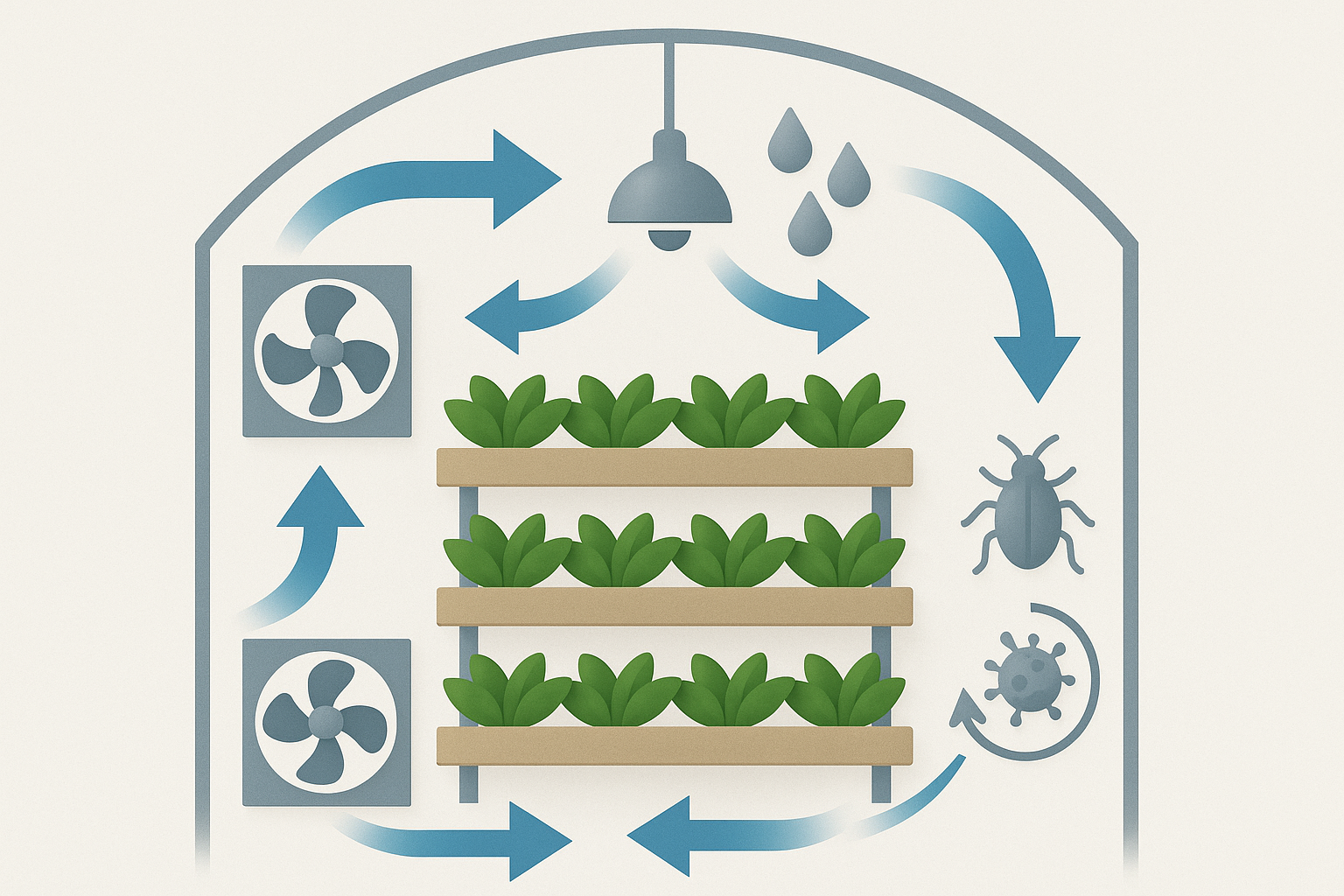
Strategically designed airflow systems, including horizontal air flow (HAF) fans, ducted air delivery, and vertical circulation mechanisms, are employed to homogenise these parameters. Proper circulation distributes heat and moisture evenly, ensuring that all plants are exposed to optimal conditions, regardless of position within the growing facility.
Disease Prevention and Pest Control
Fungal and bacterial pathogens often thrive in stagnant, humid conditions. Poor airflow contributes to the formation of boundary layers of still, moist air around plant surfaces, creating ideal conditions for pathogens such as powdery mildew and grey mould. Airflow disrupts these boundary layers and reduces surface moisture, thereby inhibiting spore germination and pathogen proliferation.
Furthermore, air movement discourages certain insect pests. For example, whiteflies and aphids prefer undisturbed environments; consistent air currents can deter them from settling and breeding. While airflow is not a substitute for integrated pest management (IPM), it is a non-chemical tool that reinforces broader crop protection strategies.
Mechanical Systems and Design Considerations
Designing airflow systems in CEA is not simply a matter of adding fans; it requires careful consideration of air velocity, direction, frequency, and interaction with other climate control systems. Excessively strong air currents may damage plants physically or increase transpiration beyond sustainable levels. Conversely, inadequate circulation leads to the problems outlined above.
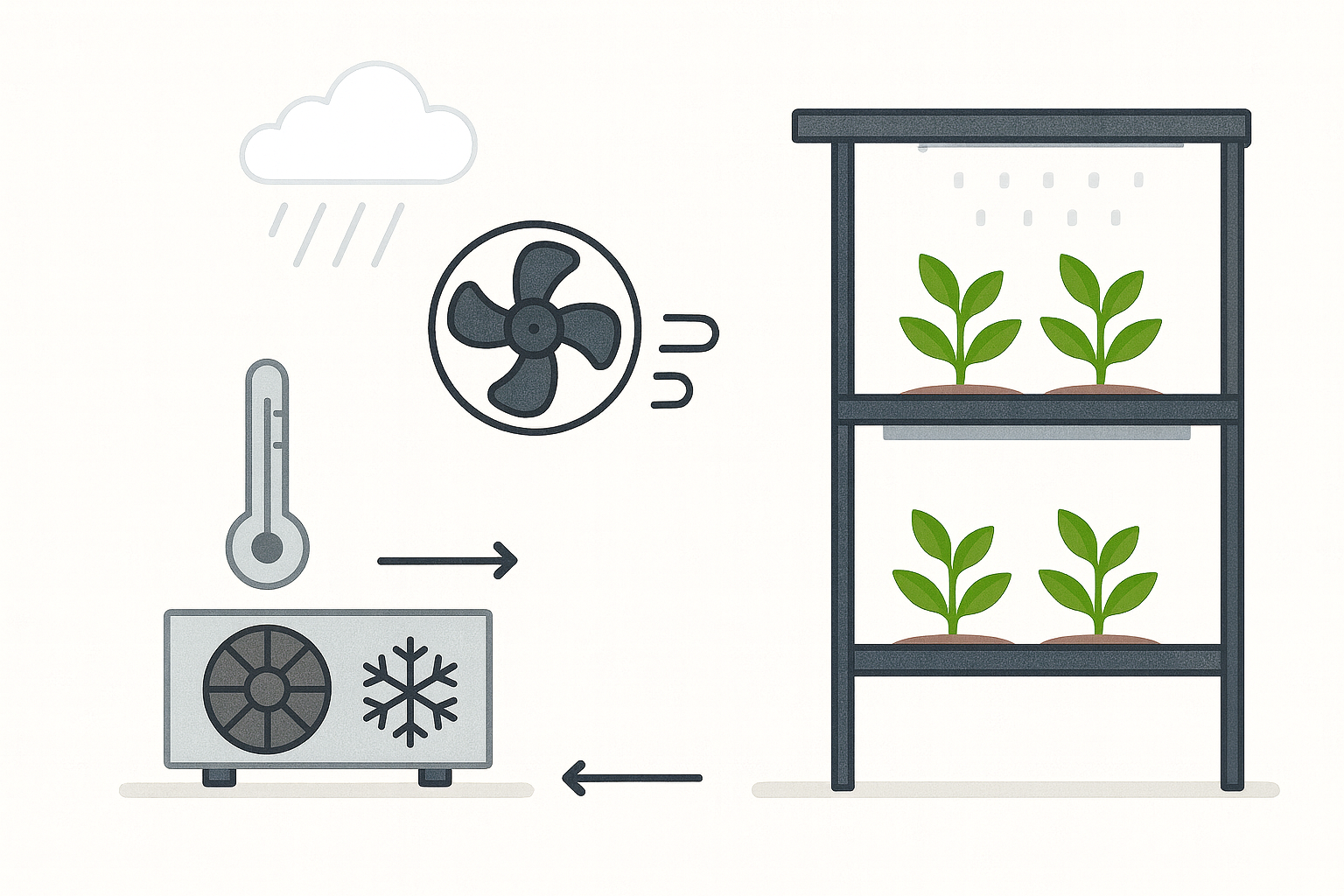
In vertical farms, where space is used intensively and layers are stacked, airflow dynamics become especially complex. Air must be delivered evenly across horizontal planes and between levels, often requiring ducted systems, variable speed fans, and computational fluid dynamics (CFD) modelling to identify and resolve stagnant zones. In closed systems or plant factories using HVAC-integrated climate control, airflow design must also ensure the efficient recovery and redistribution of conditioned air to minimise energy expenditure.
Energy Efficiency and Sustainability
Airflow systems, while essential, represent a significant portion of energy use in CEA facilities. Moving air requires energy; however, poorly designed airflow results in even greater inefficiencies by compromising other systems such as heating and dehumidification. For example, localised humidity build-up may force a dehumidifier to work harder than necessary, increasing energy use and operational cost.
Improved system integration, where airflow supports rather than competes with other control mechanisms, can reduce overall energy demand. Advanced controls, such as variable frequency drives and intelligent automation systems, enable facilities to modulate air movement based on real-time environmental data, ensuring that airflow is responsive rather than static.
Empirical Evidence and Best Practice
Numerous studies underline the importance of airflow in indoor agriculture. For example, research from Wageningen University has demonstrated that inadequate air movement in closed environments leads to CO₂ stratification and significant reductions in photosynthetic efficiency. Likewise, commercial trials in North American vertical farms have found that targeted airflow improvements can reduce disease incidence by over 40% and improve yield consistency.
Best practice dictates that airflow should be considered during the initial design of a CEA facility rather than as a retrofitted solution. This includes modelling air distribution, accounting for crop density and plant morphology, and integrating airflow with temperature and humidity sensors for real-time control.
Conclusion: A Foundational Environmental Variable
In summary, airflow is a critical, though often underappreciated, element in the architecture of CEA systems. Its influence spans nearly every aspect of plant production: from gas exchange and temperature regulation to disease control and energy efficiency. Airflow in CEA production systems must be designed and managed with precision to support healthy, uniform crop development and sustainable operation. As vertical farming and other forms of controlled environment agriculture scale up to meet global food security challenges, airflow will remain a cornerstone of environmental control and production reliability.