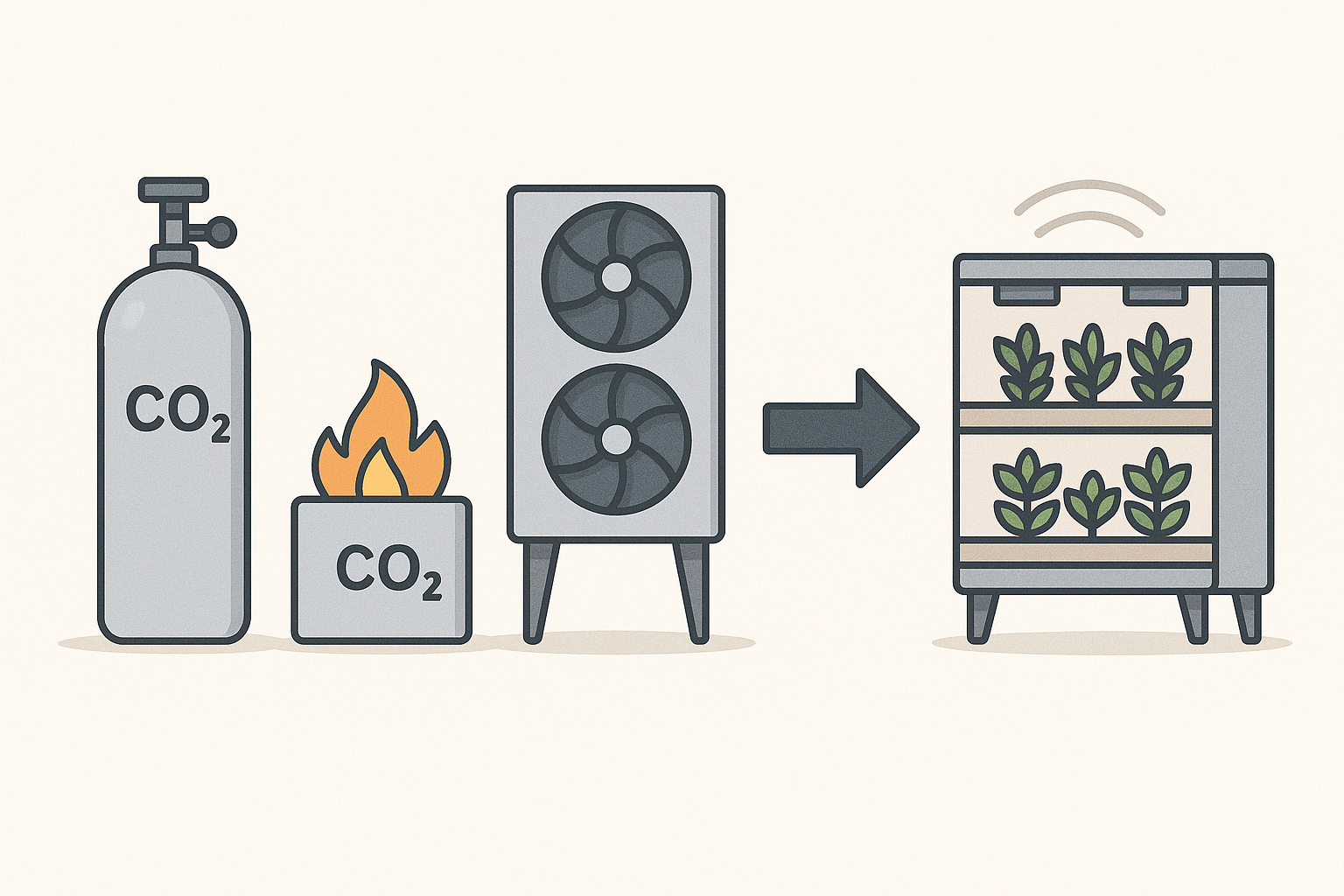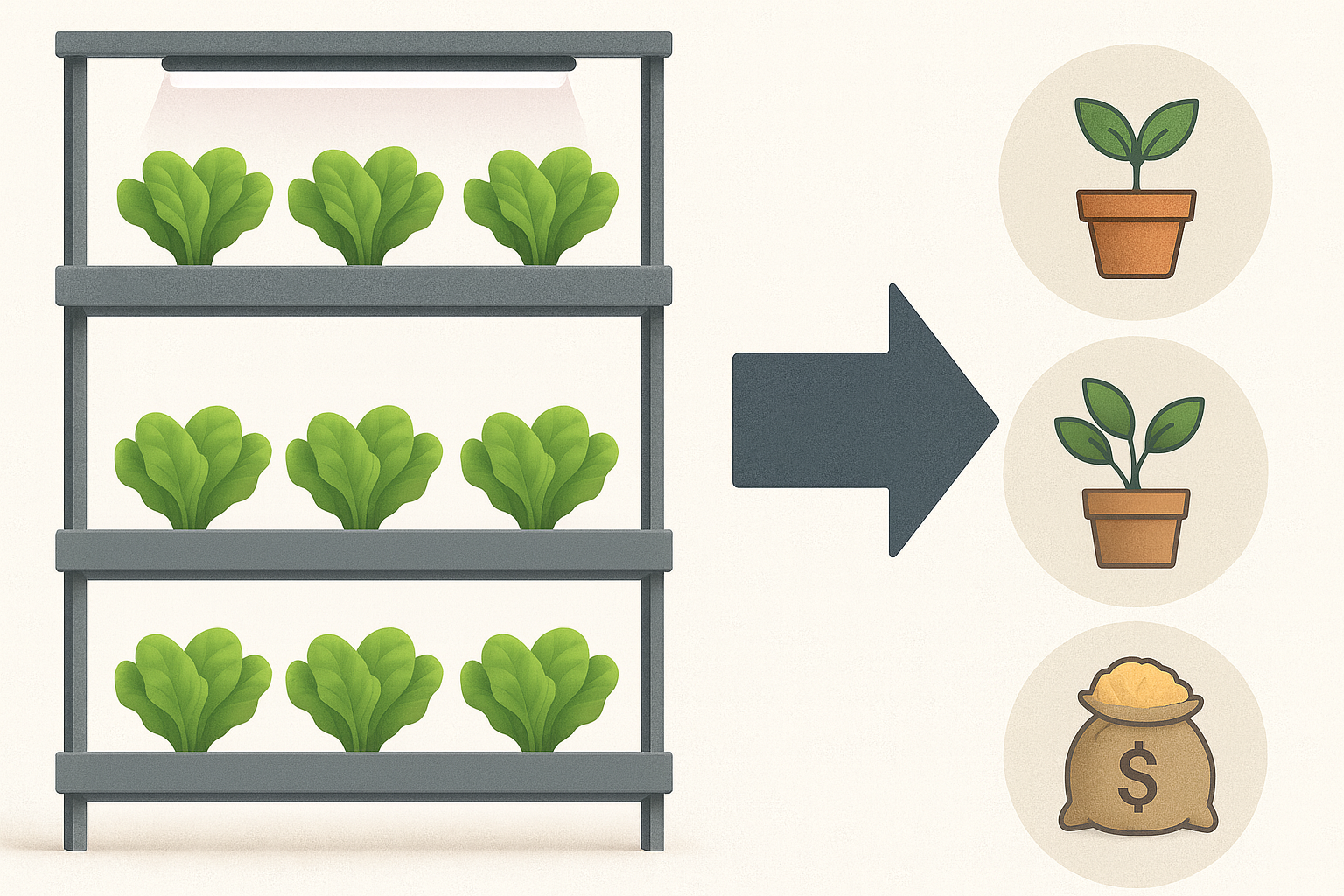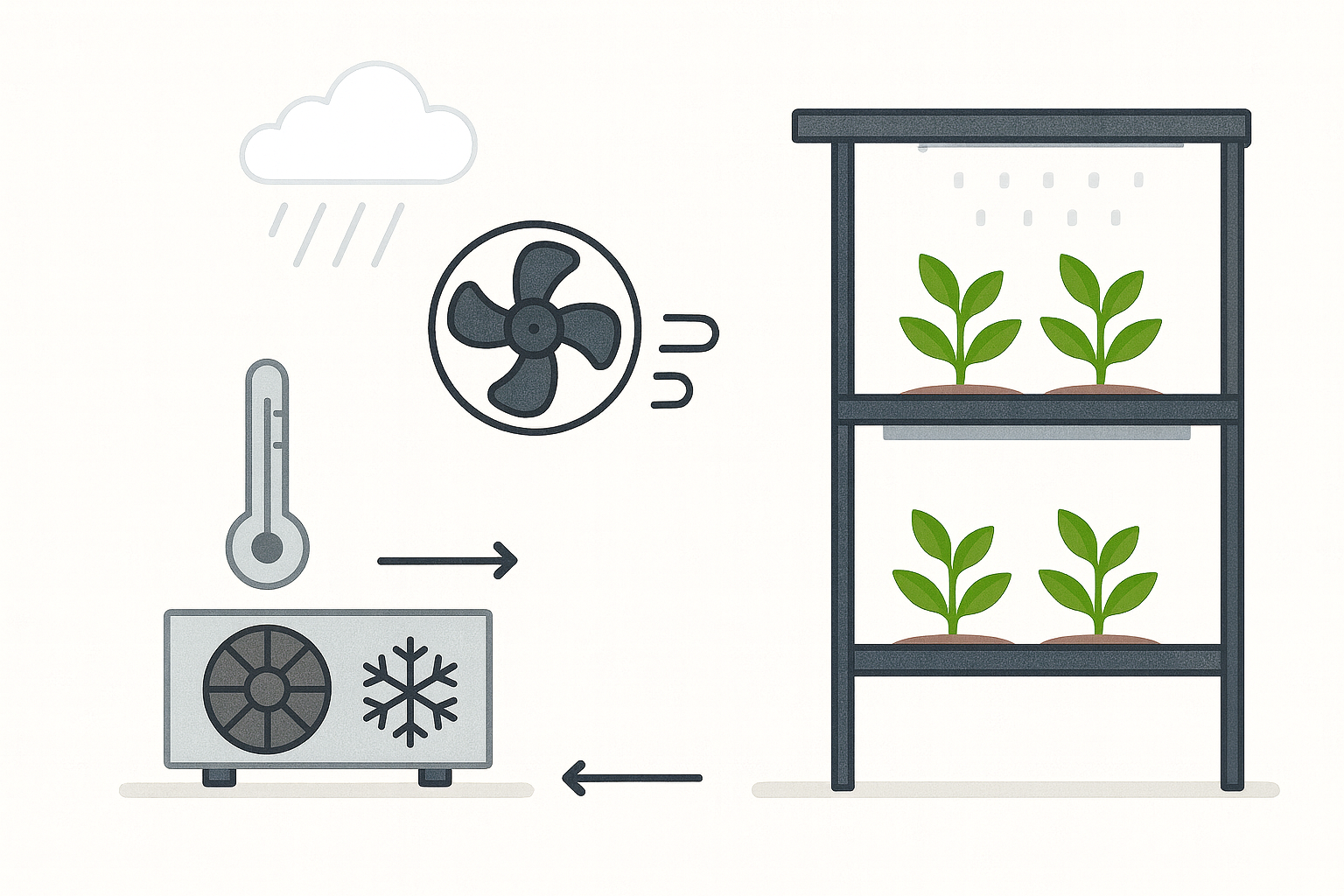
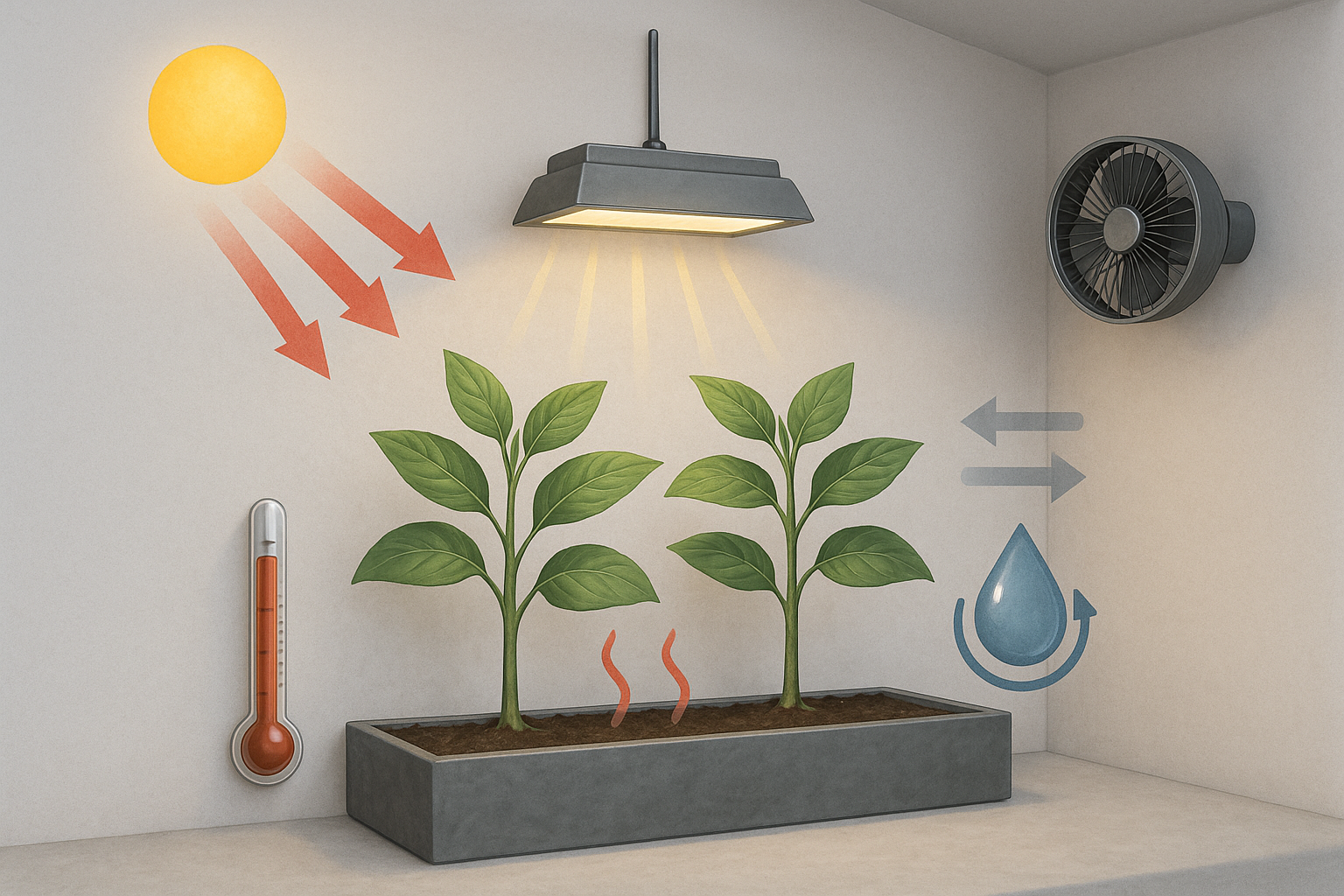
Understanding plant thermodynamics in indoor production is essential to optimising controlled environment agriculture (CEA) systems. While light, carbon dioxide and nutrients are often discussed as primary factors influencing plant development, temperature and energy flows (governed by thermodynamic principles) are equally fundamental. Whether in vertical farms, greenhouses or other indoor horticultural systems, thermodynamics directly influences not only plant physiology but also energy efficiency, operational costs and overall crop outcomes.
Why Thermodynamics Matters in Indoor Agriculture
Thermodynamics is the science of energy and heat transfer. In the context of indoor plant environments, it describes how energy is introduced, distributed, transformed and lost. All metabolic processes in plants, including photosynthesis, respiration and transpiration, are governed by thermal energy dynamics. However, plants do not function in isolation; they respond continuously to their surrounding environment. The ability to manipulate temperature, humidity, and energy flows with precision can therefore enhance or impair plant growth.
Unlike open-field agriculture, where plants are at the mercy of outdoor climate variability, indoor production enables more exacting control. This makes thermodynamic understanding not merely useful but essential. For instance, excessive heat accumulation from artificial lighting, poor airflow design or inefficient insulation can lead to heat stress, altered transpiration rates, nutrient imbalances and increased pathogen pressure. Conversely, thermal deficits can stunt growth or lead to energy-wasteful compensatory heating.
The Role of Heat Transfer in Controlled Environments
There are three principal modes of heat transfer relevant to plant environments: conduction, convection and radiation. Each contributes differently to the thermal landscape of a growing space.
Conduction occurs when heat moves through solid materials such as the walls, benches or containers in a vertical farm. The choice of construction materials and insulation quality determines how much heat is retained or lost from the system.
Convection involves the movement of heat through fluids, in this case, moisture-rich air. Ventilation systems, fans and airflow patterns affect how warm or cool air is distributed around plant canopies. Poor convective management can result in localised microclimates, with temperature differentials across a growing area, undermining uniformity in crop development.
Radiation, in the context of CEA, primarily refers to the radiant heat emitted by lighting systems, particularly high-intensity discharge lamps and to some extent LEDs. Radiative heat contributes both to canopy leaf temperature and to the ambient environment. Understanding how radiation translates into thermal load is vital for designing appropriate cooling or ventilation strategies.
Plant Thermoregulation: Balance and Stress
Plants do not passively endure environmental conditions; they actively regulate their internal temperature through processes like transpiration. When light intensity increases and photosynthesis accelerates, so does leaf temperature. To avoid overheating, plants open their stomata, releasing water vapour; a process that both cools the leaf and aids nutrient transport.
However, in enclosed systems, if the surrounding air is already saturated with moisture or poorly circulated, transpiration efficiency declines. The result is increased leaf temperature, stress at the cellular level, and potentially irreversible physiological damage. This interaction between plant biology and environmental thermodynamics is central to the concept of Vapour Pressure Deficit (VPD), a critical metric in CEA used to gauge the potential for optimal plant transpiration.
Thermal imbalance also affects root zones. Roots require specific temperature ranges to function efficiently; excessive heating from sub-canopy lighting or poor insulation around hydroponic reservoirs can cause root stress, nutrient uptake inhibition and susceptibility to root pathogens.
Energy Efficiency and Climate Management
Indoor farming is inherently energy-intensive; heating, ventilation and air conditioning (HVAC) systems represent a major proportion of operational expenditure. Understanding thermodynamics allows growers to design systems that maintain crop-specific climate parameters using minimal energy input.
For instance, heat recovery systems can repurpose thermal energy from exhausted air to preheat incoming fresh air, reducing demand on active heaters. Similarly, phase change materials (PCMs) embedded in construction can absorb excess heat during peak lighting periods and release it when temperatures fall - passively stabilising thermal swings.
Moreover, advanced climate control systems increasingly use dynamic modelling software grounded in thermodynamic principles to simulate and regulate environmental variables. These systems predict how temperature, humidity, and energy consumption will shift over time and make real-time adjustments to avoid energy wastage or crop stress.
Designing for Thermal Stability
Successful CEA operations require meticulous integration of architecture, energy systems and crop biology. Thermal zoning, where different parts of a facility maintain distinct temperature setpoints, can accommodate the needs of different crop species or growth stages within a single building. However, this approach only works if the thermodynamic properties of the space are well understood and appropriately managed.
The orientation and thermal mass of structural components, the emissivity of reflective surfaces, and the spatial arrangement of heat-producing equipment all affect how thermal energy behaves within an environment. Even plant arrangement plays a role: denser canopies absorb and retain more heat, influencing not just the microclimate but also the energy required to sustain desired conditions.
Monitoring tools such as infrared thermography, leaf temperature sensors and thermal energy models offer increasingly accessible means of tracking thermal dynamics in real time. These tools enable early intervention and long-term optimisation of plant thermodynamics in indoor production systems.
The Broader Implications of Thermodynamic Control
Understanding and leveraging thermodynamics in CEA is not only an agronomic concern; it has broader implications for sustainability, economic viability and policy development. Efficient thermal management reduces greenhouse gas emissions associated with heating and cooling, contributing to the environmental credibility of vertical farming.
Furthermore, precise thermodynamic control allows for reliable year-round production, consistent quality and higher yields, all of which underpin the economic feasibility of indoor agriculture. As policymakers begin to assess the potential of CEA to contribute to food security and urban resilience, thermodynamic literacy becomes a prerequisite for informed decision-making.
Plant thermodynamics in indoor production is a foundational aspect of CEA that touches on plant biology, engineering, energy use and sustainability. It transforms how we conceptualise growing environments: not merely as static spaces, but as dynamic systems governed by the flows of energy and matter. By understanding and managing these flows with precision, we lay the groundwork for productive, efficient and resilient agricultural systems in an increasingly resource-constrained world.