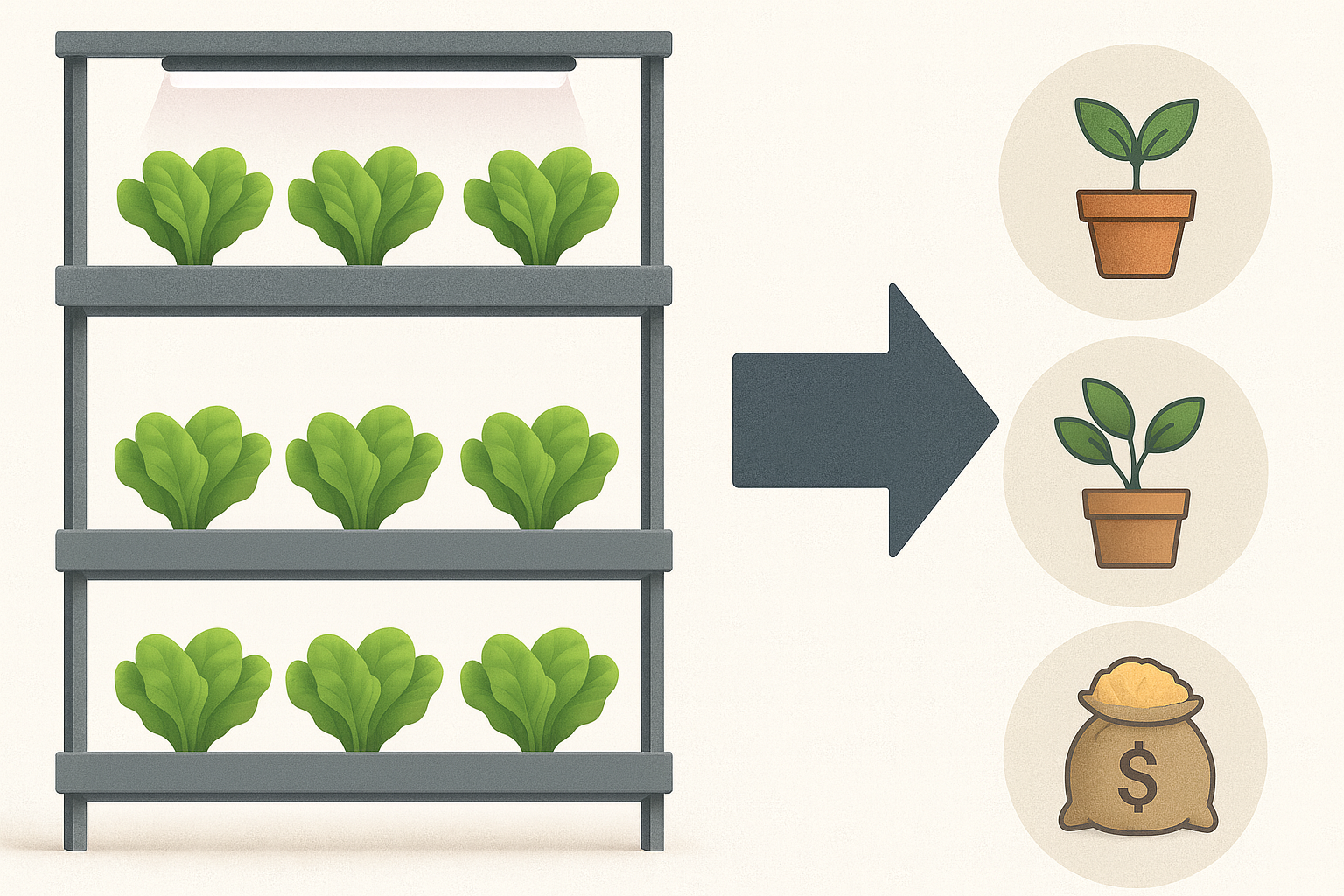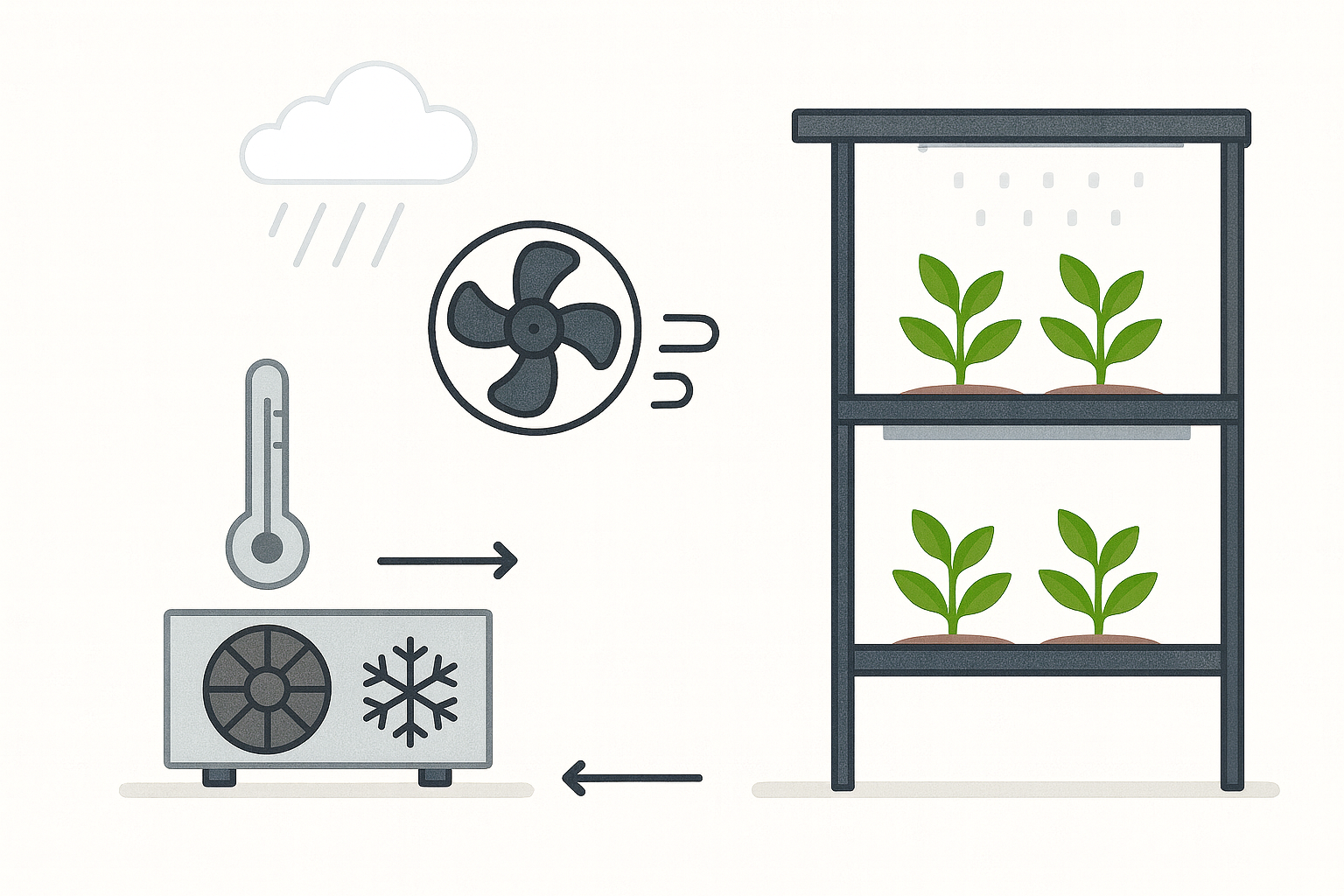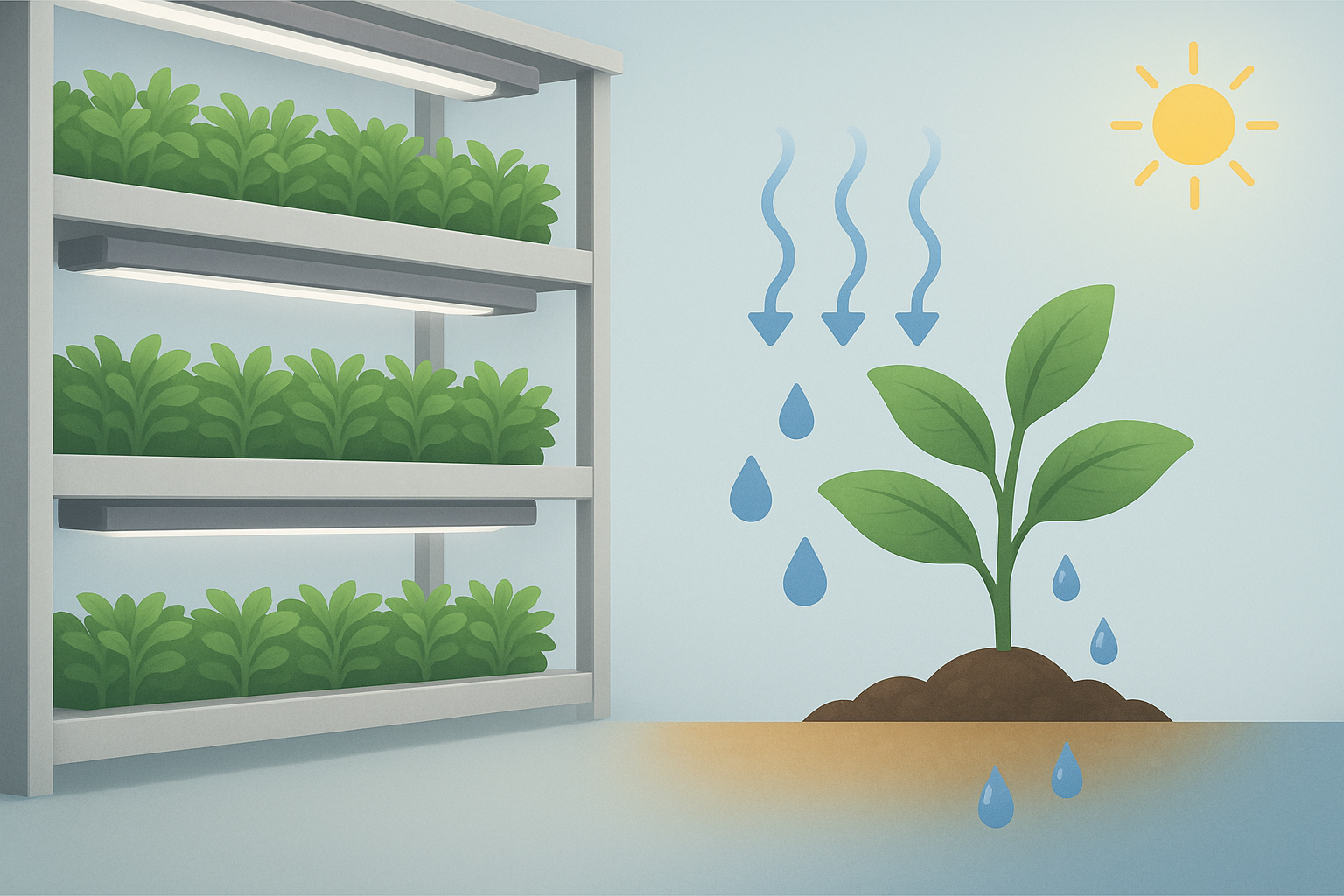
Controlled Environment Agriculture (CEA) offers precision control over the growing environment to optimise plant health, yield, and quality. Among the many environmental variables that can be manipulated, carbon dioxide (CO₂) holds particular importance. CO₂ enrichment for enhancing indoor plant production is based on a simple but powerful physiological principle: photosynthesis depends on the availability of CO₂ as a key input. When indoor crops are provided with elevated CO₂ concentrations in a well-managed environment, their photosynthetic efficiency and growth rates can increase significantly, offering both productivity and economic benefits. This introductory summary explores the purpose, function, and importance of CO₂ enrichment systems in CEA, outlining how they work and why they matter in modern vertical farming.
The Role of CO₂ in Plant Physiology
Photosynthesis is the biological process through which plants convert light energy into chemical energy, using CO₂ and water. In natural or open-field conditions, ambient CO₂ levels typically average around 400–420 parts per million (ppm), depending on regional and seasonal factors. However, research has shown that many crop species, particularly fast-growing, high-value plants such as leafy greens, herbs, and fruiting vegetables, can benefit from elevated CO₂ concentrations in the range of 800–1200 ppm, provided other environmental conditions are also optimised.
When plants have access to higher CO₂ levels, their stomata do not need to open as widely or as often, which can reduce water loss through transpiration. Simultaneously, photosynthetic rates can increase, leading to faster biomass accumulation. This relationship, however, is not linear and depends on the interaction with other variables such as light intensity, temperature, humidity, and nutrient availability. For this reason, CO₂ enrichment is most effective when applied as part of a balanced environmental strategy.
Why Enrichment Matters in Enclosed Systems
In CEA settings, such as vertical farms and glasshouse production facilities, the ambient CO₂ level often drops below atmospheric levels during the daytime due to plant uptake in a closed-loop environment. Without intervention, this depletion can constrain plant growth and yield. CO₂ enrichment systems help maintain consistent and elevated CO₂ concentrations, preventing physiological limitation and supporting crop productivity.
The importance of enrichment is particularly pronounced in vertical farming environments where high planting densities and limited airflow are common. In such systems, CO₂ is rapidly consumed by photosynthetically active crops, and without active enrichment, internal CO₂ levels can drop to 200 ppm or lower. At these concentrations, photosynthesis becomes suboptimal and growth slows considerably. In contrast, by actively maintaining an enriched CO₂ atmosphere, growers can significantly enhance crop performance and maximise the return on investment in other inputs, such as lighting and climate control systems.
Enrichment Methods and Delivery Systems
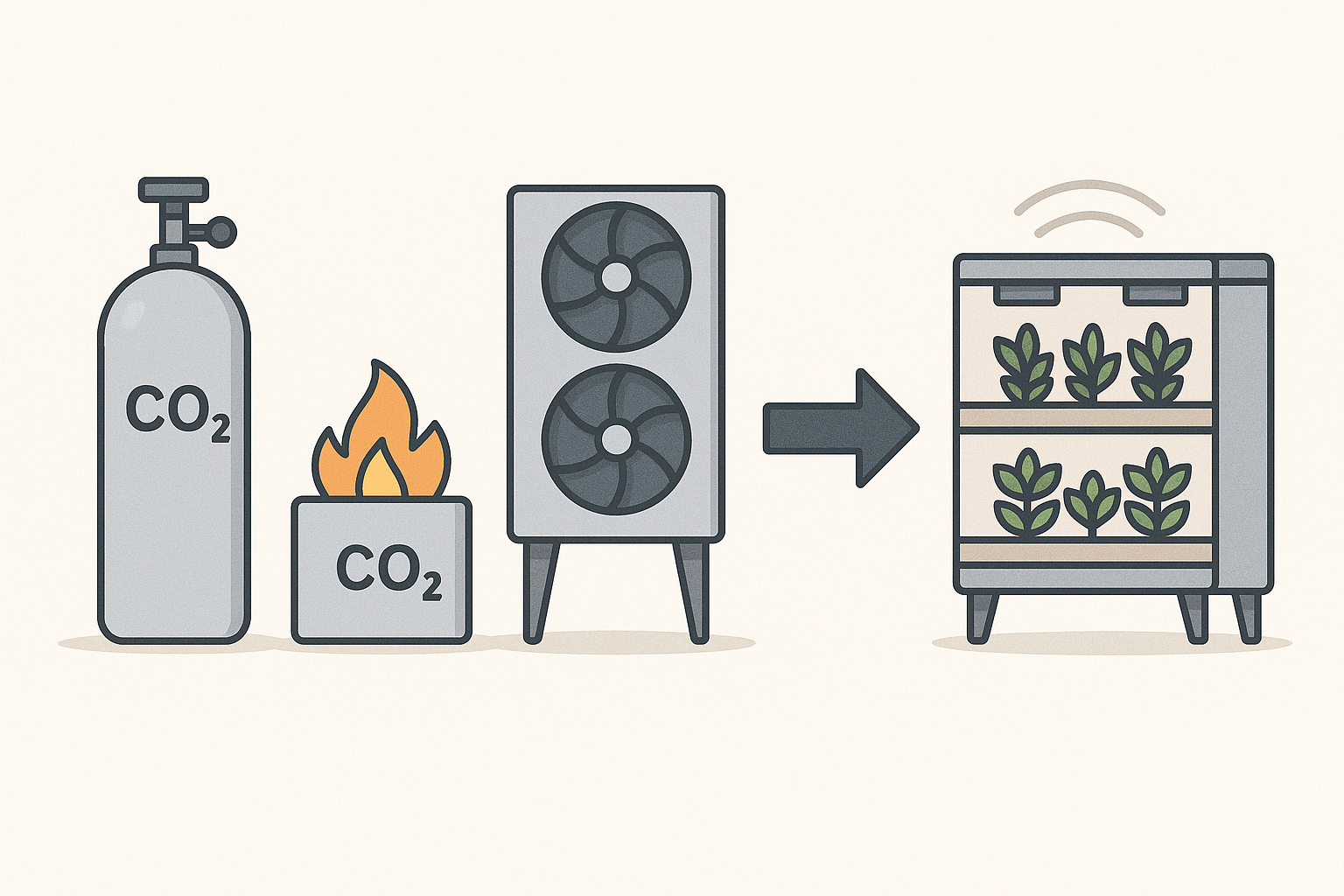
Several approaches are used to deliver CO₂ in controlled environments. The most common include compressed gas cylinders, combustion of hydrocarbon fuels (such as natural gas or propane) in CO₂ generators, and increasingly, direct air capture systems or biogenic sources integrated into the farm infrastructure. Each method has advantages and trade-offs in terms of cost, environmental impact, operational complexity, and safety.
Compressed gas systems are favoured for their precision and cleanliness; they deliver pure CO₂ and are relatively easy to regulate. CO₂ generators, while effective, produce heat and water vapour as by-products, which must be accounted for in the overall climate control strategy. The use of generators in sealed environments also requires careful monitoring of combustion efficiency and safety thresholds to avoid unintended emissions or oxygen depletion.
Distribution within the grow space must be uniform to ensure that all plants receive adequate exposure. This typically involves the use of perforated tubing, manifold systems, or fan-assisted diffusion to mix the enriched air evenly. Sensors positioned at canopy level monitor CO₂ concentrations, feeding back to a central control system that modulates delivery in real time to maintain the desired setpoint. The sophistication of these systems varies, from manual regulation to fully automated, sensor-driven platforms integrated with broader environmental management software.
Balancing Benefits and Risks
While CO₂ enrichment can boost yields, it is not without its challenges. Over-enrichment can be wasteful and counterproductive. Concentrations exceeding 1500 ppm may offer diminishing returns or lead to marginal toxicity symptoms in some plant species. In poorly ventilated or tightly sealed facilities, high CO₂ levels may pose occupational health risks to workers; regulations in most jurisdictions require that CO₂ concentrations be kept below 5000 ppm over an eight-hour time-weighted average to remain safe for human exposure.
Another key consideration is the energy and carbon cost of CO₂ delivery. Depending on the source, CO₂ may be derived from fossil fuels, potentially contributing to the overall greenhouse gas emissions of the operation. Increasing attention is being given to the life-cycle impact of vertical farming, and sustainable sourcing of CO₂, such as from renewable-powered direct air capture or biogenic fermentation processes, is likely to become a critical factor in the long-term viability and environmental credentials of indoor farming operations.
Optimising for Crop and Context
The extent to which CO₂ enrichment is beneficial depends on crop type, growth stage, and economic value. Leafy greens, for instance, tend to respond strongly to CO₂ elevation in terms of leaf area and biomass accumulation. Fruiting crops such as tomatoes, peppers, and cucumbers also benefit, particularly during their reproductive stages. In contrast, root vegetables or slower-growing perennials may show limited response relative to the cost of enrichment.
Best practice involves calibrating CO₂ levels not only to species-specific requirements but also to the interaction with other parameters, particularly light. Without sufficient light, the benefits of CO₂ enrichment are constrained; similarly, if temperature or nutrient supply is suboptimal, plants cannot fully utilise the additional carbon. For this reason, enrichment systems should be implemented as part of an integrated environmental management approach.
Looking Ahead: Innovation and Regulation
As CEA systems continue to scale and diversify, the role of CO₂ enrichment will evolve. There is growing interest in dynamic control strategies that modulate CO₂ concentration based on real-time plant activity, growth stage, or diurnal patterns, rather than static setpoints. Machine learning and crop modelling are increasingly used to inform these decisions.
Regulatory frameworks may also influence the design and operation of enrichment systems. In some regions, CO₂ usage is already monitored or taxed as part of broader carbon accounting schemes. The development of closed-loop CO₂ reuse systems, or integration with industrial or biogenic CO₂ waste streams, may offer both economic and environmental advantages in future CEA facilities.
Conclusion
CO₂ enrichment farming for optimised indoor plant production is a central component of modern CEA strategy. By enhancing photosynthesis, improving resource efficiency, and supporting higher yields, enrichment systems help unlock the full potential of controlled environments. However, successful implementation requires careful balance: understanding the physiological needs of the crop, the technical characteristics of the system, and the broader operational and environmental context. As the industry matures, CO₂ enrichment will remain a critical area for innovation, research, and responsible management.