Introduction to the Science of Aquaponics
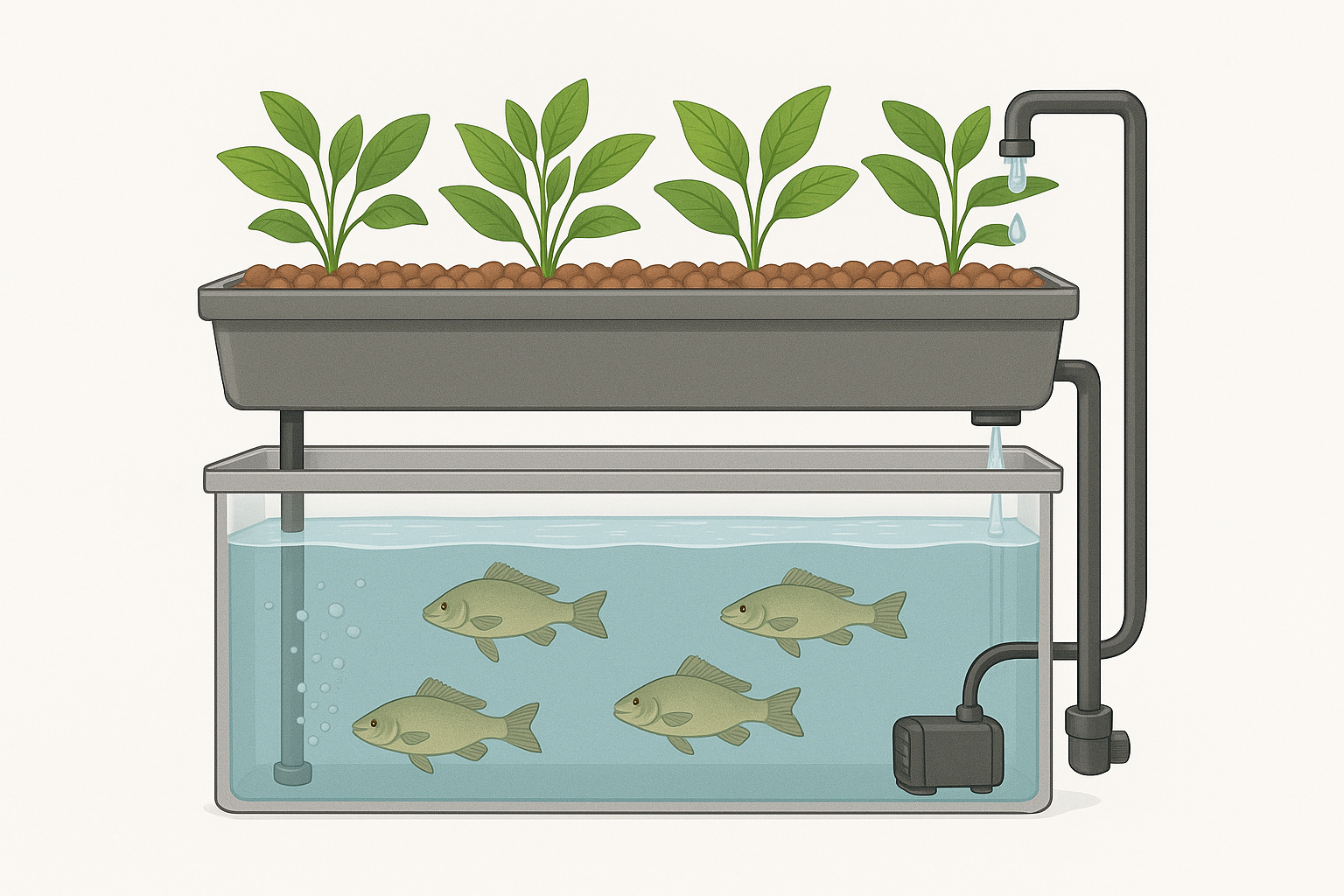
The science of aquaponics represents a sophisticated integration of aquaculture (the cultivation of fish) and hydroponics (soilless plant cultivation) within a single, recirculating system. At its core, aquaponics is a closed-loop method of food production that mimics natural ecosystems: fish produce waste rich in ammonia; this waste is utilised by the plants, which in turn cleans the water; the clean water is then recirculated back to the fish. This biologically interdependent process allows both fish and plants to thrive with minimal external inputs, making it a highly resource-efficient model for sustainable agriculture. For those investigating the future of food production in urban, vertical, or resource-limited contexts, aquaponics offers an integrated approach that aligns with environmental, economic, and nutritional goals.
Origins and Evolution
Although aquaponics might appear to be a modern innovation, its conceptual roots can be traced to ancient civilisations. The Aztecs cultivated crops on floating islands (chinampas) in shallow lakes, integrating fish and plants in a semi-symbiotic arrangement. In East Asia, rice paddies have long supported fish such as carp, contributing to nutrient cycling in low-input systems. The contemporary scientific formalisation of aquaponics, however, began in the latter half of the 20th century, particularly through academic and institutional research in the United States and Australia. Over recent decades, the method has been refined through advances in water chemistry, microbial ecology, and controlled environment technology, enabling more stable and scalable systems suitable for urban farming and commercial production.
How the System Works
Aquaponics relies on the balanced interaction of three biological agents: fish, plants, and microorganisms. Fish such as tilapia are commonly chosen for their hardiness and adaptability to controlled systems. Their excretions, primarily in the form of ammonia, are utilised by the plants and form the basis of their nutrition.
Plant roots, suspended in water or supported by inert media such as expanded clay or perlite, absorb the nutrients in the fish waste. As the water passes through the plant beds, it is filtered and returned to the fish tanks. This continuous cycle is facilitated by pumps and aeration systems that maintain optimal dissolved oxygen levels, pH balance, and temperature.
The microbial component of the system is particularly important. Without a robust and stable bacterial population, nutrient cycling fails, leading to potentially toxic build-up in the fish tanks and nutrient deficiency in the plant zone. As such, understanding microbial succession and maintaining favourable biofiltration conditions are critical for aquaponic viability.
Applications in Controlled Environment Agriculture
In the context of controlled environment agriculture (CEA) and vertical farming, aquaponics offers several advantages. It reduces water usage since the water is continually recirculated. Because nutrients are produced biologically rather than synthetically introduced, the risk of salinity build-up and nutrient imbalances can be lower if the system is properly maintained.
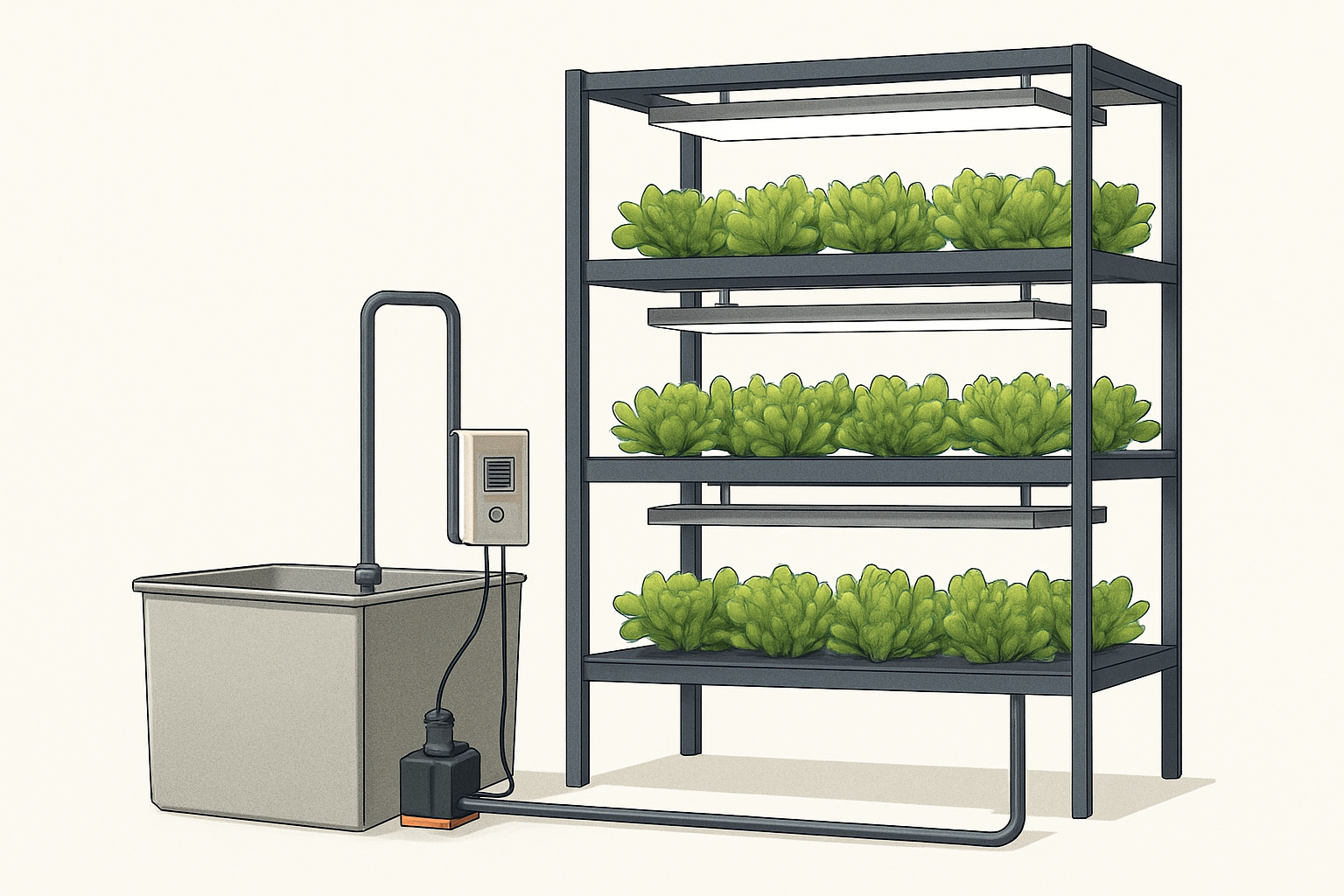
Aquaponics can be integrated in vertical farming models. By combining fish tanks on the ground level with stacked grow beds or vertical towers above. This makes aquaponics attractive for urban agriculture, especially in areas with limited access to arable land or high logistical costs for fresh produce.
Furthermore, aquaponic systems can be tailored to produce high-value crops, such as leafy greens, herbs, and even fruiting plants, as well as marketable fish species. While capital and knowledge requirements are higher than for soil or standalone hydroponic systems, the combined yield and sustainability credentials make aquaponics an area of increasing interest for commercial growers and researchers alike.
Ecological and Economic Considerations
From an ecological perspective, aquaponics reduces dependence on artificial fertilisers, lowers water consumption, and avoids the effluent discharge issues associated with standalone aquaculture. However, these benefits hinge on careful management. For instance, achieving nutrient balance can be challenging: fish and plants often have different optimal nutrient ratios, so crop selection and stocking density must be aligned.
Additionally, while the integrated model offers mutualistic benefits, it introduces complexity. Unlike hydroponics or aquaculture in isolation, aquaponics demands a systems-based approach. Disruptions in one part of the cycle, such as a fish disease outbreak or biofilter collapse, can compromise the entire system. Thus, robust system design, real-time monitoring, and adaptive management are essential.
Economically, aquaponics has seen growing interest from investors and entrepreneurs, particularly in markets with strong demand for local, sustainable, and traceable food. However, profitability remains dependent on several variables: system scale, species and crop selection, local market access, energy and labour costs, and technical competence. As with other CEA models, achieving operational efficiency requires precise calibration rather than brute-force scaling.
Research Frontiers and Policy Relevance
The science of aquaponics continues to evolve. Current research explores optimising microbial communities for enhanced nutrient conversion, automating system control through sensor integration and machine learning, and developing closed-loop feed strategies that further reduce external inputs. In the context of circular economy principles, some researchers are investigating whether aquaponics can integrate additional systems, such as anaerobic digesters or insect protein production as a fish feed source.
Policy-makers have also begun to consider the implications of aquaponics in sustainable food systems, urban planning, and environmental regulation. In Europe, the United States, and parts of Asia, funding has been directed toward pilot projects, training programmes, and standard-setting for aquaponic operations. As food security becomes increasingly urgent in the face of climate instability, aquaponics is positioned as one of several innovative models that merit serious consideration.
Conclusion
Aquaponics offers a biologically elegant and technically promising approach to food production, combining the strengths of aquaculture and hydroponics within a single, symbiotic system. As part of the broader movement towards controlled environment agriculture, it provides a model that aligns with sustainability goals while enabling intensive, year-round production in a variety of settings. The science of aquaponics continues to advance, guided by interdisciplinary research and practical innovation. While not a panacea, it is a system with considerable potential, provided that its complexity is matched by a corresponding depth of understanding and thoughtful design.