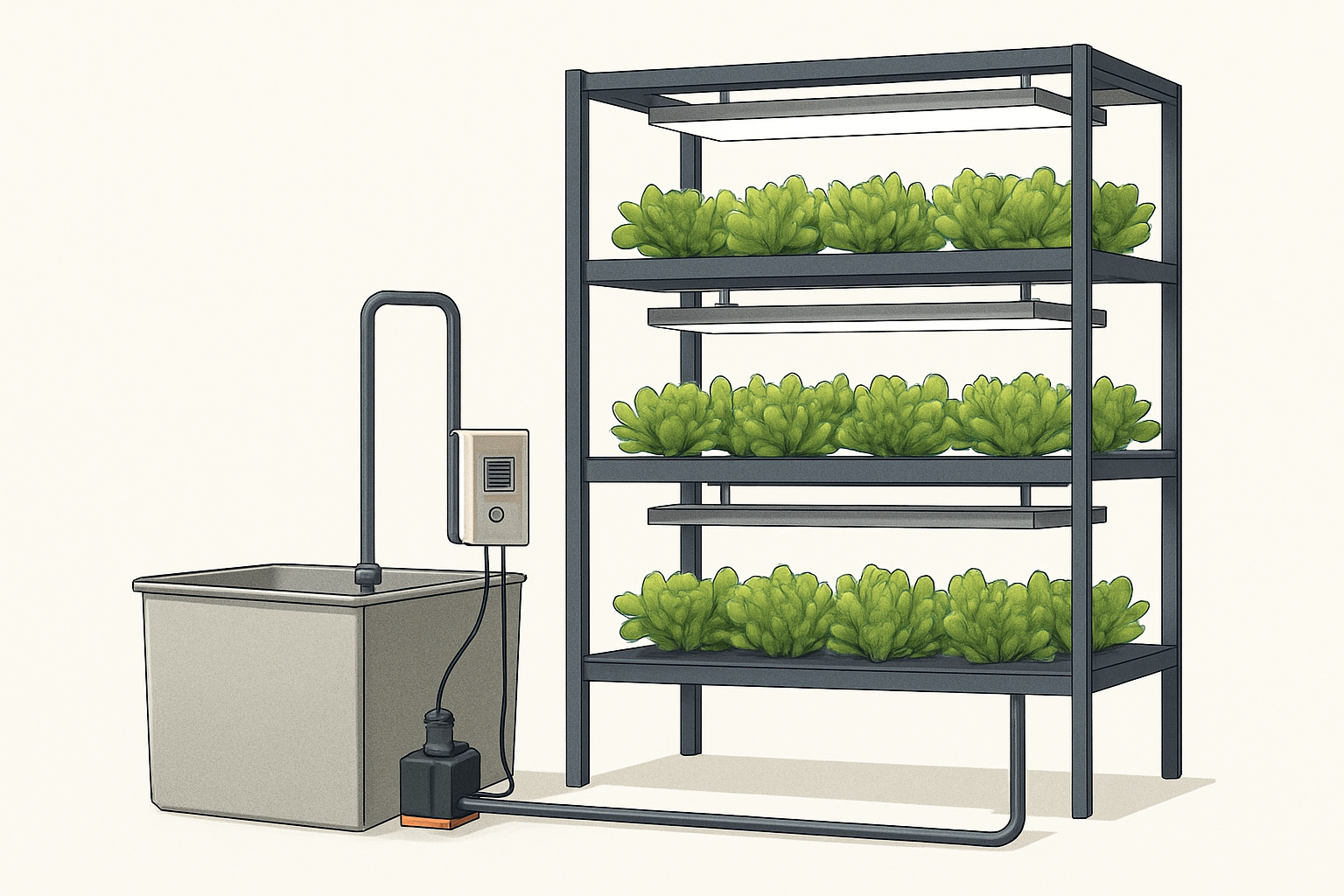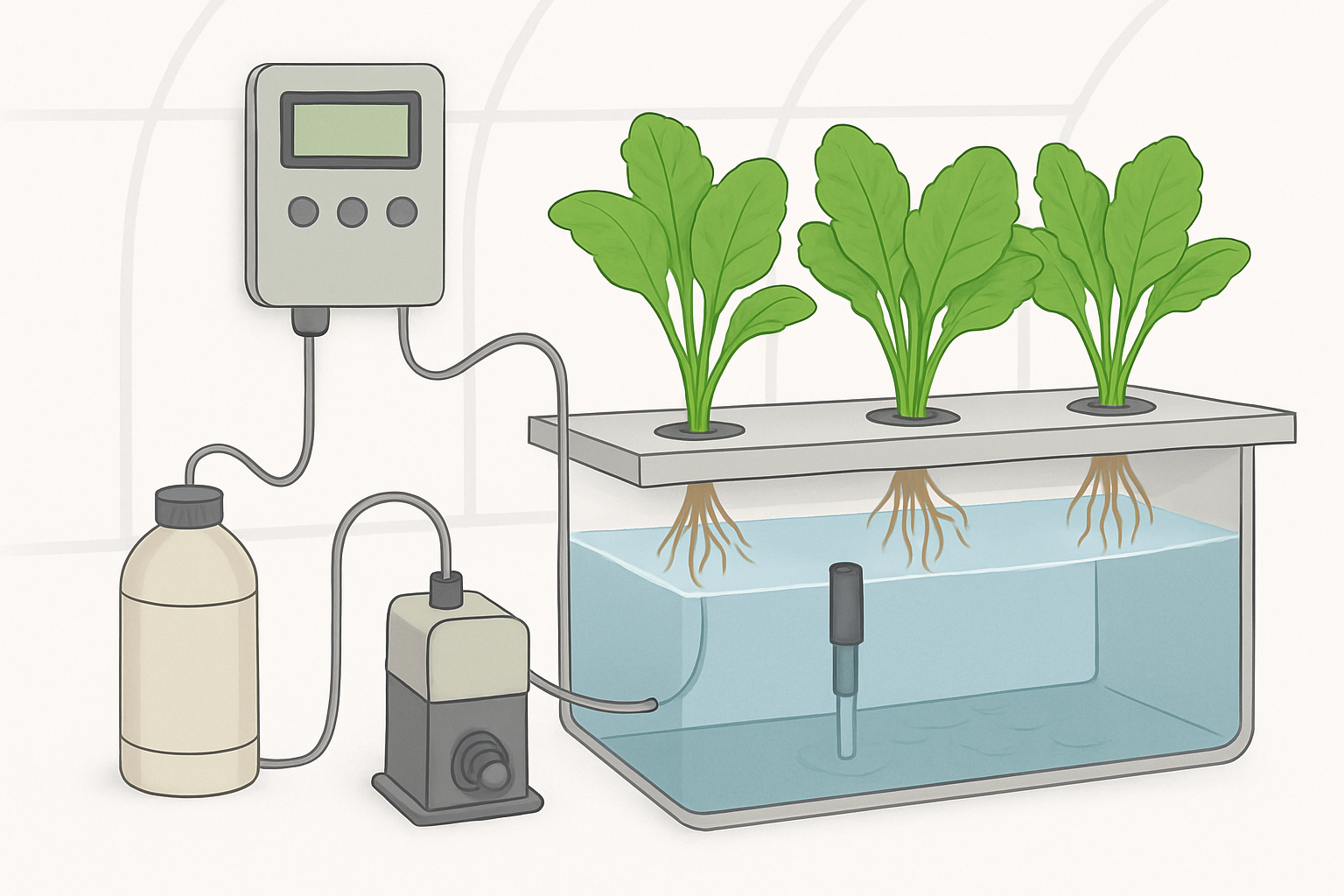
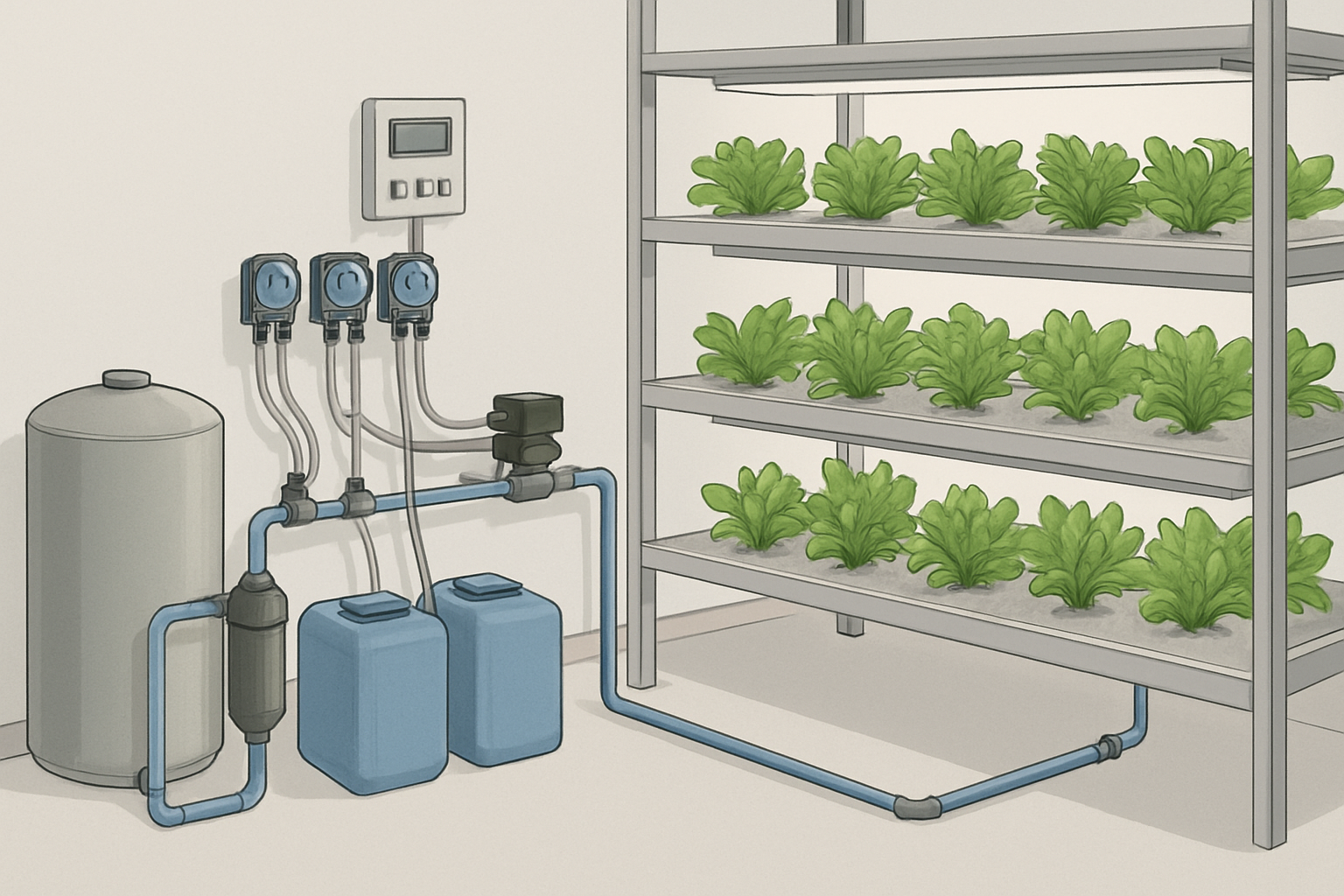
Fertigation approaches and solutions are central to nutrient management in controlled environment agriculture (CEA) and vertical farming. By delivering dissolved fertilisers directly through irrigation systems, fertigation enables precision control of plant nutrition, supports optimal growth conditions, and reduces resource waste. This integration of fertiliser application with irrigation has advanced the design and operation of high-efficiency CEA systems, where productivity, environmental control, and sustainability are closely interlinked.
The Concept and Relevance of Fertigation in CEA
Fertigation, a portmanteau of ‘fertilisation’ and ‘irrigation’, involves the application of water-soluble nutrients through the irrigation infrastructure. While the concept has long been used in open-field agriculture, its refinement in controlled environment systems allows for far greater precision and consistency. Unlike conventional fertiliser methods, which often suffer from uneven distribution or leaching, fertigation in CEA systems offers control over the timing, composition, and volume of nutrient delivery.
In vertical farming and other forms of CEA, where root zones are often confined to inert substrates or hydroponic solutions, nutrient availability must be actively managed. Therefore, fertigation is a core operational system that defines crop performance. In this context, fertigation supports the controlled optimisation of nutrient availability and pH, enabling growers to tailor feed formulas to the physiological stage and species-specific demands of crops.
Integration with Irrigation Modalities
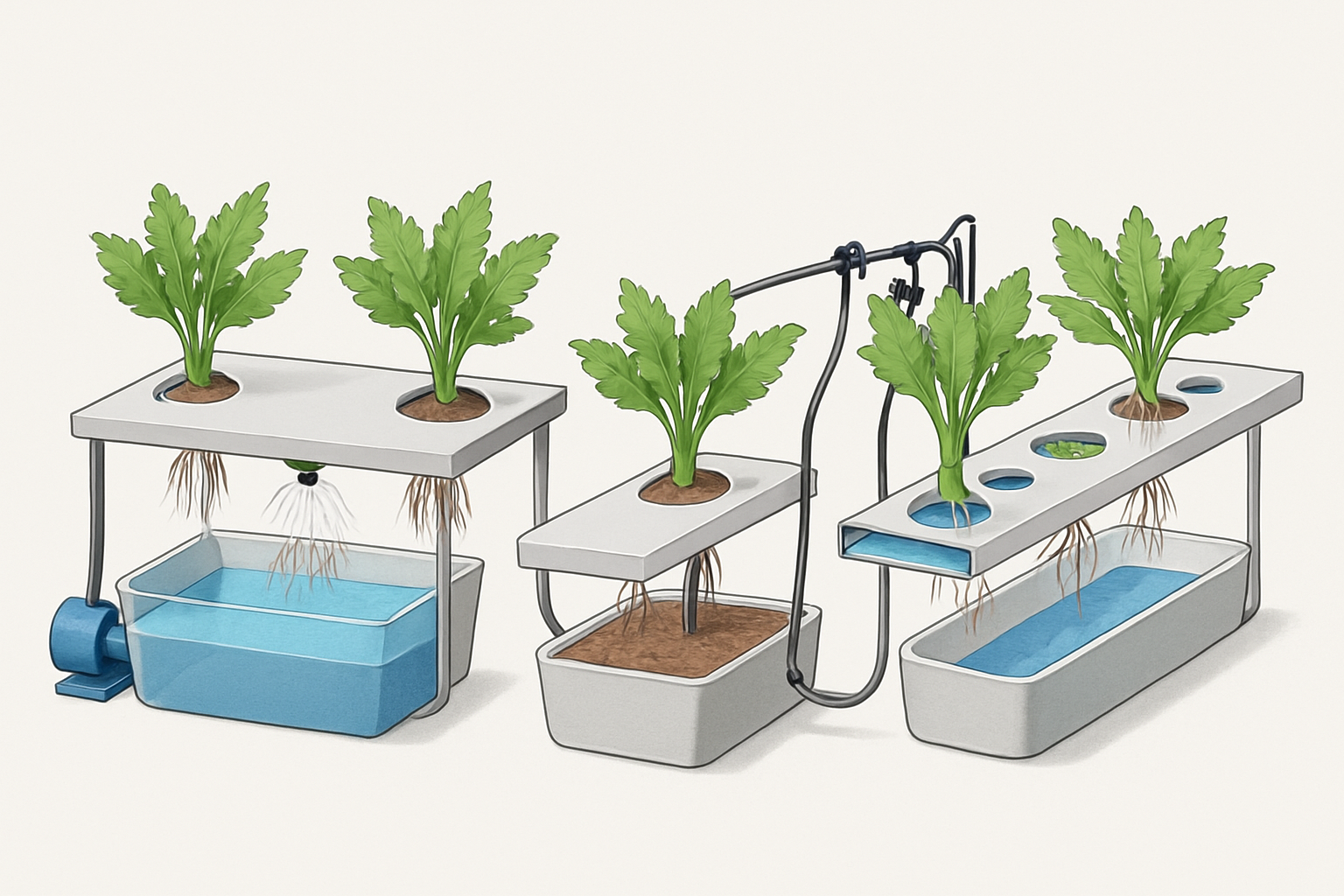
The implementation of fertigation solutions varies depending on the cultivation method. In hydroponic systems such as nutrient film technique (NFT), deep water culture (DWC), and aeroponics, fertigation is inherently embedded within the circulation of nutrient-rich water. Here, the fertigation solution serves as both the hydration and nutrient medium. Conversely, in substrate-based systems such as drip-irrigated vertical grow towers or slab cultivation, fertigation must be carefully dosed to maintain root zone stability without causing salt accumulation.
In each case, the delivery infrastructure includes reservoirs, injection units, valves, sensors, and control systems. Proportional dosing pumps or venturi injectors are commonly used to mix concentrated stock solutions into irrigation lines. These systems are often managed by fertigation controllers that allow real-time adjustment based on environmental conditions, crop stage, or feedback from sensors. In advanced setups, machine learning algorithms may be deployed to further refine nutrient dosing in response to changing conditions and plant uptake rates.
Nutrient Formulation and Scheduling
At the heart of any fertigation strategy lies the formulation of the nutrient solution. CEA operations rely on synthetic or organic soluble fertilisers, often tailored to specific crop types. Macro-elements such as nitrogen (N), phosphorus (P), and potassium (K) are delivered alongside secondary elements like calcium (Ca), magnesium (Mg), and sulphur (S), as well as trace micronutrients including iron (Fe), boron (B), manganese (Mn), zinc (Zn), copper (Cu), and molybdenum (Mo).
The timing and frequency of fertigation events, referred to as the fertigation schedule, are also critical. These schedules may be continuous (e.g. in recirculating systems) or intermittent (as in pulse fertigation used in substrate-grown crops). Factors influencing scheduling include photoperiod, evapotranspiration rates, root development stage, and ambient environmental conditions. Precision fertigation ensures that nutrients are available when the plant needs them most, avoiding deficiencies, toxicities, or nutrient lock-out due to pH imbalances.
Technological Enablers of Modern Fertigation
In recent years, fertigation systems have benefited greatly from technological advances in sensor-based automation, data integration, and remote monitoring. EC and pH sensors continuously monitor the nutrient solution, while flow meters and soil moisture probes provide feedback to prevent over-irrigation or under-fertilisation. This data-driven approach supports closed-loop control systems, in which fertigation parameters are automatically adjusted in response to real-time plant and environmental data.
Many commercial operations now employ fertigation software that integrates with climate control platforms. These systems enable multi-zone nutrient delivery, allowing separate crop types or growth stages to be managed independently within a single facility. As a result, operators can optimise resource use and minimise labour while ensuring high crop uniformity.
In high-tech vertical farms, fertigation may be integrated into a broader digital agriculture framework. This could include image-based crop health diagnostics, predictive yield modelling, and feedback-controlled lighting and CO₂ enrichment; with each element interacting with fertigation in a tightly regulated production ecosystem.
Sustainability Considerations
One of the major advantages of fertigation in CEA is its potential for resource efficiency and environmental sustainability. Compared with traditional field agriculture, fertigation minimises nutrient leaching and runoff by delivering nutrients in precise quantities. In recirculating hydroponic systems, excess solution can be collected, filtered, and reused, significantly reducing water and fertiliser input.
However, sustainability depends on the responsible formulation and disposal of nutrient solutions. Accumulation of unused salts or imbalances in recirculated systems can lead to nutrient toxicity if not properly managed. Moreover, the source and composition of fertilisers—particularly nitrogen-based compounds—carry implications for embedded energy use and greenhouse gas emissions. As such, there is growing interest in integrating organic fertigation sources, microbial inoculants, and bio-stimulants, though these introduce additional complexity in terms of solubility and system compatibility.
Regulatory frameworks are also beginning to catch up. In the UK and EU, environmental protection regulations are influencing fertiliser selection and discharge practices in CEA operations. Nutrient management plans and water recycling protocols are likely to become standard components of commercial vertical farming compliance.
Future Directions
Fertigation approaches and solutions in CEA are evolving rapidly, driven by both technological innovation and the imperative for sustainability. Research is underway into precision fertigation using AI-based decision support systems, as well as the potential for bioreactor-based nutrient generation from organic waste streams. In parallel, advances in ion-selective sensing and real-time plant tissue diagnostics promise even finer levels of nutrient control.
Ultimately, fertigation will remain a foundational component of CEA systems, enabling the intensive, high-yield production models upon which vertical farming depends. As the sector matures, success will increasingly hinge on the ability to deliver nutrients with scientific precision, economic efficiency, and environmental responsibility.