Exploring the Science of Flood and Drain Hydroponics in Controlled Environment Agriculture
Introduction: What Is Flood and Drain Hydroponics?
The science of flood and drain hydroponics, also known as ebb and flow, is a common approach used within soilless cultivation and Controlled Environment Agriculture (CEA) systems. This method leverages periodic flooding and draining of a plant root zone with nutrient-rich water, creating a dynamic root environment that supports efficient oxygenation, nutrient uptake, and water use. It offers a balance between simplicity, adaptability, and effectiveness, making it one of the most widely adopted hydroponic systems across both hobbyist and commercial operations.
Flood and drain hydroponics is distinct from continuous-flow systems such as Nutrient Film Technique (NFT) or Deep Water Culture (DWC); instead of maintaining constant water contact, it operates cyclically. These controlled cycles of flooding and draining allow the root zone to alternate between absorption and aeration phases, mimicking some beneficial aspects of natural soil behaviour, but with greater precision and control. The system is versatile, scalable, and suitable for a wide variety of crops, particularly in structured indoor production environments.
System Design and Operation
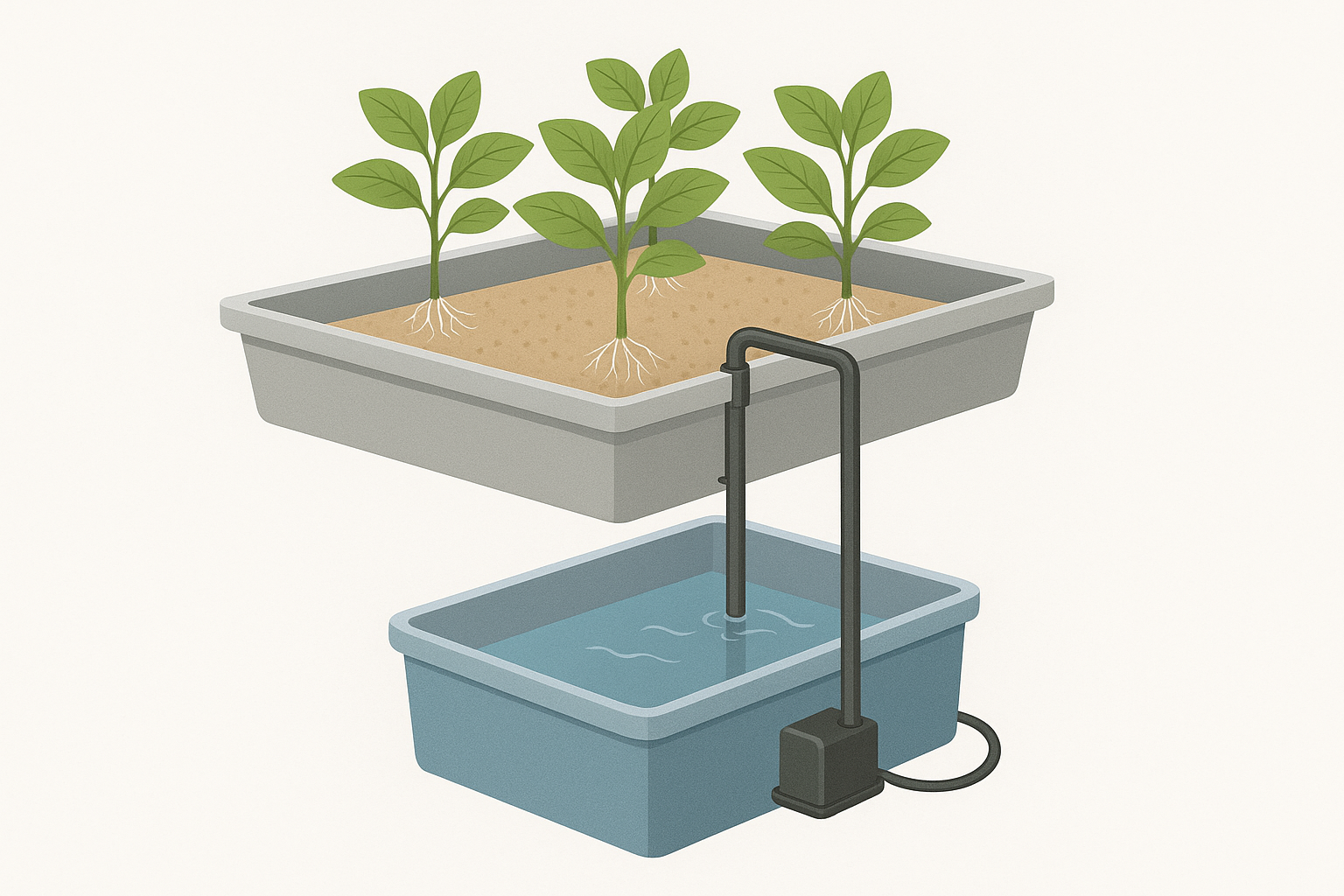
At its core, a flood and drain system consists of a plant-holding tray or bed, a nutrient reservoir, a water pump, and a timing mechanism. Plants are often supported in inert media such as perlite or rockwool which provide structural support while allowing rapid fluid movement (any material which has some degree of absorbency works well as substrate, and industry examples are myriad: recycled carpet fibres, hemp, jute, foam to name just a few). The pump is activated periodically to flood the tray, saturating the root zone with irrigant solution. Once the desired flood level is reached, the pump is switched off or reversed, and the solution drains back into the reservoir by gravity or controlled outflow.
This cyclical process, typically occurring several times a day depending on crop type, growth stage, and environmental conditions, supports optimal oxygen availability. As the solution drains, it draws fresh air into the root zone, promoting aerobic root function and reducing the risk of root pathogens. The frequency and duration of cycles are critical; they must be adjusted according to temperature, humidity, crop type, and substrate porosity to avoid under- or over-saturation.
Scientific Principles Behind Flood and Drain
The efficacy of flood and drain systems rests on a sound scientific foundation. Plant roots require a balance of oxygen, water, and nutrients. While overwatering in traditional soil-based systems often results in oxygen deprivation and root rot, the flood and drain technique avoids this by allowing periods of drainage that restore oxygen to the root environment.
Capillary action within the growing media enables moisture and nutrients to remain accessible even after the flood cycle ends. Furthermore, regular draining prevents salt accumulation in the root zone, which is a common issue in recirculating systems, ensuring a more stable root environment.
A notable physiological benefit is the stimulation of stronger root development. The alternating wet-dry conditions encourage roots to grow more extensively in search of moisture, increasing their surface area for nutrient uptake. This, in turn, can enhance plant vigour, yield, and resilience.
Applications in Vertical Farming and CEA
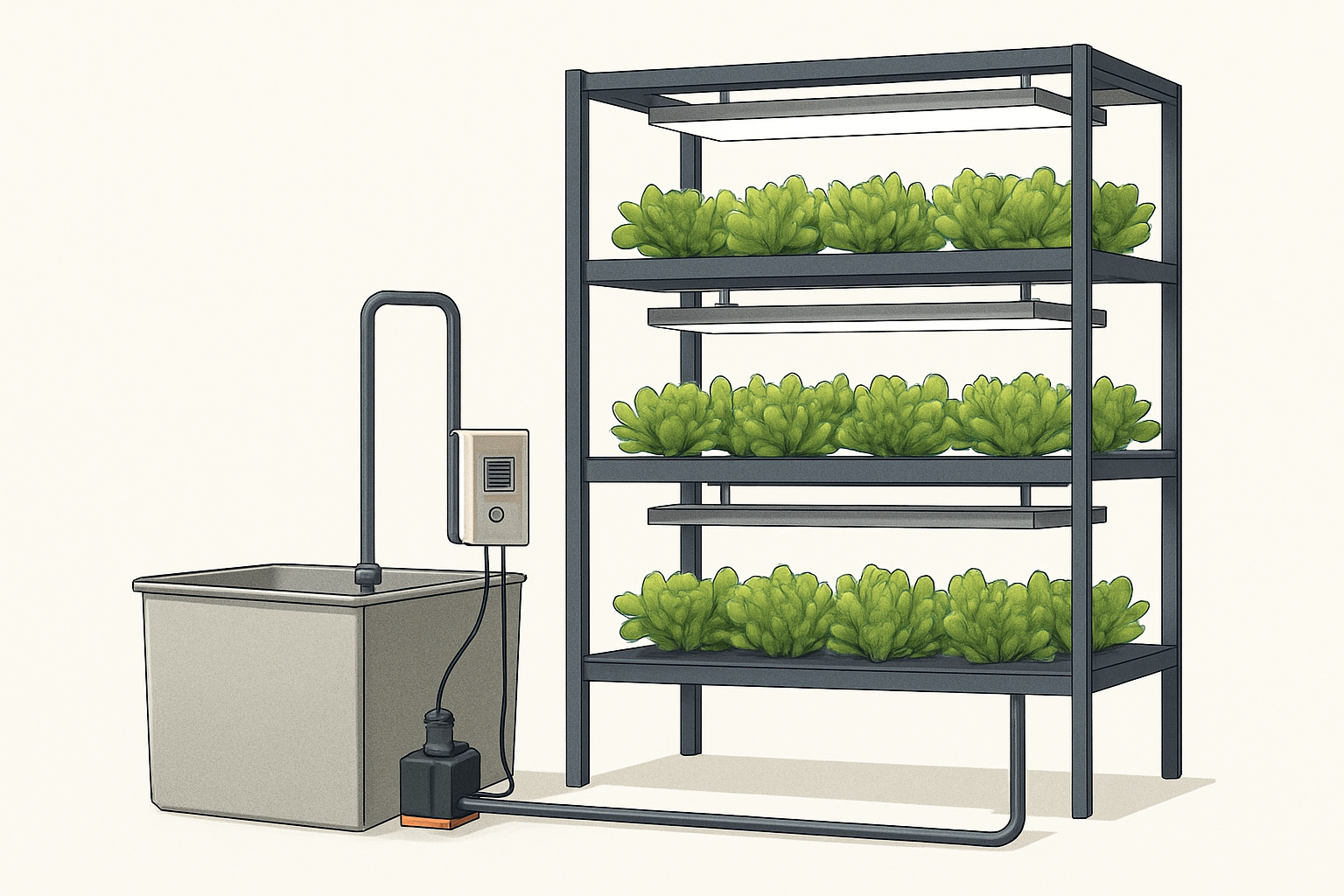
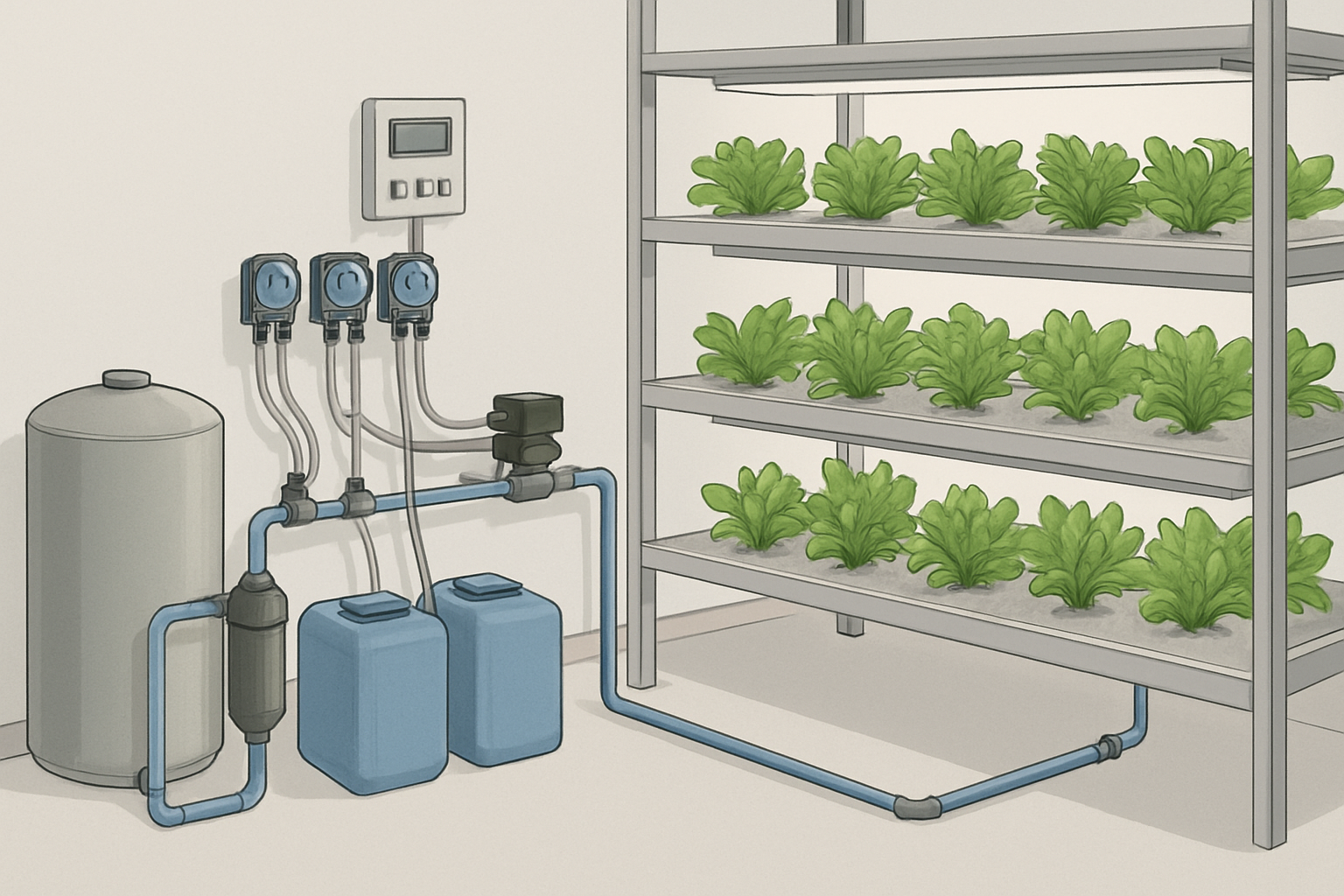
In vertical farming, space and resource efficiency are paramount. Flood and drain systems can be tailored for stacked horizontal layers or integrated into modular shelving, making them highly suitable for vertical integration. Their reliability, combined with relatively low infrastructure demands compared to high-pressure aeroponic or fogponic systems, makes them a cost-effective choice for commercial growers seeking scalability.
Moreover, flood and drain methods support a wide crop range: leafy greens, herbs, strawberries, and even small-rooted fruiting crops such as chillies and dwarf tomatoes have all been grown successfully. System modularity allows growers to isolate and control specific zones, reducing biosecurity risks and improving the management of light, nutrients, and crop cycles.
Advantages and Challenges
Flood and drain systems offer several clear advantages: they are relatively simple to construct and maintain; they use water and nutrients efficiently; and they support vigorous root health. The intermittent flooding also helps to prevent the stagnation and anaerobic conditions that can compromise root function.
However, there are limitations. Power reliability is critical; if the pump fails and the media dries out too long, crop loss can occur. Likewise, root pathogens such as Pythium spp. can spread rapidly in shared recirculating systems without proper hygiene protocols. Monitoring and automation are advisable for commercial use, ensuring consistency across multiple daily cycles.
Substrate choice also matters greatly. Media must drain well yet retain enough moisture between cycles; an incorrect balance may result in poor aeration or inconsistent moisture distribution. Environmental parameters such as air temperature, humidity, and evapotranspiration rates must also be considered when designing flood intervals.
Conclusion: The Role of Flood and Drain in the Future of Soilless Cultivation
The science of flood and drain hydroponics demonstrates a practical and biologically sound approach to soilless cultivation, offering a powerful tool for food production in controlled environments. It encapsulates many of the benefits sought in modern agriculture: resource efficiency, spatial adaptability, and precise control over the plant environment.
As vertical farming systems continue to evolve to meet the demands of urban food security and climate-resilient agriculture, flood and drain systems are likely to remain a vital component of the hydroponic toolbox. Their ability to deliver high-performance results with relatively modest technological overhead makes them particularly appealing for scalable implementation across a range of agricultural contexts, from small research units to large-scale commercial greenhouses.
This method does not promise miracle outcomes; rather, it offers a structured, predictable framework grounded in sound horticultural science. Its enduring relevance stems from this balance of simplicity and effectiveness; a principle that underpins much of the best practice in controlled environment agriculture.