Deep Water Culture (DWC) is one of the most accessible and scientifically intriguing methods in hydroponic growing. The science of deep water culture centres on plant roots being suspended in a continuously oxygenated, nutrient-rich water solution. This approach to soilless cultivation enables rapid growth, high yields, and resource efficiency when applied correctly. As Controlled Environment Agriculture (CEA) and vertical farming continue to expand globally, approaches such as DWC are becoming increasingly relevant to researchers, growers, policymakers, and educational institutions alike.
Introduction to the DWC Method
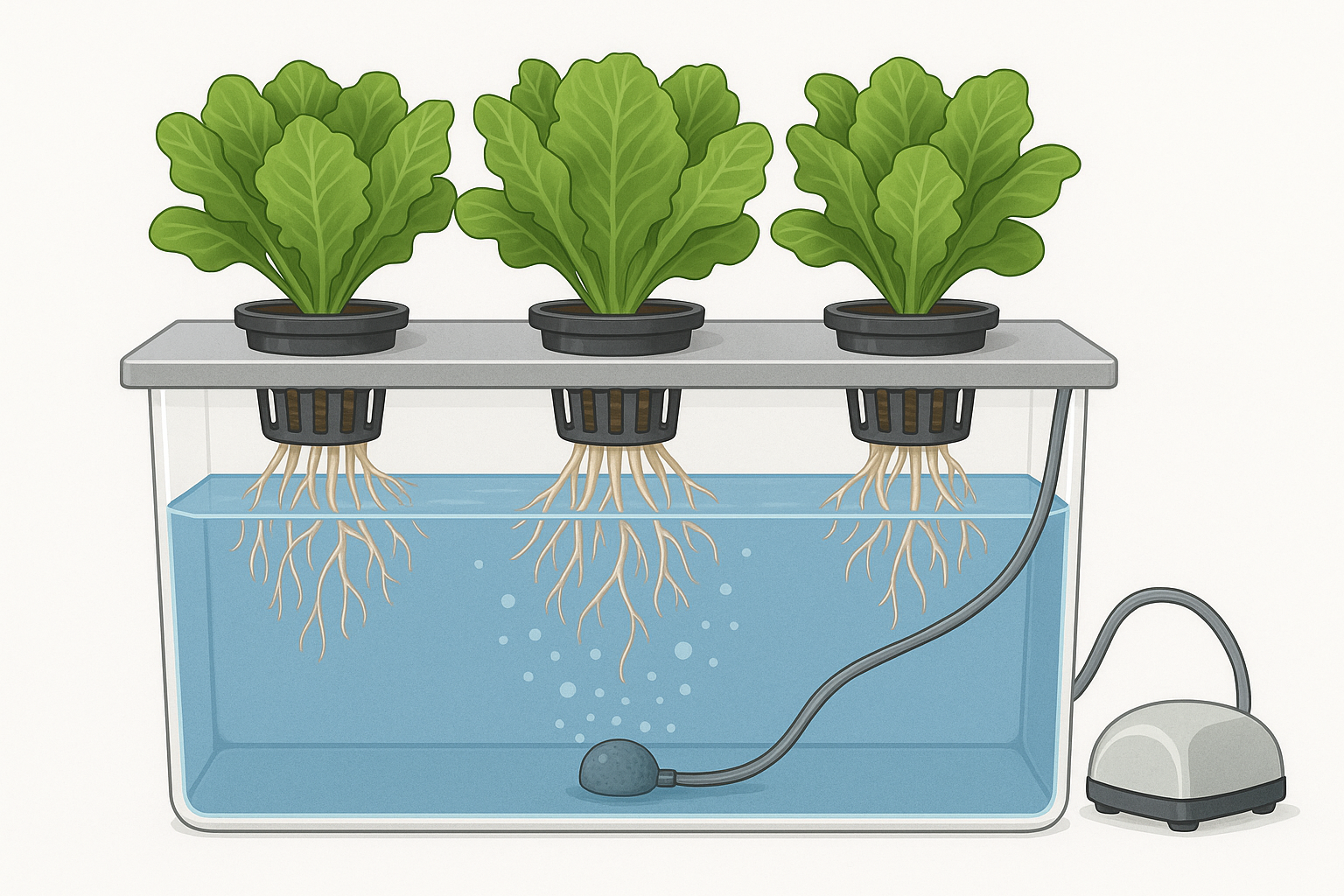
Deep Water Culture is a form of hydroponics that submerges plant roots directly in an aqueous nutrient solution. Plants are typically supported by net pots or floating rafts, allowing the root systems to remain in constant contact with water while the aerial parts develop above the reservoir. Unlike nutrient film technique (NFT), where a thin flow of water passes over roots, DWC immerses roots completely, providing uninterrupted access to hydration and nutrients.
Crucially, because water contains significantly less oxygen than soil, DWC systems must ensure sufficient aeration to prevent root suffocation and promote healthy growth. This is achieved by diffusing air directly into the nutrient solution using air stones or diffusers, powered by external air pumps. Maintaining dissolved oxygen levels above 6 mg/L is generally regarded as optimal for most horticultural crops.
The Scientific Basis of DWC
The physiological foundation of DWC lies in its ability to satisfy three core requirements of plant roots: water, nutrients, and oxygen. Water serves as the transport medium; dissolved mineral nutrients are absorbed directly by root epidermal cells; and dissolved oxygen enables root respiration, which is essential for energy production (ATP synthesis) and ion uptake.
This environment eliminates the variability inherent in soil systems: pH, nutrient composition, and oxygen availability can be closely controlled. As such, DWC is sometimes used in research settings to study nutrient uptake dynamics, root morphology, and plant responses to abiotic stress under controlled conditions.
From a biochemical perspective, DWC optimises the conditions for nutrient ionisation and bioavailability. Macronutrients such as nitrogen, phosphorus, and potassium remain soluble and are readily taken up by roots. Microelements like iron and manganese, which may become unavailable in high-pH soils, are delivered consistently when the solution is properly managed. These advantages often result in faster vegetative growth compared to conventional substrate-based systems.
Practical Implementation in Controlled Environments
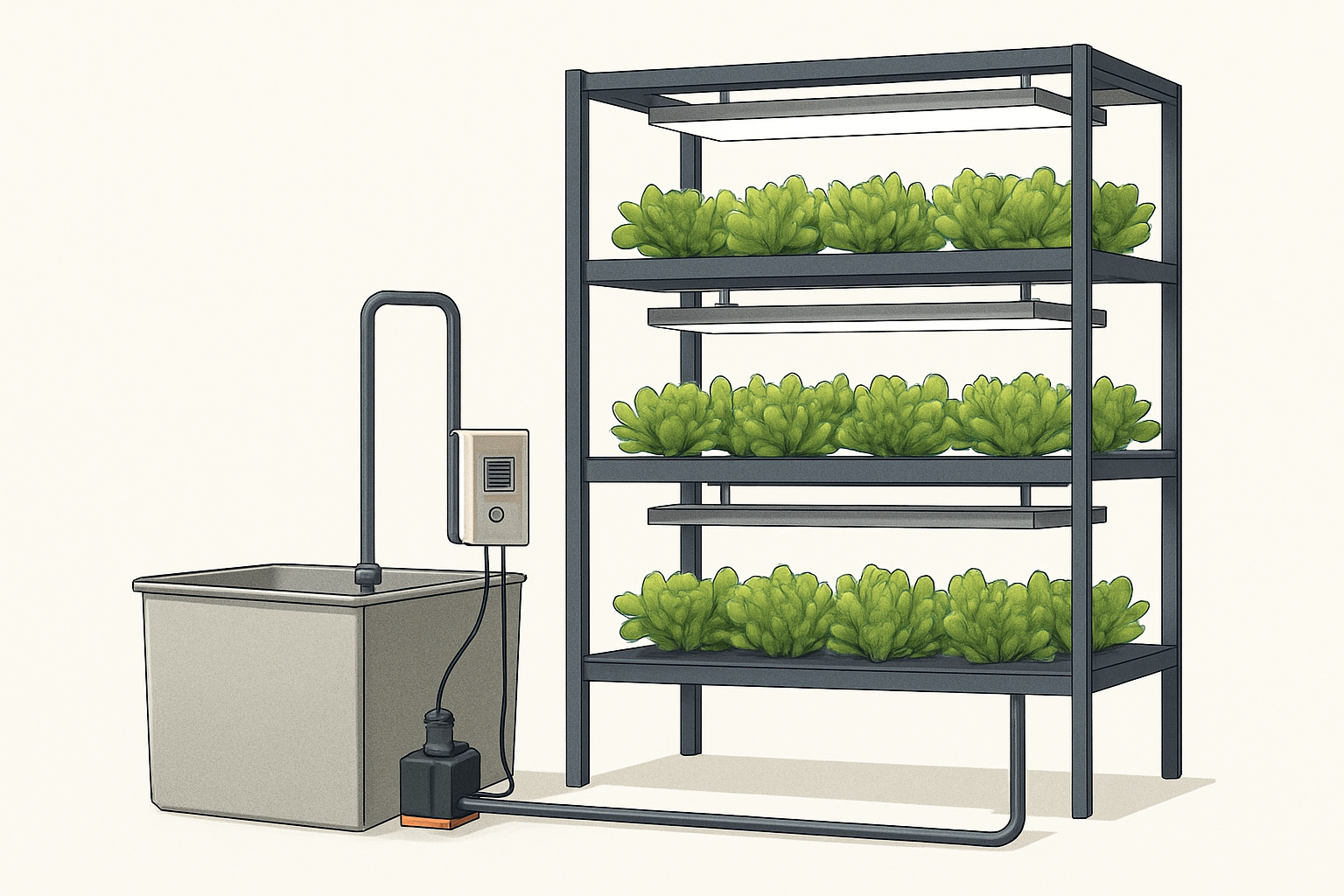
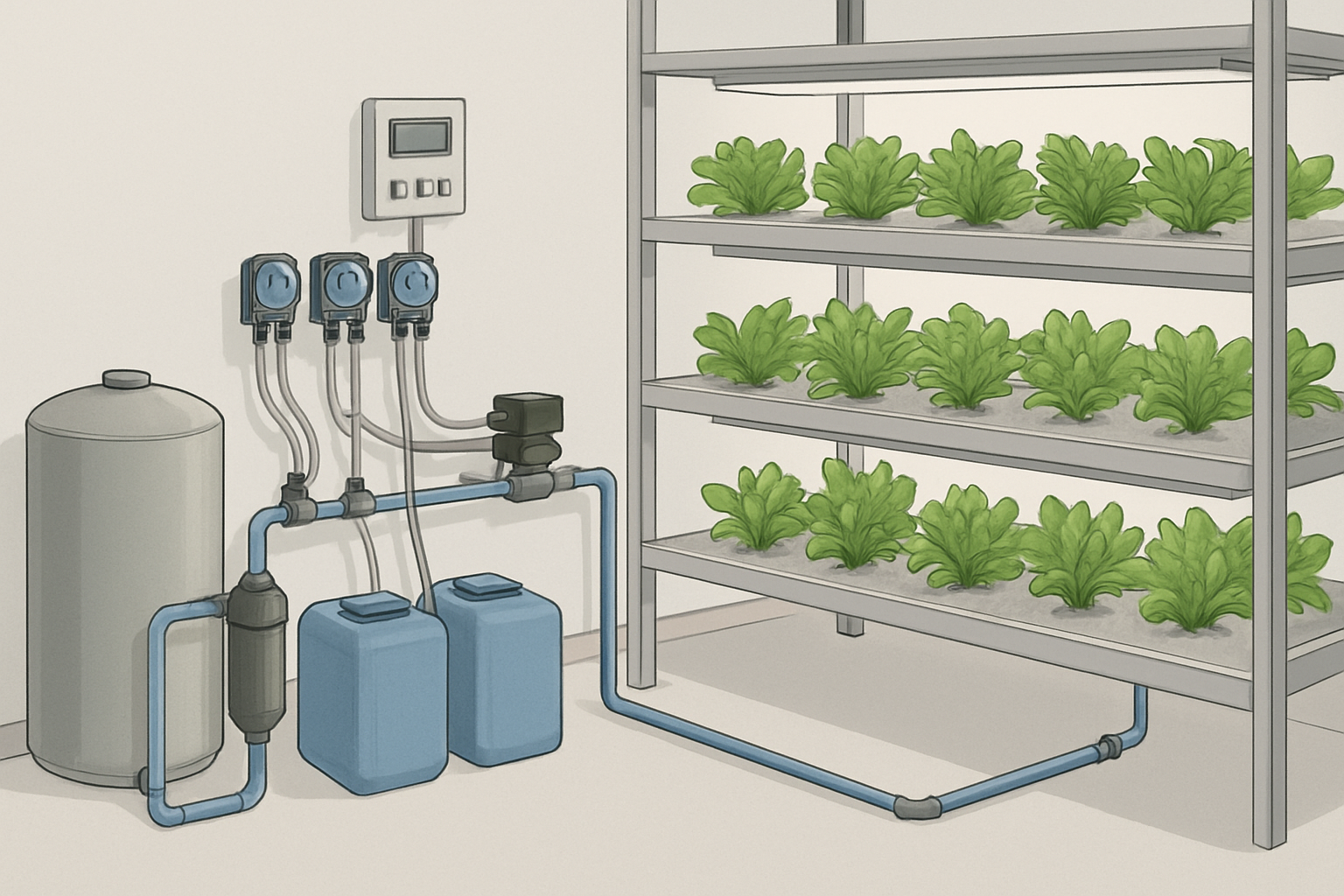
In commercial vertical farms and research greenhouses, DWC systems are typically modular and scalable. Units may consist of shallow troughs or deep reservoirs made from food-grade plastic or stainless steel. Crops such as lettuce, basil, pak choi, and other leafy greens are particularly well-suited to this method due to their relatively small root zones and short production cycles.
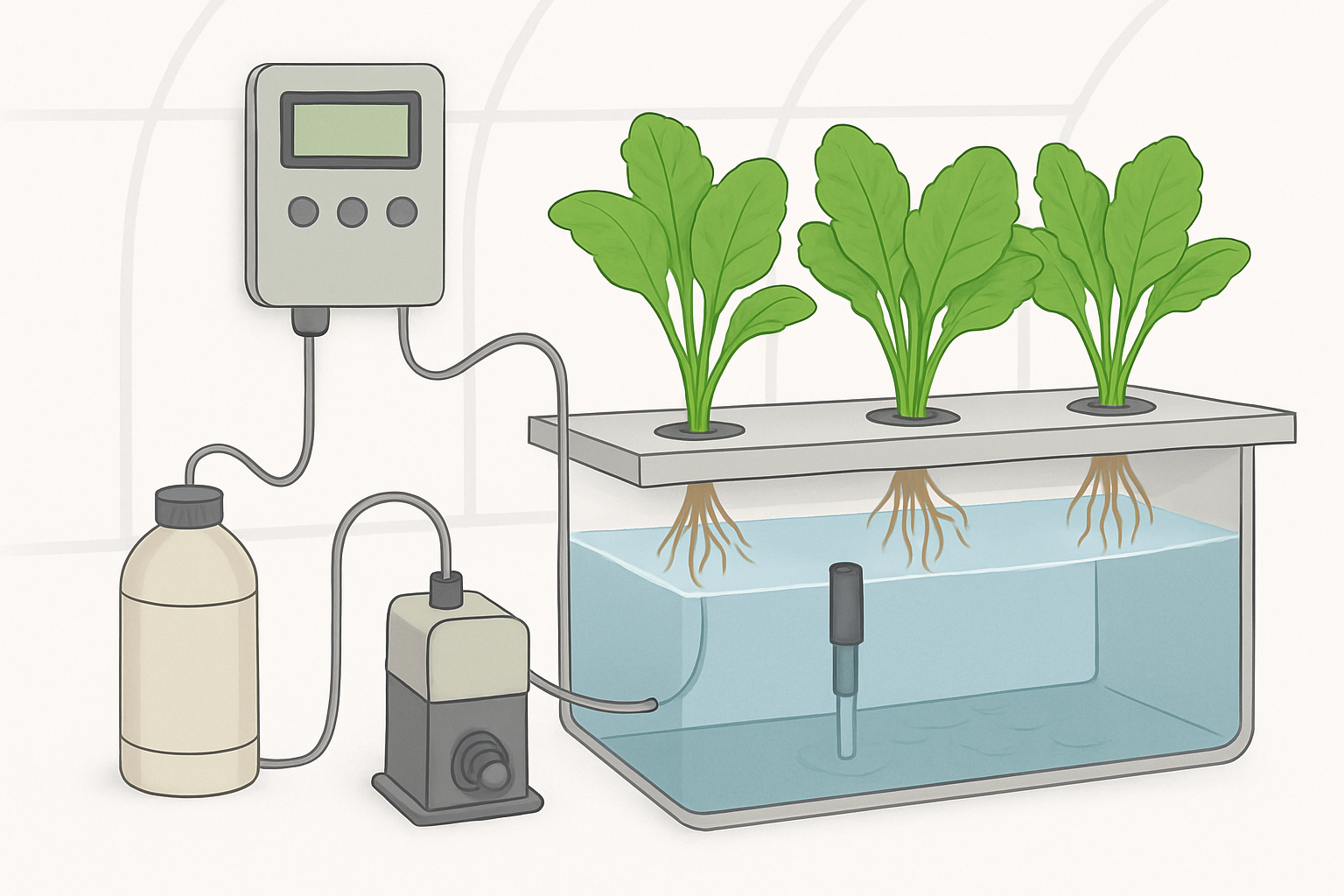
System management focuses on several key parameters: nutrient concentration (measured in electrical conductivity or EC), pH balance, water temperature, and oxygen saturation. Water temperature is especially critical; levels above 24°C can significantly reduce dissolved oxygen and encourage pathogenic microbes such as Pythium, which causes root rot. As a result, cooling systems or climate-controlled environments are often employed in commercial setups.
While DWC is conceptually simple, operational excellence requires careful monitoring. Continuous or semi-continuous dosing systems may be used to replenish nutrients and stabilise pH. Some farms integrate DWC into recirculating hydroponic systems to reduce water use and improve sustainability metrics.
Advantages and Limitations
The primary benefit of DWC lies in its capacity for high productivity with minimal substrate input. There is no need for growing media such as rockwool, coir, or perlite. This not only reduces input costs but also eliminates waste associated with substrate disposal, particularly relevant in zero-waste or circular farming models.
However, the system is highly sensitive to power failures and mechanical faults. Because plant roots are constantly submerged, any interruption in aeration can rapidly lead to hypoxia, root death, and plant collapse. Moreover, waterborne pathogens can spread quickly through shared reservoirs, making hygiene and biosecurity essential components of system design and maintenance.
Another limitation is crop type. While leafy greens and herbs perform well, fruiting crops such as tomatoes, peppers, and cucumbers generally require larger root volumes and greater support, making DWC less practical for these species at scale. In such cases, hybrid systems or other hydroponic techniques may be preferred.
Current Research and Technological Innovation
Ongoing research into the science of deep water culture includes studies on root zone oxygenation, microbial community dynamics, and automated control systems. Advances in sensor technology allow real-time monitoring of dissolved oxygen, EC, and nutrient levels, enabling precise environmental control and early detection of system faults.
In terms of sustainability, researchers are exploring the use of renewable energy sources for system operation, as well as closed-loop designs that minimise water loss through evaporation and transpiration. Some vertical farms are now integrating DWC with controlled lighting systems and AI-based decision support tools to further enhance efficiency.
In academic settings, DWC remains a model system for investigating root physiology under constant conditions. Its ability to isolate variables such as nutrient form, temperature, or oxygen level makes it valuable in plant nutrition and stress physiology research.
Why Deep Water Culture Matters
Deep Water Culture is not merely a convenient technique for hobbyists or small-scale growers; it represents a scalable, efficient, and scientifically robust method for producing food in constrained urban and peri-urban environments. As cities grow and agricultural land becomes increasingly limited, systems like DWC offer viable solutions for fresh food production within controlled environments.
Its relevance extends beyond crop yield: DWC systems exemplify how precise environmental control, scientific principles, and practical engineering can converge to create resilient agricultural models. For policy-makers, researchers, and industry stakeholders, understanding DWC is part of a broader conversation about sustainable food security, technological innovation, and climate resilience in the agri-food sector.
Conclusion
The technique of deep water culture provides valuable insight into plant physiology and nutrient dynamics within soilless systems. When properly implemented, DWC offers a productive, resource-efficient method of crop cultivation particularly well-suited to leafy greens and herbs. Though not without its challenges, its versatility and controllability have earned it a central place in both commercial hydroponics and academic research. As part of the wider hydroponic spectrum, DWC continues to evolve through research and innovation, making it an essential technique to understand in the context of modern Controlled Environment Agriculture.