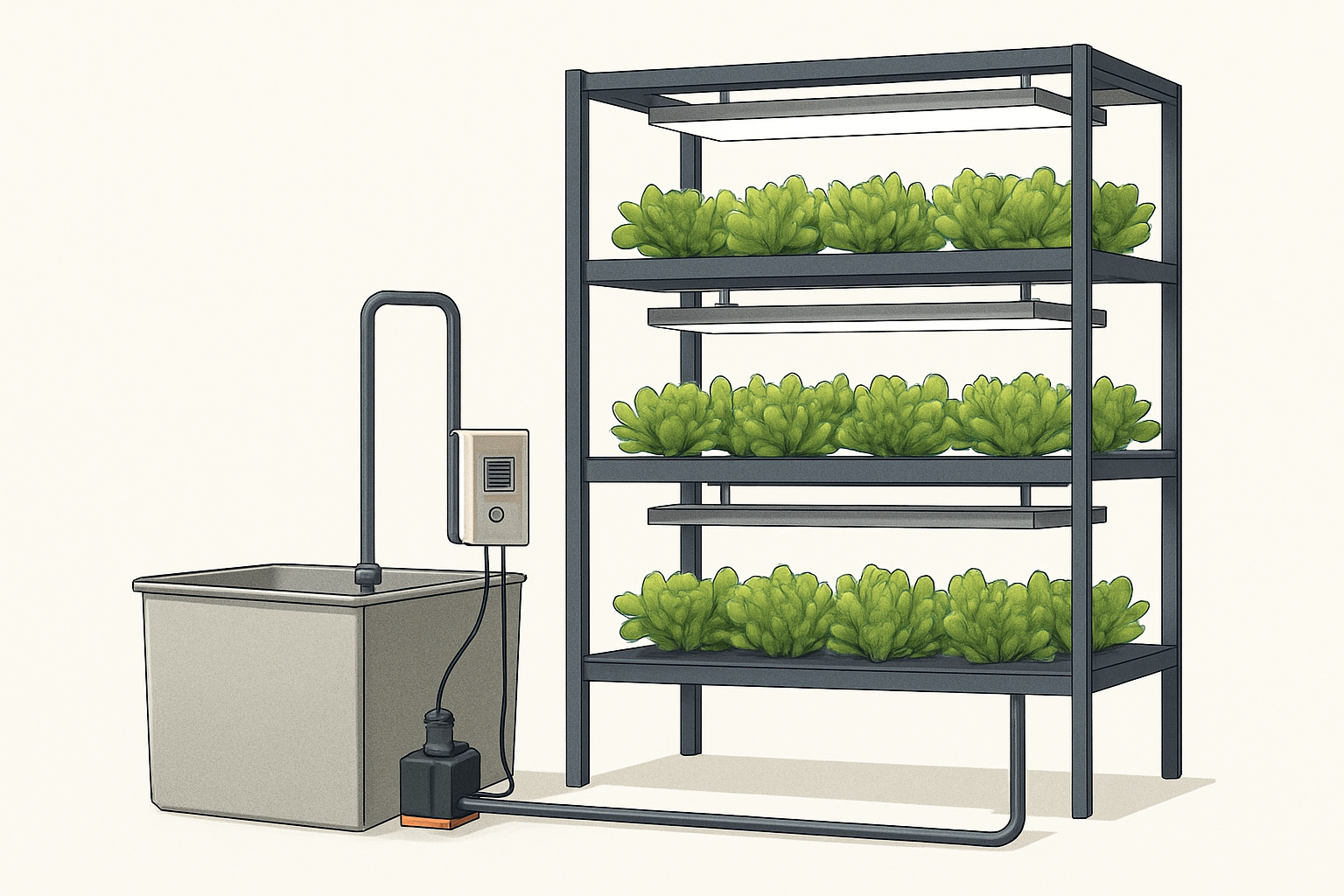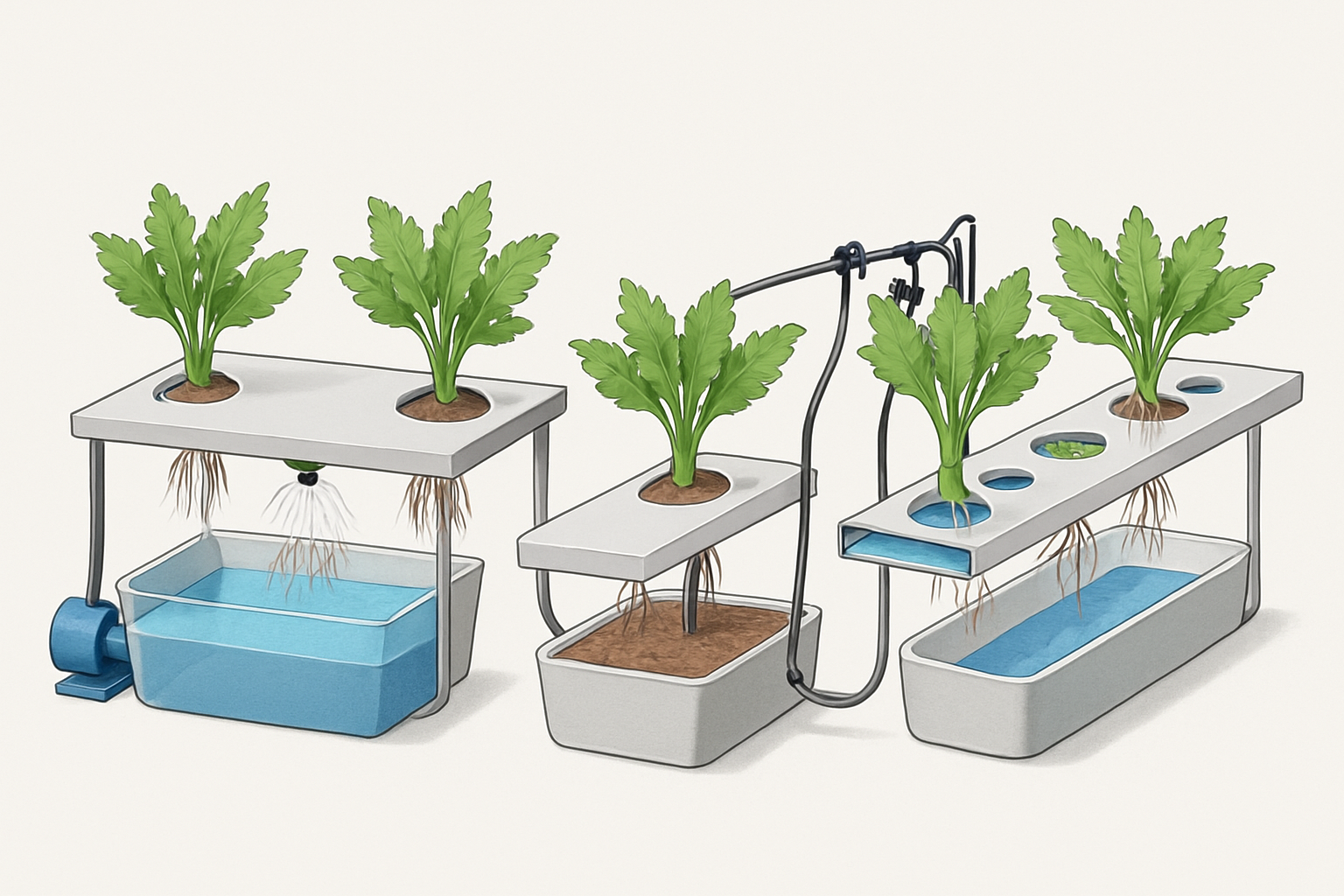
Among the various parameters that growers must track and manage in CEA systems, monitoring and regulating pH is particularly critical. pH levels directly influence the solubility and availability of nutrients in the root zone; in turn, this affects plant health, yield, and overall system efficiency. Despite its simplicity as a concept, pH is a subtle and dynamic factor that requires constant attention in any hydroponic or soilless growing system.
Understanding pH in the context of CEA
pH is a measure of the hydrogen ion concentration in a solution; in essence, it determines how acidic or alkaline that solution is. The pH scale ranges from 0 to 14, with 7 being neutral. Most crops in CEA systems prefer a slightly acidic root-zone environment, typically between 5.5 and 6.5, though optimal ranges may vary slightly depending on the crop species and growth stage.
In traditional soil-based agriculture, the buffering capacity of soil helps stabilise pH to some extent. In CEA systems, particularly those utilising hydroponics, aeroponics, or aquaponics, there is little or no such buffer. Nutrient solutions flow directly to the plant roots, so even minor fluctuations in pH can have a disproportionately large impact on nutrient uptake. For instance, at pH levels above 7.5, micronutrients such as iron, manganese, and zinc become chemically unavailable to many plants; conversely, highly acidic solutions may lead to toxicity or root damage.
The role of pH in nutrient availability and plant performance
The interplay between pH and nutrient chemistry is one of the most important relationships in soilless cultivation. Each essential nutrient, whether a macronutrient like nitrogen or potassium, or a trace element such as boron or molybdenum, has a preferred pH range in which it remains soluble and accessible to plants. A well-maintained pH ensures that the full nutrient profile remains available, avoiding deficiency symptoms that may otherwise arise even when the total nutrient content appears adequate.
In practical terms, a stable pH can improve fertiliser efficiency, reduce waste, and enhance the consistency of crop outcomes. It is particularly important in closed-loop systems, where nutrient solutions are recirculated. In these cases, biological processes such as root exudation, microbial activity, and nitrification can all shift the pH over time. Without proper monitoring and adjustment, these shifts can go unnoticed until they begin to impair plant health or reduce yields.
Methods of monitoring and regulation
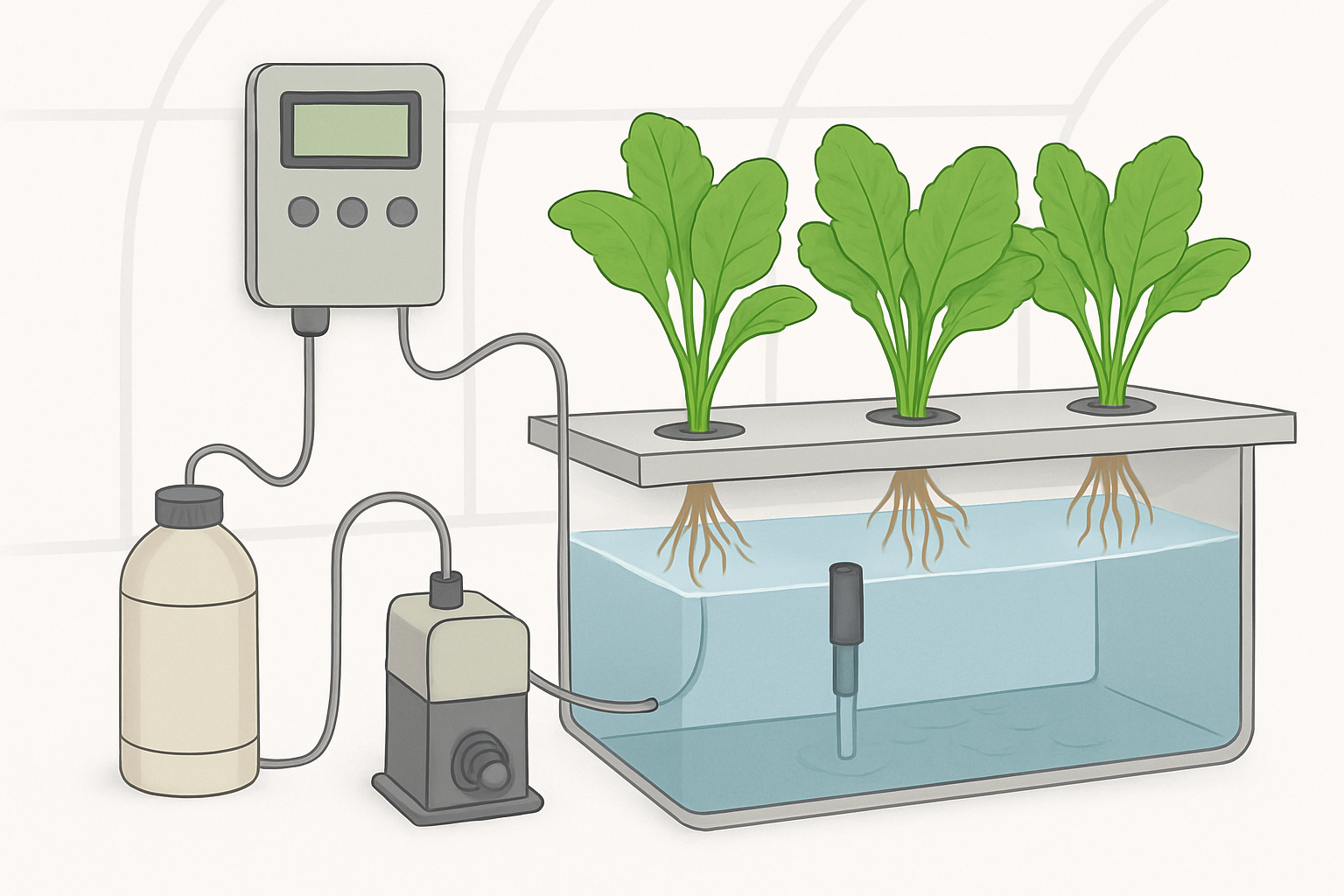
Monitoring pH in CEA involves either manual or automated techniques. Manual testing can be performed using colourimetric pH test kits or digital pH meters; while affordable and straightforward, these methods rely on frequent human intervention and calibration to remain accurate. Digital pH meters, in particular, must be regularly cleaned and calibrated with reference solutions to provide reliable data.
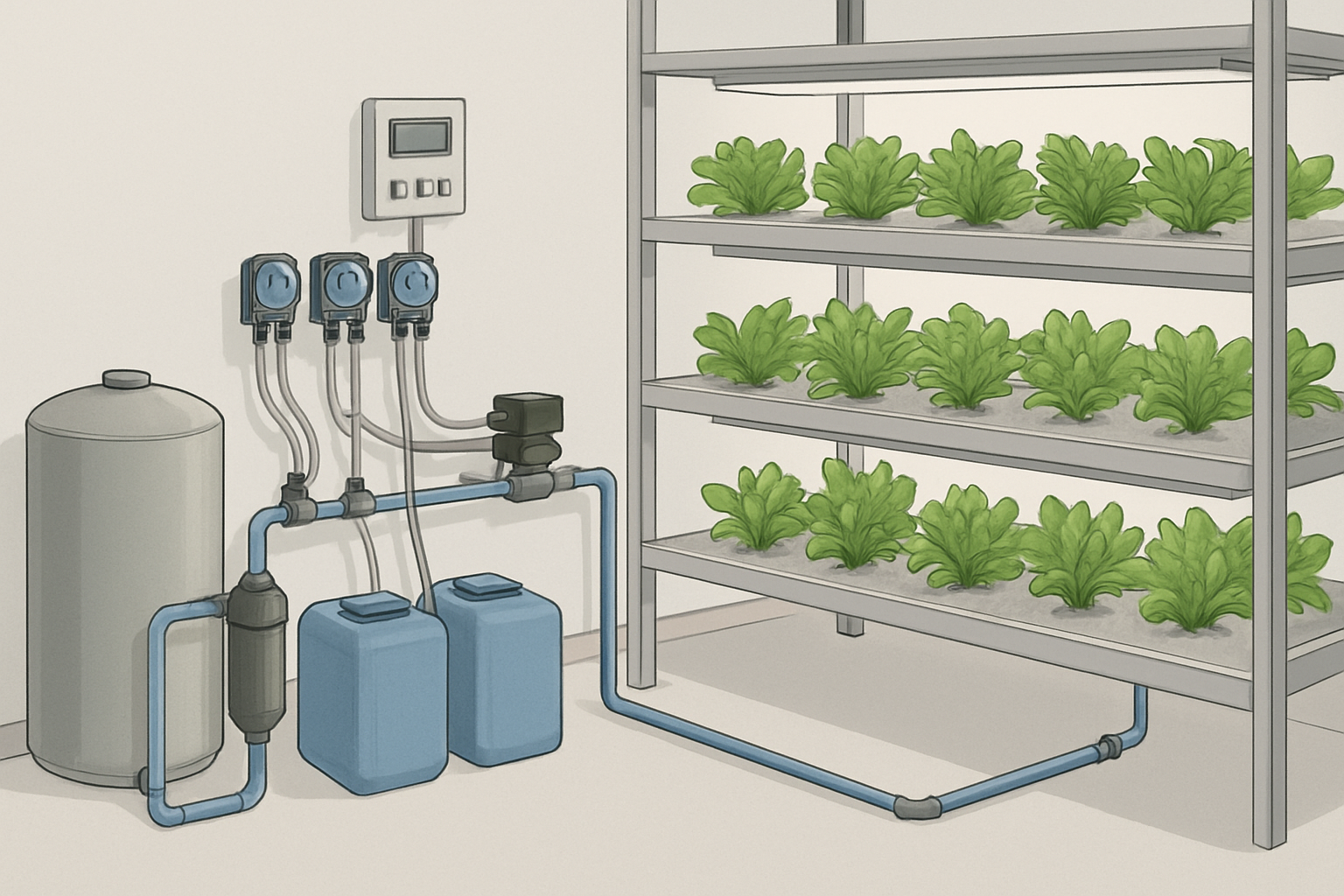
Automated systems, which can be integrated within fertigation units or environmental control platforms, can provide continuous pH monitoring and real-time adjustment. These systems use pH probes and dosing pumps to maintain the target range by injecting acid or alkali solutions when deviations occur. Although more expensive to install, automated pH regulation can significantly reduce the risk of human error, especially in large-scale or high-density operations.
Regardless of the chosen method, consistency is essential. Even a short period of exposure to inappropriate pH levels can cause stress or nutrient imbalances that affect a crop’s development. Furthermore, because pH interacts closely with other variables such as electrical conductivity (EC), temperature, and microbial activity, it must be interpreted in context as part of a broader management strategy.
Factors that influence pH in CEA environments
Several factors can cause pH drift in nutrient solutions. Among the most common are the type of fertiliser salts used, plant nutrient uptake ratios, biological activity in the root zone, and the source water characteristics. For example, when plants preferentially take up nitrate ions over ammonium, the root zone can become more alkaline over time. Conversely, heavy uptake of potassium or calcium can shift the pH in the opposite direction.
Water source quality is another important consideration. Many borehole or municipal water supplies contain dissolved bicarbonates, which act as a buffer and can make it harder to lower the pH. In such cases, pre-treatment of irrigation water with acid (commonly nitric or phosphoric) may be necessary to bring the baseline pH within a manageable range.
Moreover, in aquaponic systems, where fish waste provides the nutrient source, the biological processes of nitrification and mineralisation can influence pH dramatically. Here, the balancing act becomes more complex, as the ideal pH for plant uptake may not align perfectly with the preferred conditions for aquatic life or microbial activity.
Consequences of neglecting pH monitoring
Failure to monitor and regulate pH in CEA systems can lead to a cascade of problems, beginning with reduced nutrient uptake and progressing to visible deficiency symptoms, stunted growth, or poor-quality produce. In extreme cases, pH imbalances may promote pathogen growth or disrupt beneficial microbial communities, especially in root zone environments designed to support bioactivity. Over time, this can compromise the entire cultivation system, necessitating costly intervention and system flushing.
For commercial growers, the economic risks of ignoring pH are substantial. Nutrient inefficiency translates into wasted inputs and lower productivity. For researchers, inconsistent pH control can confound experimental results or mask the effects of other variables. Even in small-scale or educational setups, poor pH management undermines the reliability of the system and the learning experience it offers.
A foundational practice for all CEA systems
Whether managing a small hydroponic unit or a multi-hectare vertical farm, monitoring and regulating pH in CEA is not optional—it is foundational. It demands consistent attention, robust measurement tools, and a clear understanding of how pH interacts with plant physiology, nutrient chemistry, and system design. While modern automation can ease the operational burden, the underlying principles remain rooted in agronomic science and sound practice.
CEA represents a vision of precision-controlled food production, one that offers resilience, resource efficiency, and scalability. Within this paradigm, pH is not just a metric to be recorded, but a process variable that requires active engagement and strategic management. The more closely we understand and control it, the more consistently we can deliver high-quality, high-yield crops with minimal environmental impact.
In short, pH monitoring is not a minor detail; it is a critical aspect of system stewardship that directly influences performance, sustainability, and success in any controlled growing environment.