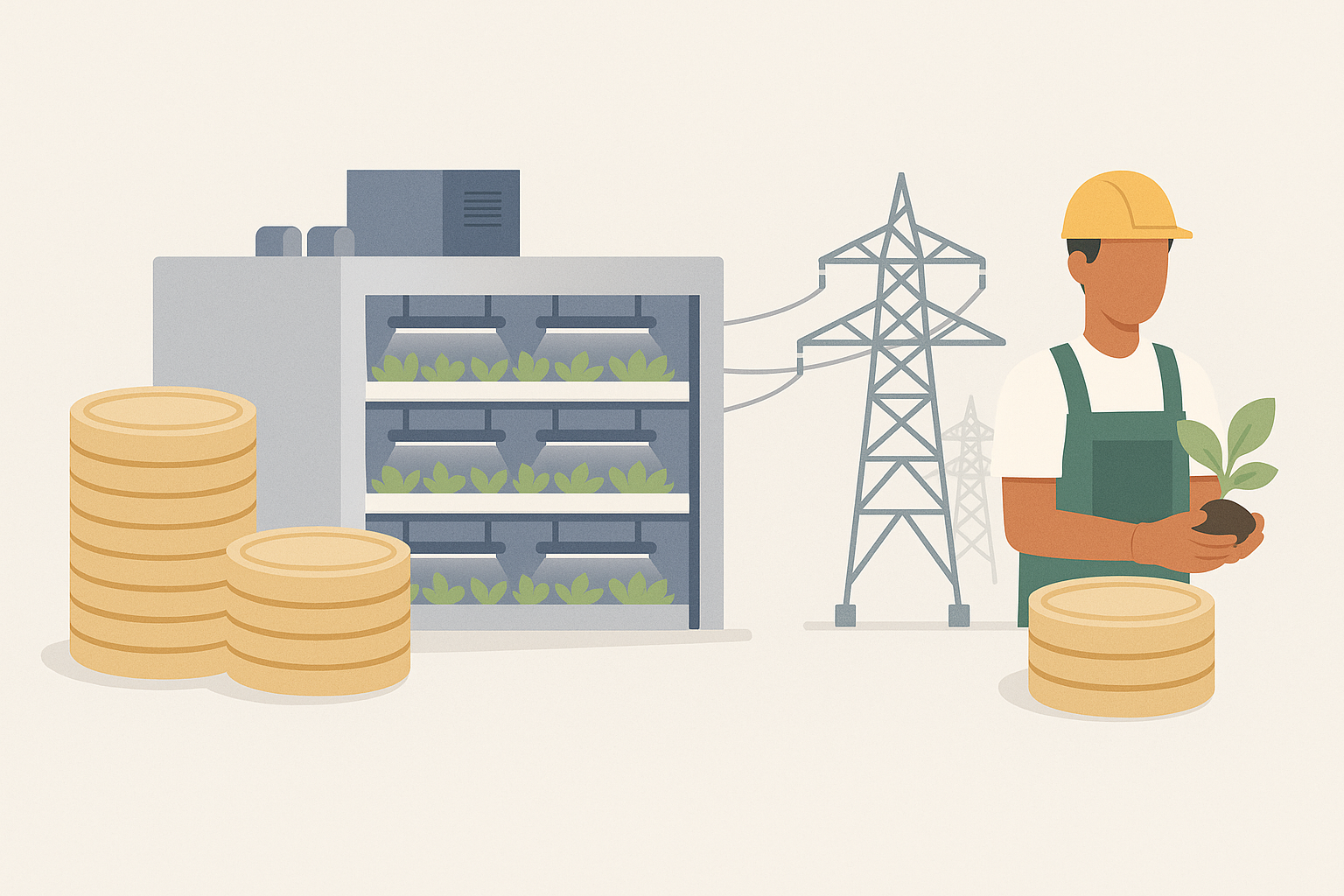
Controlled Environment Agriculture (CEA) and vertical farming are often presented as modern solutions to the challenges of food production in an era marked by climate uncertainty, urbanisation, and supply chain volatility. Yet behind the promise of consistent yields and localised food systems lies a central question: what are the true costs for indoor farming production, and how should they be understood by prospective growers, investors, and policymakers? Here we will consider the capital and operational costs associated with CEA, outlining why they matter and how they shape the viability of indoor farms.
Capital expenditure: the foundation of an indoor farm
Capital expenditure (CAPEX) refers to the upfront costs required to design, build, and equip a CEA facility. These costs vary widely depending on scale, location, and production method, but they invariably represent a significant challenge, which increase with scale and complexity of production system design. For small-scale vertical farms located in urban environments, CAPEX may be driven largely by the expense of retrofitting buildings, procuring LED lighting, climate control systems, and automation equipment. For larger commercial facilities, costs extend further to include land purchase or long-term lease agreements, purpose-built structures, water purification and recirculation systems, advanced monitoring and automation approaches, and in some cases renewable energy infrastructure.
Industry estimates suggest that CAPEX for vertical farms can range from several hundred pounds per square metre for a modest pilot site to several thousand pounds per square metre for high-tech, fully automated facilities. Such variation highlights a core challenge for new entrants: the capital intensity of CEA demands both a clear understanding of technology requirements and robust financial planning before operations begin. Unlike open-field farming, where land and machinery costs are significant but largely static, capital requirements in indoor farming evolve alongside rapid technological advances, making early choices about lighting, climate control, and system design especially consequential.
Operational expenditure: the ongoing burden of production
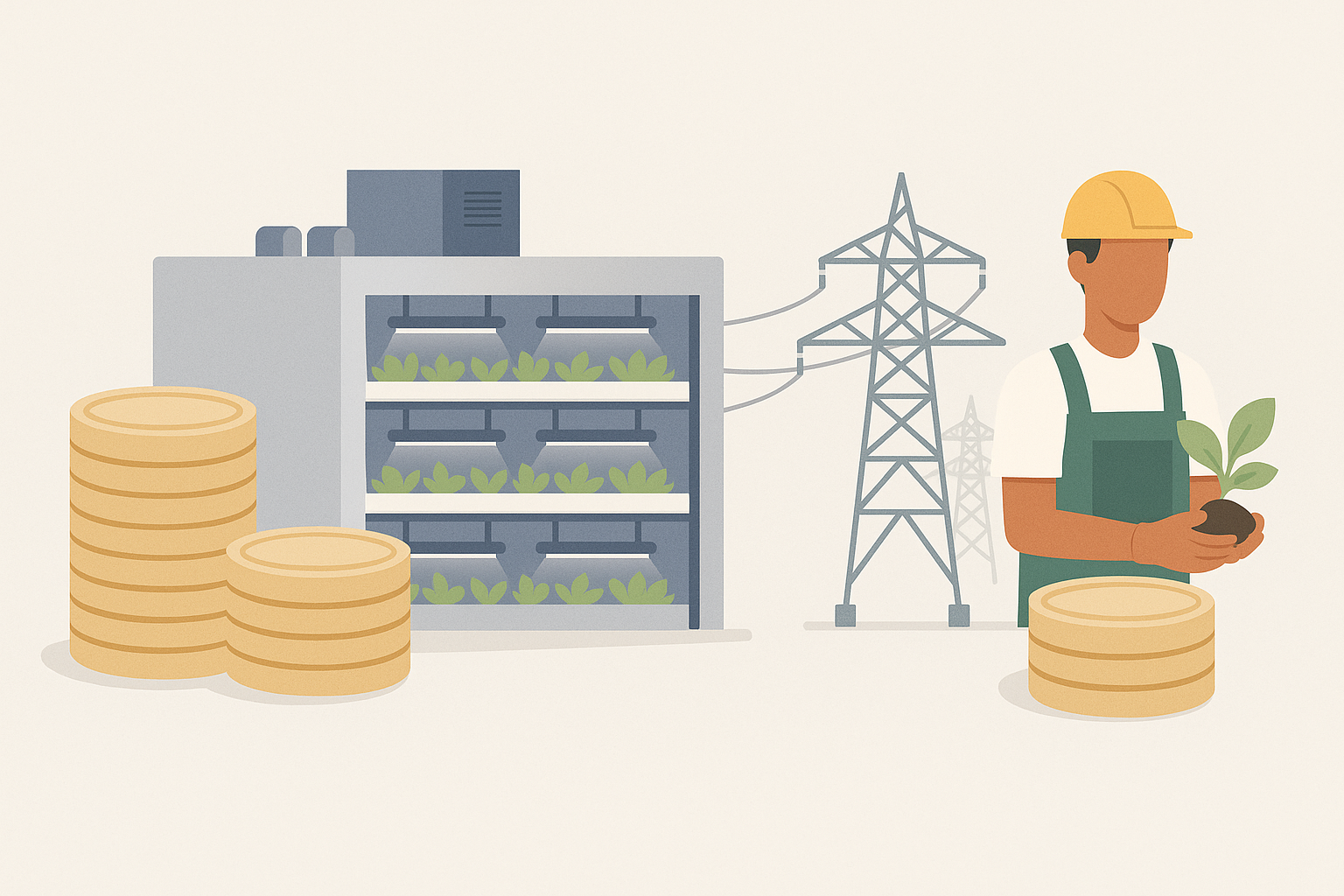
While capital outlay is substantial, operational expenditure (OPEX) is the recurring cost of keeping the system running day to day. For indoor farming production, operational costs typically include electricity, labour, consumables such as seeds, substrates, and nutrients, water treatment, packaging, distribution, and maintenance of equipment. Among these, electricity is often the single largest cost driver, sometimes accounting for up to 50% of total OPEX, owing to the high energy demands of LED lighting, HVAC systems, and pumps for hydroponic or aeroponic circulation – though this is highly variable across production systems, for a range of factors.
Labour represents another critical component. Although automation technologies promise reductions in labour intensity, many vertical farms still require skilled staff for seeding, transplanting, harvesting, and quality control. Labour costs can fluctuate depending on local wage levels and the complexity of production systems. In contrast, inputs such as fertilisers, nutrients, and growing media tend to represent a smaller but still essential proportion of OPEX. Maintenance and replacement of key equipment, particularly LEDs and HVAC units, add further recurring expenses that must be incorporated into financial planning.
Balancing CAPEX and OPEX: the search for efficiency
The relationship between capital and operational costs is not straightforward; choices made in one area inevitably influence the other. For example, investment in high-efficiency LED lighting and well-designed HVAC systems may increase initial capital requirements but reduce long-term energy expenditure. Similarly, advanced automation systems carry significant upfront cost but can substantially lower labour expenditure over time. The balance between CAPEX and OPEX is therefore one of the most important strategic considerations for indoor farm operators, shaping both profitability and resilience.
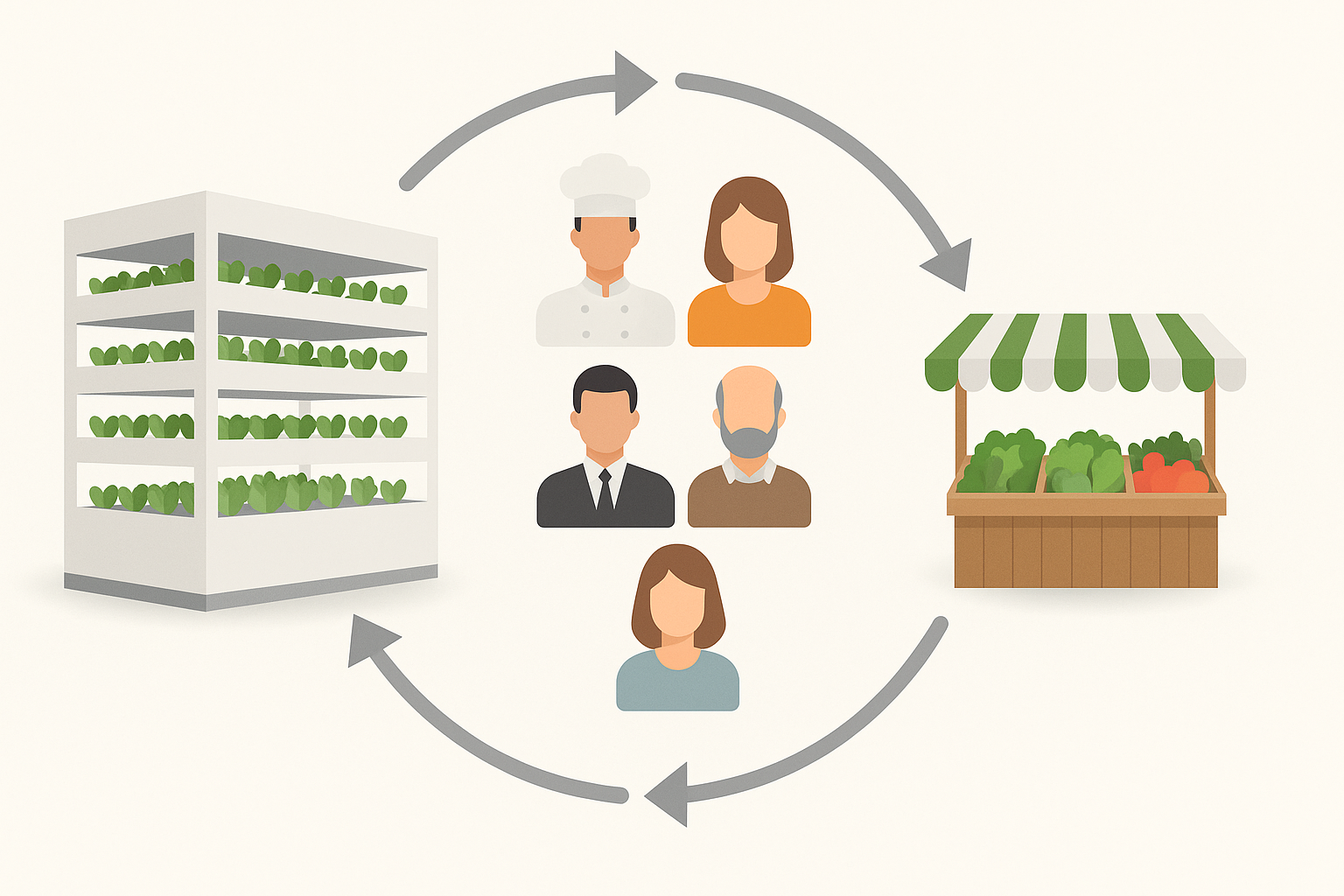
This balance is particularly critical when considering economies of scale. Larger facilities can often spread fixed costs over greater volumes of production, improving efficiency per unit output. However, this scaling process also intensifies financial exposure, meaning that errors in system design or underestimation of operational burdens can become costly. Furthermore, in food production, economies of scale may depress the value of a single item of produce; in a production system with high operating overheads such as a vertical farm, achieving high produce output rates may require consideration of resulting product values. For smaller urban farms, by contrast, lower capital intensity may reduce risk, but higher relative operating costs can constrain profitability unless carefully managed through niche markets or direct-to-consumer models.
Financial implications for different stakeholders
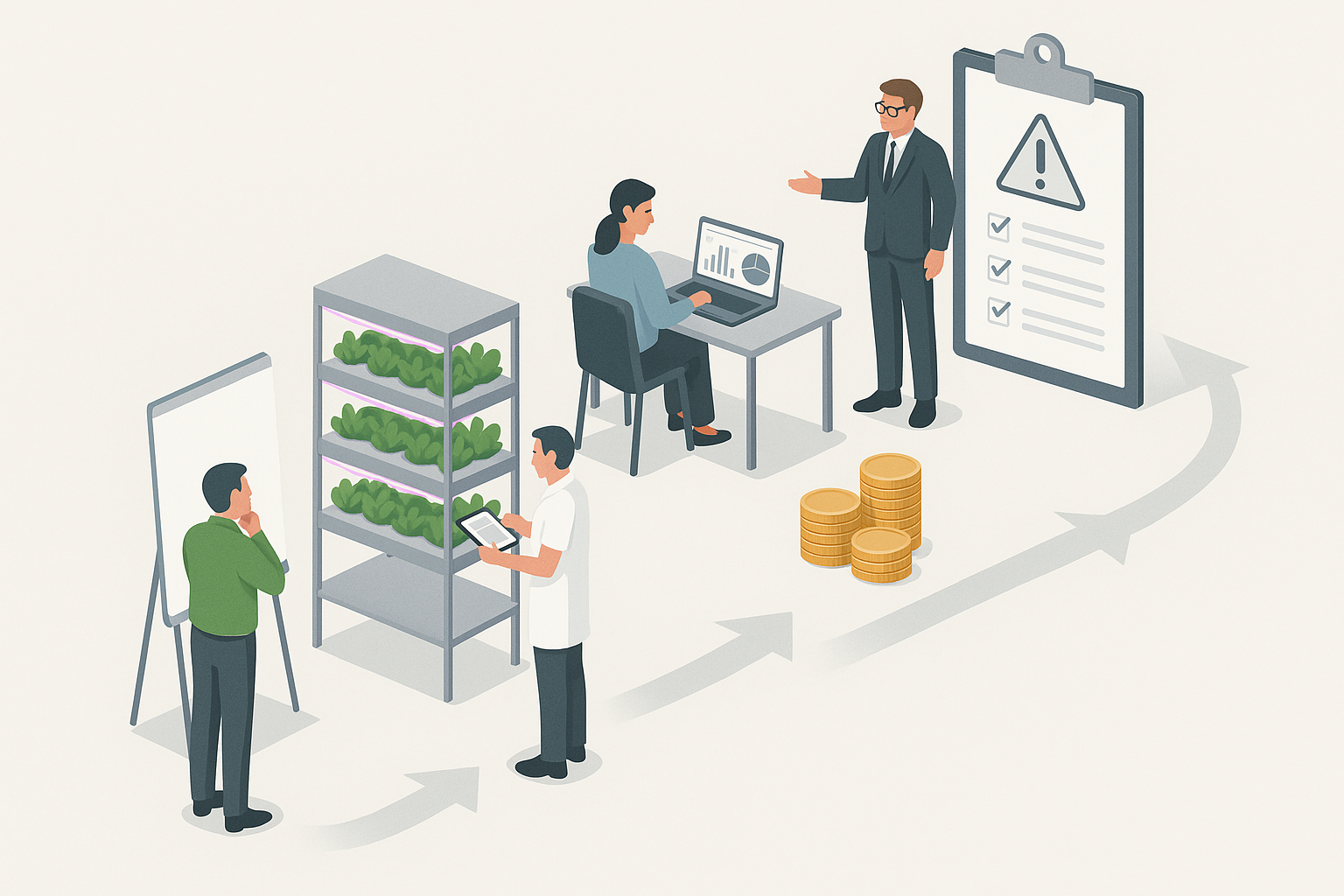
Understanding the costs of indoor farming production has implications well beyond the grower. For investors, capital and operational costs shape the risk-return profile of CEA ventures, influencing funding decisions and expectations for profitability. For policymakers, awareness of these costs is essential in designing supportive frameworks such as energy subsidies, research grants, or incentives for renewable integration. For researchers and technology developers, the cost structure informs the priority areas for innovation, particularly in energy efficiency, automation, and materials science.
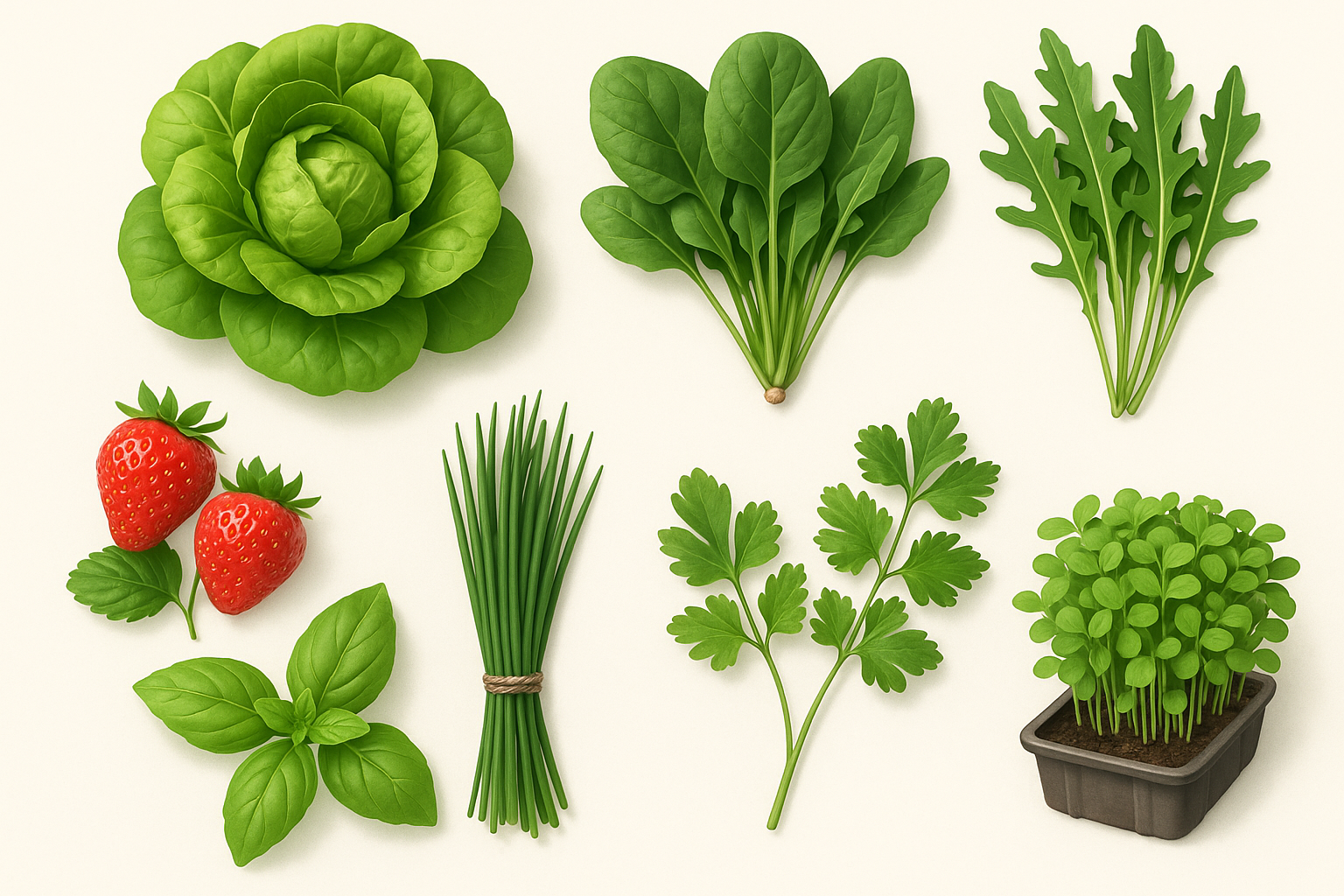
Case studies suggest that financial success in vertical farming often depends less on achieving the lowest possible capital outlay and more on carefully aligning system design with market strategy. Farms designed for premium leafy greens in affluent urban centres may justify higher capital and energy costs if consumer demand supports premium pricing. Conversely, facilities targeting staple crops face a different economic equation, where cost efficiency becomes paramount.
The broader context: cost trends and future outlook
The economics of CEA are not static; they evolve alongside technological advances, energy markets, and climate policy. Over the past decade, the cost of LED lighting has fallen significantly, reducing one of the largest initial barriers to entry. At the same time, volatile energy prices, particularly in Europe and Asia, have exposed the vulnerability of electricity-dependent systems. Looking ahead, integration of renewable energy sources, improved heat recovery technologies, and more efficient automation are likely to reduce operational costs.
However, the sector will continue to face structural financial challenges. High capital intensity makes financing complex, and operational margins remain narrow compared to traditional agriculture. The success of CEA in scaling beyond niche markets will depend on continued improvements in cost efficiency, alongside recognition of the broader social and environmental value of localised, climate-resilient food systems.
This last point is perhaps most germane. In a future where traditional food production is threatened, governments may need to support CEA enterprises to ensure ongoing production of fresh produce. This will undoubtedly take the form of subsidies, as has been the case in traditional agriculture, and may alter the economic viability and opportunity for CEA systems considerably.
Conclusion
Capital and operational costs are the defining factors in determining the viability of indoor farming production. These are complex and multifaceted, making effective financial planning, that is broad in scope, necessary for any burgeoning venture. For those considering investment or participation in CEA, understanding these costs in detail is essential to making informed decisions. As the sector matures, careful balancing of capital intensity, operational efficiency, and market positioning will determine which indoor farms succeed, and which struggle to remain viable in an increasingly competitive food production landscape.