Understanding the potential for return on investment (ROI) for an indoor farming system is a central concern for anyone considering entering the field of Controlled Environment Agriculture (CEA). Whether the motivation is to create a profitable business, supply resilient food systems, or demonstrate innovative technology, the capacity of an indoor farm to provide a viable financial return is the measure by which it will ultimately be judged. In its simplest form, ROI is the balance between any upfront costs (capital or otherwise), ongoing operational demands, and the potential for long-term revenue growth in an industry still defining its economic boundaries. However the many factors that can affect the potential for profitability in a CEA production system may mean the reality is more complex.
Why ROI Matters in Indoor Farming
Return on investment has a particular importance in vertical farming because the model is both capital intensive and operationally demanding. Indoor production requires sophisticated infrastructure: controlled lighting, HVAC and CO2 systems, automated irrigation, and often high-density modular growing racks. These facilities must be financed, constructed, and maintained, which requires upfront investment before any crops can begin development. At the same time, energy, labour, and inputs such as seeds and nutrients create ongoing operational costs. Investors, policymakers, and growers alike seek a clear understanding of how quickly, and to what degree, these expenses can be offset by reliable yields and premium market pricing.
Components of Investment
The starting point for ROI assessment is an accurate grasp of capital expenditure. This may include the cost of land or building leases, retrofitting or new build facilities, LED lighting systems, hydroponic or aeroponic infrastructure, automation technologies, and environmental monitoring equipment. The capital outlay is dependent on facility and operation size, and can be measured in millions rather than thousands for large commercial-scale facilities. Equally, small-scale operations can be established with much greater parsimony; these typically aim for lower levels of environmental control, with potentially less sophisticated technology, but may develop production models that are profitable more quickly, via direct to consumer sales.
In addition to capital costs is operational expenditure. Here, the most significant factors are electricity (for lights, environmental control), water use, nutrient solutions, labour, packaging, distribution, maintenance, and miscellaneous costs such as software subscriptions, etc. Unlike capital expenditure, which is front-loaded, these operational costs accumulate continuously and must be factored in to ultimate cost of goods sold (COGS) calculations. Developing a product and price point that covers COGS with sufficient additional profit is the base requirement for initial ROI.
Revenue Potential and Market Dynamics
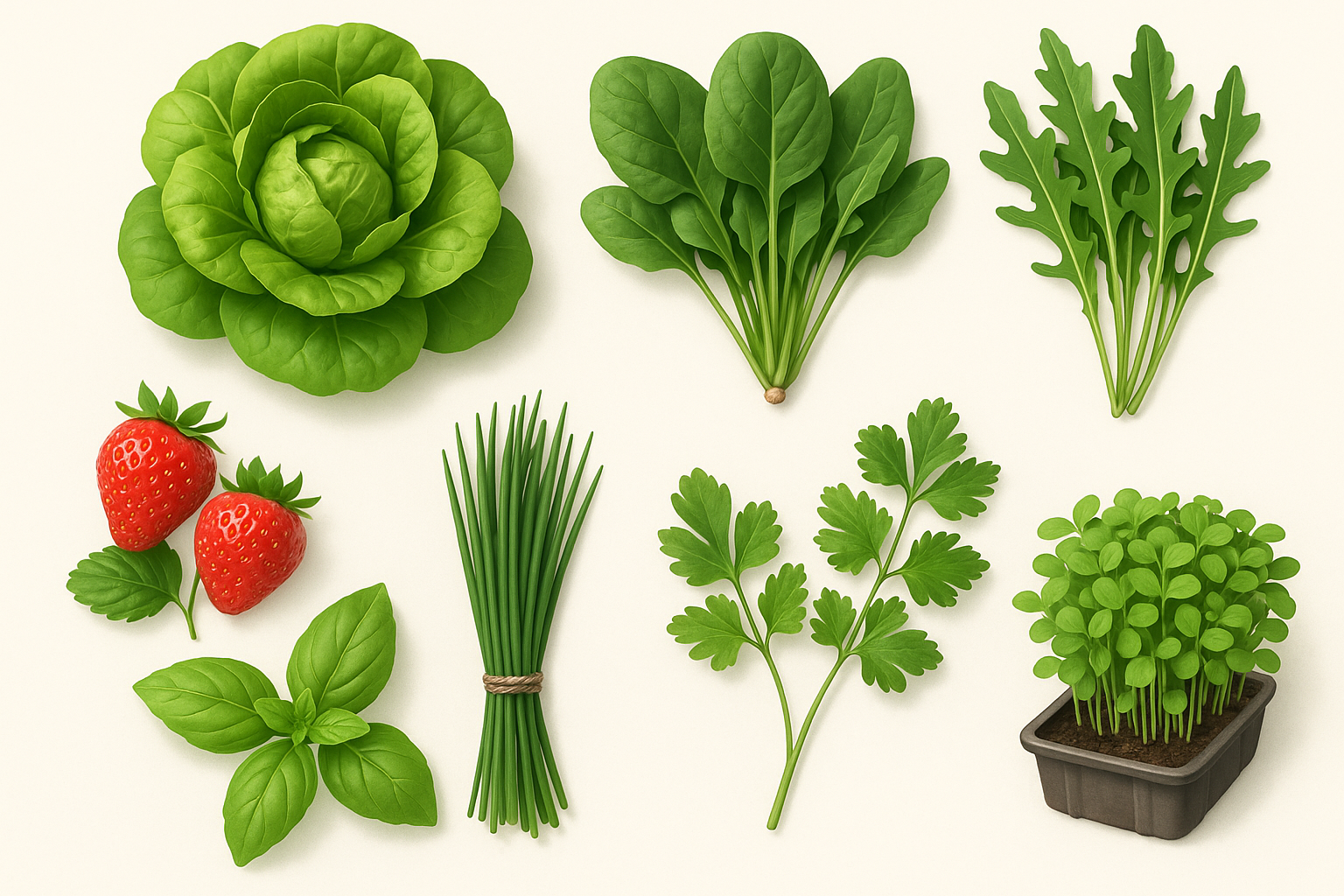
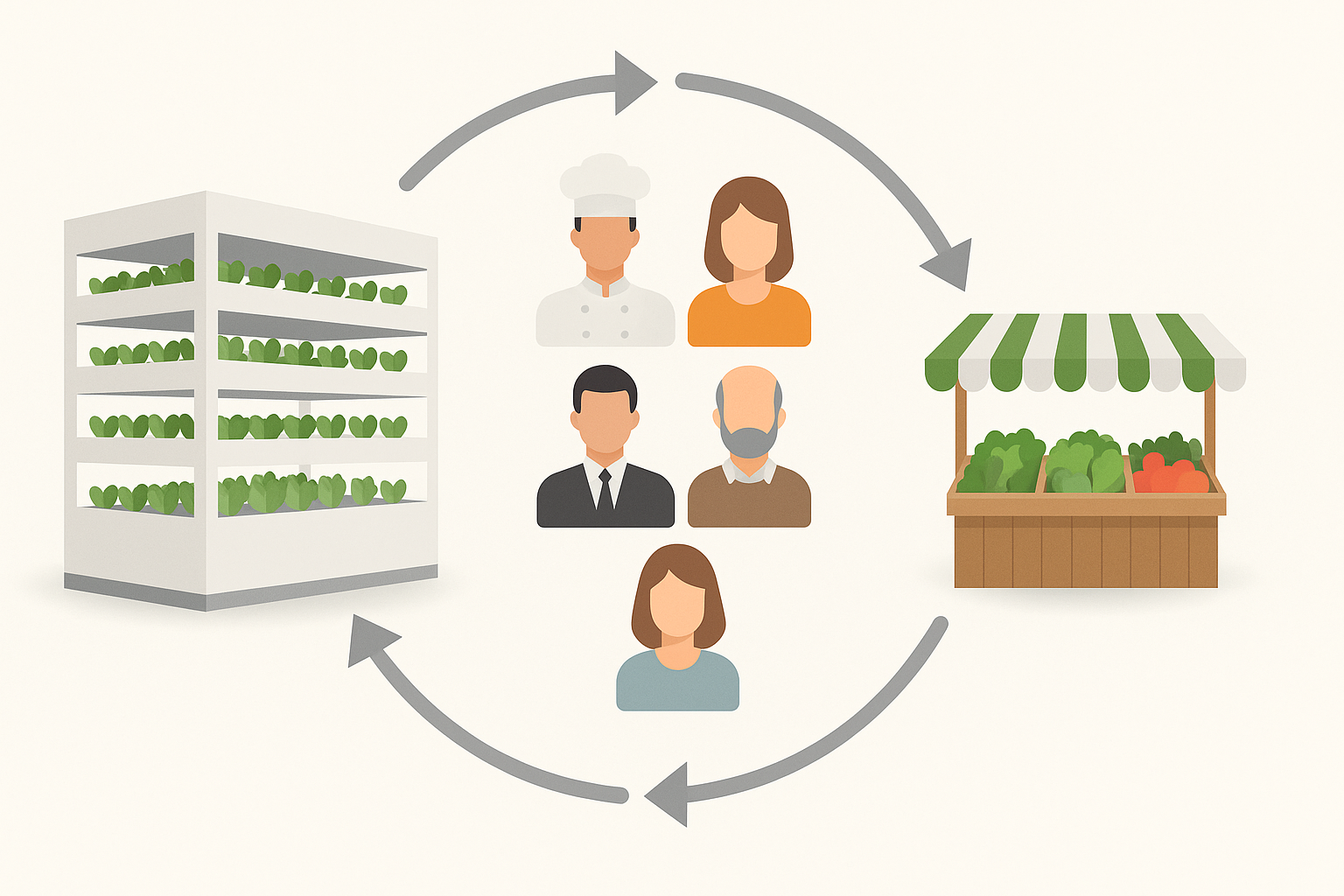
ROI in Indoor farming systems depends heavily on the crops selected and the markets served. High-value crops such as pharmaceutical plants, microgreens, herbs, and other leafy greens often command premium prices, especially in urban centres where freshness and consistency are valued. However, the market is not static: competition, changing consumer preferences, and broader agricultural supply fluctuations influence price stability. Additionally, indoor farms may secure revenue through contracts with retailers and restaurants, direct-to-consumer sales, or integration into local supply chains. Each channel carries its own margin implications and risks.
There is also scope for diversification of income. Some farms provide consultancy, licence their technology, or open their facilities to research and education partnerships. While these may not form the core of financial returns, they can improve the resilience of an enterprise and shorten the perceived time to break-even.
Calculating Indoor Farming ROI
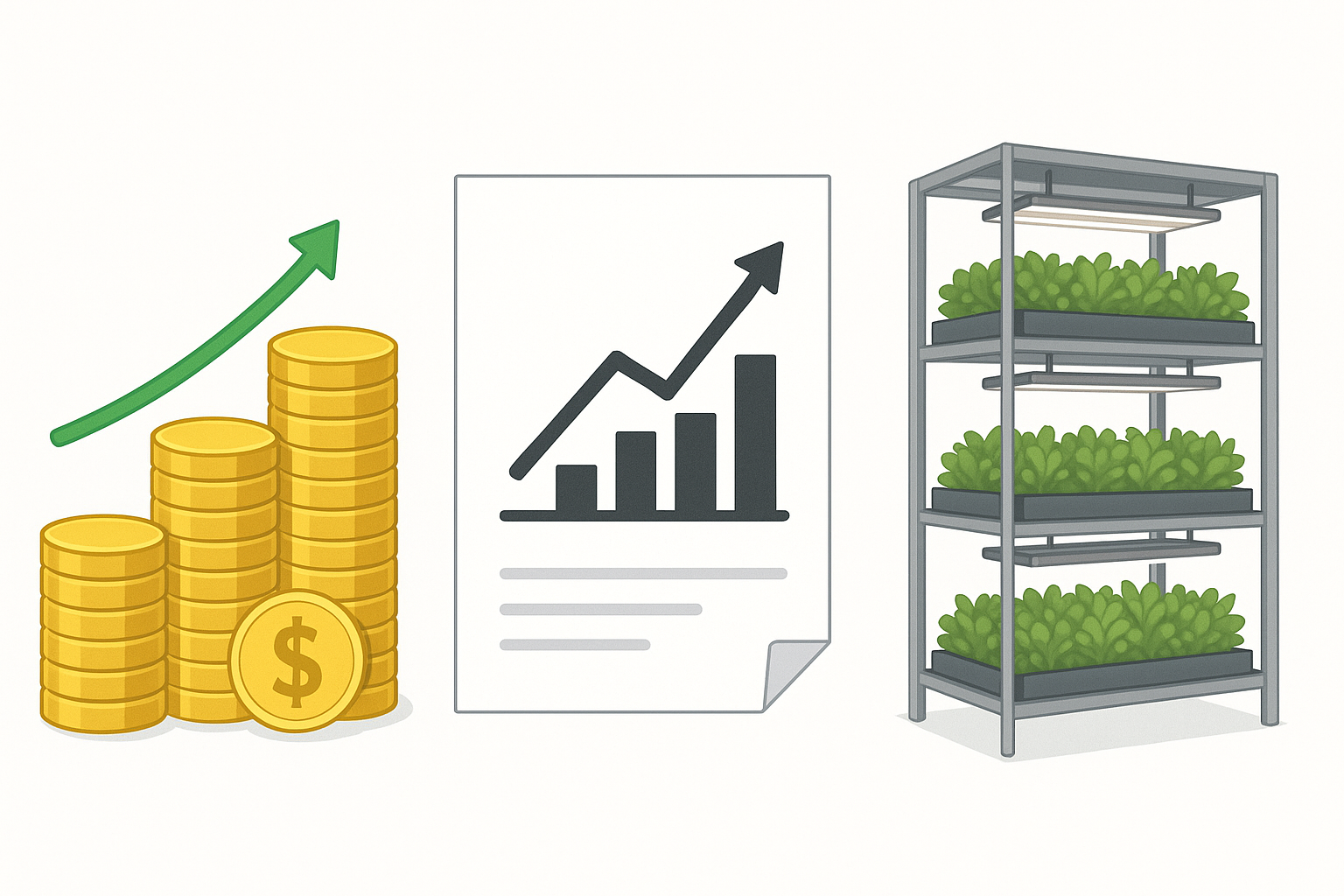
The most straightforward calculation of ROI compares net profit to total investment. In practice, this means subtracting annual operating costs from gross revenue, then comparing the result with the total capital invested. However, the calculation must account for more than simple profitability in the first year. Cash flow projections, payback period, internal rate of return (IRR), and net present value (NPV) all offer a more nuanced picture of long-term viability.
For example, a vertical farm with a £5 million initial investment might generate £1.5 million in revenue per year, with operating costs of £1 million. The resulting net profit of £0.5 million suggests an ROI of 10 percent annually, implying a 10-year payback period. Yet this is an idealised scenario: fluctuations in energy prices, shifts in market demand, and technological upgrades all alter the trajectory. Sensitivity analysis and scenario modelling are therefore vital tools in presenting ROI to investors and stakeholders.
The Role of Efficiency and Innovation
One of the strongest determinants of indoor farming return on investment is operational efficiency. Incremental improvements in lighting efficiency, HVAC or other environmental control optimisation, water recapture, and automation can drastically improve margins. For instance, high-efficiency LEDs may reduce electricity consumption by 20%, leading to thousands of pounds in annual savings for large facilities. Similarly, labour automation, while costly upfront, may reduce long-term dependency on human operators in repetitive tasks such as seeding, transplanting, or harvesting.
The integration of digital tools such as digital twins, AI-driven environmental controls, and predictive analytics also influences ROI. These systems allow for fine-tuning of environmental conditions, reducing waste and improving consistency, which in turn enhances market reputation and revenue stability.
Risks and Uncertainties
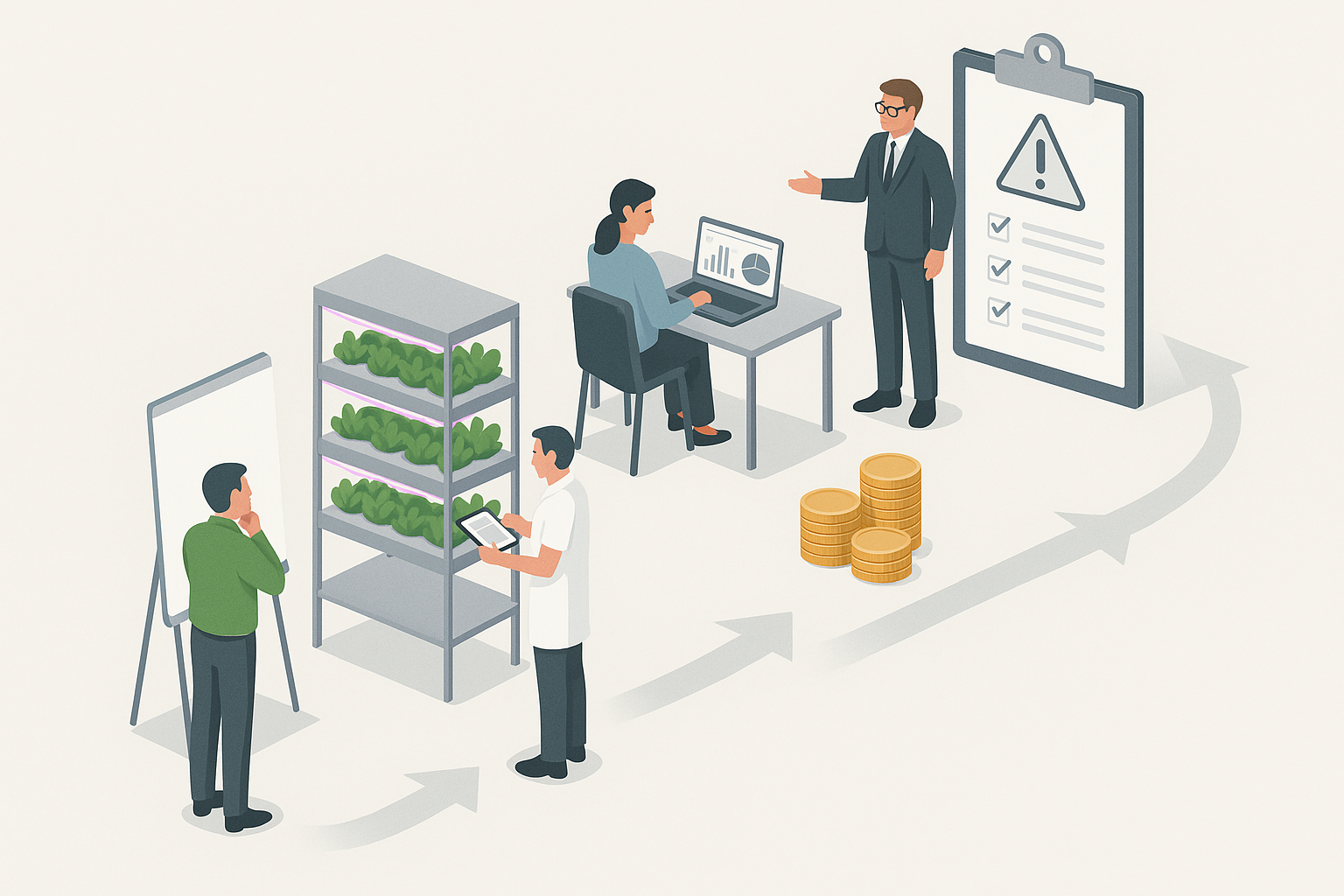
Calculating ROI in vertical farming is not without uncertainty. Energy prices are volatile, as seen in recent years, and they constitute a dominant proportion of operational costs. Market saturation, particularly in urban centres where many indoor farms compete for the same retail contracts, may compress margins. Policy frameworks, such as subsidies for renewable energy or support for sustainable agriculture, can either improve or undermine ROI calculations. Investors must therefore weigh not only technical and financial aspects but also policy and market conditions.
Broader Implications
The pursuit of indoor farming ROI is not solely a financial question. It intersects with environmental goals, food security, and urban planning. Policymakers view ROI alongside social returns: reduced food miles, lower pesticide use, and enhanced resilience of supply chains. For communities, ROI can mean the creation of skilled jobs and the provision of fresh produce in food deserts. For entrepreneurs, it is the foundation of a viable business model. Thus, while ROI is an essential measure of financial health, it is also part of a larger debate on the role of technology in reshaping agriculture.
Conclusion
Indoor farming return on investment represents both the promise and the challenge of CEA. It is a calculation rooted in rigorous assessment of costs and revenues, yet shaped by variables such as technology, market dynamics, and sustainability imperatives. As more data emerges from commercial operations worldwide, models for predicting ROI are becoming more refined, offering greater confidence to investors and growers. However, ROI should not be viewed as a static figure but as a living measure: one that evolves with each improvement in efficiency, each shift in market behaviour, and each step towards sustainable production.
DIY Science!
Example Calculation: Small-Scale Vertical Farm
Scenario:An entrepreneur is considering setting up a 200 m² vertical farm in an urban warehouse space to produce leafy greens and herbs for local restaurants and farmers’ markets. Note: these are broad general costs estimations for example purposes only!
1. Capital Expenditure (CAPEX)
- Warehouse fit-out (insulation, flooring, plumbing, HVAC): £40,000
- Multi-tier hydroponic racks with LED lighting (10 racks, 5 levels each): £50,000
- Environmental control and automation systems (sensors, pumps, climate controls): £15,000
- Packaging and post-harvest equipment: £5,000
- Miscellaneous (other equipment - i.e. IT, contingency): £10,000
Total CAPEX: £120,000
2. Operational Expenditure (OPEX, per year)
- Electricity (lighting, HVAC, pumps): £25,000
- Labour (1 full-time operator, part-time assistant): £22,000
- Seeds and nutrients: £8,000
- Packaging and logistics: £5,000
- Rent and insurance: £15,000
- Maintenance and other overheads: £5,000
Total OPEX: £80,000 per year
3. Revenue Projection
- Production capacity: 200 m² × 10 crop cycles per year × 3 kg per m² per cycle = 6,000 kg per year
- Average selling price (leafy greens and herbs to restaurants, premium quality): £15 per kg
Gross revenue: 6,000 × £15 = £90,000 per year
4. Net Profit and ROI
- Gross revenue: £90,000
- OPEX: £80,000
- Net profit (before tax and depreciation): £10,000 per year
ROI calculation:ROI = (Net profit ÷ CAPEX) × 100ROI = (£10,000 ÷ £120,000) × 100 = 8.3 percent per year
Payback period:£120,000 ÷ £10,000 = 12 years
Interpreting the Example
This (very) simple model suggests that a small-scale vertical farm with high operating costs and modest scale will have a relatively long payback period, but it is intended to offer a conservative estimation. Profitability could improve through:
- Higher-value crops (microgreens, speciality herbs, or direct-to-consumer sales at premium prices).
- Production optimisation (improved crop outcomes, reduced time to harvest = more harvests)
- Energy optimisation (approaches to reduce energy expenditure, to save money).
- Diversified revenue streams (farm tours, workshops, B2B supply contracts).
- Grant income (governmental support for business innovation)