Selecting what to grow is undoubtedly a critical decision for any controlled environment agriculture (CEA) enterprise. The choice of crop directly affects technical design, operating costs, and economic returns. For many new entrants, the question is framed simply: what are the best crops for indoor farming systems? The answer is more nuanced. Success depends not only on biological performance but also on market demand, production economics, and long-term business strategy. Salad greens, herbs, strawberries, and emerging niche crops have all been trialled with varying degrees of commercial success. This summary introduces the topic by outlining key considerations and providing context for why crop choice matters so fundamentally.
Why crop choice matters in CEA
Unlike conventional farming, where climate and soil largely dictate what can be grown, CEA systems offer a high degree of control over temperature, humidity, light, and nutrient supply. This control makes it technically possible to cultivate a wide range of crops throughout the year. Yet not all crops are equally suited. Some species, such as lettuce or basil, have rapid growth cycles, high yields per unit area, and consistent market demand, which align well with the fixed costs of an indoor farm. Others, such as cereals or root vegetables, are far less viable in a high-energy, high-technology environment due to their long growth periods and comparatively low market price. Choosing the right crop therefore requires balancing biological feasibility with economic rationale.
Salad greens as a foundation crop
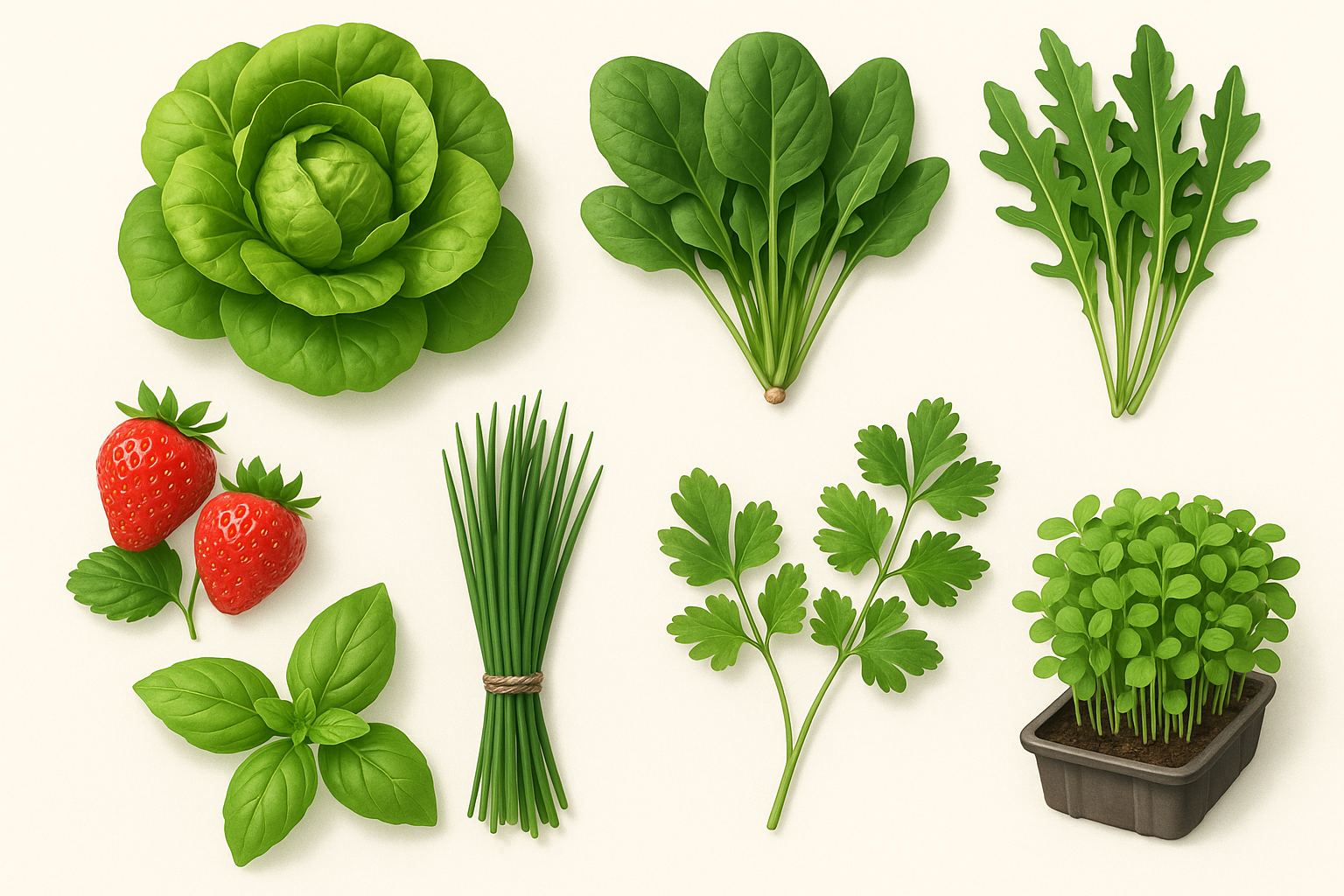
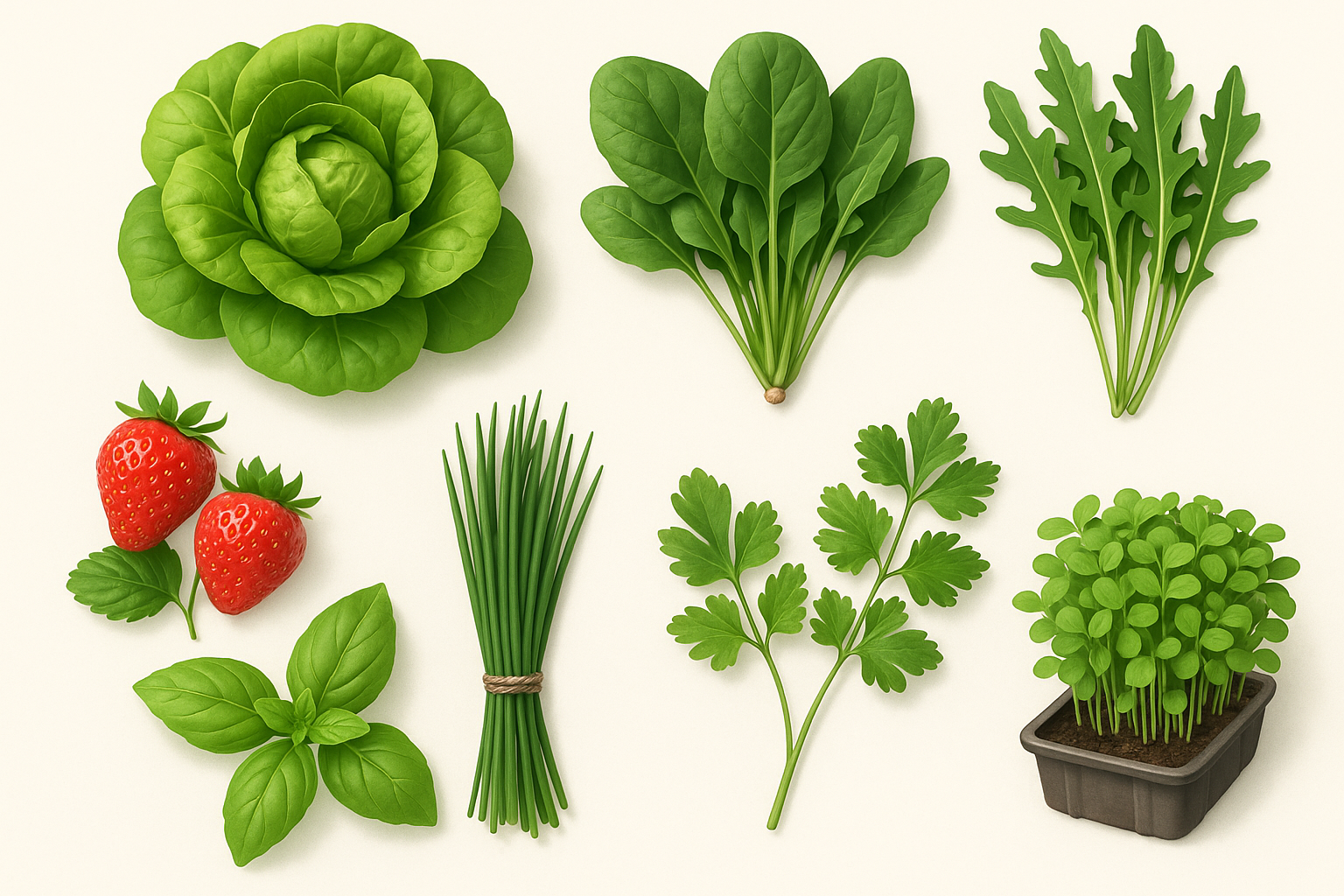
Lettuce, spinach, rocket, and similar leafy greens remain the backbone of most commercial vertical farms. They are relatively lightweight, grow quickly, and can be harvested multiple times depending on the system. Importantly, they are widely consumed and already familiar to retail and food service markets. From an operational perspective, leafy greens are forgiving: they tolerate a range of environmental parameters and show fewer structural stresses in hydroponic or aeroponic systems than more complex fruiting plants. Their short crop cycle allows for rapid turnover, making them particularly suitable for small-scale pilots and commercial scaling alike.
Herbs and culinary value
Culinary herbs such as basil, mint, coriander, and parsley are also regarded as some of the best crops for indoor farming systems. They have high unit value, are often used fresh, and degrade quickly in conventional supply chains. This means local CEA production offers a genuine advantage by delivering improved freshness and flavour. From a growing standpoint, herbs benefit from similar conditions to salad greens, although some require careful calibration of photoperiod and nutrient balance to avoid premature flowering. As with greens, the short production cycle supports year-round supply and strong margins. However, demand for specific herbs can be niche and regional, so market research is vital.
Strawberries and fruiting crops
Strawberries are a notable example of a fruiting crop increasingly explored in vertical farms. They are highly valued by consumers, often imported over long distances, and present opportunities for local premium production. Yet they are more complex to grow. They require pollination management, more sophisticated lighting strategies, and longer crop cycles than leafy crops. Energy demand per kilogram of strawberries can be substantially higher than that for lettuce. For this reason, strawberries are generally grown in high-value urban markets where consumer willingness to pay offsets the increased cost of production. Research and pilot projects in Japan, the United States, and parts of Europe have demonstrated promising yields, but large-scale commercial models are still emerging.
Niche crops and differentiation
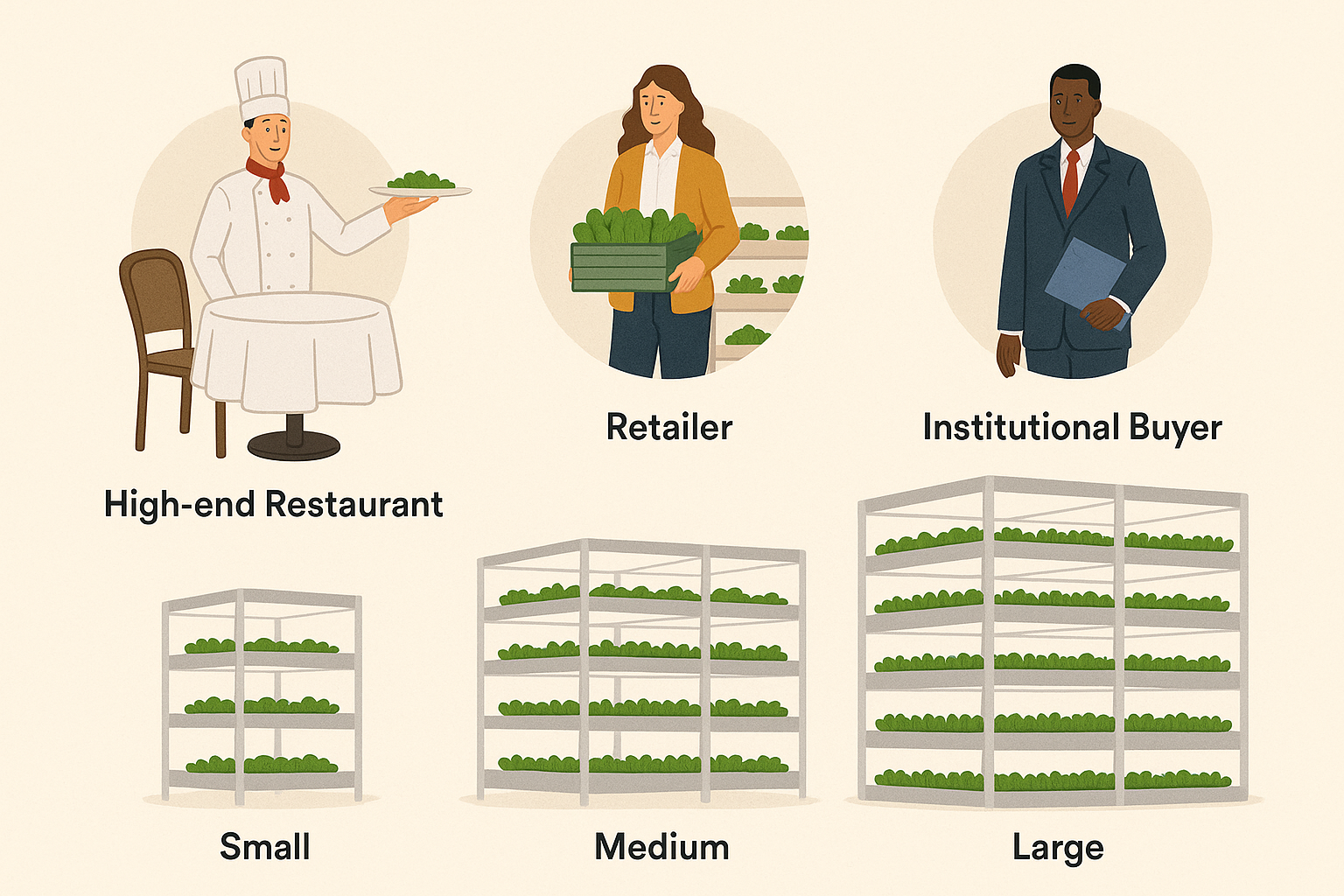
Beyond staples such as greens and herbs, some vertical farms are experimenting with niche products: edible flowers, microgreens, exotic salad mixes, or pharmaceutical plants. These crops can command exceptionally high value in specialised markets such as fine dining, nutraceuticals, or cosmetics. They also highlight one of the opportunities of CEA: the ability to produce plants with consistent phytochemical profiles or unique visual qualities regardless of external climate. The risk is that such markets are smaller and more volatile. Farms pursuing this route must be agile, able to switch crops rapidly, and deeply engaged with their customer base. Niche crops are rarely a first choice for large-scale systems, but they offer potential for differentiation and brand building.
Balancing biology and economics
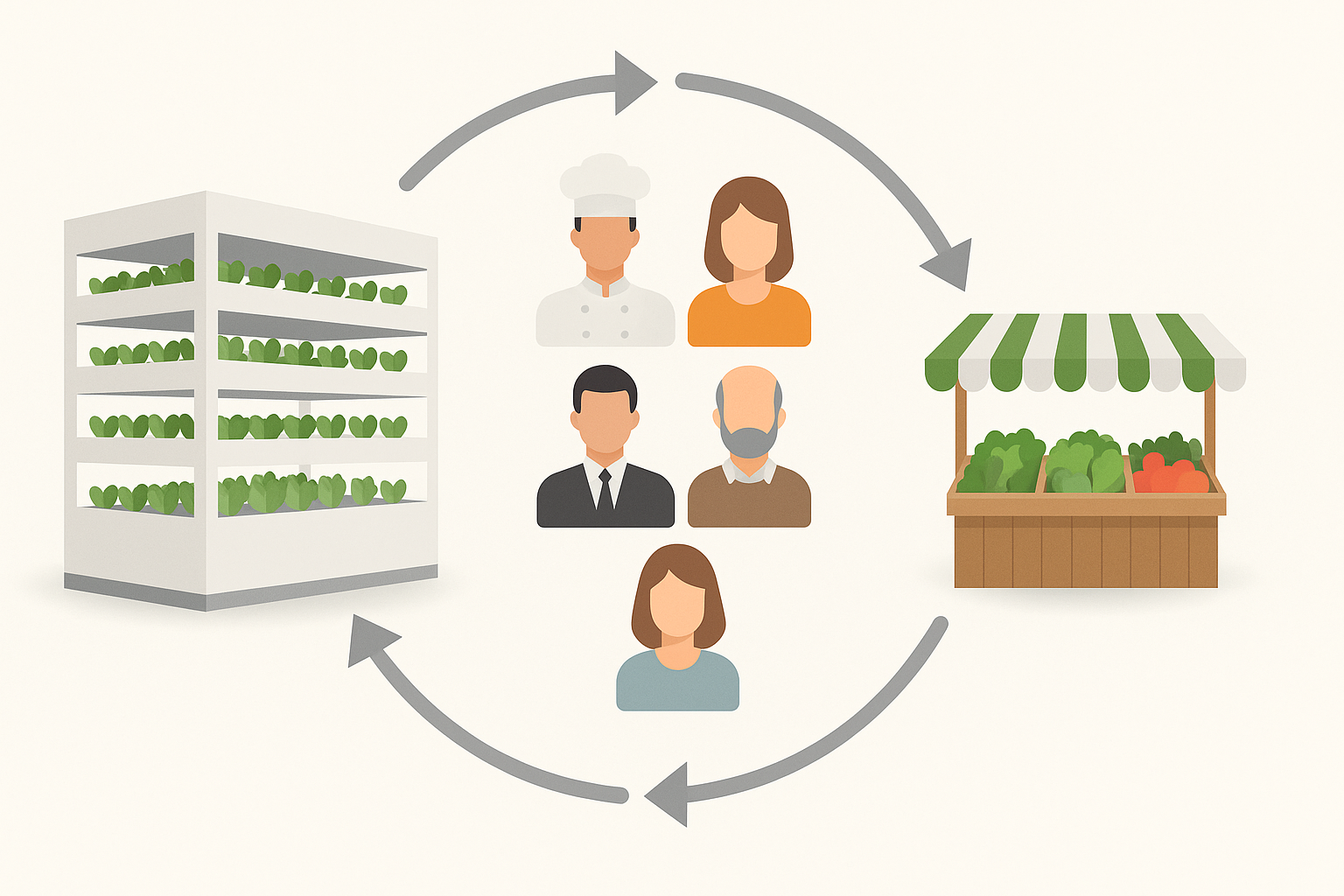
Determining which crops to grow involves assessing both plant science and market dynamics. From a biological perspective, crops with short life cycles, high density, and relatively simple growth requirements tend to be most efficient. From an economic perspective, crops with high per-unit value, hgh demand for freshness, or vulnerability in conventional supply chains are most attractive. A successful indoor farm finds the overlap between these categories. Lettuce and basil may not seem exotic, but they consistently fit both sets of criteria, which is why they dominate the industry. More complex crops such as strawberries or tomatoes may only be viable where consumer willingness to pay is high and operational expertise is advanced.
Looking ahead
As technology improves, the range of viable crops for CEA is likely to expand. Advances in LED lighting, automation, and energy integration are already reducing production costs. Genetic research into varieties optimised for indoor conditions is accelerating, offering cultivars with compact architecture, faster growth, or enhanced flavour. At the same time, shifting consumer preferences towards local, fresh, and sustainably produced food create ongoing opportunities for novel crops. Nevertheless, the core principles remain: the best crops for indoor farming systems are those that grow efficiently in a controlled environment and meet a clear, sustainable market demand.
Conclusion
Choosing crops for CEA and vertical farm systems is not simply a technical matter but a strategic decision with implications for biology, economics, and consumer acceptance. Salad greens and herbs provide a reliable entry point, strawberries illustrate both the potential and complexity of fruiting crops, and niche products demonstrate opportunities for innovation and differentiation. A successful enterprise will align crop selection with market realities and system design, ensuring that controlled environments are used where they add genuine value. This page provides a foundation for further exploration of specific crop types and strategies, positioning growers and researchers to make informed choices in a rapidly evolving field.