Effective project planning is essential for anyone seeking to build a viable business or research initiative in controlled environment agriculture (CEA). While the technology and promise of vertical farming often capture attention, success depends on careful, structured planning that balances technical feasibility, financial viability, and long-term sustainability. This page provides an overview of the key considerations involved in designing, developing, and managing a vertical farm project, drawing together insights from both academic research and industry practice.
Why Planning Matters
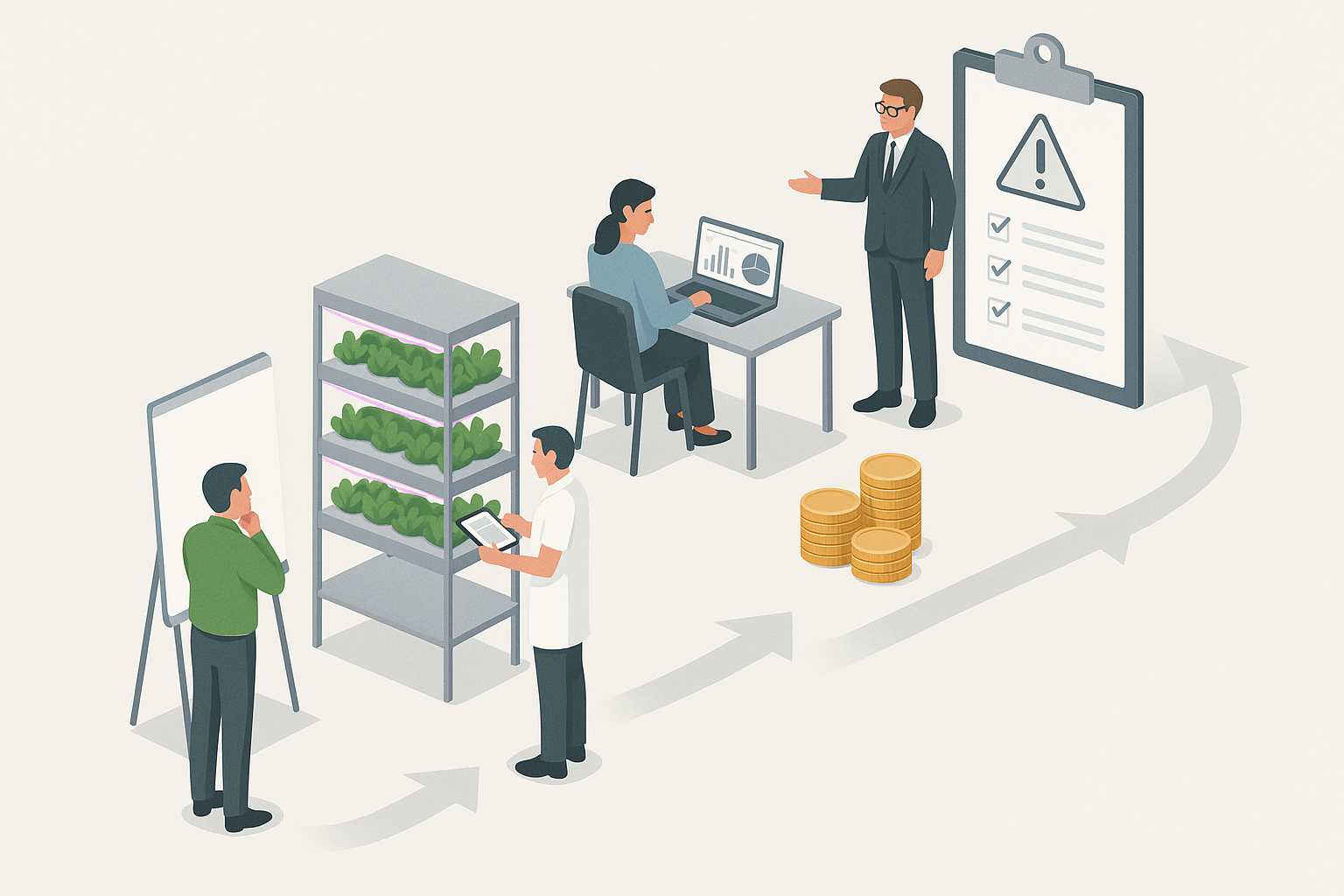
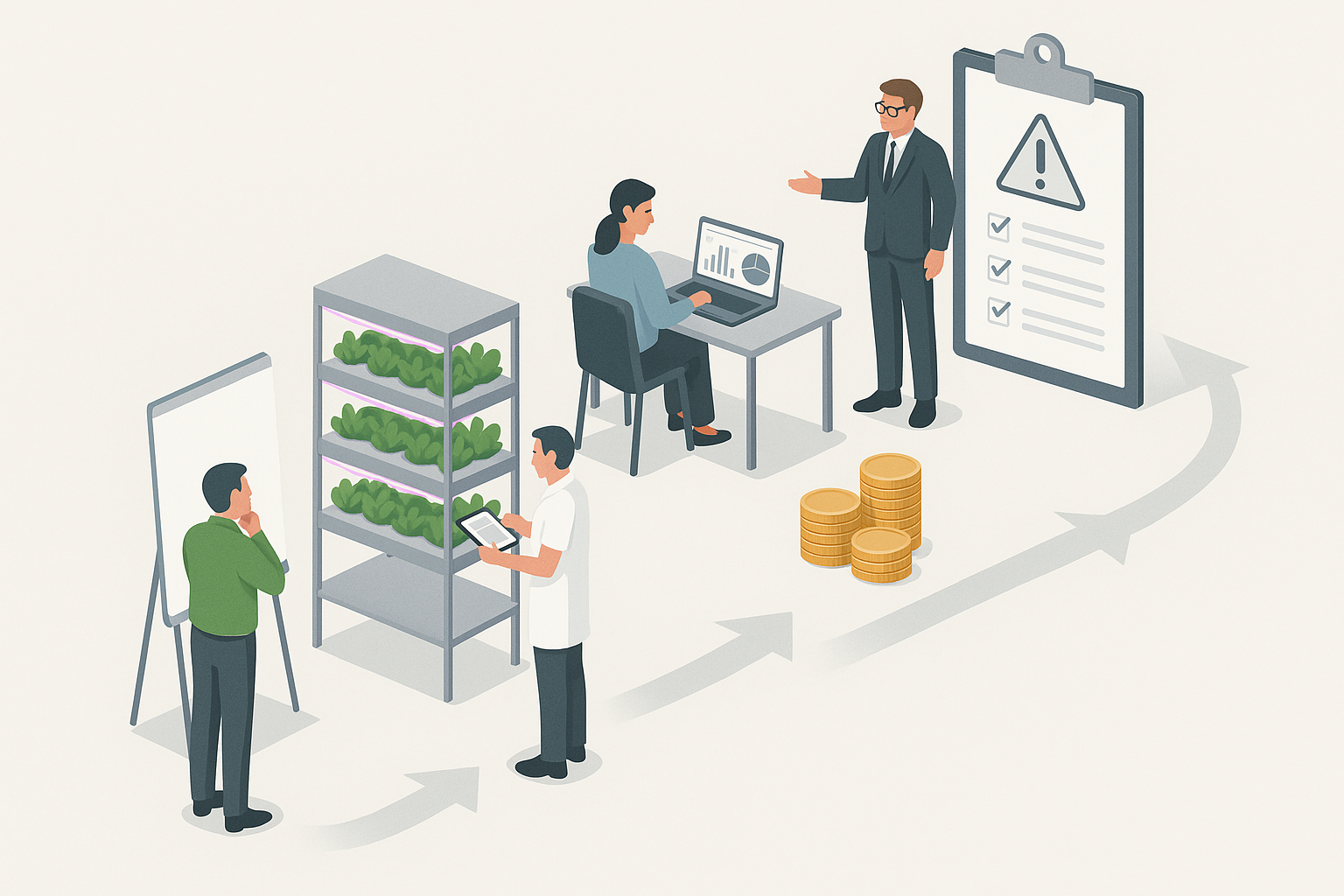
Vertical farming is not simply about stacking crops under artificial light; it requires a systems-based approach that integrates horticultural science, engineering, economics, and operational management. Without thorough planning, projects can falter due to underestimated costs, energy inefficiencies, or poorly aligned market strategies. Careful preparation reduces risk, allows for clearer investment decisions, and ensures that the chosen model is both resilient and profitable. As with any capital-intensive venture, a strong plan serves as the bridge between concept and long-term operational success.
Defining Purpose and Scope
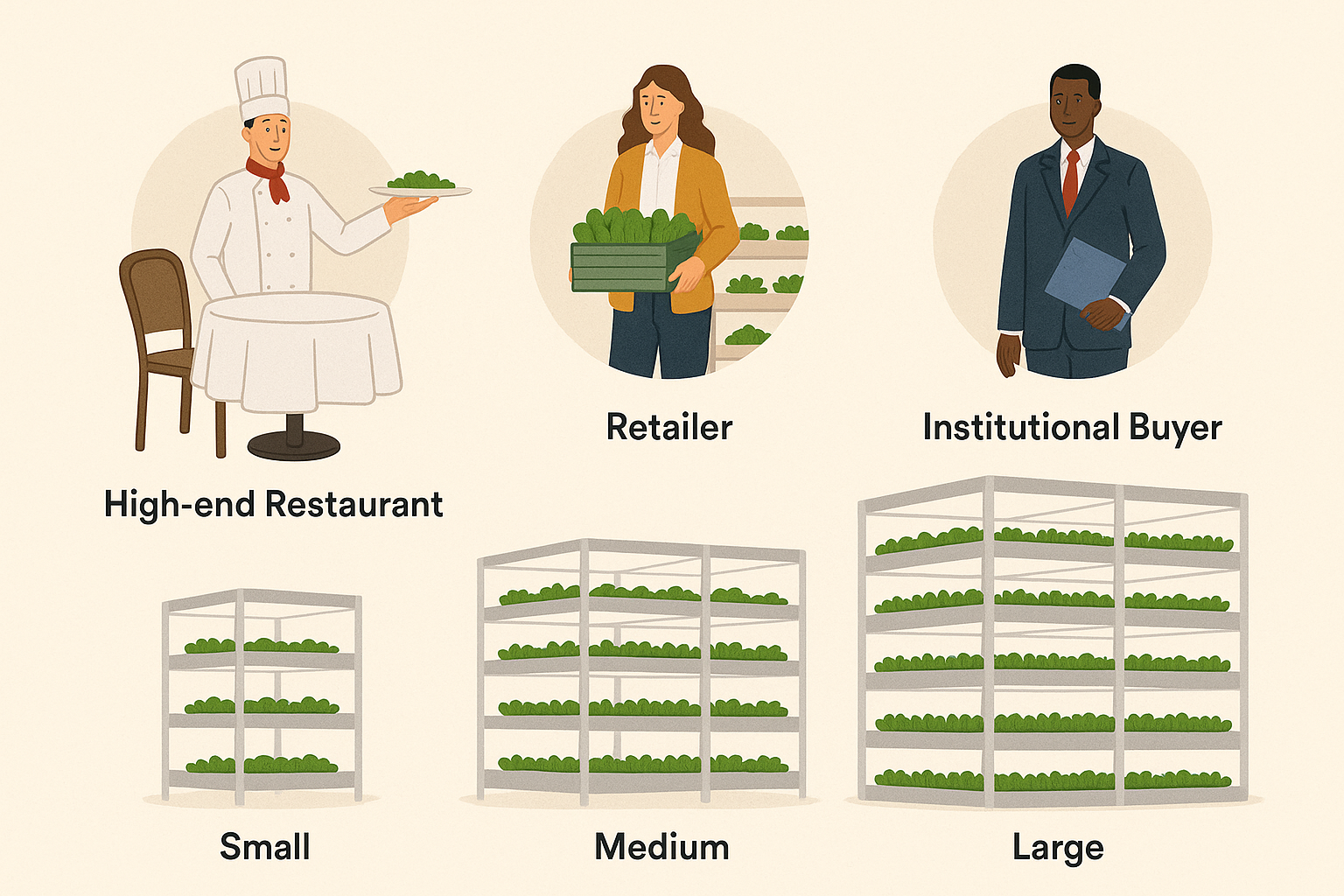
The first stage in vertical farm project planning involves defining the primary purpose of the enterprise. Some farms are established for commercial production, focusing on crops such as leafy greens, herbs, or microgreens that can be sold into local markets. Others may be research-driven, aimed at testing crop varieties, new substrates, or sensor technologies. A clear purpose helps set the scope: from the scale of the facility and the level of automation to the choice of crops and sales channels. Without this clarity, investment can become misaligned with market realities or research objectives.
Technical and Spatial Design
The technical design of a vertical farm encompasses infrastructure, growing systems, and environmental controls. Key decisions include whether to retrofit an existing building or construct a new facility, and whether to adopt hydroponic, aeroponic, or aquaponic systems. Lighting design is a crucial factor: different crops require specific light spectra, intensities, and photoperiods, which influence yield and quality. Climate control systems must balance energy efficiency with crop needs, maintaining precise levels of temperature, humidity, and airflow. Spatial planning also plays a role: racks, water systems, and access routes need to be configured for both efficiency and worker safety.
Research indicates that energy accounts for between 25 and 40% of operating costs in vertical farms, depending on crop type and design (Graamans et al., 2018). Planning for insulation, renewable energy integration, or heat recovery systems can therefore be decisive in long-term profitability. Early modelling of energy demand and resource flows provides a valuable benchmark for investors and operators.
Economic and Financial Considerations
Every vertical farm project must be underpinned by a robust financial plan. Capital expenditure includes construction, equipment, and fit-out costs, while operational expenditure covers inputs such as energy, water, nutrients, labour, and maintenance. Financial projections should take account of the time needed to reach full production capacity, as well as potential fluctuations in input prices.
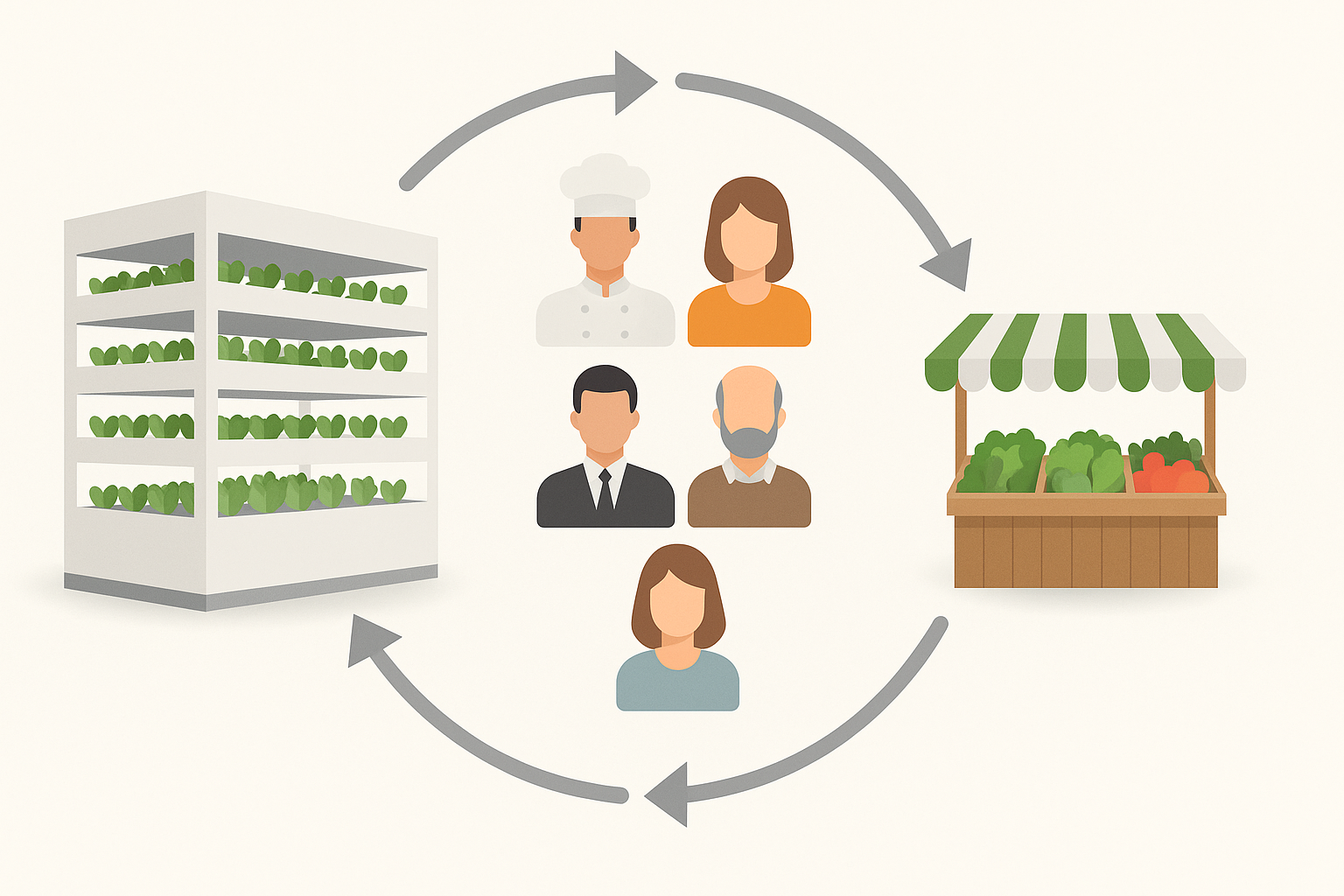
Return on investment depends not only on yields but also on market access. For example, premium produce supplied directly to restaurants or urban retailers can command higher margins than wholesale sales into supermarket supply chains. Careful analysis of local demand, competition, and pricing trends is therefore central to planning. Studies show that small-scale urban farms can succeed through niche markets, while larger operations often require scale to offset high fixed costs (Benke & Tomkins, 2017).
Regulatory and Policy Context
Vertical farms operate within wider policy and regulatory frameworks that vary by country and region. Planning permission, building regulations, and food safety standards must all be addressed at an early stage. In the UK, for example, facilities must comply with the Environment Act 2021 and Planning Policy Wales or England’s planning frameworks, depending on location. Incentives for renewable energy generation or sustainable land use may provide opportunities to reduce costs or access grants. Investors and growers who align projects with national sustainability goals are more likely to secure long-term policy support.
Human Capital and Skills
Although automation is increasing, indoor farms still rely on skilled personnel for tasks such as crop management, systems monitoring, and quality assurance. Project planning must account for workforce development: from horticultural training and safety protocols to technical expertise in lighting, HVAC, and nutrient systems. In addition, management teams require skills in finance, marketing, and supply chain logistics. Workforce considerations are often underestimated, yet they strongly influence operational resilience and overall productivity.
Risk and Resilience
Planning also involves anticipating risks and embedding resilience into the project design. These risks include energy price volatility, equipment failure, crop disease, and market saturation. Scenario planning can help managers understand potential vulnerabilities and design appropriate contingencies. For example, diversification of crop types or customer bases can reduce dependence on a single revenue stream. Similarly, investment in backup power systems or predictive sensor networks can prevent costly crop losses.
Looking Ahead
Vertical farm project planning is not a one-off exercise but an evolving process. As technologies advance and markets shift, project strategies must adapt. Early adoption of digital tools such as digital twins, life cycle assessments, and resource-flow models can provide long-term value by enabling continuous optimisation. Those who plan carefully at the outset are best positioned to benefit from emerging opportunities, whether in carbon-neutral farming, new crop markets, or integration with renewable energy systems.
Conclusion
A successful vertical farm does not emerge solely from innovative technology; it is built on comprehensive planning that integrates technical design, financial modelling, regulatory compliance, and human expertise. Vertical farm project planning requires attention to detail and a willingness to align with both market realities and sustainability goals. Done well, it enables ventures to move beyond proof-of-concept towards long-term viability, delivering consistent yields, stable returns, and valuable contributions to food security.
References
Benke, K. & Tomkins, B. (2017). Future food-production systems: vertical farming and controlled-environment agriculture. Sustainability: Science, Practice and Policy, 13(1), 13-26.Graamans, L., Baeza, E., van den Dobbelsteen, A., Tsafaras, I. & Stanghellini, C. (2018). Plant factories versus greenhouses: Comparison of resource use efficiency. Agricultural Systems, 160, 31-43.