Introduction: The Science of Drip Irrigation in Modern Growing Environments
Drip irrigation is a simple approach to irrigation management, which can reduce unnecessary water use and losses, whilst providing irrigation direct to the plant in the near vicinity. As growers seek to increase water efficiency, nutrient delivery precision, and crop consistency, drip irrigation has emerged as a reliable, scalable, and scientifically grounded approach. This technique enables targeted root-zone management and sustainable resource use.
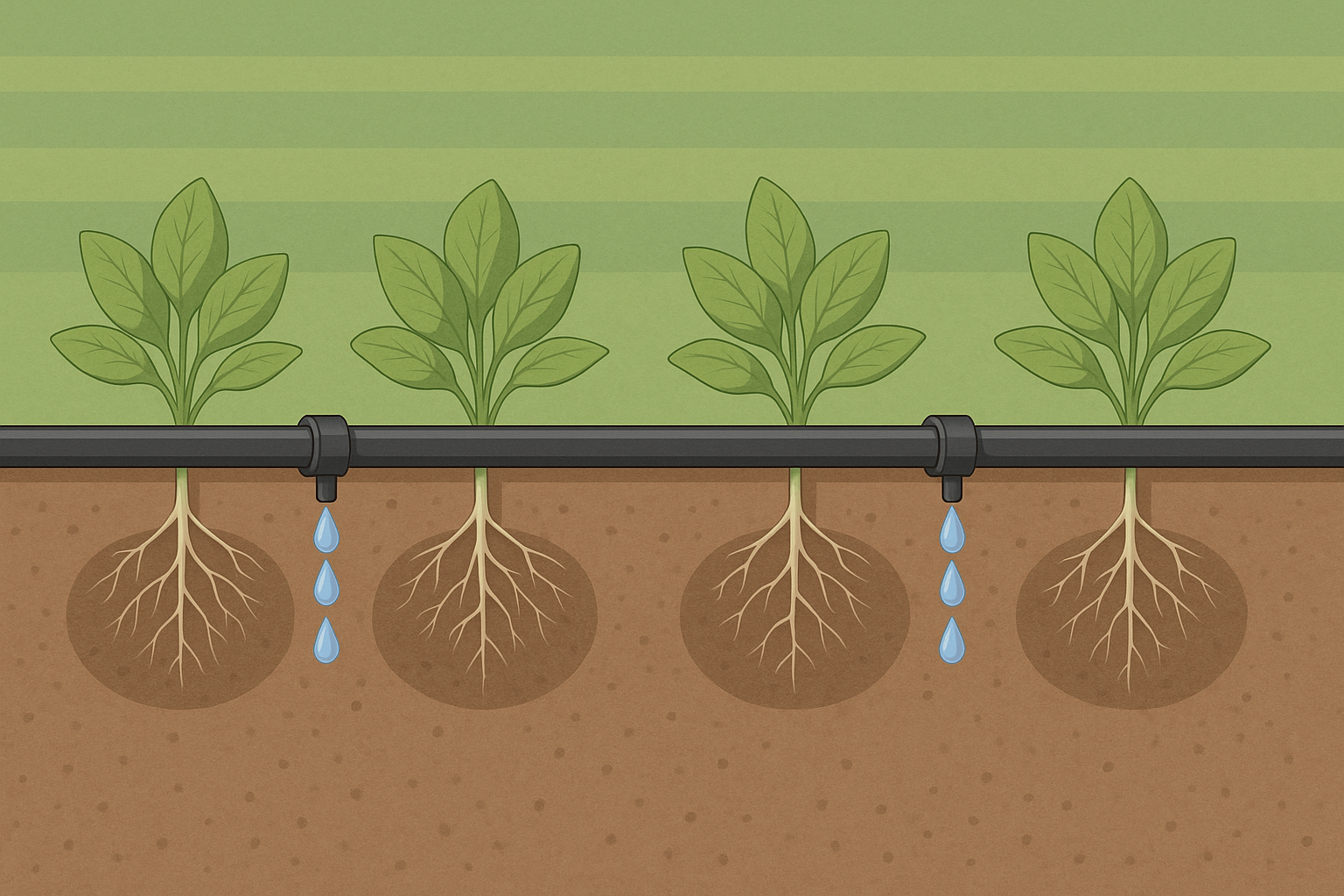
Drip irrigation, also known as micro-irrigation, operates by delivering water and soluble nutrients directly to the base of each plant through a network of emitters, tubes, and pressure regulators. Unlike overhead sprinklers or flood-based methods, it allows for granular control over water distribution, reducing waste and minimising disease risk associated with excess moisture. In CEA settings, where environmental variables are carefully managed to maximise yield per square metre, drip systems provide the responsiveness and stability needed to support high-performance crop production.
How Drip Irrigation Works in CEA Contexts
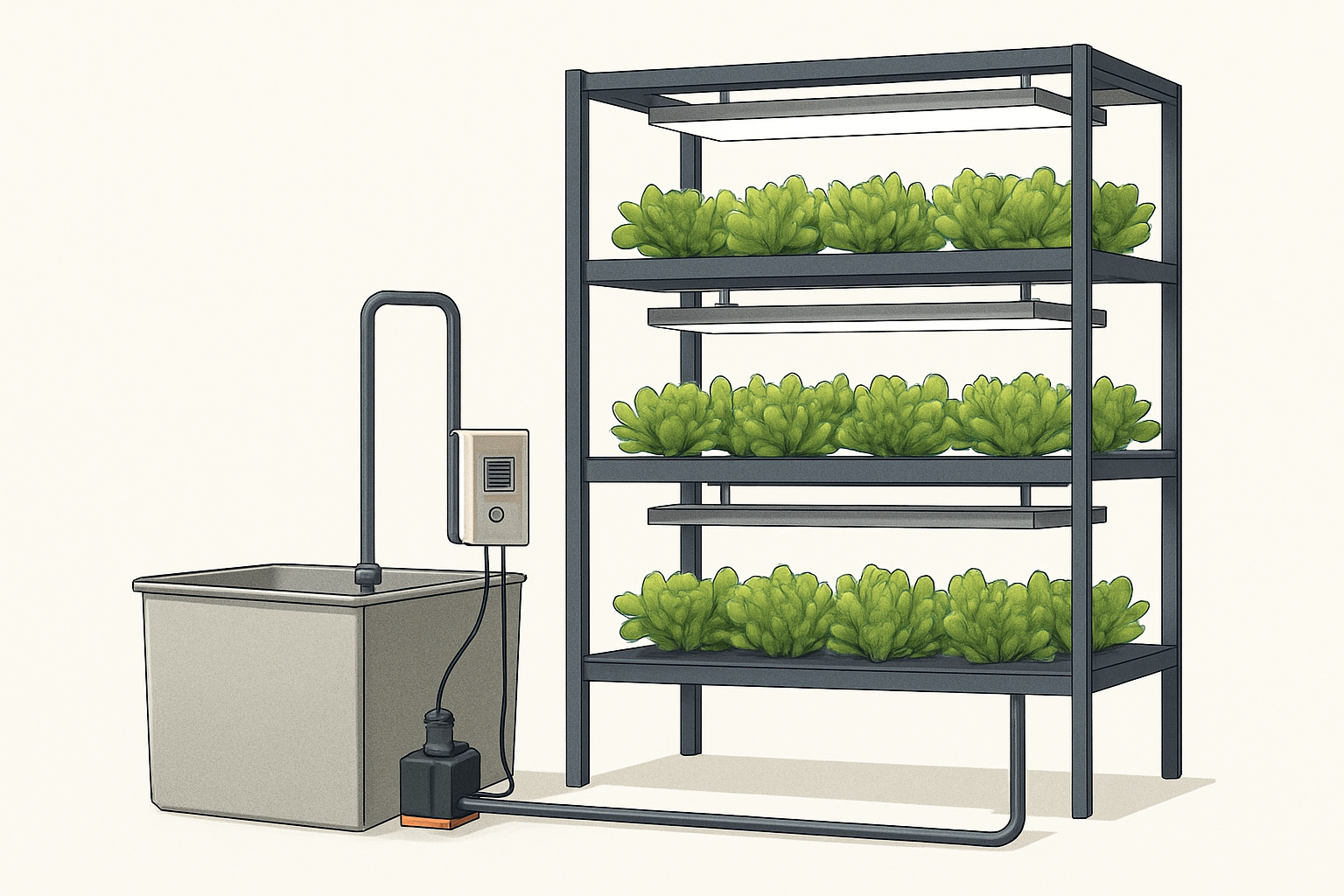
In a drip irrigation system, emitters release water slowly and precisely near the plant’s root zone. The emitter flow rates are typically measured in litres per hour, and systems can be configured with great flexibility, whether serving rows of leafy greens, vine crops, or densely packed vertical columns. In vertical farming, where plants may be arranged in stacked trays or towers, the delivery infrastructure can be adapted with vertical risers, pressure-compensating drippers, or capillary wicks to ensure uniform distribution across all levels.
A central feature of the science behind drip irrigation is its ability to regulate the ‘wetting front’, the spatial pattern of water infiltration in the growing media. By maintaining a narrow but consistent wetting zone, growers avoid waterlogging while ensuring that roots have continuous access to moisture and nutrients. This is especially important in soilless substrates like rockwool, coir, or perlite, where the retention and movement of water are quite different from natural soil.
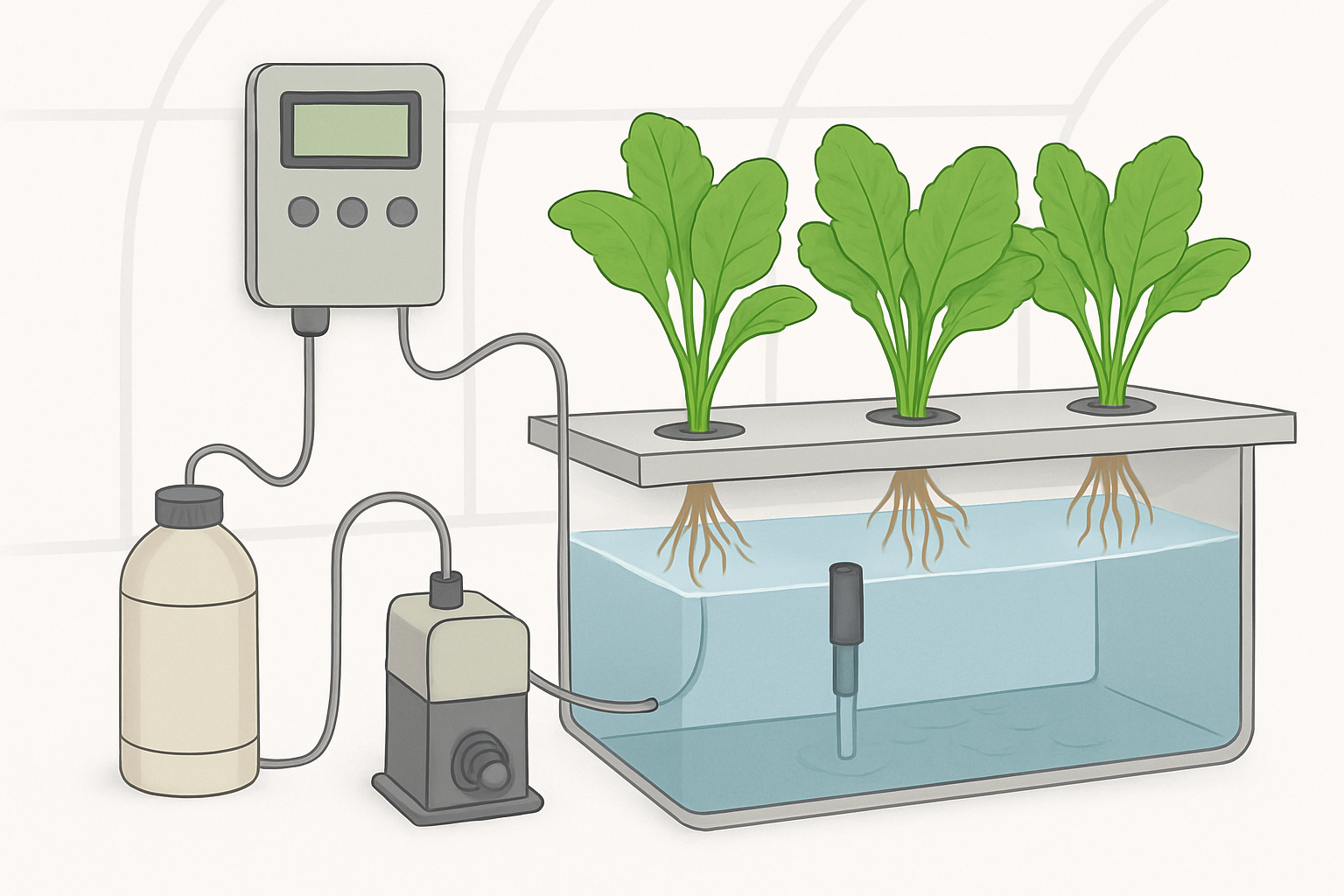
Moreover, drip systems can be precisely automated. Timers, sensors, and fertigation units allow delivery schedules to be adjusted based on plant stage, transpiration rate, or environmental conditions such as vapour pressure deficit (VPD). Integration with data-logging platforms enables growers to monitor system performance, detect blockages or irregularities, and respond dynamically to changing plant needs.
Advantages for Vertical Farming and CEA
Drip irrigation’s relevance to vertical farming is particularly strong due to its compatibility with both horizontal and vertical growing structures. It supports spatial efficiency by avoiding the need for open channels or flood reservoirs; this frees up space and allows closer plant spacing without compromising root access to water. Because water is delivered directly where it is needed, overall consumption can be reduced by up to 60 percent compared to conventional methods, with additional savings in energy if gravity-fed systems are used.
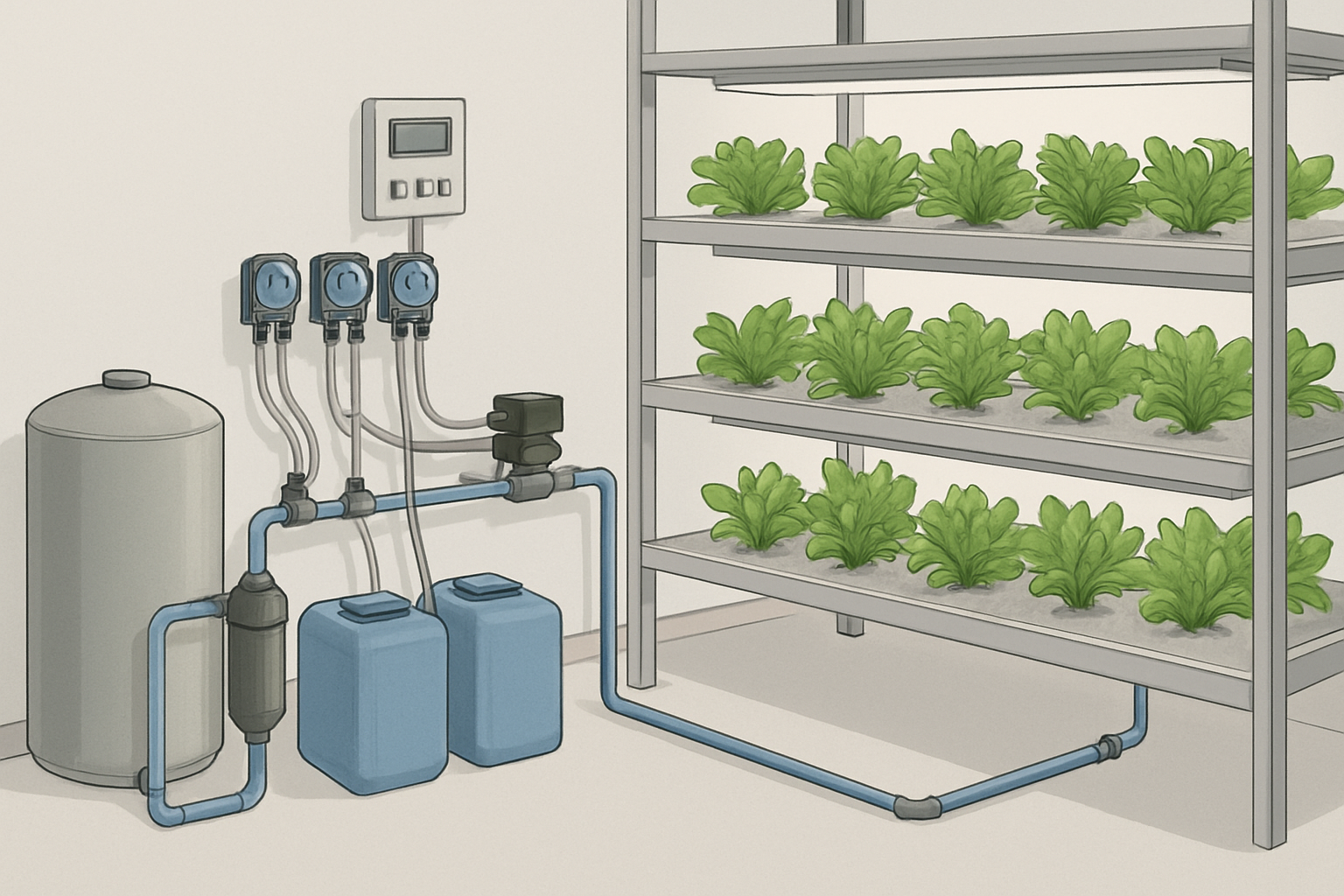
Another significant benefit is nutrient use efficiency. Nutrient solutions can be injected directly into the irrigation line using fertigation units, enabling real-time adjustments and reducing run-off. In recirculating systems, excess solution can be collected, filtered, and reused, reducing input costs and minimising environmental impact. This is especially relevant in jurisdictions with strict water discharge regulations or limited freshwater availability.
In climates or structures where humidity must be carefully controlled, drip irrigation contributes to better environmental stability. Because the method minimises surface evaporation and reduces airborne moisture, it supports lower humidity levels, which in turn helps to mitigate fungal disease pressure and improves transpiration dynamics. This translates into more predictable growth rates and improved crop quality.
Limitations and Design Considerations
While the science of drip irrigation offers many advantages, the system must be carefully designed and maintained to function optimally. Emitters can clog due to particulates, biofilm, or nutrient precipitates, especially when using organic or concentrated fertilisers. As such, filtration and regular flushing routines are essential. Moreover, uniformity of flow across all emitters must be ensured through pressure regulation, especially in vertically distributed systems where gravity can introduce variation.
System layout must account for the growing media’s water retention characteristics, the crop’s root structure, and the expected irrigation frequency. For instance, deep-rooted fruiting crops such as tomatoes or cucumbers may require different emitter placement and flow rates compared to shallow-rooted lettuces or herbs. Drip intervals must balance water availability with sufficient oxygenation of the root zone, avoiding the conditions of continuous saturation that can induce root rot or reduce nutrient uptake efficiency.
Additionally, careful calibration is required when integrating drip systems with environmental control strategies. Over-irrigation can disrupt humidity balance and increase energy load on dehumidification systems; under-irrigation can stress plants and reduce yield. Therefore, effective use of drip irrigation depends on a systems-thinking approach, where irrigation is treated as one component of an interlinked growing environment.
Applications in Research and Commercial Production
Drip irrigation is not only prevalent in large-scale commercial vertical farms, but also widely used in research trials within universities, agri-tech institutes, and breeding programmes. Its controlled delivery system makes it ideal for studying plant response to nutrient regimes, irrigation frequency, or environmental stimuli. By standardising water and nutrient application, researchers can isolate variables more effectively, enhancing the quality of agronomic data.
In commercial settings, modular drip systems allow farms to scale incrementally while maintaining control and consistency. Integration with IoT sensors and cloud-based platforms enables remote management, predictive maintenance, and integration with broader CEA infrastructure. Examples include tomato farms using dual-line drip systems with variable-rate fertigation, or basil and microgreen operations using fine-tuned drip emitters to optimise flavour compound expression under controlled stress conditions.
Looking Ahead: Innovation and Sustainability
As vertical farming technologies evolve, so too does the role of drip irrigation. Advances in emitter design, material science, and sensor integration continue to improve system reliability and performance. Developments in nanobubble irrigation, precision fertigation, and AI-driven irrigation scheduling all show promise in increasing the impact of drip systems within CEA.
From a sustainability standpoint, drip irrigation supports broader goals related to water conservation, input reduction, and sustainable intensification. Its capacity to minimise waste and deliver nutrients precisely aligns with the environmental ambitions of many urban farming initiatives and policy frameworks supporting sustainable food production.
In summary, the science of drip irrigation underpins many of the most effective practices in CEA and vertical farming. Through precise, responsive water and nutrient delivery, it empowers growers to optimise plant performance, reduce resource consumption, and contribute to a more resilient agricultural future.