Understanding the principles of nutrient solution delivery in Controlled Environment Agriculture
Controlled Environment Agriculture (CEA) systems, such as vertical farms, greenhouses, and other indoor growing environments, depend fundamentally on the precise management of inputs. Among these, one of the most critical is the nutrient solution. Appropriate nutrient solution delivery will underpin the health, productivity, and efficiency of soilless cultivation systems; it enables plants to access the essential elements required for growth in the absence of soil. In well-managed CEA operations, the formulation and delivery of these nutrient solutions are tightly controlled, tailored to crop species, growth stages, and environmental conditions. The goal is not simply to nourish plants, but to do so in a manner that is resource-efficient, replicable, and aligned with broader sustainability objectives.
Why Nutrient Solutions Matter in Soilless Cultivation
Unlike traditional agriculture, where soil serves as both a physical anchor and a reservoir of nutrients, CEA systems must deliver all required mineral elements directly to plant roots. This makes nutrient solution delivery a central concern in hydroponic, aeroponic, and aquaponic methods. Each macro- and micronutrient must be provided in bioavailable forms and at appropriate concentrations. Deficiencies or toxicities can quickly manifest in enclosed growing environments; the absence of buffering capacity, normally afforded by soil, means that errors in formulation or irregularities in distribution are far less forgiving.
Nutrient solutions typically consist of water-soluble compounds containing nitrogen (N), phosphorus (P), potassium (K), calcium (Ca), magnesium (Mg), and sulphur (S), along with trace elements such as iron (Fe), manganese (Mn), zinc (Zn), copper (Cu), boron (B), and molybdenum (Mo). Formulations are guided by established plant requirements, but successful implementation demands attention to ionic balance, pH, electrical conductivity (EC), and water quality. All of these factors must be monitored continuously and adjusted as necessary to maintain optimal uptake.
Principles of Nutrient Formulation
Formulating an effective nutrient solution is both a scientific and operational challenge. While commercial pre-mixed fertiliser blends are widely available, advanced CEA systems often benefit from custom formulations tailored to crop species, phenological stage, and growing method. For example, leafy greens in a nutrient film technique (NFT) system may require a different nitrogen-to-potassium ratio than fruiting crops grown in deep water culture (DWC) or aeroponics. Moreover, plant demand evolves over time: early vegetative stages typically require more nitrogen, whereas reproductive stages benefit from increased potassium and phosphorus.
Water source characteristics play a pivotal role in formulation. The presence of dissolved salts, bicarbonates, or trace minerals in source water may necessitate pre-treatment such as reverse osmosis. A thorough understanding of water chemistry is essential to avoid antagonistic interactions: for instance, excessive calcium can precipitate phosphate, making both unavailable to plants. Buffering agents may also be introduced to stabilise pH, which influences nutrient solubility and uptake efficiency.
Delivery Mechanisms and System Integration
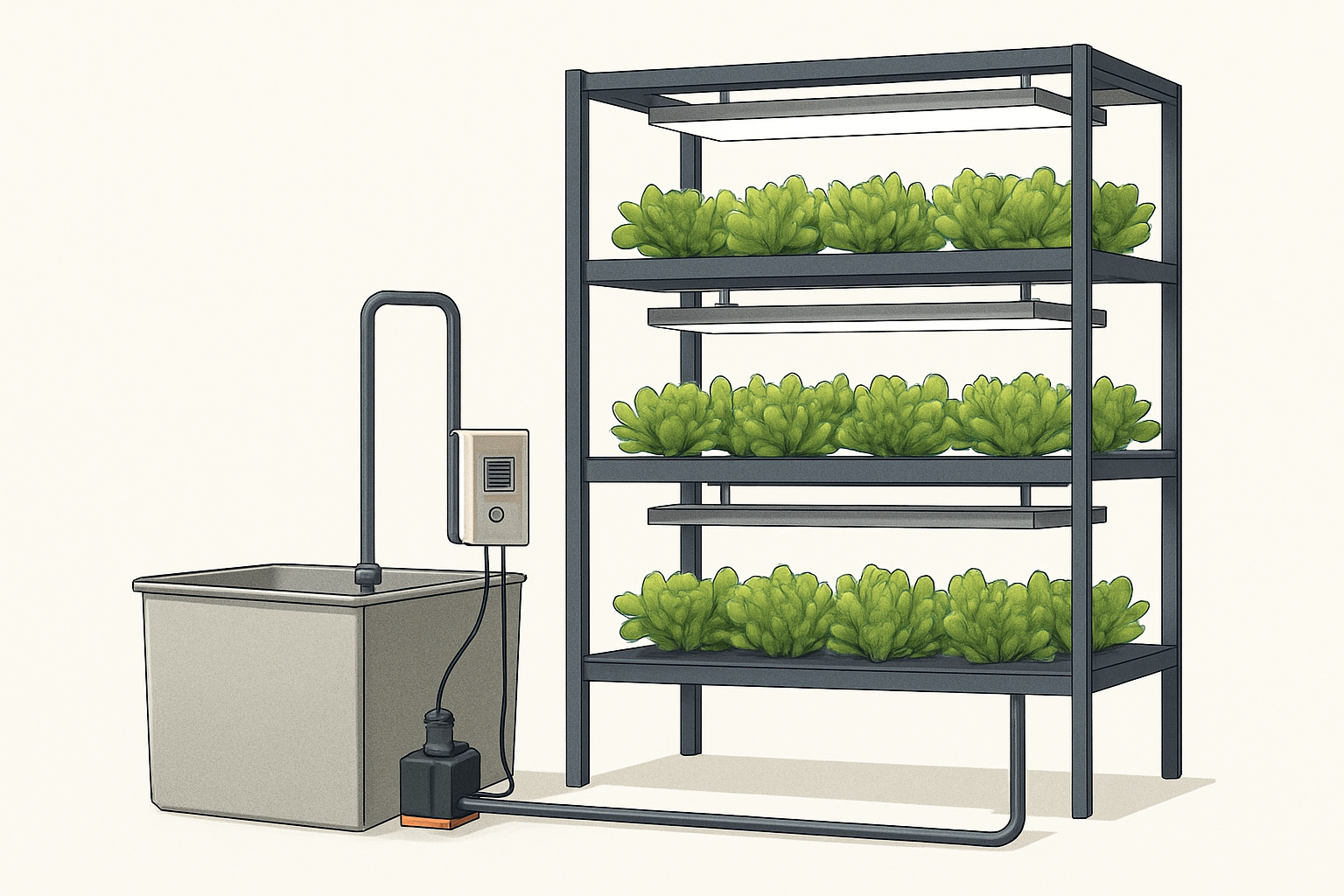
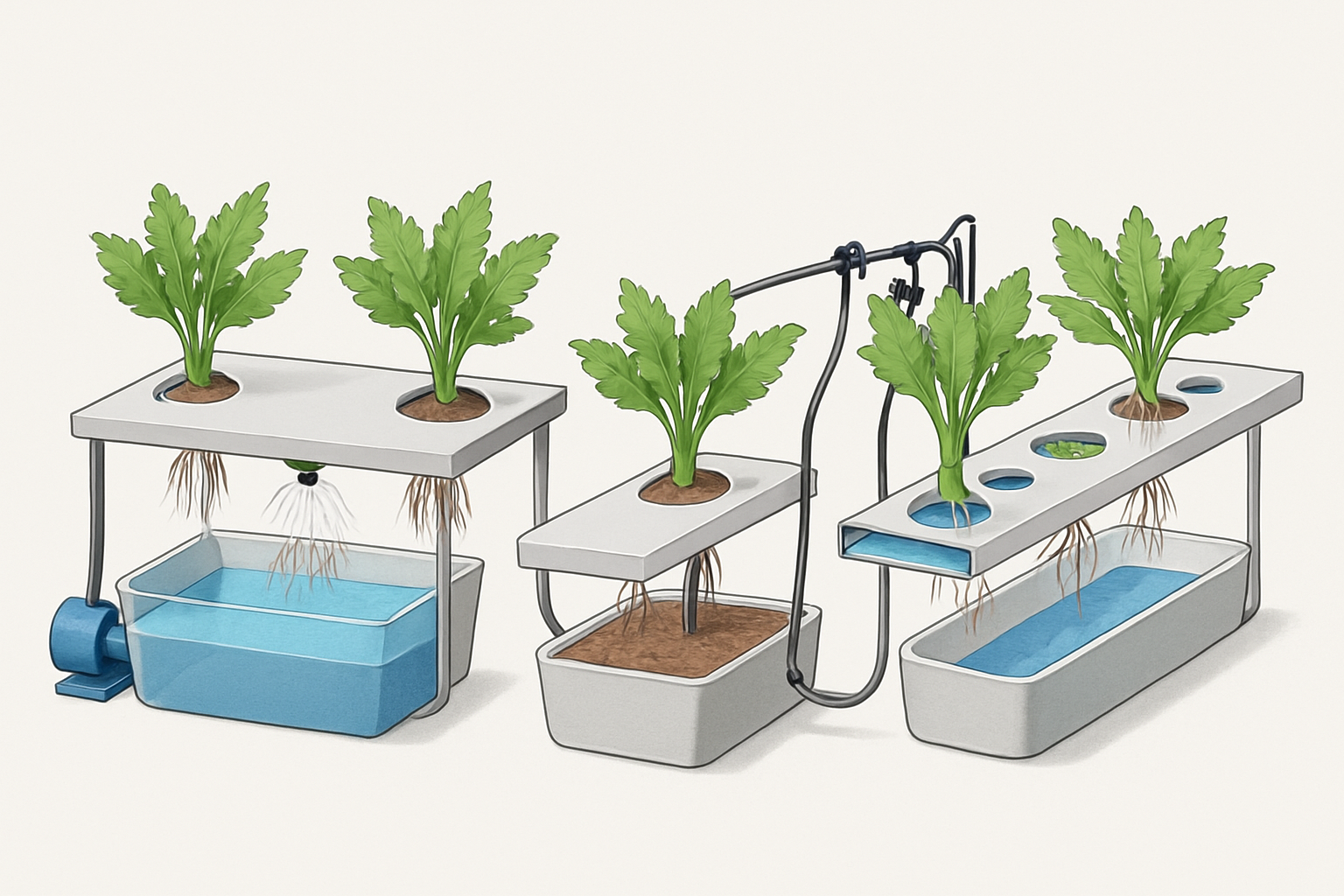
Once formulated, the nutrient solution must be delivered uniformly and consistently. This process is determined by the design of the cultivation system, including the growing substrate (if used), root access, and irrigation method. In hydroponics, solution delivery typically occurs via drip emitters, flood-and-drain cycles, or thin films. Aeroponics uses high-pressure nozzles to mist roots, whereas aquaponics recirculates water through a closed-loop system incorporating both plant roots and aquatic species.
Each of these systems places different demands on the nutrient delivery infrastructure. For instance, aeroponic systems require fine atomisation and precise pressure control to avoid clogging and to ensure even distribution. In contrast, drip systems must be designed to prevent salt accumulation at the root zone and allow for periodic flushing. Flow rates, delivery intervals, and nutrient concentrations are all carefully calibrated, often with the aid of automation and data logging systems.
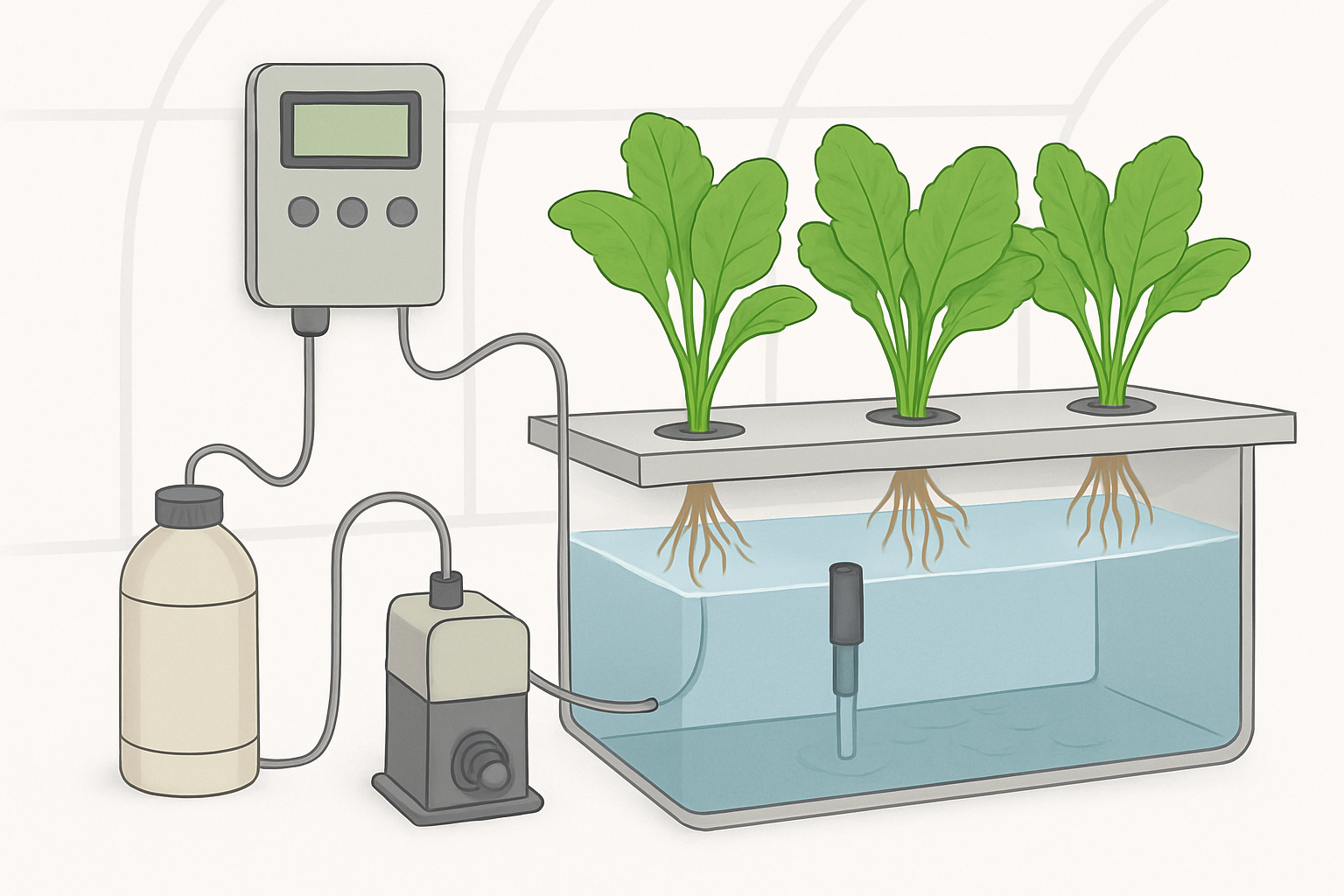
Recirculation is increasingly employed in advanced operations to reduce water and nutrient waste. However, closed-loop systems require sophisticated monitoring and control to avoid the accumulation of undesirable ions or pathogens. Sensors measure EC and pH in real time; in some cases, machine learning algorithms predict and adjust nutrient delivery based on historical crop data and environmental variables.
Monitoring and Control: A Feedback-Centred Approach
Effective nutrient solution delivery in CEA is not a static task but a dynamic, feedback-driven process. Nutrient uptake in plants is influenced by a range of environmental conditions, including light intensity, temperature, humidity, and carbon dioxide concentration. As these factors fluctuate, so too does plant demand. Monitoring technologies, including ion-selective electrodes, optical sensors, and near-infrared spectroscopy, are increasingly integrated into CEA platforms to provide real-time data on solution composition and plant status.
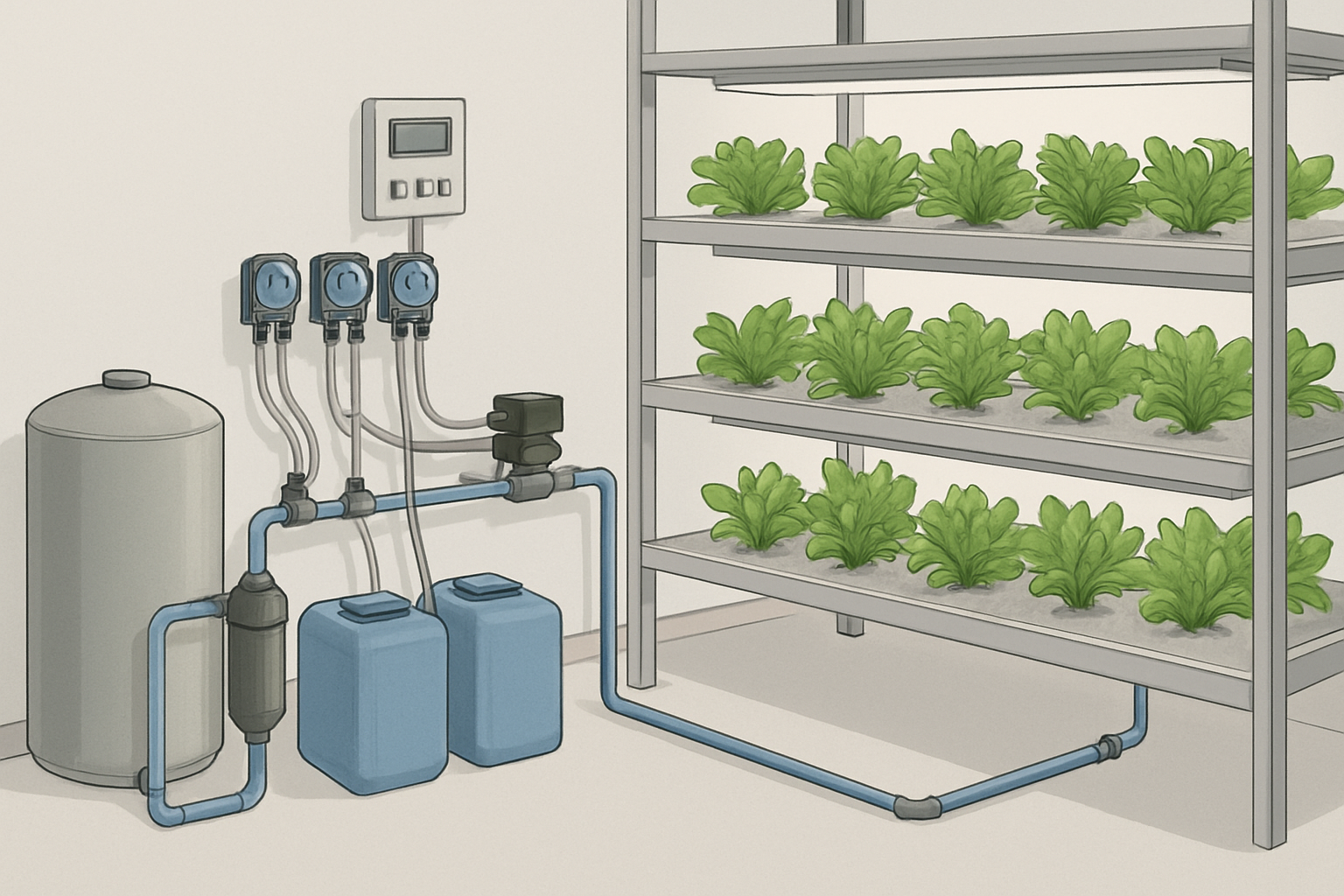
Automated fertigation systems (fertilisation through irrigation) are often employed to manage solution delivery precisely. These systems mix stock solutions on demand, adjust for pH and EC, and distribute the mixture through the irrigation infrastructure. Cloud-based platforms can store historical data, issue alerts, and offer predictive insights, helping growers to anticipate needs rather than react to problems. Despite these technological advances, human oversight remains critical: regular calibration of sensors and validation of system outputs are essential to ensure reliability.
Sustainability Considerations
One of the most promising aspects of CEA lies in its potential to reduce agricultural inputs and environmental impacts. Nutrient solution delivery, when properly managed, can contribute significantly to this aim. Closed-loop systems reduce nutrient runoff, and precise delivery minimises over-application. However, the production, transport, and disposal of fertiliser inputs carry environmental costs; so too does the energy demand associated with intensive monitoring and control systems. Integrating renewable energy sources, improving nutrient use efficiency, and developing biobased fertiliser alternatives are all active areas of research.
In some cases, nutrient sources can be derived from organic waste streams, such as digestates or compost teas. While promising from a sustainability perspective, these approaches present challenges in terms of consistency, pathogen management, and compatibility with automation. Regulatory frameworks for organic hydroponics vary internationally, and further standardisation is likely required as the sector matures.
Conclusion
Nutrient solution delivery is a cornerstone of modern Controlled Environment Agriculture; it represents both an engineering challenge and a biological imperative. Proper formulation and delivery allow CEA systems to achieve high yields with reduced environmental impact, making them attractive solutions to issues of food security, resource scarcity, and climate resilience. As the field evolves, advances in sensor technology, automation, and agronomic science will continue to refine how nutrient solutions are managed. However, the fundamental principles remain rooted in plant physiology, chemistry, and systems thinking. Understanding these principles is essential for anyone seeking to engage meaningfully with the design, operation, or governance of CEA systems.