Crop growth cycles are central to how indoor production systems function and to their promise of consistent, high-quality harvests. Unlike open-field agriculture, where crop development is at the mercy of weather, soil conditions, and seasonal changes, indoor farms can define and manipulate the crop cycle with precision. This control does not simply mean producing food out of season; it means understanding the biological stages of growth, designing production schedules around them, and using environmental technologies to guide plants through their life cycle efficiently.
Crop growth cycles in indoor farming
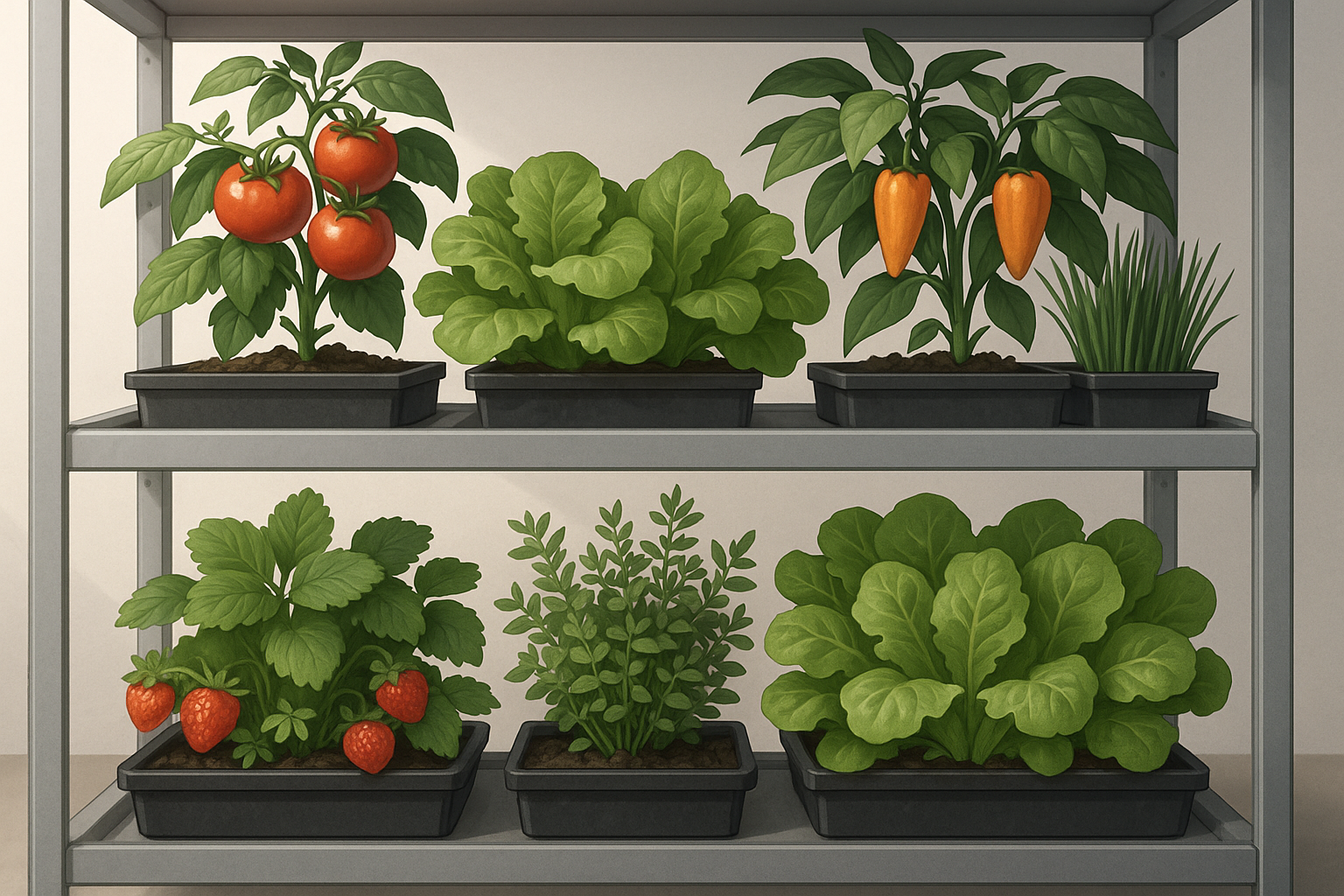
A growth cycle describes the complete sequence of development from seed to harvest. In vertical farming, where space, light, nutrients, and labour are carefully planned, the cycle becomes a measurable unit of production. A farm’s profitability, resource efficiency, and output consistency all depend on how these cycles are managed. Short-cycle crops such as microgreens may be ready within 7 to 14 days, while leafy greens typically require 25 to 35 days. Fruit-bearing plants such as tomatoes or peppers involve much longer cycles, often several months. By mapping and managing these cycles, growers align biological processes with operational objectives, ensuring reliable supply chains and stable yields.
Stages of growth in controlled environments
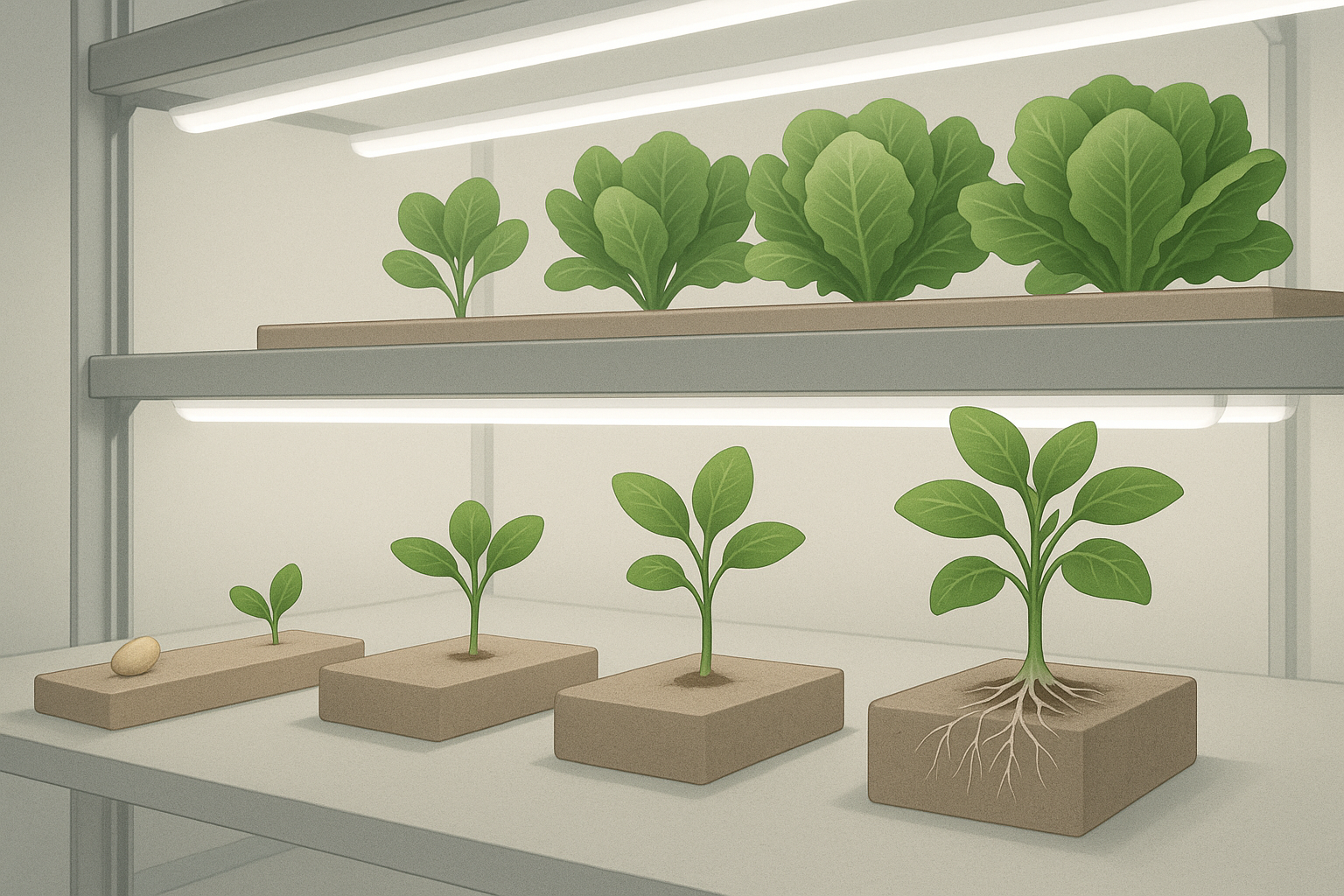
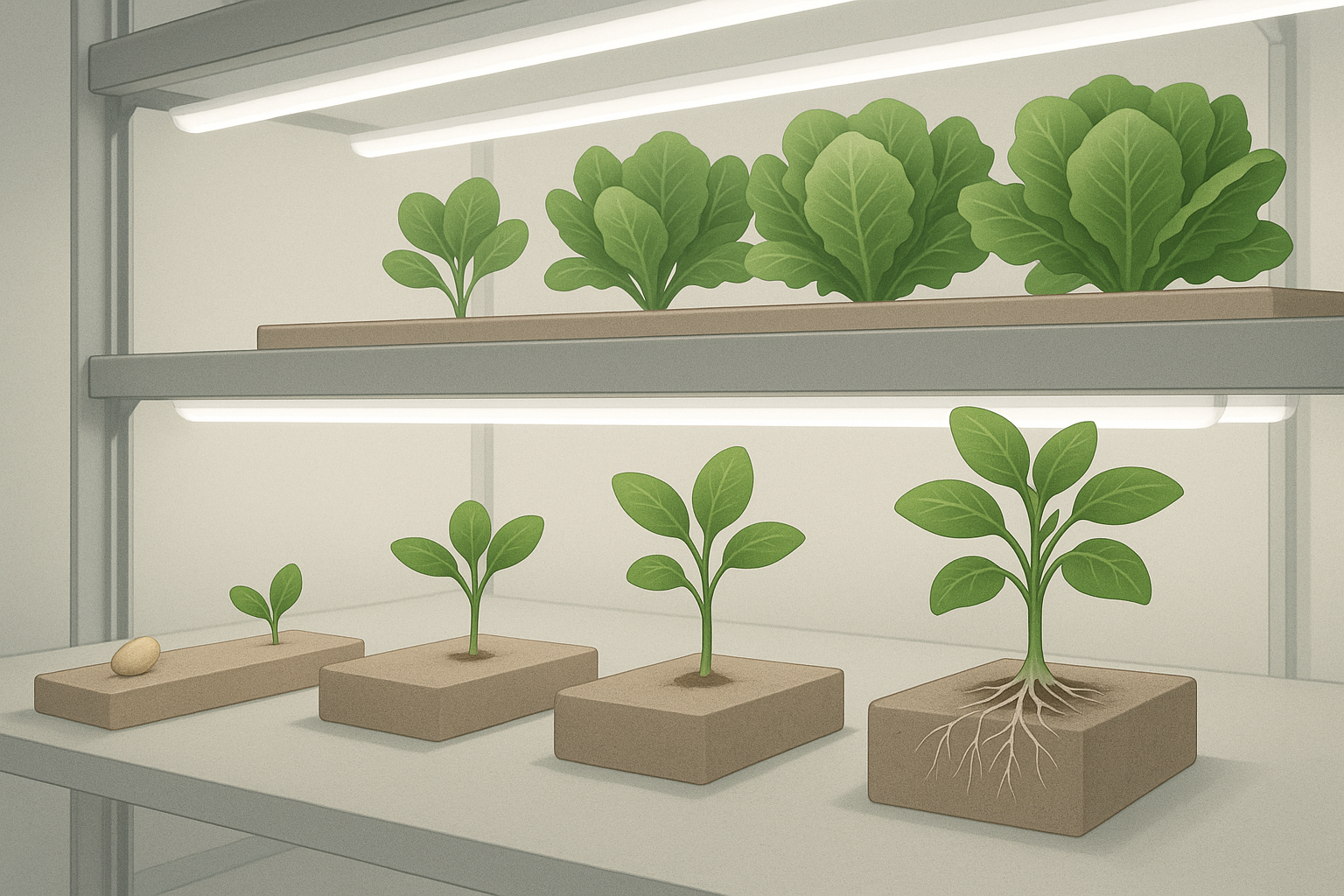
Although plant species vary in their physiology, most crop growth cycles can be divided into broadly recognisable stages: germination, seedling establishment, vegetative growth, reproductive development, and harvest. Each stage requires a different set of environmental conditions. Germination is highly sensitive to moisture and temperature, while vegetative growth depends on sustained nutrient uptake and photosynthetic light. The reproductive stage, which includes flowering and fruiting, often demands adjusted light spectra, temperature shifts, or targeted nutrient formulations. Indoor farming provides the tools to fine-tune each phase through programmable lighting systems, hydroponic nutrient delivery, and precise microclimate regulation.

Scheduling and continuous production
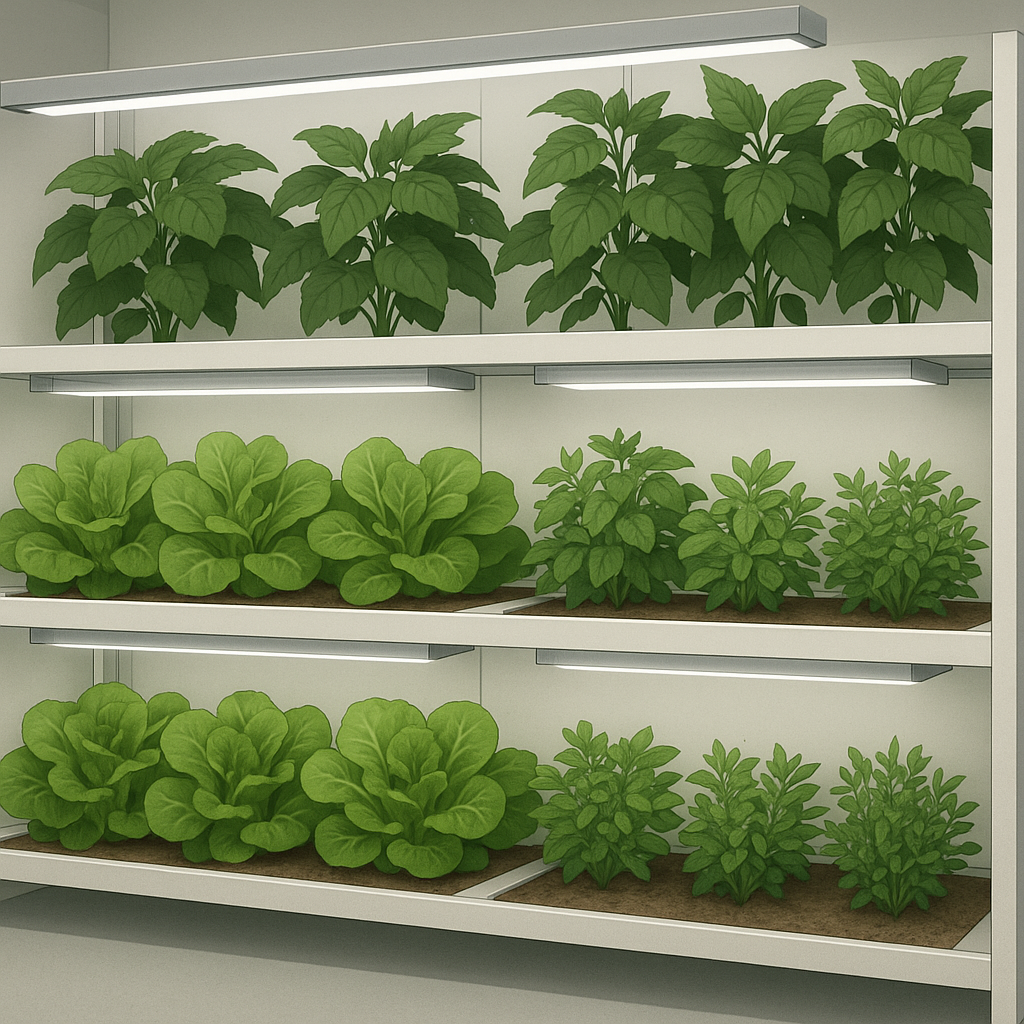
A distinctive advantage of vertical farming is the possibility of staggered cycles. Rather than planting an entire facility at once, growers divide their production area into zones at different stages of the cycle. This system allows continuous harvesting and reduces the peaks and troughs of seasonal farming. For example, a lettuce farm may structure its growth rooms so that seedlings, young plants, and mature crops are all present simultaneously, with harvesting carried out daily or weekly. Such scheduling depends on accurate modelling of growth durations and on maintaining environmental consistency. Errors at one stage can cascade into later phases, underscoring the importance of monitoring and feedback.
Environmental parameters and growth duration
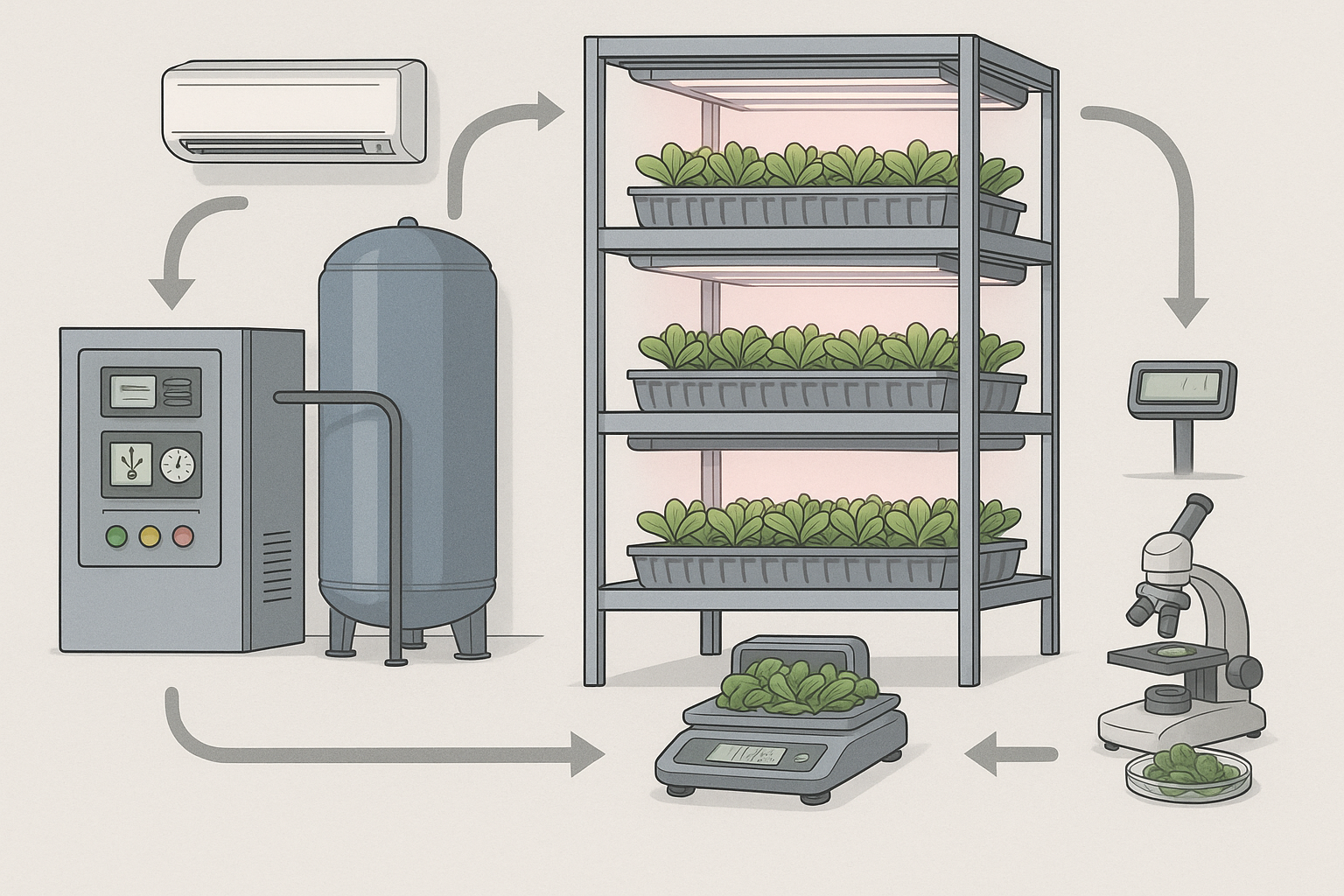
The length and quality of a crop cycle in vertical farming is highly responsive to environmental factors. Light intensity and photoperiod determine the rate of photosynthesis; temperature influences metabolic activity and transpiration; humidity affects stomatal regulation and disease risk; and nutrient concentrations shape biomass accumulation. Controlled environment agriculture allows these variables to be measured and adjusted in real time. For instance, increasing daily light integral (DLI) can shorten vegetative phases, while altering red-to-blue light ratios can encourage flowering. However, accelerated cycles may compromise flavour, nutrient content, or structural quality, meaning that optimisation involves balancing speed with quality.
Economic and operational implications
Understanding crop growth cycles in vertical farming is not only a biological question but also a financial one. Each day a crop remains in the system carries energy, water, and labour costs. Conversely, faster cycles increase turnover but may require more intensive inputs. Investors and policymakers evaluating vertical farming ventures often examine cycle length as a measure of efficiency. Long-cycle crops, such as fruiting varieties, are more resource-intensive and demand higher market prices to remain viable, while short-cycle leafy greens are better suited to commodity-scale production. Consequently, the study of growth cycles is intertwined with questions of market strategy, technology adoption, and farm design.
Research and innovation in growth cycle optimisation
Ongoing research is investigating how genomic selection, breeding, and digital tools can refine crop cycles for indoor environments. Breeders are beginning to select varieties specifically for rapid growth in controlled conditions rather than in open fields. At the same time, digital twins and machine learning models allow predictive control of growth stages, integrating sensor data with biological models to forecast harvest readiness. These innovations highlight how growth cycles in vertical farming are not static, but adjustable parameters within a larger production system.
A foundation for food system resilience
The study and management of crop growth cycles in vertical farming have implications beyond individual facilities. As urban populations increase and climate volatility disrupts conventional farming, the ability to maintain consistent cycles of production indoors offers resilience for food systems. Yet this potential depends on a thorough grasp of the biological, technical, and economic dimensions of the cycle. Indoor farming is not a shortcut to faster crops; it is a framework that requires knowledge, discipline, and continuous refinement.
Conclusion
Crop growth cycles in vertical farming sit at the heart of controlled environment agriculture. They connect plant physiology with economic planning, and environmental control with food system resilience. By understanding how crops move through their life stages and by learning how to schedule, monitor, and optimise these cycles, vertical farms can provide reliable harvests and contribute meaningfully to sustainable food production. Understanding how plants behave across life cycles is essential insight for any grower using CEA technologies, as it is likely to govern the effectiveness and efficiency of any indoor production system.