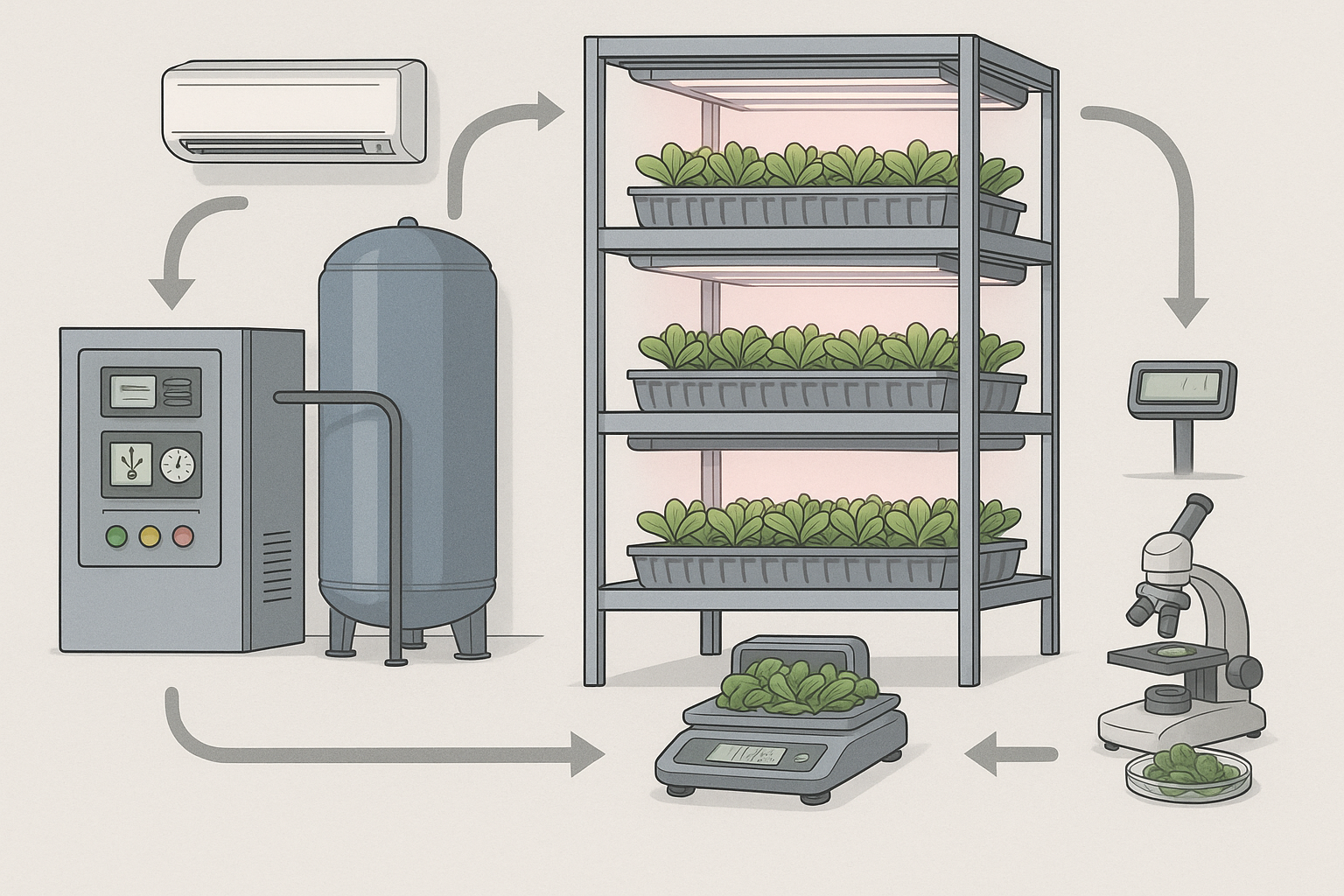
Yield optimisation in controlled environment agriculture (CEA) is one of the most discussed and researched aspects of indoor food production. The principal question is simple: how can growers extract the maximum amount of produce from a defined space while maintaining or improving crop quality? For vertical farms and other indoor plant production systems, the answer is not a single technique but a combination of precise environmental control, informed crop selection, and the careful balancing of productivity with quality attributes such as flavour, nutritional value, and shelf life. Here we introduce the key principles that underpin yield optimisation in CEA, why they are important for growers and investors alike, and how they are shaping the future of the indoor growing sector.
Balancing Yield with Quality
It is tempting to assume that maximising yield simply involves pushing crops to grow faster and denser. In practice, this can undermine quality if it is not managed carefully. For example, lettuce forced into rapid growth through high light intensity and nutrient loading may increase fresh weight per square metre, but at the cost of reduced flavour or lower post-harvest resilience. Yield optimisation in CEA therefore extends beyond volume alone; it requires growers to define what constitutes a desirable output in their specific context. For a leafy green producer supplying local supermarkets, visual uniformity and shelf life may be the main quality drivers. For a grower targeting restaurants, flavour intensity or unique textures may outweigh total tonnage. This interplay of yield and quality highlights why optimisation strategies in vertical farming must be tailored to both market and crop type.
Environmental Control as a Driver of Optimisation
The key advantage of CEA lies in its capacity to manipulate environmental conditions that, in conventional agriculture, remain subject to weather and seasonal variability. Light, temperature, humidity, carbon dioxide concentration, and nutrient delivery can all be fine-tuned to match the physiological requirements of the crop. Research has shown that small changes in light spectra can significantly influence biomass partitioning, leaf morphology, and even antioxidant levels in plants. Similarly, optimising vapour pressure deficit (VPD) allows growers to regulate transpiration, ensuring efficient nutrient uptake without inducing water stress. By approaching the growing environment as a dynamic system rather than a fixed setting, farms can target the dual goals of high yield and consistent quality.
Measuring and Defining Yield
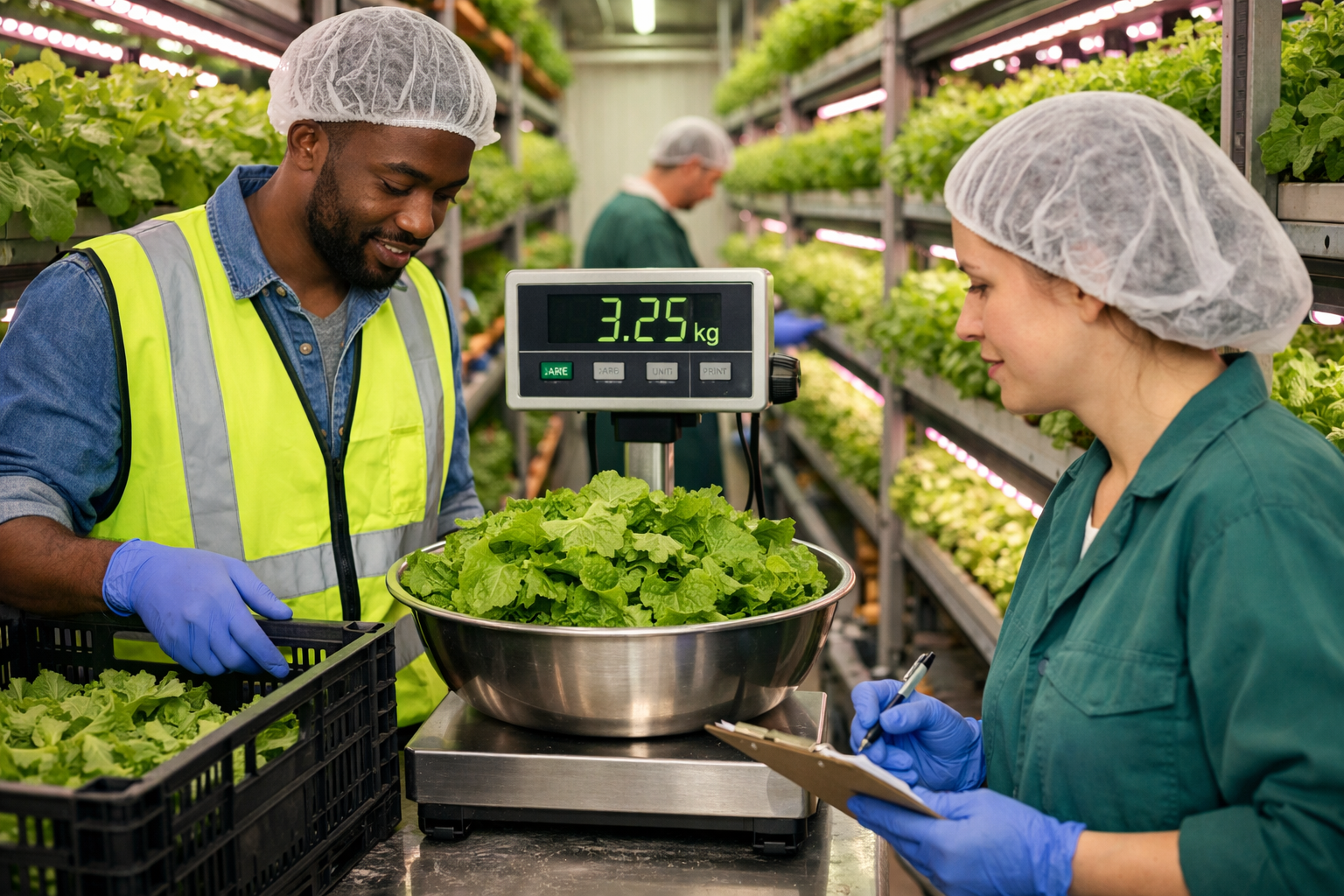
Yield in vertical farming is often expressed as grams or kilograms of fresh weight per square metre per growth cycle, or per year. However, such metrics can be misleading without considering crop type, cycle length, and economic value. A kilogram of basil harvested every two weeks from a square metre of vertical farm space may be more profitable than three kilograms of lettuce harvested over a similar period, due to the higher market price of herbs. Furthermore, yield should not be measured solely by weight; uniformity, visual appeal, and proportion of marketable product are equally important. Waste due to poor germination, disease, or mechanical damage reduces effective yield even when biomass appears high. This means that rigorous data collection and analysis are essential for accurate optimisation strategies.
Quality Metrics in Indoor Farming
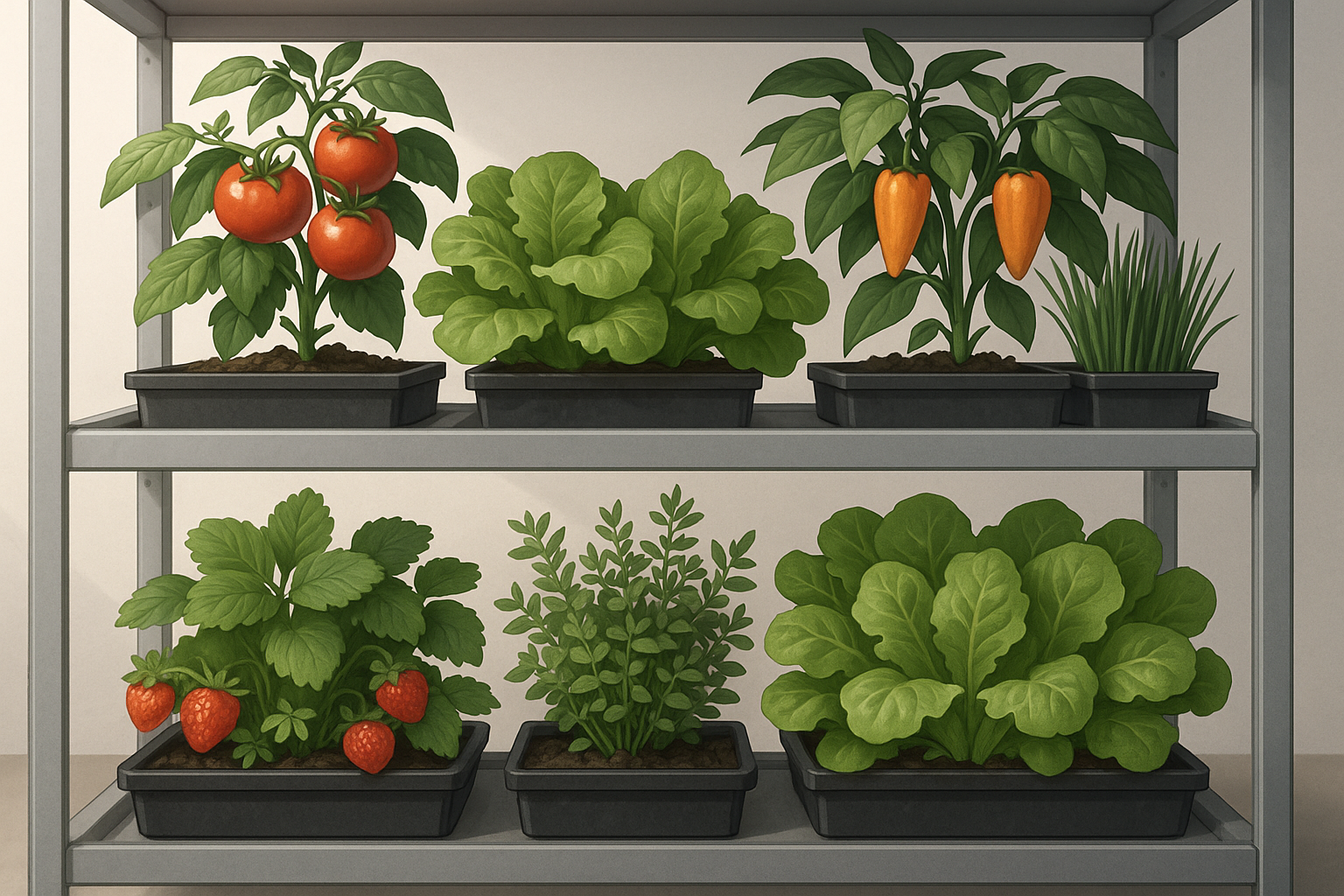
Quality is multi-dimensional and varies by crop, but in vertical farming it is commonly assessed in terms of nutritional composition, flavour profile, texture, and post-harvest durability. For example, the concentration of bioactive compounds such as anthocyanins in leafy greens can be enhanced by exposing plants to specific light treatments shortly before harvest. Texture, often overlooked, is critical for consumer acceptance: a crisp lettuce or a firm strawberry defines perceived quality as much as sweetness or aroma. Shelf life is another defining metric; indoor-grown produce is often marketed on the basis of local freshness, yet if rapid senescence occurs the market advantage diminishes. Consequently, quality optimisation involves both in-growth management and post-harvest handling protocols.
Trade-offs and Strategic Choices
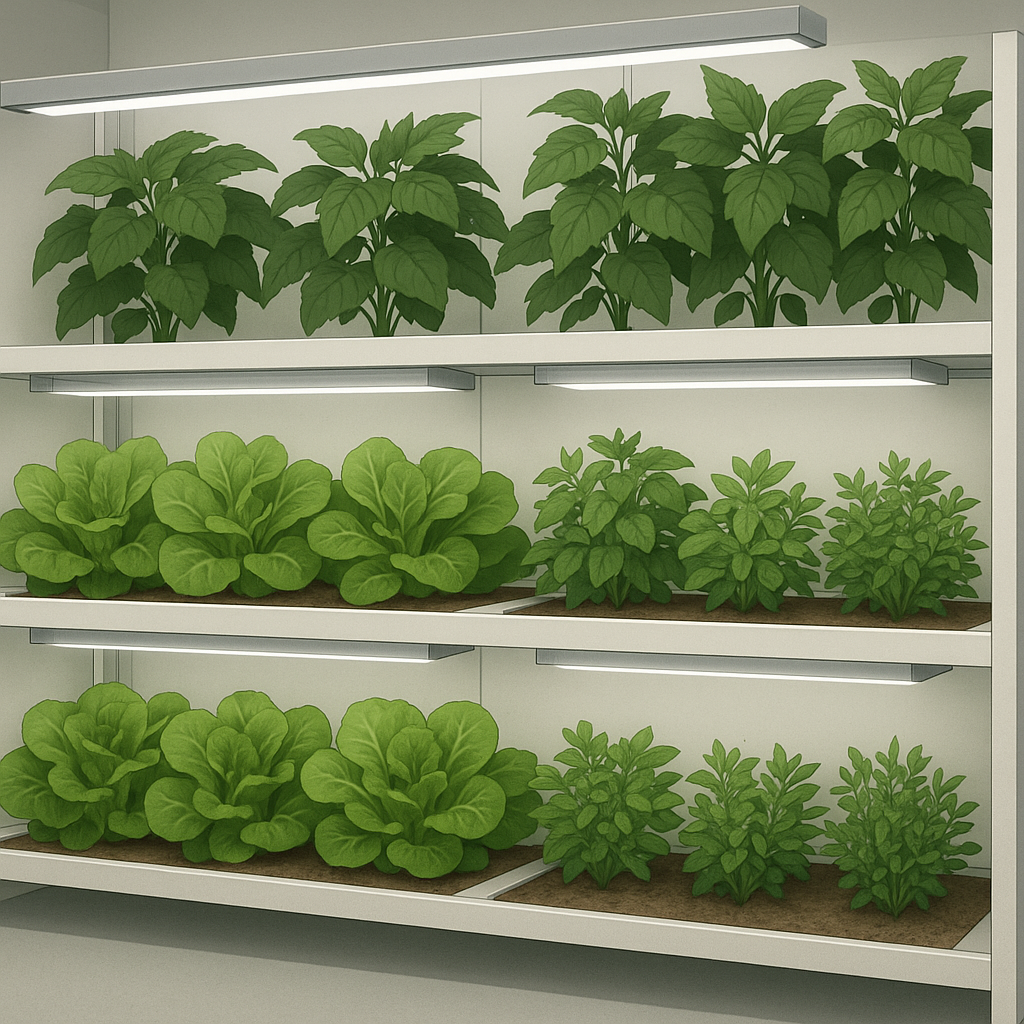
Yield optimisation in CEA is not without trade-offs. Increasing plant density may increase yield per square metre, but it can also heighten the risk of microclimatic imbalances, disease pressure, and shading effects that reduce uniformity. Raising CO2 levels can accelerate photosynthesis, yet excessive enrichment without balancing ventilation may compromise crop safety and worker health. Likewise, certain interventions that improve flavour, such as stress-induced metabolite accumulation, can slightly reduce fresh weight. Successful growers accept that optimisation does not mean maximisation in one dimension, but rather the pursuit of the most commercially and environmentally viable balance.
Technology, Data, and Continuous Improvement
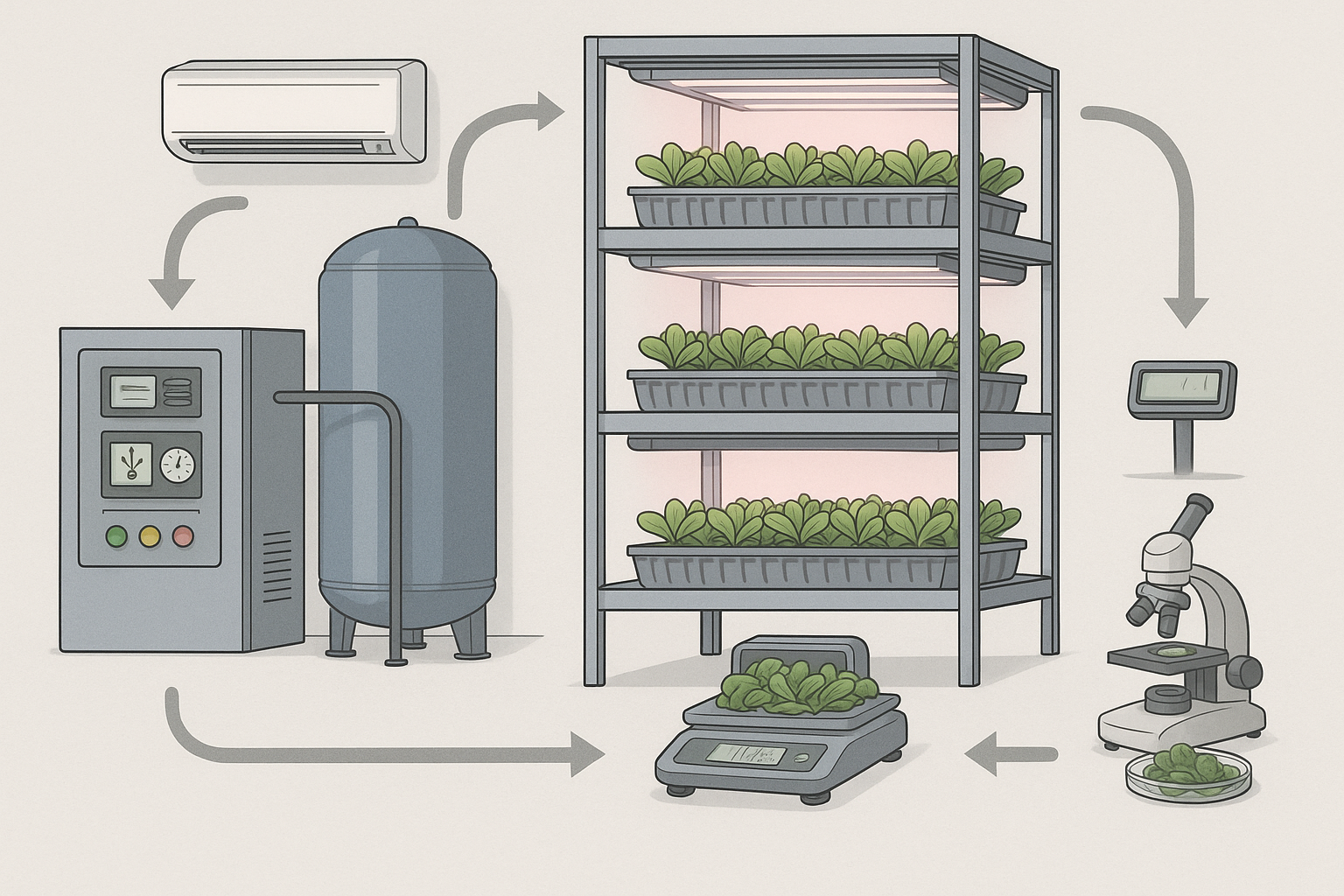
The pursuit of yield and quality optimisation increasingly depends on the integration of data analytics, modelling, and automation. Sensors embedded within growing systems provide real-time feedback on microclimate conditions, nutrient concentrations, and plant physiological status. AI-driven decision-support systems are beginning to recommend environmental adjustments in response to predicted plant responses, effectively creating digital twins of cropping systems. These tools allow growers to test optimisation scenarios virtually before implementing them in the farm, reducing risk and improving efficiency. However, technology cannot replace the biological knowledge underpinning crop responses; optimisation remains as much an art as a science.
Wider Significance and Future Directions
The optimisation of yield and quality in vertical farming extends beyond individual farms. As CEA plays a growing role in food security strategies, the question of how much output can be achieved per unit of energy, water, and seed becomes increasingly significant. Studies have highlighted that while yields per area are often many times greater than conventional agriculture, the energy costs of lighting and climate control remain limiting factors. Future research is therefore focused not only on raising crop productivity, but on achieving it at lower resource inputs, thereby maximising net yield in terms of both produce and sustainability outcomes.
Conclusion
Yield optimisation in CEA is not a simple matter of producing more crops more quickly; it is a nuanced process of aligning productivity with quality, market requirements, and sustainability goals. It depends on a complex interplay of environmental control, crop physiology, data-driven management, and strategic trade-offs. For investors and policy-makers, this means that claims of high yields must always be interpreted alongside quality outcomes and input costs. For growers, it means that the path to successful optimisation lies not in a single technique, but in an integrated, adaptive approach that balances science, technology, and market awareness. Vertical farming offers the rare opportunity to control the conditions of crop growth with precision; the challenge is to harness that control to deliver both yield and quality in ways that are commercially viable and socially valuable.
References
Graamans, L., Baeza, E., van den Dobbelsteen, A., Tsafaras, I., & Stanghellini, C. (2018). Plant factories versus greenhouses: Comparison of resource use efficiency. Agricultural Systems, 160, 31-43.
Ouzounis, T., Rosenqvist, E., & Ottosen, C. O. (2015). Spectral effects of artificial light on plant physiology and secondary metabolism: A review. HortScience, 50(8), 1128-1135.
Son, K. H., & Oh, M. M. (2013). Leaf shape, growth, and antioxidant phenolic compounds of two lettuce cultivars grown under various combinations of blue and red light-emitting diodes. HortScience, 48(8), 988-995.