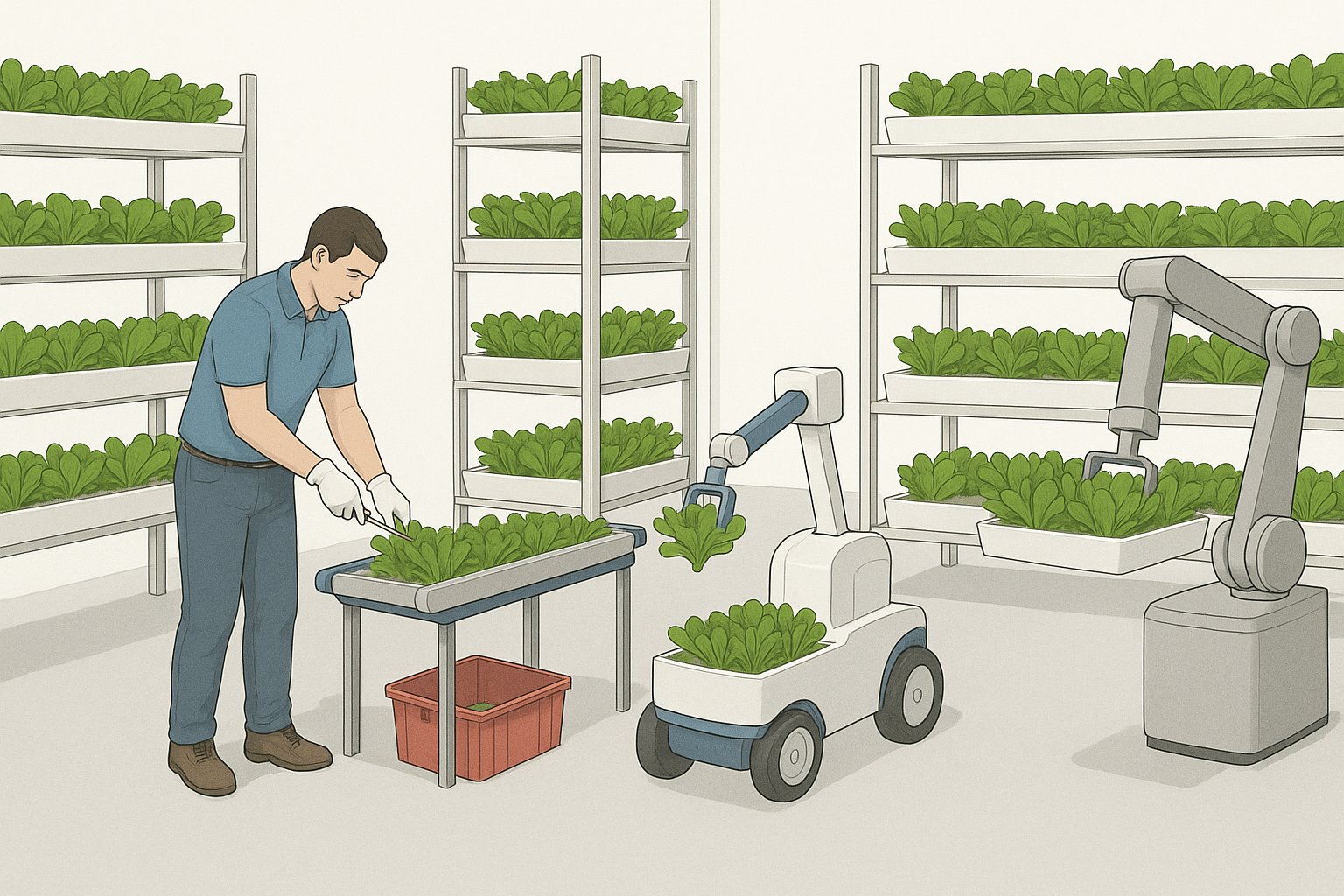
Harvesting is the final stage in the production cycle of indoor crops, yet its importance is often underappreciated in discussions of Controlled Environment Agriculture (CEA). The choice of harvesting strategies in indoor agriculture not only determines the quality and marketability of produce, but also influences labour requirements, system efficiency, sustainability, and ultimately profitability. For growers operating in highly controlled indoor systems where every stage of plant development is carefully managed, the harvesting phase represents the culmination of weeks of environmental optimisation, nutrient delivery, and monitoring. A poorly designed or inefficient harvesting approach risks undermining all the previous effort invested in production.
Harvesting in Indoor Farming
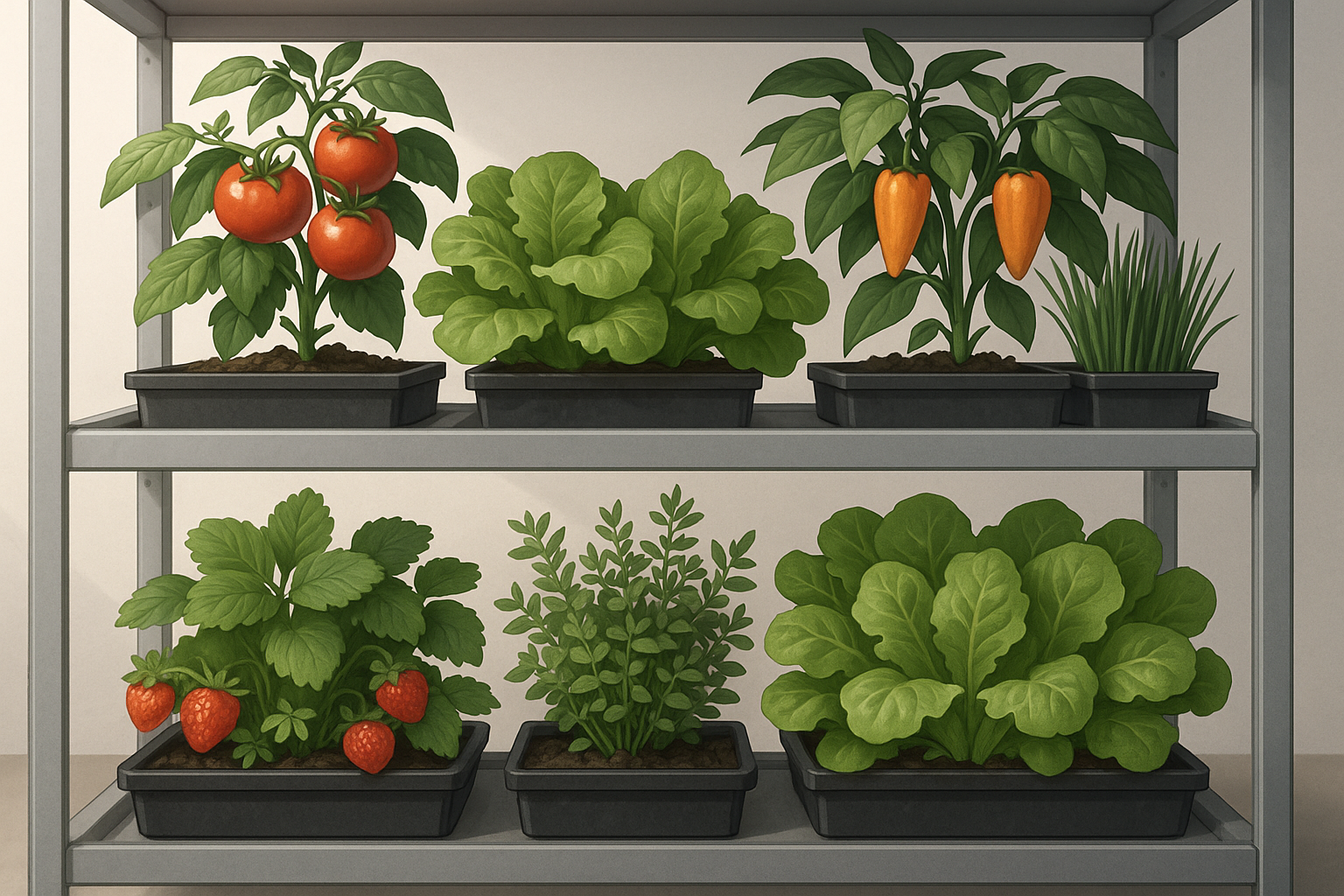
CEA and Vertical farming differs from conventional agriculture in its focus on precision. Crops are often grown under carefully controlled conditions with strict planting densities, standardised growth cycles, and clearly defined market specifications. Harvesting must therefore be equally precise: the timing of harvest can influence flavour, nutrient content, shelf-life, and yield. In crops such as lettuce, microgreens, herbs, or strawberries, a few hours’ difference in harvest maturity may affect post-harvest quality and transport resilience.
Unlike outdoor farming, where crops may be harvested seasonally and in bulk, indoor farming relies on continuous, staggered production cycles. This means harvesting is not a single seasonal event but an ongoing operational process that must be repeated daily or weekly. Efficient harvesting strategies therefore reduce labour costs, maintain consistency, and ensure that market demand is met without oversupply or waste.
Manual Harvesting in Controlled Environments
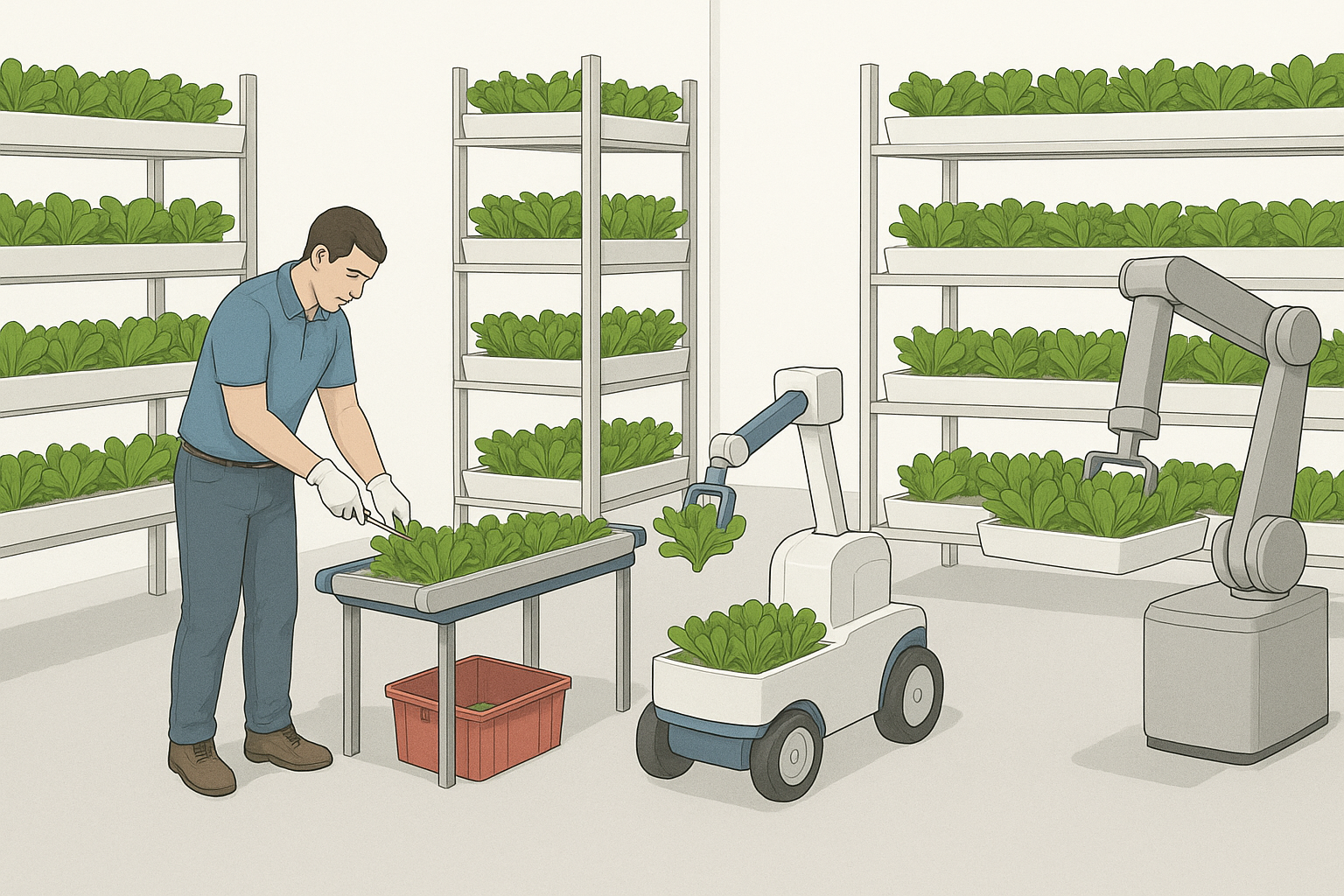
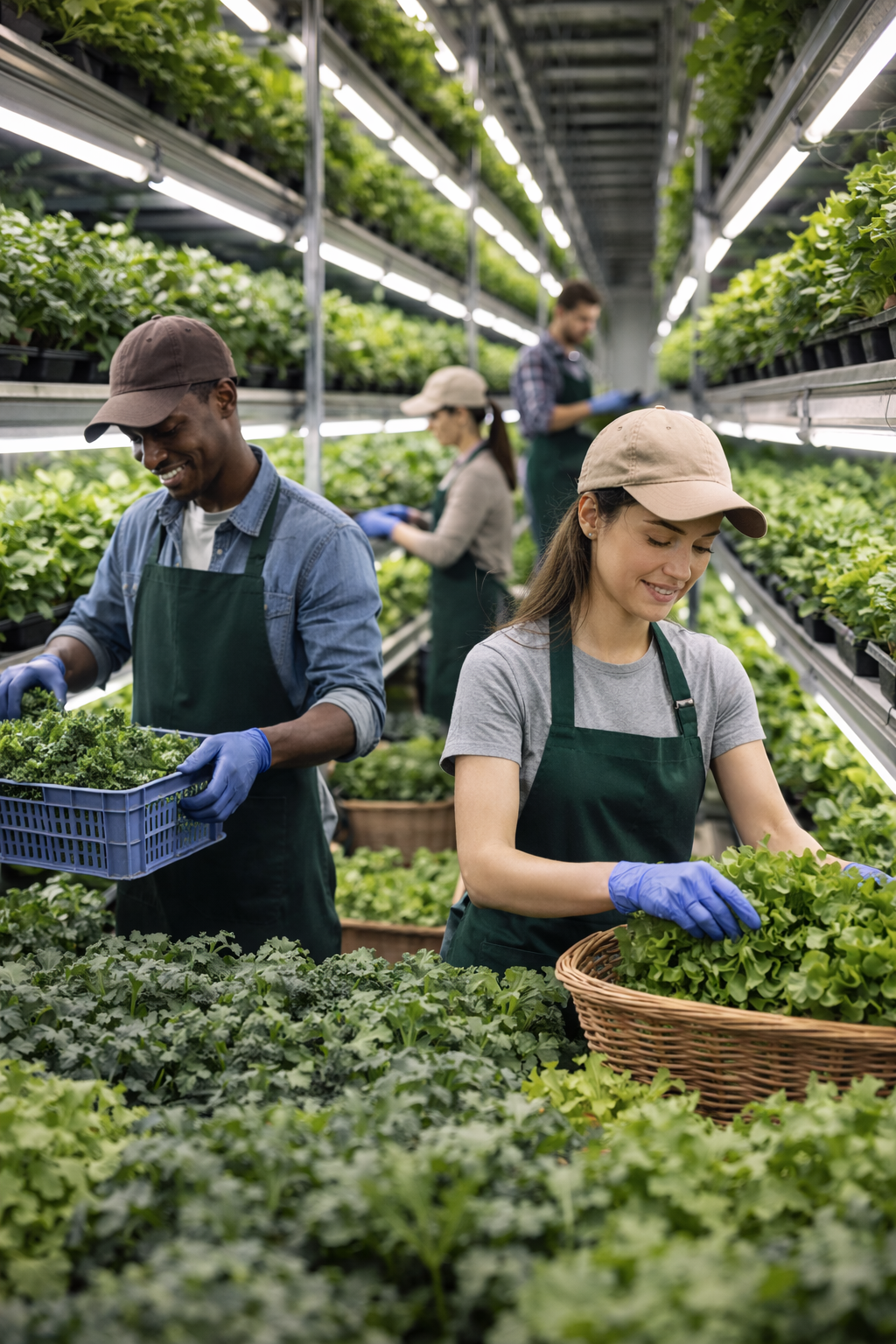
Many vertical farms still rely heavily on manual labour. Workers cut, trim, or pick crops by hand, often using tools adapted from horticultural practice. Manual harvesting has advantages in flexibility: skilled workers can judge ripeness and quality, remove damaged leaves, and ensure delicate produce is handled with care. This is particularly relevant for high-value crops such as herbs or edible flowers where appearance and freshness are paramount.
However, labour-intensive harvesting also presents challenges. Labour costs are a significant proportion of total operational expenditure in many vertical farms, particularly in countries with high wage structures. Manual harvesting also introduces risks of inconsistency and contamination if hygiene protocols are not strictly followed. As vertical farming becomes more commonplace reliance on manual harvesting alone may limit economic viability, prompting greater interest in semi-automated and fully mechanised systems.
Mechanised and Automated Harvesting
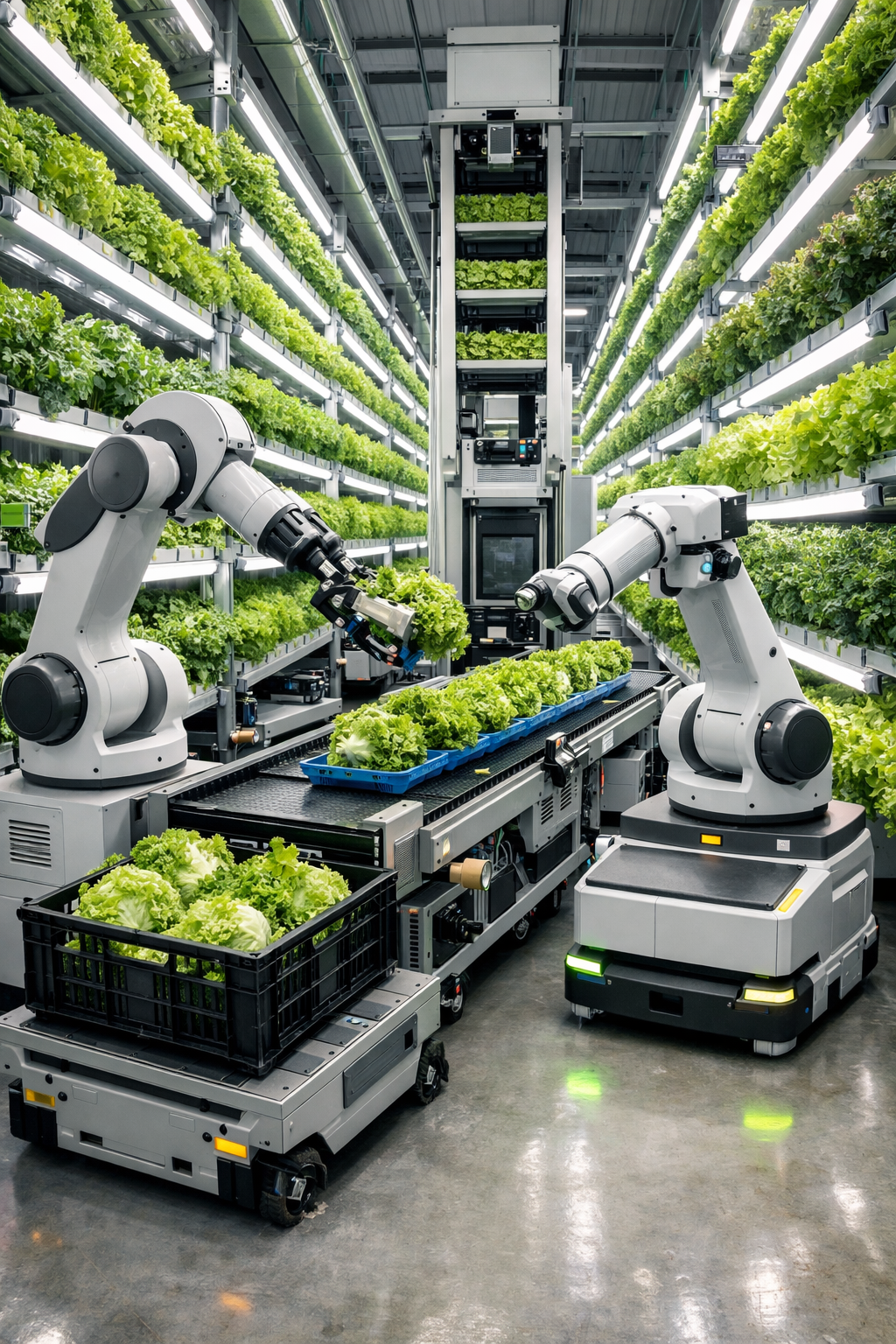
The development of mechanised harvesting solutions for vertical farming is gaining pace. Conveyor-based systems, robotic cutters, and automated tray handling equipment can reduce the dependence on human labour while standardising quality. For example, leafy greens grown in hydroponic trays can be cut en masse using automated bandsaws or water-jet systems. In other cases, robotic arms equipped with vision systems can identify and pick individual fruits such as tomatoes or strawberries.
Automation brings benefits of scalability, consistency, and reduced labour dependency. Yet it also requires significant capital investment and careful system integration. Indoor farms are often highly customised; the suitability of a harvesting robot or mechanised system depends on crop morphology, growth medium, and the physical layout of growing racks. While automation offers promise, its widespread adoption in vertical farming remains in development, with most commercial operations employing hybrid strategies that combine manual oversight with mechanised support.
Timing, Frequency, and Market Alignment
Another central dimension of harvesting strategies in vertical farming concerns timing and frequency. Indoor farms can harvest crops at multiple growth stages: microgreens may be cut just days after germination; baby leaves may be harvested at two to three weeks; mature heads of lettuce or fruiting crops are taken later. Each stage aligns with different markets, from restaurants seeking tender microgreens to retailers demanding consistent heads of lettuce.
Harvest frequency also interacts with crop scheduling. Because vertical farms operate on staggered production, efficient harvest planning ensures a continuous supply. Poorly timed harvesting may create surpluses that strain storage or shortfalls that damage customer relationships. Advanced scheduling software and digital twin modelling are increasingly used to forecast yields and align harvesting schedules with demand.
Post-Harvest Handling in Indoor Systems
Harvesting cannot be separated from what follows immediately afterwards: washing, cooling, packaging, and transport. Post-harvest handling in indoor farming is particularly important because consumers often expect “ready-to-eat” produce that has undergone minimal handling. Cold-chain integrity, hygienic processing, and gentle packaging are therefore critical to preserve freshness and reduce losses. Some farms integrate harvesting directly into packaging workflows: crops are cut, conveyed, and sealed within minutes, reducing the risk of contamination and extending shelf life.
Sustainability and Resource Considerations
Harvesting strategies also influence sustainability. Inefficient harvesting can lead to unnecessary waste of biomass, energy, and water. In microgreen production, for instance, a single harvest consumes a significant volume of seed. Innovative strategies such as multi-cut harvesting of certain leafy greens, or the selection of cultivars bred for regrowth, may reduce waste and extend productivity. However, these strategies must be balanced against the need for uniformity and quality in markets that demand visually consistent produce.
Furthermore, automation raises questions of energy use and material resources. Robots and conveyors require additional energy input, and plastic packaging often accompanies automated workflows. Designing harvesting approaches that balance efficiency with environmental responsibility remains a priority for both researchers and practitioners.
Research, Innovation, and Future Directions
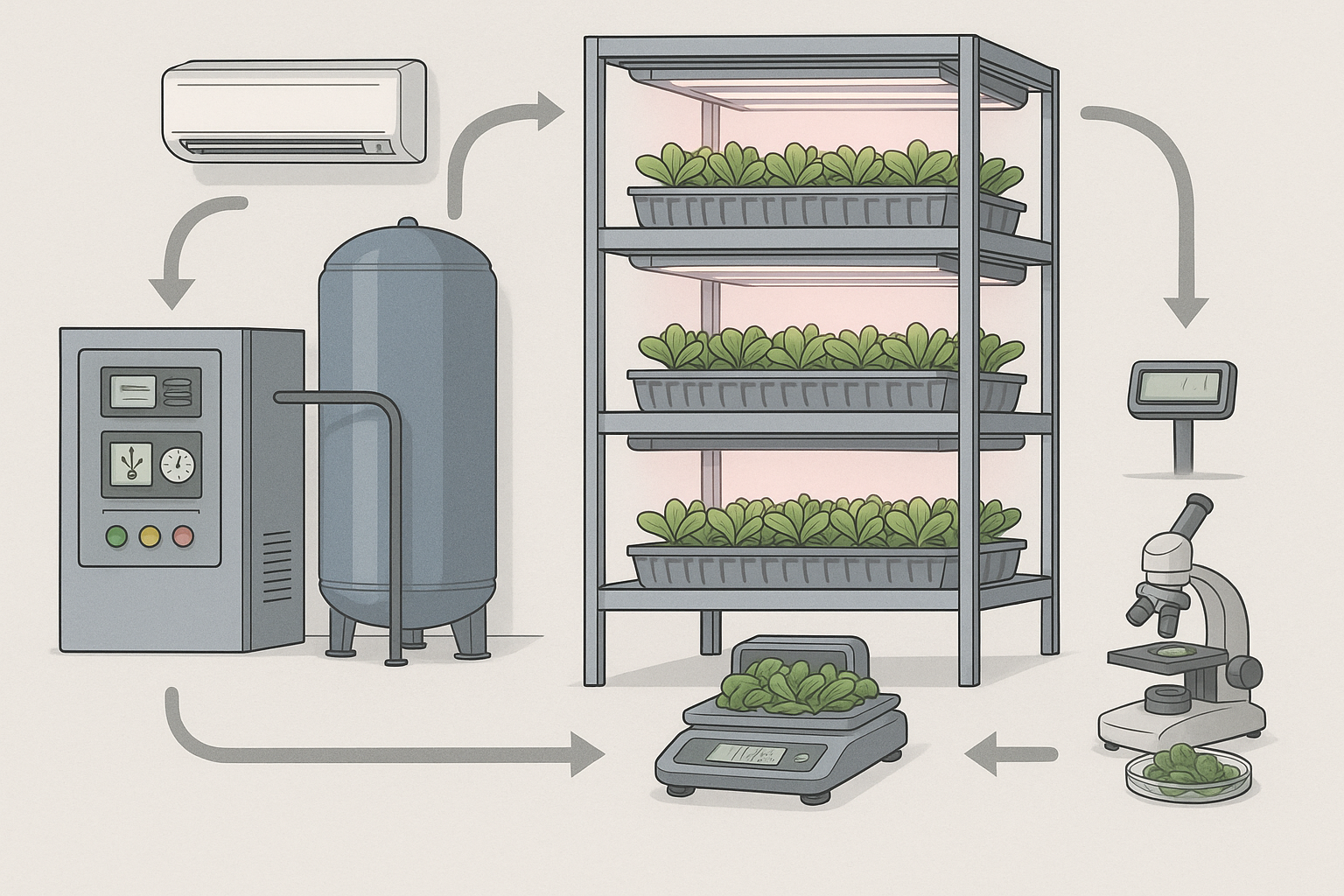
Research into harvesting strategies in vertical farming is rapidly evolving. Universities and start-ups alike are experimenting with new robotic systems, AI-based ripeness detection, and precision cutting tools. Integration with Internet of Things (IoT) sensors allows farms to track crop readiness in real time, while machine learning algorithms can optimise harvest schedules to maximise yield and minimise waste.
Future innovation is likely to combine biological and technological approaches. Plant breeders are already exploring varieties optimised for indoor harvest, such as lettuce with uniform height or strawberries with clustered fruiting patterns that are easier for robots to pick. Coupled with advances in automation, these developments may redefine what constitutes an efficient harvest in controlled environments.
Conclusion
Harvesting strategies in vertical farming are a critical component of operational success, shaping not only the efficiency of production but also the quality and reliability of supply. Whether through manual precision, mechanised efficiency, or automated innovation, the choice of harvesting approach must align with crop type, business scale, and market demand. For a sector positioning itself as a reliable contributor to future food systems, the refinement of harvesting practices will remain central to balancing economic viability with sustainability.
By integrating technical innovation with careful consideration of crop biology and market needs, vertical farms can establish harvesting methods that are efficient, resilient, and adaptable. In doing so, they ensure that the controlled conditions that nurture crops through their growth cycles are matched by equally precise and sustainable practices at the point of harvest.