Controlled Environment Agriculture (CEA) relies heavily on precision climate regulation, and among its most critical components are heating, ventilation, and air conditioning systems. CEA HVAC systems provide the thermal stability, airflow management, and humidity control essential for maintaining optimal plant growth conditions in vertical farming setups. Far from being auxiliary infrastructure, these systems form the environmental backbone of any high-performance indoor farming operation. Without them, reliable year-round production, crop consistency, and energy efficiency would not be possible.
The Function of HVAC in Controlled Environments
In the context of vertical farming, HVAC systems must do more than simply heat or cool air. Their primary function is to manage the internal climate parameters that affect plant physiology: temperature, humidity, and air movement. Each of these variables must be carefully regulated to support photosynthesis, transpiration, nutrient uptake, and disease resistance.
Unlike traditional buildings, which are designed for human comfort, vertical farms require tight environmental control at the microclimate level. Plants are highly sensitive to small deviations in their growing conditions; for example, leaf temperature affects stomatal conductance, while inadequate humidity control may lead to powdery mildew or inhibit transpiration. Consequently, CEA HVAC systems must be engineered with precision and responsiveness.
Moreover, vertical farms have a high internal heat load due to the concentration of LED grow lights and electronic equipment. Lighting arrays can raise temperatures significantly, especially when stacked in close vertical configurations. HVAC systems must account for this thermal gain and maintain spatial temperature uniformity throughout the growing area, including at different canopy levels.
Integrating HVAC with Plant Biology
The design of HVAC systems in CEA environments must begin with an understanding of plant biology and agronomic goals. Unlike HVAC solutions for data centres or office spaces, CEA systems must integrate with biological processes such as evapotranspiration. As plants transpire, they release water vapour, which adds latent load to the air; this must be removed efficiently to prevent humidity from exceeding optimal levels. High relative humidity (RH) not only impedes transpiration but can also foster fungal growth and impair nutrient delivery.
A well-designed HVAC system will monitor and modulate both sensible heat (temperature) and latent heat (moisture). In doing so, it creates a stable vapor pressure deficit (VPD) (the difference between the moisture in the air and the moisture the air can hold when saturated) which is a more useful metric for plant response than temperature or humidity alone. Consistent VPD supports efficient transpiration and nutrient flow, which in turn drives biomass accumulation and quality crop development.
Energy Load Management and Efficiency
CEA HVAC systems are among the most energy-intensive components of a vertical farm. Heating, cooling, and dehumidification must operate continuously and respond dynamically to internal and external changes. As a result, system efficiency is paramount, not only from an operational cost perspective but also in terms of sustainability and carbon footprint.
One of the primary challenges in vertical farming is balancing the competing demands of lighting, cooling, and humidity control. For example, high-efficiency LED lights reduce energy consumption compared to HPS alternatives; however, they still generate considerable heat that must be removed via cooling systems. Simultaneously, transpiring crops increase humidity, requiring dehumidification.
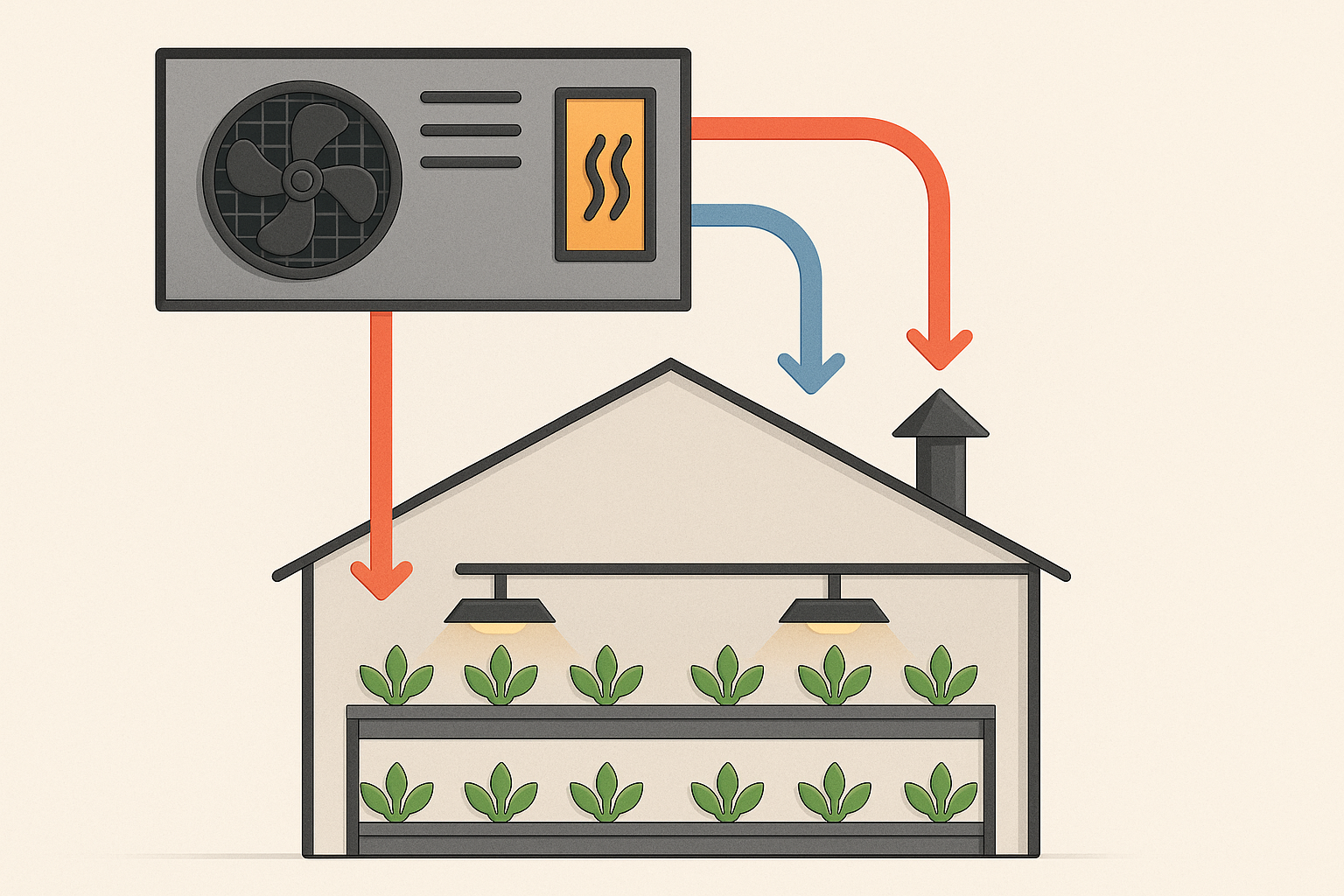
Integrated HVAC systems often incorporate energy recovery ventilators (ERVs), desiccant dehumidifiers, or even hybrid solutions that combine cooling and dehumidification in a single cycle. Advanced farms may utilise heat pumps with variable-speed compressors and intelligent control systems that optimise performance based on real-time sensor feedback. In some designs, excess heat generated during lighting cycles is captured and redirected for use during colder periods, reducing net energy demand.
The use of Computational Fluid Dynamics (CFD) modelling is also gaining ground in facility design, helping engineers simulate airflow, heat distribution, and humidity gradients to ensure consistent performance before installation. These models can also inform system zoning, allowing for differential climate control across different sections of a growing facility, particularly important in multi-crop or multi-growth-stage systems.
Air Quality, Filtration, and Pathogen Control
Ventilation serves both a thermodynamic and biosecurity function in vertical farming. While plants release oxygen and consume CO₂, the environment must be continuously replenished with fresh air to prevent stagnation, odour buildup, or depletion of essential gases. Equally, recirculating air without adequate filtration can facilitate the spread of airborne pathogens, spores, or particulate matter.
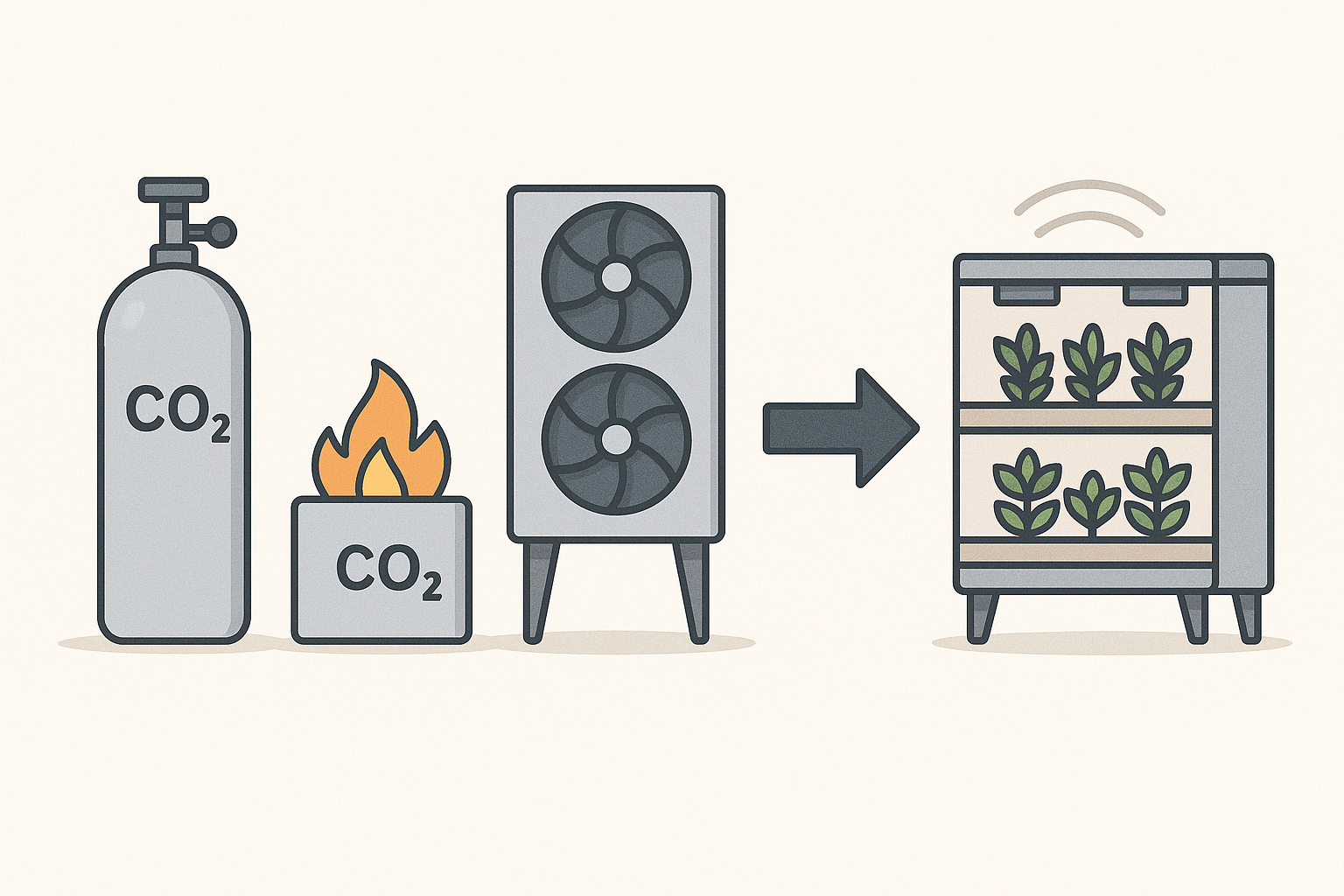
Modern CEA HVAC systems incorporate multi-stage filtration, including HEPA filters, activated carbon, or UV-C sanitisation, to maintain air purity. This is particularly critical in high-density indoor farms where infection pressure can increase rapidly. CO₂ supplementation, often required to maximise photosynthetic efficiency, must also be carefully managed to avoid accumulation above recommended thresholds (typically up to 1200 to 1500 ppm for optimised systems, depending on crop type).
Some advanced systems also introduce positive pressure differentials to keep out external contaminants or incorporate controlled laminar airflow to reduce pathogen dispersal. All these measures contribute to a cleanroom-like environment tailored for plants rather than people.
Climate Control and Automation
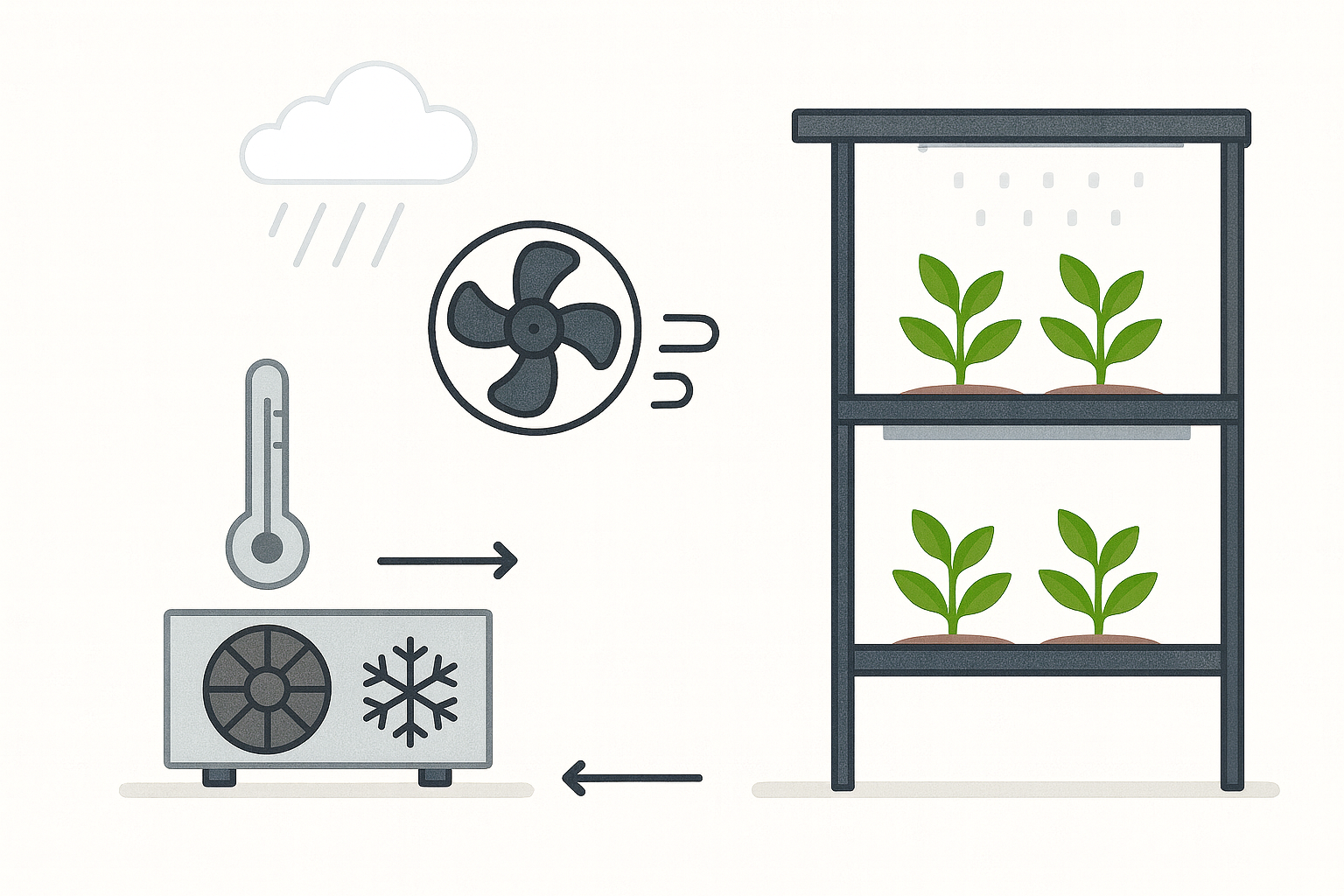
The effectiveness of a CEA HVAC system is closely linked to its integration with digital control systems. These systems monitor environmental data in real time and adjust HVAC operation accordingly. Sensors track temperature, humidity, CO₂, air velocity, and even crop water status; algorithms then use this information to adjust fan speeds, damper positions, compressor cycles, or dehumidification loads.
The integration of HVAC with Building Management Systems (BMS) or dedicated horticultural control platforms allows for predictive adjustments and load balancing. For example, the system may reduce dehumidification in anticipation of night-time cooling or adjust airflow patterns based on crop development stage.
Machine learning approaches are beginning to emerge, enabling HVAC systems to learn from historical performance data and optimise their operation over time. This not only enhances energy efficiency but also improves crop outcomes by maintaining a more stable growing environment with fewer fluctuations or reactive overshoots.
Future Directions and Considerations
As vertical farming scales and diversifies, the demand for adaptive and efficient HVAC solutions will grow accordingly. Customisation will be key; CEA HVAC systems must be designed not just for climatic performance but also for the specific crop profile, facility layout, energy availability, and operational goals of the farm.
Sustainability will continue to drive innovation. Opportunities exist in the use of renewable energy sources, thermal energy storage, and closed-loop environmental systems that recycle heat, water, and air. Furthermore, regulatory standards and lifecycle assessments will increasingly factor into HVAC system selection and operation.
Ultimately, successful vertical farming operations depend as much on climate infrastructure as on seeds, substrates, or lighting. HVAC is not merely a support system; it is a central pillar of environmental control in CEA. Investing in well-designed, data-informed HVAC architecture is essential to achieving consistency, quality, and profitability in vertical farming. Without it, the core promise of CEA, namely predictable, high-yield, indoor crop production, cannot be reliably fulfilled.