
Understanding the role of plant stomata and the process of gas exchange in plants is a requirement of modern Controlled Environment Agriculture (CEA). Stomata are tiny pores, primarily located on the surfaces of leaves, that regulate the flow of gases between plants and their surrounding environment. They are the entry point for carbon dioxide required in photosynthesis and the main exit point for oxygen and water vapour. In indoor farms and vertical farming systems, where light, humidity, and carbon dioxide levels are carefully managed, stomatal behaviour directly influences crop growth, yield, and water-use efficiency.
The role of stomata in photosynthesis and respiration
At its core, gas exchange in plants revolves around photosynthesis and respiration. Stomata open to allow carbon dioxide to diffuse into the leaf mesophyll, where it is fixed into carbohydrates during photosynthesis. Oxygen, a by-product of this process, exits the leaf through the same pores. Simultaneously, plants respire, consuming oxygen and releasing carbon dioxide. This constant flux means that stomata function as highly dynamic gateways, balancing multiple metabolic processes while protecting the plant against excessive water loss.
Water loss and transpiration
Stomatal opening also facilitates transpiration, which is the evaporation of water from internal leaf tissues. While this may appear wasteful, transpiration plays an essential role in cooling the plant and maintaining the flow of water and dissolved nutrients from roots to shoots. In natural ecosystems, water loss is counterbalanced by rainfall and soil reserves. In CEA systems, however, water availability is tightly controlled and often recycled. The extent of stomatal opening therefore becomes a critical determinant of water-use efficiency. Excessive transpiration increases the energy demands on climate control systems; insufficient transpiration can restrict nutrient transport and temperature regulation.
Environmental control and stomatal responses
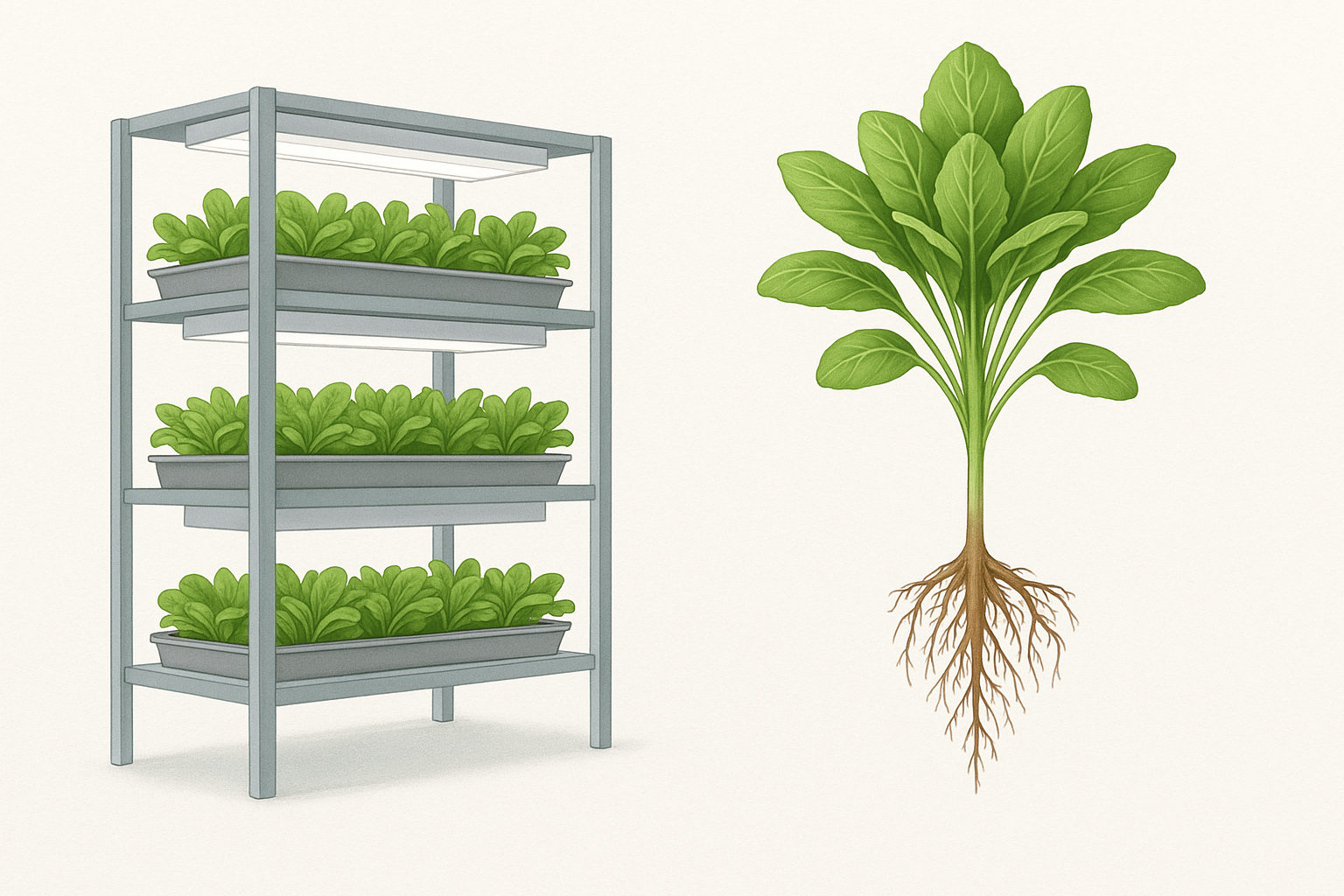
Stomata respond to a wide range of environmental cues, including light intensity, carbon dioxide concentration, relative humidity, temperature, and even internal signals such as the plant hormone abscisic acid. In a vertical farm, growers can manipulate many of these parameters. For example, blue wavelengths of light promote stomatal opening, while elevated carbon dioxide levels often lead to partial closure once photosynthetic demand is satisfied. Relative humidity in the growth chamber affects the vapour pressure deficit (VPD), which in turn influences how much water vapour exits through the stomata. Managing VPD is now a central principle of precision horticulture, ensuring that plants maintain optimum transpiration rates for both cooling and nutrient uptake.
Stomatal diversity across species
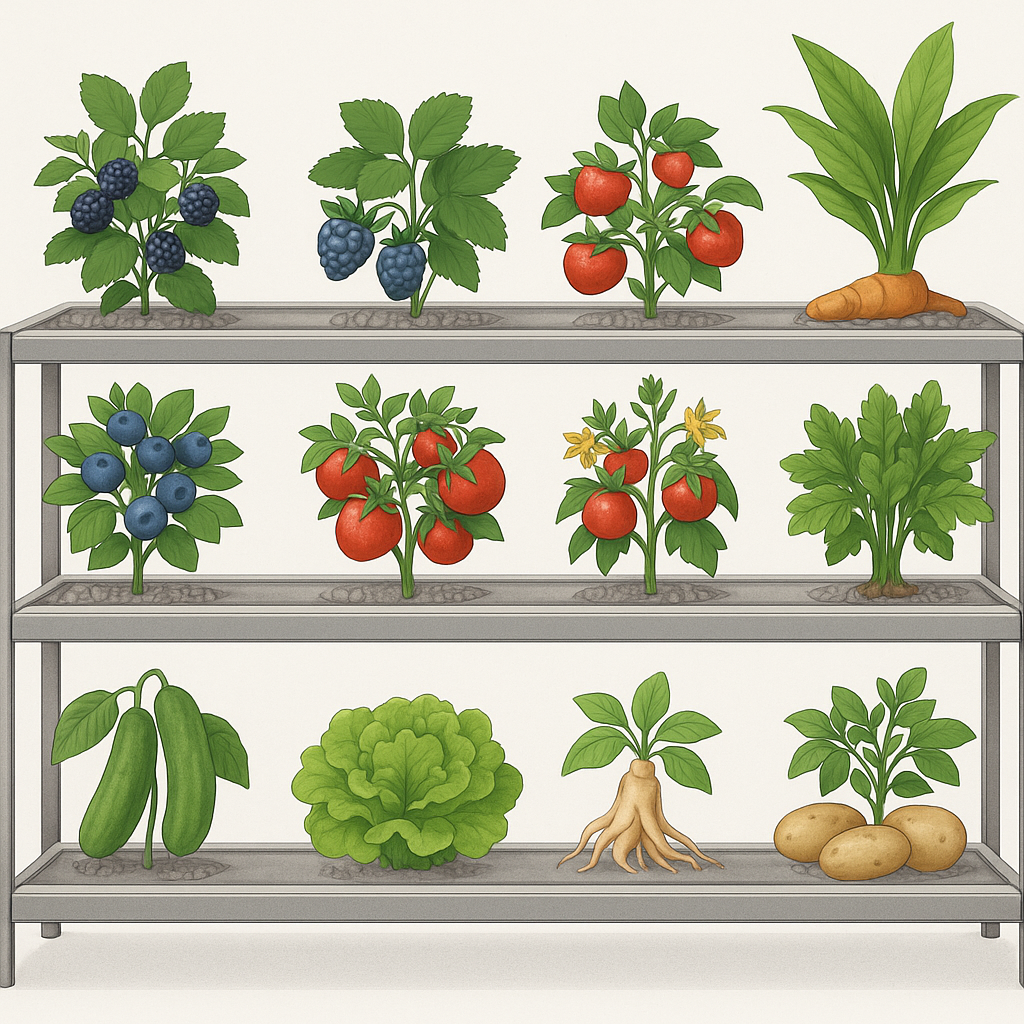
Not all plants regulate gas exchange in the same way. Stomatal density, size, and distribution vary across species and even cultivars. Leafy greens such as lettuce typically have high stomatal densities, enabling rapid gas exchange that supports fast growth in controlled systems. Herbs like basil often display different stomatal responses, reflecting adaptations to their native environments. Understanding these variations allows growers to optimise crop choice, lighting, and climate control strategies. For instance, high-value crops with naturally conservative stomatal behaviour may benefit from targeted CO2 enrichment, while fast-growing leafy crops may require careful humidity management to prevent excessive water loss.
Relevance to Controlled Environment Agriculture
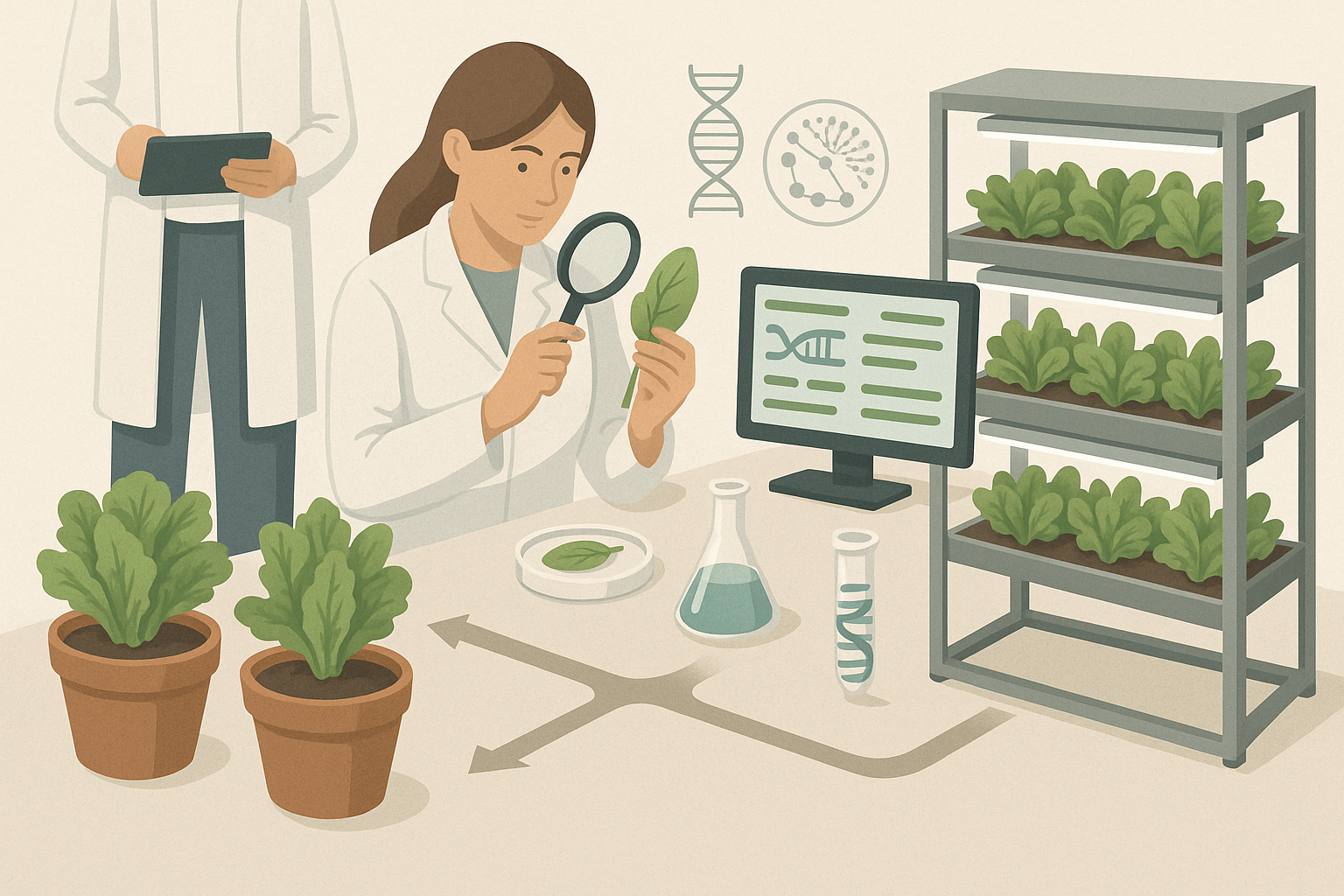
In the context of CEA, plant stomata gas exchange is more than a biological curiosity; it is a measurable process that connects plant physiology with operational efficiency. Sensors and modelling tools now allow growers to monitor stomatal conductance indirectly by tracking transpiration, leaf temperature, or canopy gas exchange. Digital twins of crop systems increasingly incorporate stomatal behaviour to predict how plants will respond to changes in light cycles, CO2 dosing, or HVAC settings. By integrating knowledge of stomata into farm design and daily management, CEA practitioners can fine-tune conditions to maximise photosynthesis while conserving water and energy.
Stomata as a bridge between plant biology and technology
The study of stomata brings together plant biology, environmental physics, and engineering. From the invention of gas-exchange chambers in classical plant physiology to the modern use of machine vision and AI to monitor canopy health, the behaviour of stomata remains a unifying theme in crop science. In vertical farming, where every cubic metre of air and every drop of water must be accounted for, the lessons of stomatal biology translate directly into economic outcomes. Efficient stomatal management means faster growth rates, predictable yields, and reduced operational costs.
Concluding reflections
Stomata are minute structures in plant leaves with far-reaching implications. Their ability to regulate gas exchange underpins photosynthesis, respiration, and transpiration, shaping both plant performance and farm efficiency. In CEA, where the grower assumes responsibility for creating the plant’s atmosphere, understanding stomatal behaviour becomes essential. The more precisely we can interpret how plants open and close these microscopic pores, the more effectively we can design indoor farms that are productive, resilient, and sustainable.
References
Chaves, M. M., Costa, J. M., Zarrouk, O., Pinheiro, C., Lopes, C. M., & Pereira, J. S. (2016). Controlling stomatal aperture in semi-arid regions: The role of abscisic acid, soil water status and plant hydraulic conductivity. Annals of Botany, 118(6), 1293–1306.
Hetherington, A. M., & Woodward, F. I. (2003). The role of stomata in sensing and driving environmental change. Nature, 424, 901–908.
Lawson, T., & Matthews, J. (2020). Guard cell metabolism and stomatal function. Annual Review of Plant Biology, 71, 273–302.
McElwain, J. C., & Steinthorsdottir, M. (2017). Paleoecology, ploidy, paleoatmospheric CO2, and plant stomata. Annual Review of Earth and Planetary Sciences, 45, 493–517.
Raven, J. A., & Beardall, J. (2016). The Biology of Plants. Cambridge University Press.
Taiz, L., Zeiger, E., Møller, I. M., & Murphy, A. (2015). Plant Physiology and Development. Sinauer Associates.
Wheeler, R. M., & Sager, J. C. (2003). Crop gas exchange. In: Plants in Space Biology: Controlled Environment Agriculture Applications. NASA Technical Reports.