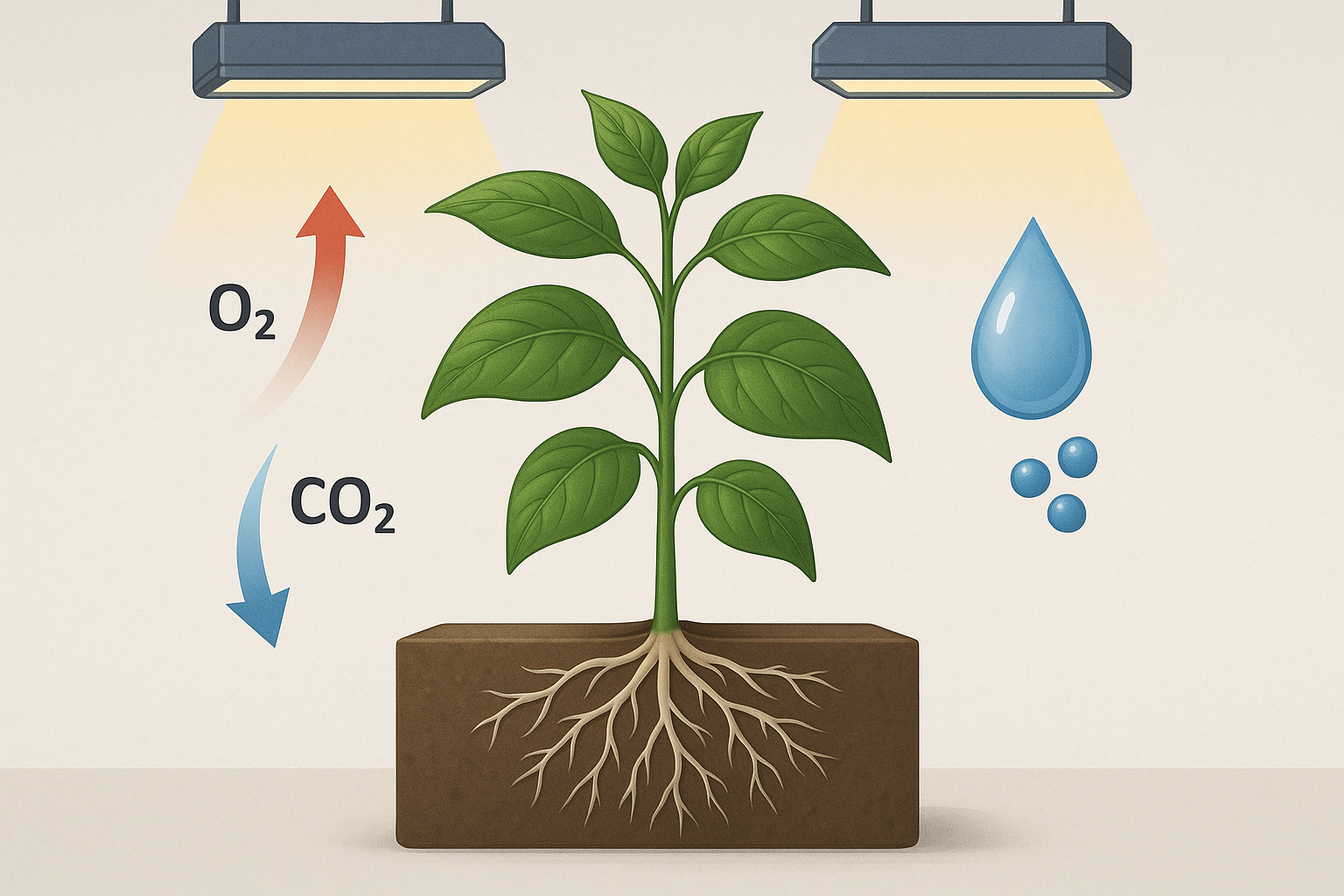
Understanding plant biology basics is essential for anyone interested in growing in vertical farms or other controlled environment systems. Plants are the central actors in these systems, yet their biology is often less familiar to new growers than the engineering and technological components. A solid grasp of how plants grow, develop, and respond to their environment provides the foundation for designing and managing productive indoor farms. This introduction sets out the core principles of plant biology as they apply to controlled environments, showing how the physiology, structure, and functions of plants inform cultivation decisions.
Why plant biology matters in CEA
Controlled environment agriculture seeks to optimise conditions such as light, temperature, humidity, water, and nutrients. These inputs interact directly with plant processes including photosynthesis, respiration, transpiration, and nutrient uptake. A grower who understands these processes is better placed to adjust their system for yield, quality, and efficiency. For example, knowing that stomata regulate gas exchange helps explain why humidity management is critical in vertical farming; or why light quality affects not just photosynthesis but also plant morphology and flavour. Plant biology is therefore not an abstract science, but a practical guide to daily decision-making in CEA systems.
Plant structure and growth
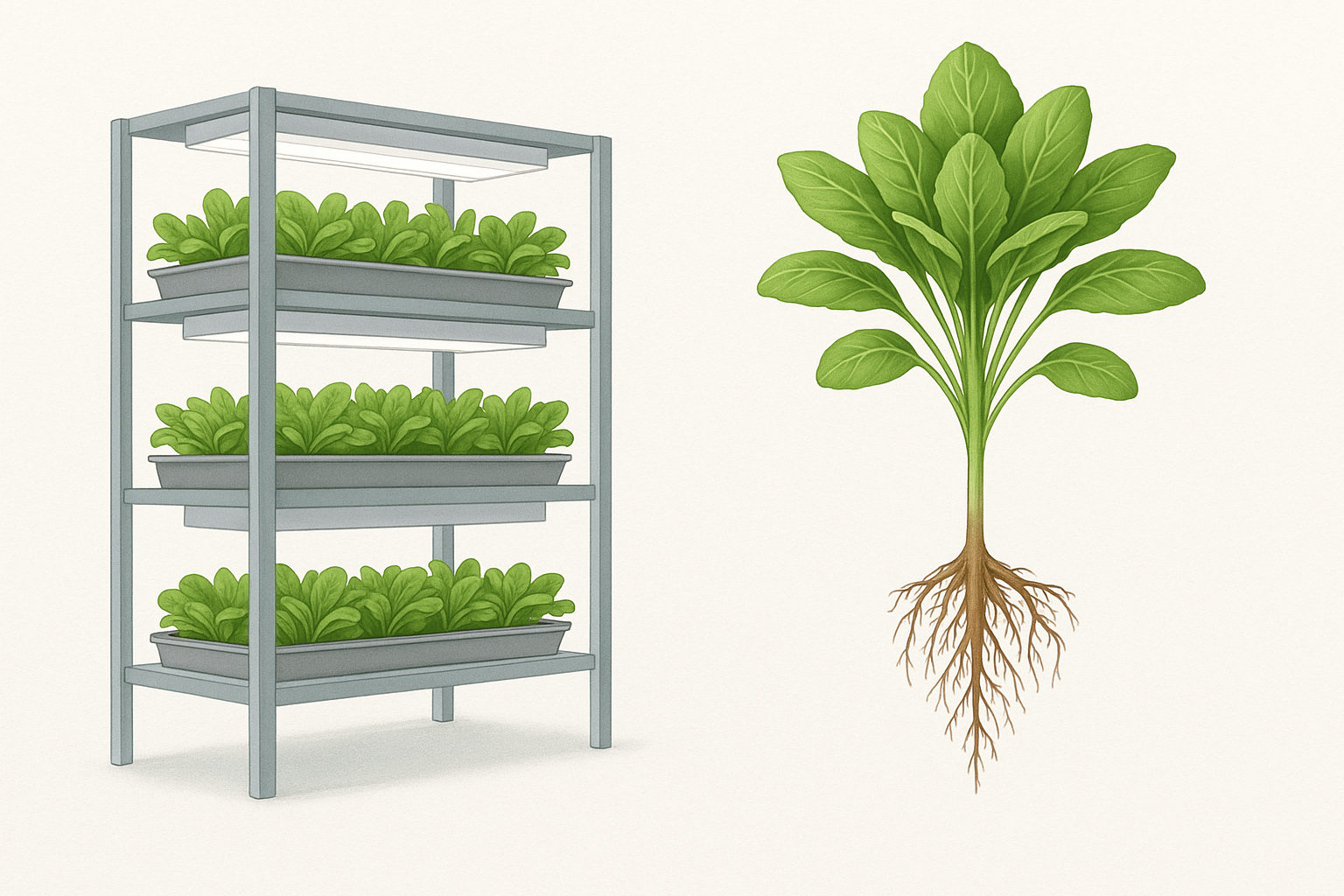
The basic architecture of plants consists of roots, stems, leaves, flowers, and seeds. Each organ plays a role that becomes more or less significant depending on the crop and production goal. Roots anchor the plant and absorb water and nutrients. In soil-less CEA systems such as hydroponics or aeroponics, roots are suspended or misted, so their oxygen supply must be carefully managed. Stems support leaves and transport resources through the xylem and phloem. Leaves are the primary site of photosynthesis and transpiration; their shape, orientation, and density influence how efficiently light is captured. In fruiting crops, flowers and subsequent seeds or fruits represent the harvestable yield, while in leafy greens, vegetative growth is the priority.
Photosynthesis and energy
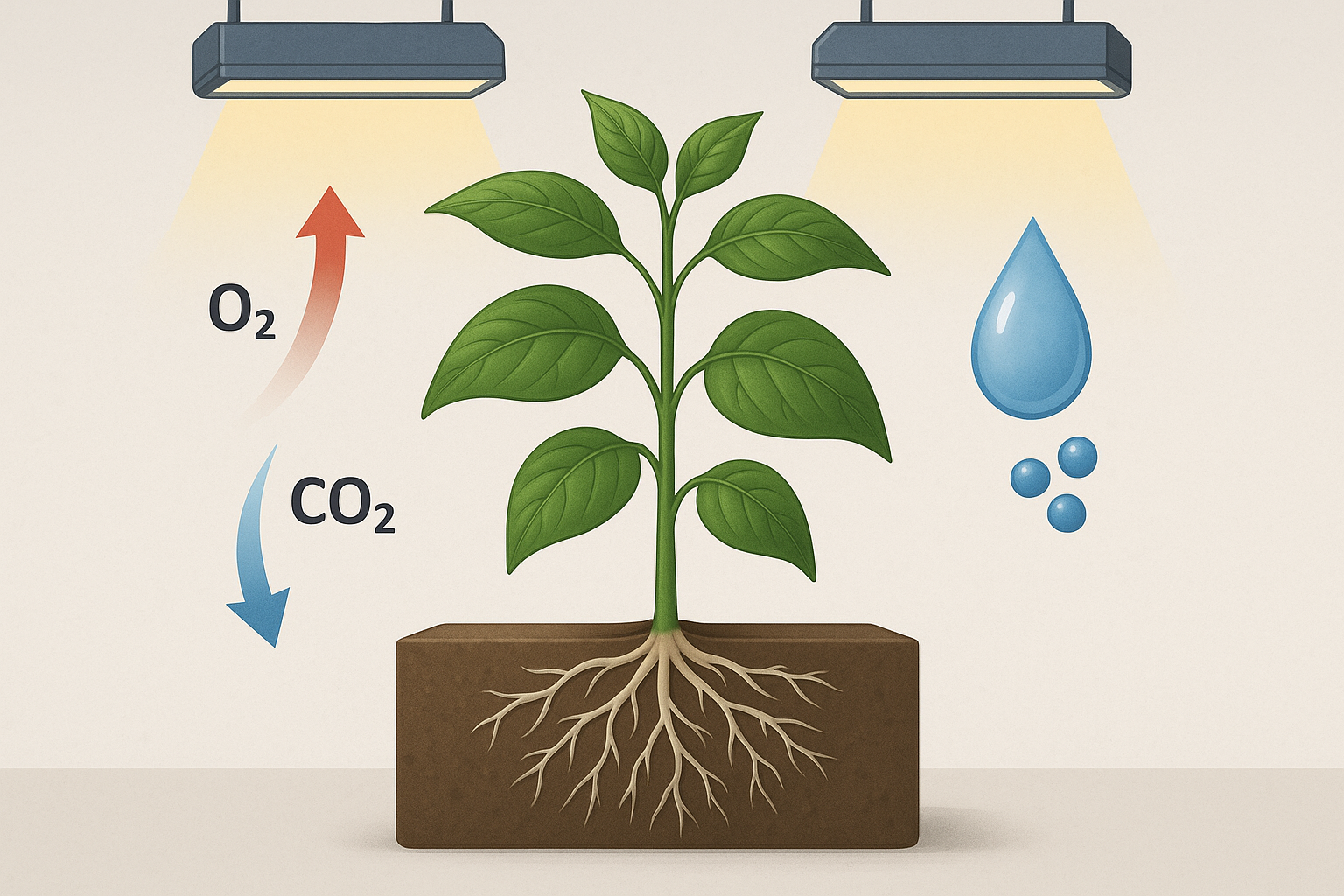
Photosynthesis is the process by which plants convert light energy into chemical energy stored as sugars. In simple terms, light absorbed by chlorophyll drives a reaction between carbon dioxide and water to produce glucose and oxygen.
Plants capture C through photosynthesis: CO2 + H2O LIGHT> O2 + (CH2O)
This fundamental process underpins all plant productivity, and its efficiency is influenced by light intensity, duration, spectrum, and distribution. In CEA, artificial lighting must provide both sufficient photosynthetically active radiation (PAR) and the right quality of light to optimise growth. Growers also need to balance photosynthesis with respiration, the process by which plants use stored sugars for maintenance and growth. If respiration outpaces photosynthesis, plants may grow slowly or show stress symptoms.
Water and nutrient dynamics
Plants depend on water not only as a substrate for photosynthesis but also as a medium for nutrient transport and as a regulator of temperature through transpiration. In controlled environments, irrigation is carefully designed to supply water and nutrients in measured solutions. Nutrient uptake occurs through root membranes, and deficiencies or toxicities quickly affect plant development. A grounding in plant nutrition helps growers interpret symptoms such as chlorosis (yellowing leaves) or necrosis (dead tissue), and respond by adjusting nutrient formulations. The balance of macronutrients and micronutrients is central to both yield and quality.
Macro nutrients: Nitrogen (N), Phosphorus (P), Potassium (K), Magnesium (Mg) Calcium (Ca), Sulfur (S)
Micro nutrients: Boron (B), Iron (Fe), Chlorine (Cl), Manganese (Mn), Zinc (Zn), Copper (Cu), Molybdenum (Mo), Nickel (Ni)
Environmental responses
Plants are highly responsive to environmental cues. Phototropism directs growth towards light sources, while gravitropism orients roots downward and shoots upward. Temperature affects enzyme activity and developmental rates, with extremes leading to stress responses. High humidity can limit transpiration and reduce nutrient transport, while low humidity can cause wilting. Controlled environment systems provide an opportunity to fine-tune these variables, but only if the grower understands the underlying plant responses. For example, high light without adequate water supply leads to photoinhibition and scorch; too much nitrogen without balanced potassium can cause excessive vegetative growth at the expense of fruiting.
Reproduction and crop life cycles
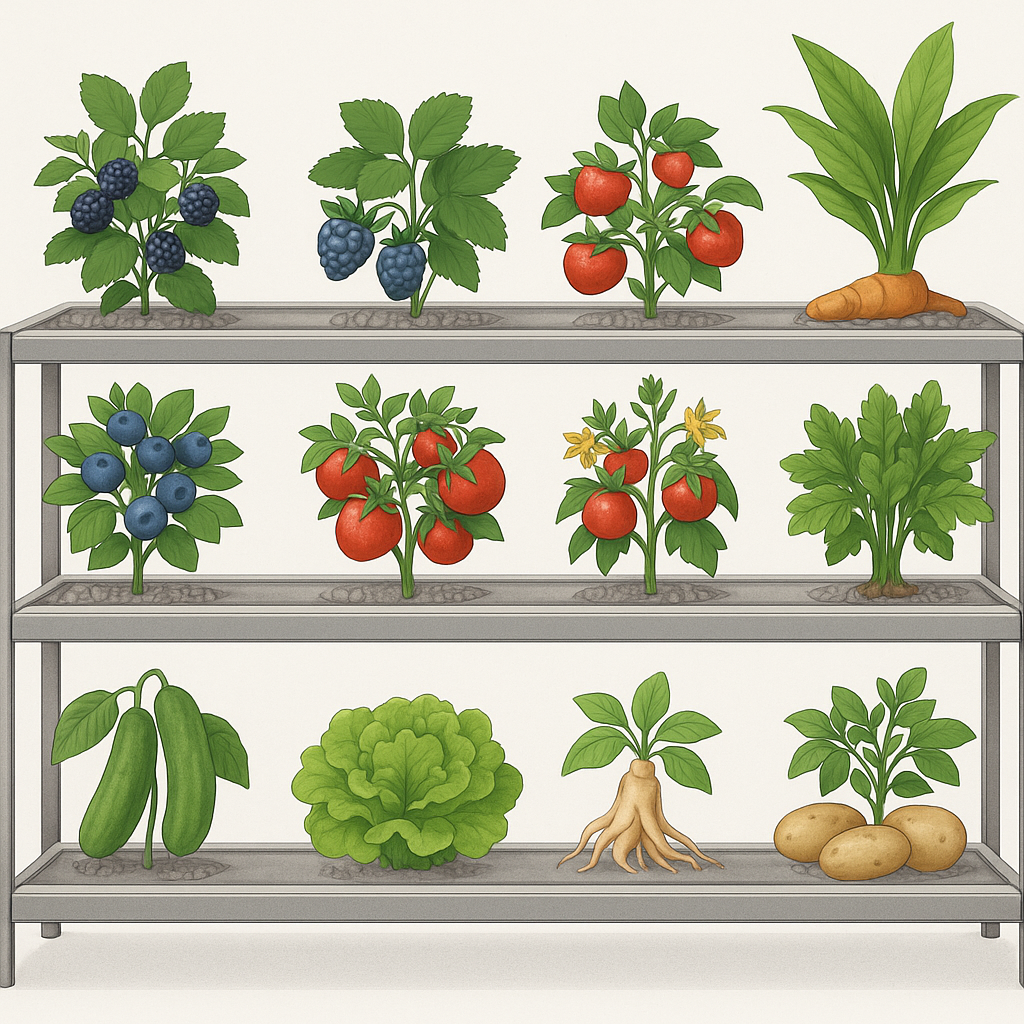
Different crops have different life cycles, and understanding these is essential for planning harvests. Leafy crops such as lettuce and basil are harvested during vegetative growth, before flowering reduces quality. Fruiting crops such as tomatoes and strawberries require careful management of pollination, either through manual techniques or the introduction of pollinators. The transition from vegetative to reproductive stages is triggered by internal signals and environmental cues, such as day length and temperature. Controlled environments allow these cues to be manipulated, enabling off-season or accelerated production, but only if the biology is respected.
Plant health and resilience
Pathogens, pests, and physiological disorders all impact indoor crops. While controlled environments reduce exposure to some external threats, they can also create conditions favourable to fungal diseases or nutrient imbalances. Understanding plant defence mechanisms, from physical barriers like cuticles to chemical responses such as phytoalexins, helps in developing integrated pest management strategies. Moreover, an appreciation of stress biology highlights the importance of resilience: a plant under chronic stress is more susceptible to disease and produces lower yields.
Linking biology to practice
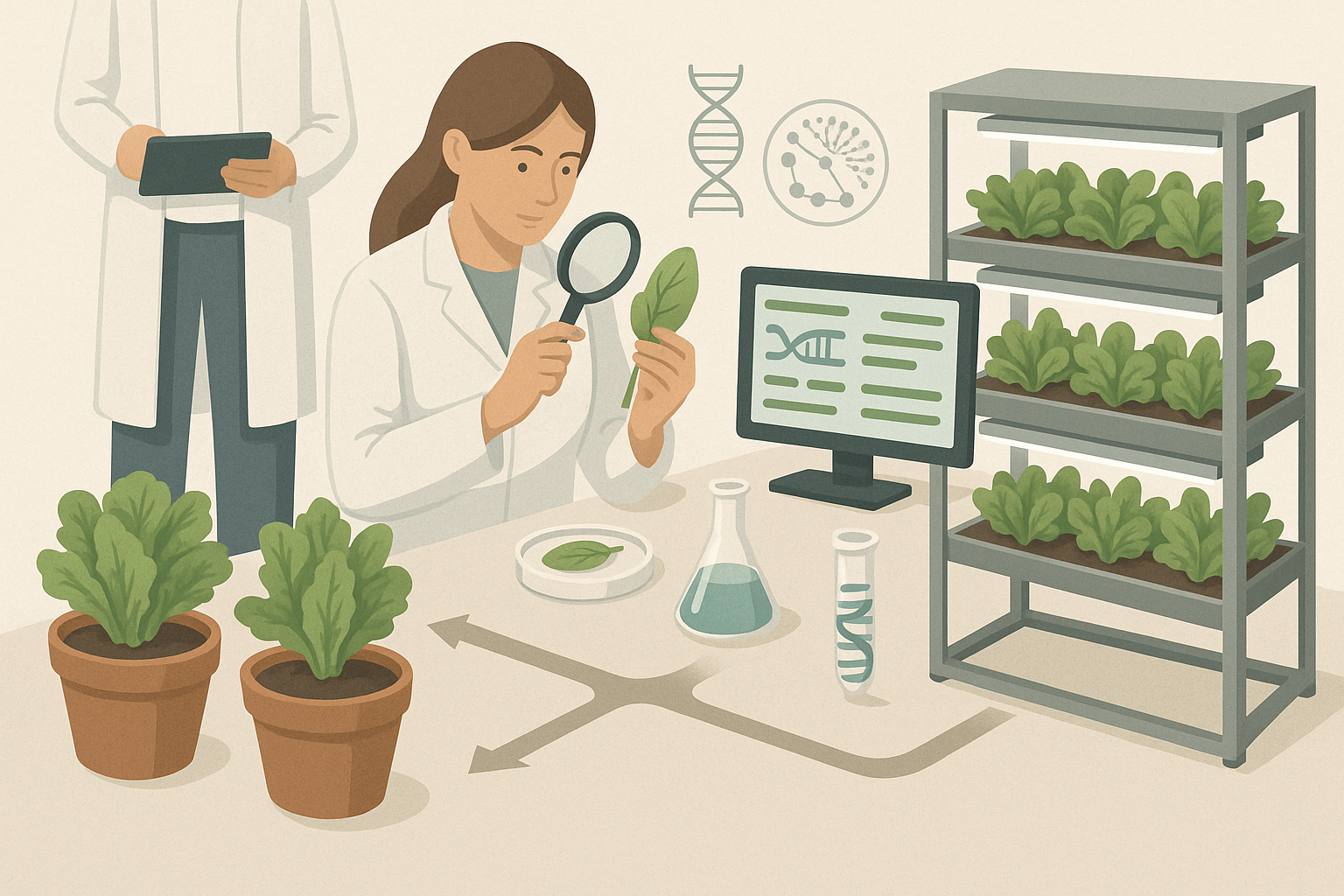
Plant biology basics for CEA are not simply academic. They guide choices about lighting design, irrigation scheduling, ventilation, and crop planning. They explain why certain crops succeed indoors while others are more challenging. They also provide the foundation for innovations in breeding, biotechnology, and precision management. By starting with the fundamentals of plant biology, growers can approach controlled environment agriculture with a deeper understanding and a stronger capacity to troubleshoot, adapt, and innovate.
Conclusion
A vertical farm or greenhouse may be defined by its technology, but it is powered by plant biology. The more growers, investors, and policy-makers understand how plants function, the more effectively they can support sustainable, productive, and profitable systems. This page has outlined the essentials: plant structure and growth, photosynthesis and respiration, water and nutrients, environmental responses, reproduction, and health. These basics, applied thoughtfully, are the foundation of success in controlled environment agriculture.
References
- Taiz, L. and Zeiger, E. (2010). Plant Physiology. 5th ed. Sunderland, MA: Sinauer Associates.
- Hopkins, W.G. and Hüner, N.P.A. (2009). Introduction to Plant Physiology. 4th ed. Wiley.
- Raven, P.H., Evert, R.F. and Eichhorn, S.E. (2012). Biology of Plants. 8th ed. W.H. Freeman and Company.
- Kozai, T., Niu, G. and Takagaki, M. (2015). Plant Factory: An Indoor Vertical Farming System for Efficient Quality Food Production. Academic Press.
- Resh, H.M. (2013). Hydroponic Food Production: A Definitive Guidebook for the Advanced Home Gardener and the Commercial Hydroponic Grower. CRC Press.
- Bugbee, B. (2020). "Toward an Optimal Spectral Quality for Plant Growth and Development: The Importance of Radiation Capture". Horticultural Research, 7(56).