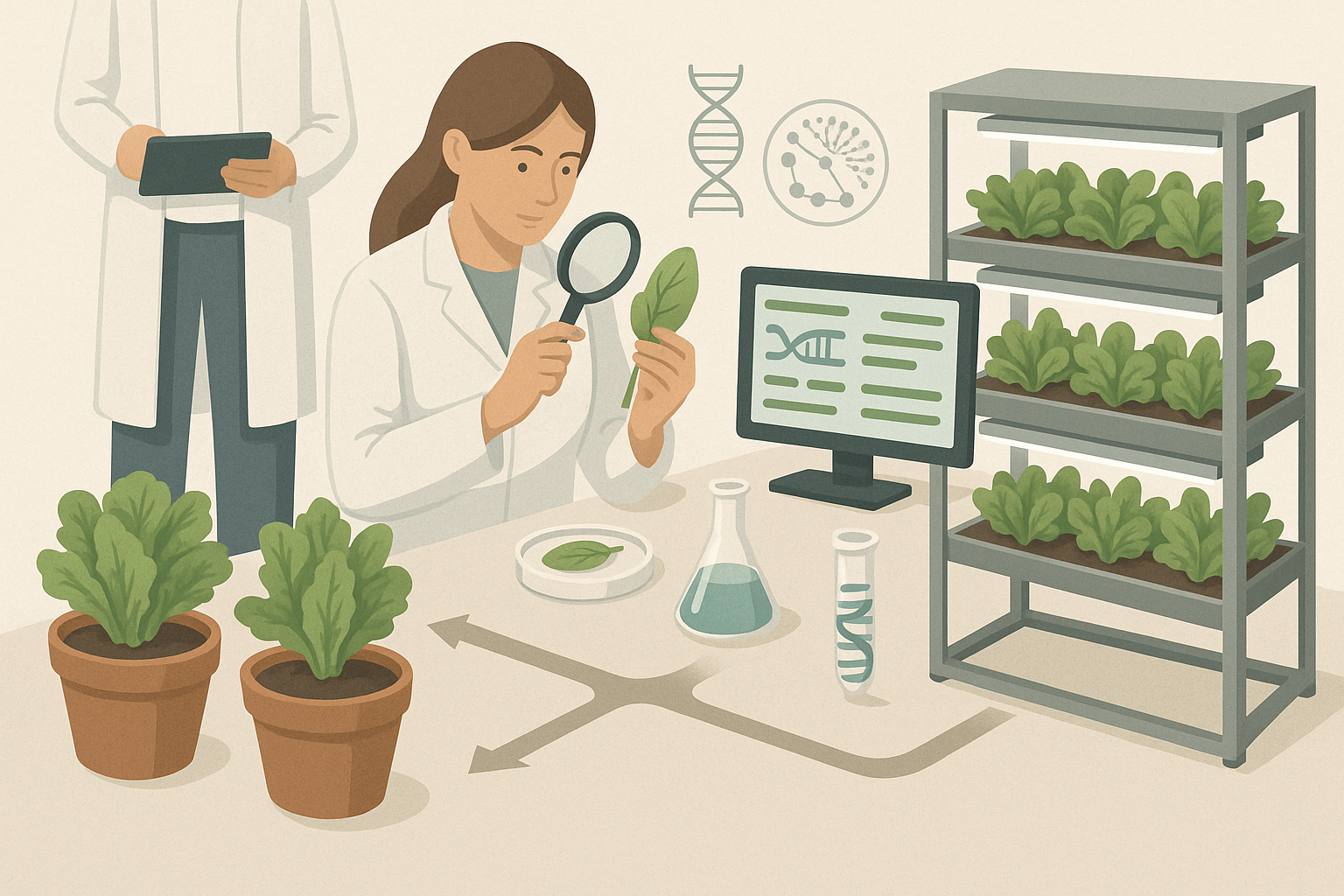
Plant breeding and genomic selection of crops for indoor farming is rapidly becoming a core objective in the evolution of controlled environment agriculture (CEA). The ability to design crops specifically adapted to the unique conditions of indoor production systems represents one of the most significant opportunities to improve yields, resource efficiency, and product quality.
Unlike traditional agriculture, which has benefitted from centuries of selection in open-field environments, vertical farming demands varieties that thrive under artificial lighting, hydroponic or aeroponic conditions, tightly managed microclimates, and space-constrained architectures. Here we consider the rationale, methods, and future directions of breeding programmes and genomic selection for indoor farming, providing both a conceptual overview and examples of emerging practice.
Why Traditional Varieties Fall Short
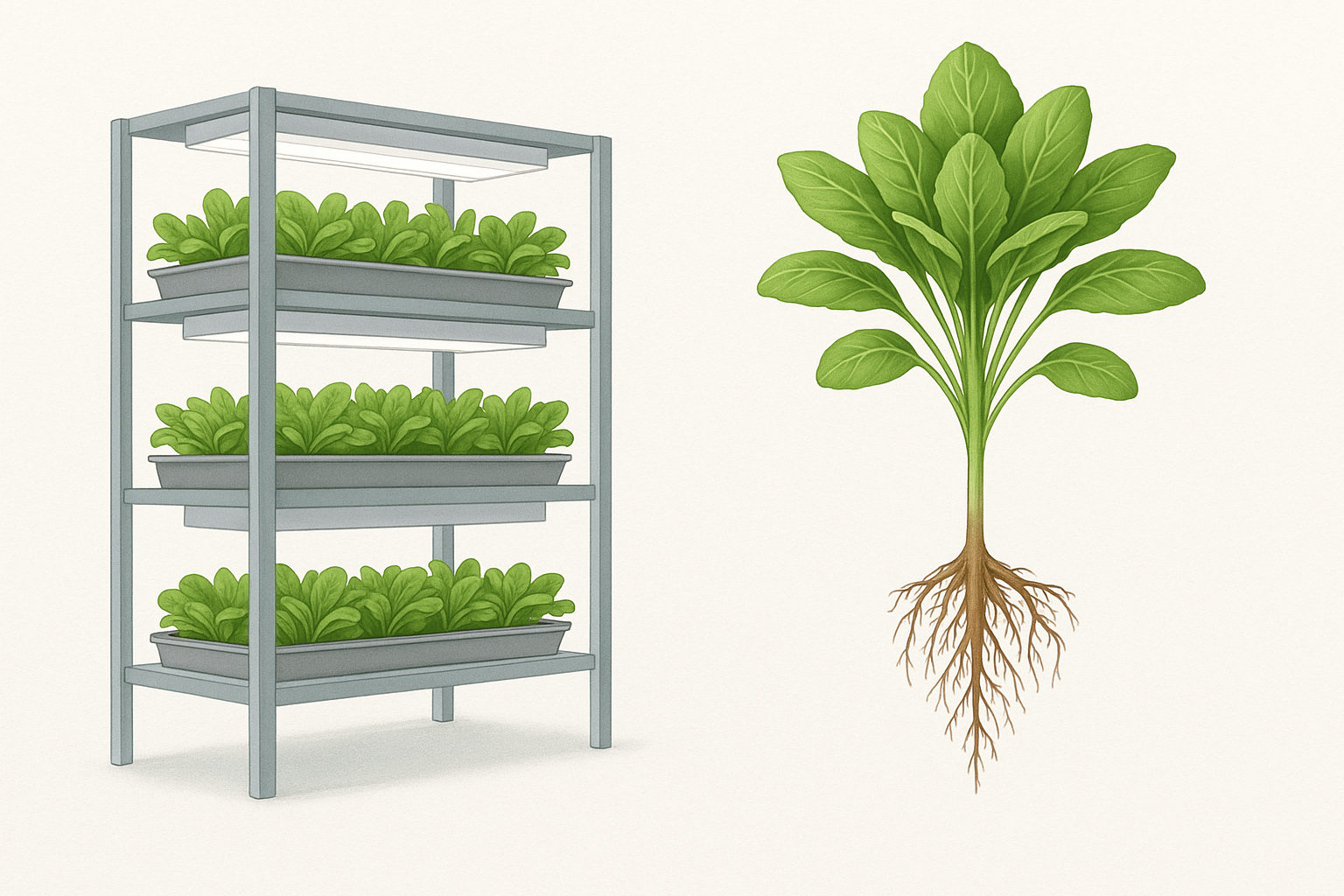
Most crop varieties in commercial use today were developed for field cultivation where traits such as resistance to drought, tolerance to fluctuating temperatures, and mechanical harvestability were priorities. In indoor farms, these features are often irrelevant. Instead, traits like compact architecture, rapid growth cycles, uniform canopy development, and responsiveness to artificial light spectra become decisive. Leafy greens bred for open fields, for example, may bolt too quickly under continuous photoperiods or develop biomass inefficiently when grown in multilayer racks. Without purposeful breeding, yield and quality ceilings in vertical farms are quickly reached.
The Role of Plant Breeding in Vertical Farming
Plant breeding in this context is about tailoring plants to their environment rather than adapting the environment to the plant. Selective crossing and hybrid development can focus on traits such as reduced internode length, enhanced nutrient-use efficiency in hydroponic solutions, and optimised responses to red and blue light. For instance, dwarf tomato varieties have already shown promise in controlled systems, producing fruits of commercial size while remaining structurally suited to stacked layers. Similarly, certain basil lines bred for resistance to downy mildew may become staples in vertical farms due to their compatibility with dense planting and humidity management.

Genomic Selection and Precision Approaches
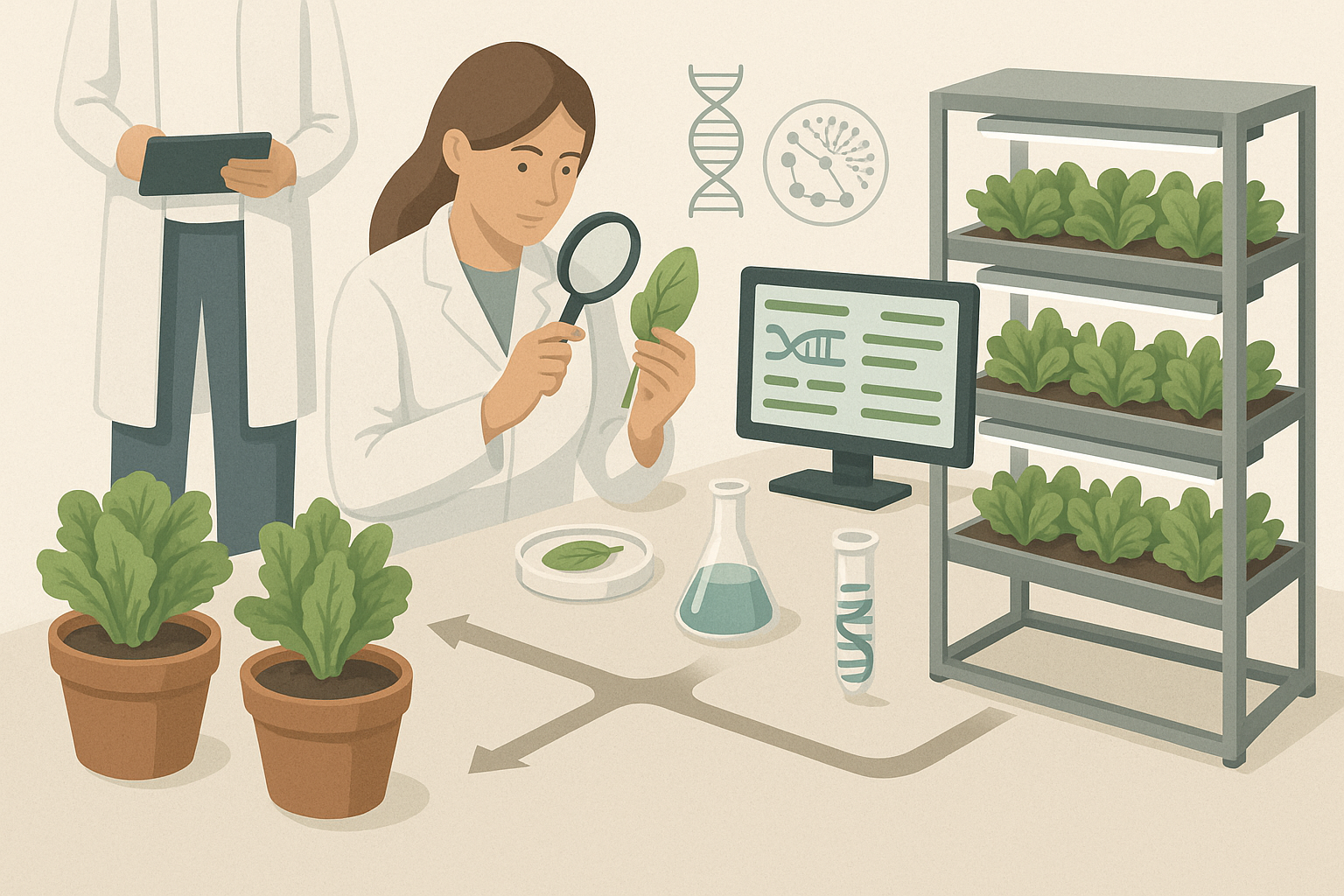
Conventional breeding is a long process, often requiring multiple generations before desirable traits are reliably expressed. Genomic selection shortens this cycle by using molecular markers across the plant genome to predict performance early in development. This enables researchers to identify promising candidates before full phenotypic trials are completed. In vertical farming, where growing cycles are short and selection pressure can be tightly controlled, genomic approaches are particularly powerful. Techniques such as genome-wide association studies (GWAS) and marker-assisted selection (MAS) allow precise identification of alleles linked to traits such as compact morphology, improved nutrient uptake, or altered photoreceptor sensitivity.
The use of gene editing technologies such as CRISPR-Cas9 further accelerates the process by allowing direct modification of traits of interest. For example, targeted edits to phytochrome genes can alter plant responses to far-red light, potentially enabling crops to make better use of LED spectra while avoiding energy wasted on wavelengths irrelevant to growth. These tools raise ethical and regulatory questions, but they also provide unprecedented opportunities to refine crops for highly specific indoor environments.
Linking Breeding to Digital and Environmental Data
One of the distinctive features of vertical farming is the availability of rich environmental and performance data. Sensors monitoring light, CO2, humidity, and nutrient levels create detailed records of crop behaviour under different conditions. When combined with genomic data, this information supports the development of digital twins that can model how particular genetic variants perform across environments. Breeding programmes for indoor farming are therefore increasingly data-driven: plant breeders can simulate, test, and refine varieties with a speed and precision impossible in traditional agriculture.
Case Studies and Emerging Applications
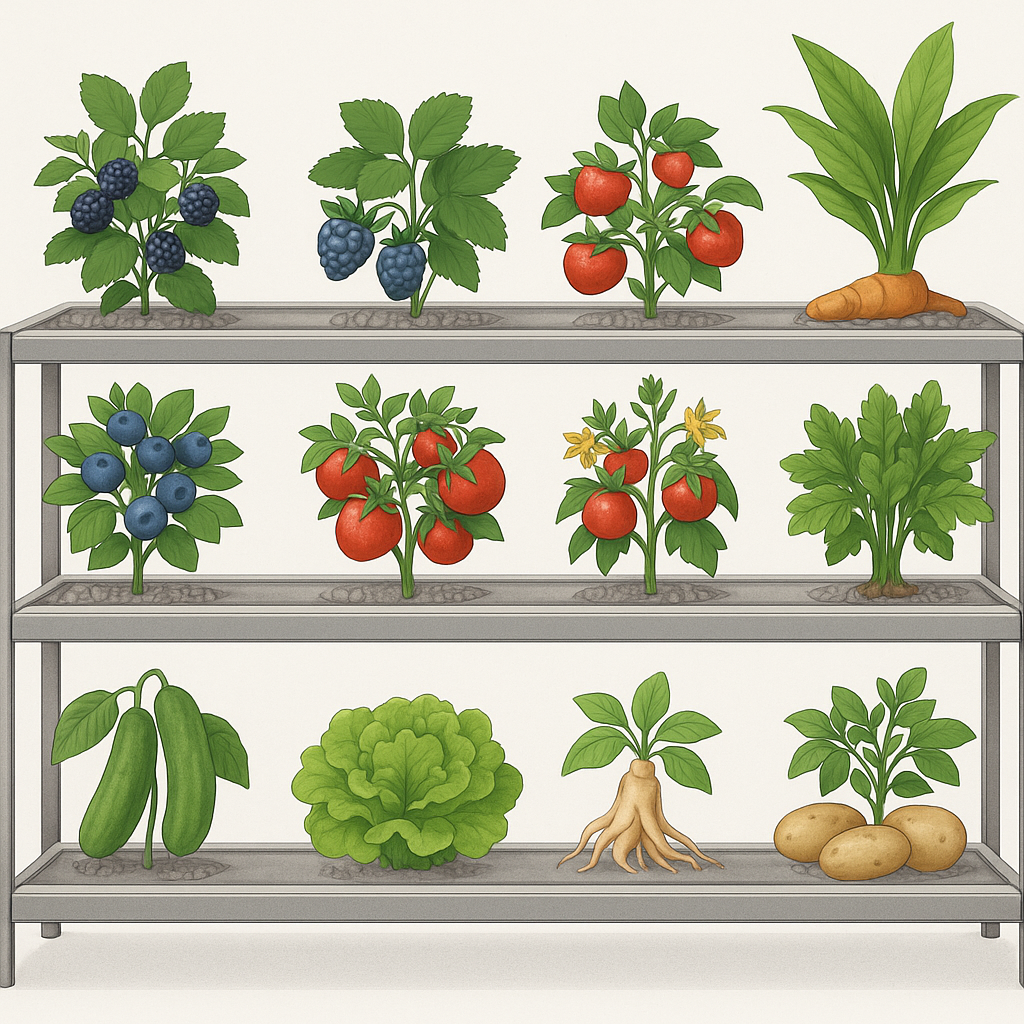
Several institutions and companies are already pursuing breeding strategies for CEA. Research from Wageningen University in the Netherlands, for instance, has highlighted lettuce genotypes with markedly different responses to LED lighting regimes, paving the way for tailored breeding lines. Commercial seed firms are beginning to release cultivars marketed as "indoor-ready", although the sector is still in its infancy. Tomatoes, strawberries, and high-value herbs are early candidates for vertical farming-specific breeding due to their economic importance and manageable genetic complexity. Beyond fresh produce, the possibility of breeding plants for pharmaceutical metabolite production in indoor farms is also being explored, with genomics enabling the identification of gene clusters associated with target compounds.
Challenges and Considerations
The promise of plant breeding and genomic selection for vertical farming must be balanced against significant challenges. Regulatory frameworks vary widely: while some jurisdictions permit gene-edited crops with relatively few restrictions, others classify them alongside genetically modified organisms, subject to stricter approval processes. There is also a cost barrier, as breeding new lines is expensive, and seed companies may hesitate to invest in varieties for a still-developing market. Intellectual property concerns and consumer acceptance are additional hurdles, especially when public perception of "artificial" farming is already mixed.
At the same time, there is an opportunity to align breeding with sustainability goals. Indoor farming reduces the need for pesticides and water, but optimised varieties could enhance these benefits further by requiring fewer inputs, having longer shelf life, or producing higher nutritional content. Plant breeding, when integrated with genomics and precision cultivation, has the potential to make CEA not only economically viable but also a contributor to resilient food systems.
Future Directions
Looking ahead, the integration of plant breeding with genomic selection will likely define the next decade of vertical farming. Advances in high-throughput phenotyping, machine learning algorithms for trait prediction, and the increasing affordability of sequencing technologies all point towards a more systematic and collaborative future. Public-private partnerships may play a key role in ensuring that breeding efforts address both commercial viability and broader food security concerns. Over time, we may see the emergence of entirely new crop ideotypes designed from the ground up for vertical systems rather than adapted from field varieties.
Conclusion
Plant breeding and genomic selection for vertical farming are not optional extras: they are essential to unlocking the full potential of indoor agriculture. By aligning genetic improvement with the realities of controlled environments, breeders can create crops that are efficient, resilient, and tailored to consumer and market needs. Genomics provides the tools to accelerate this process, while vertical farming itself provides the data-rich context to guide decision-making. Together, they represent a powerful convergence of biology and technology that will shape the future of how we grow food.