Introduction to Remote Sensing in Indoor Farming
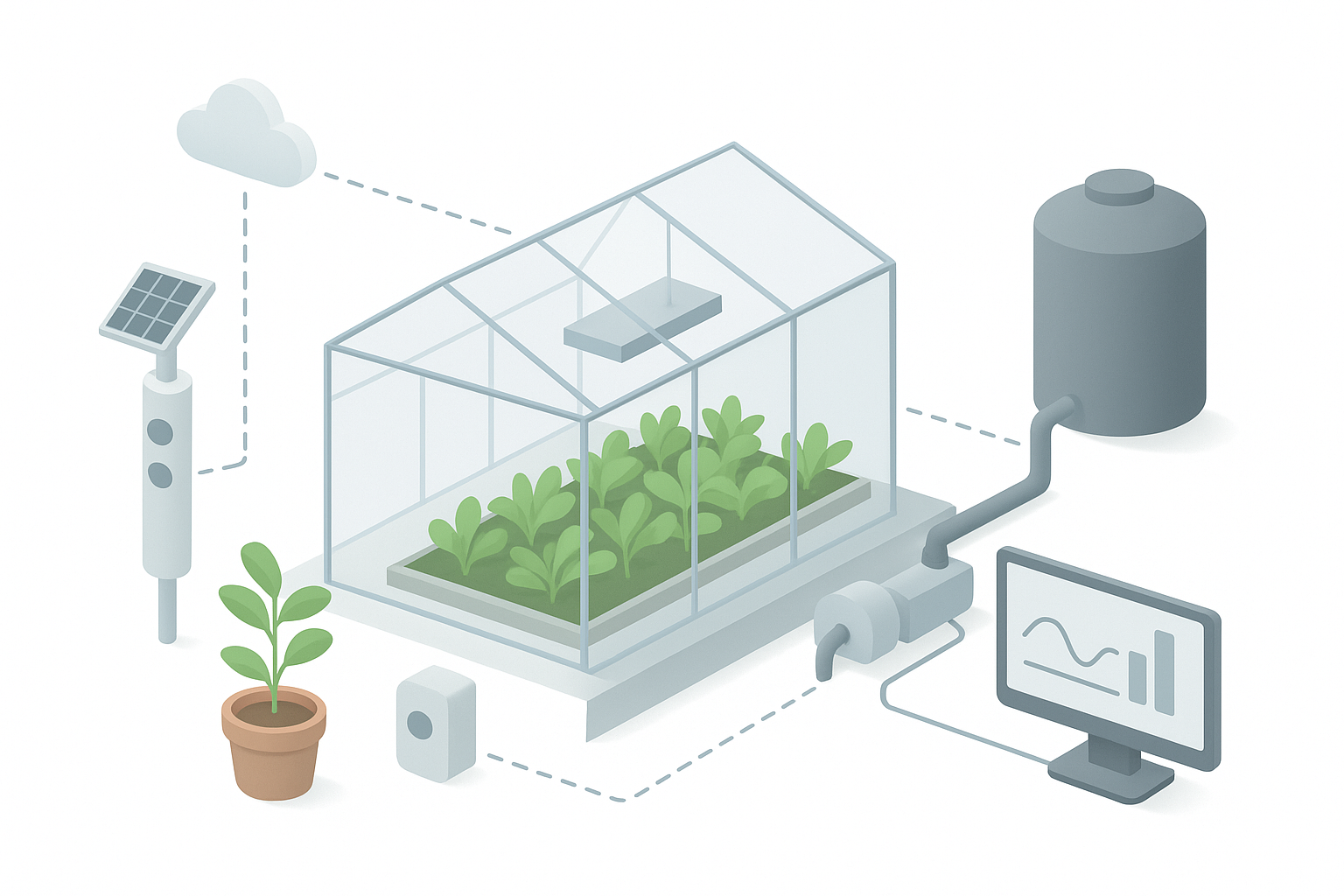
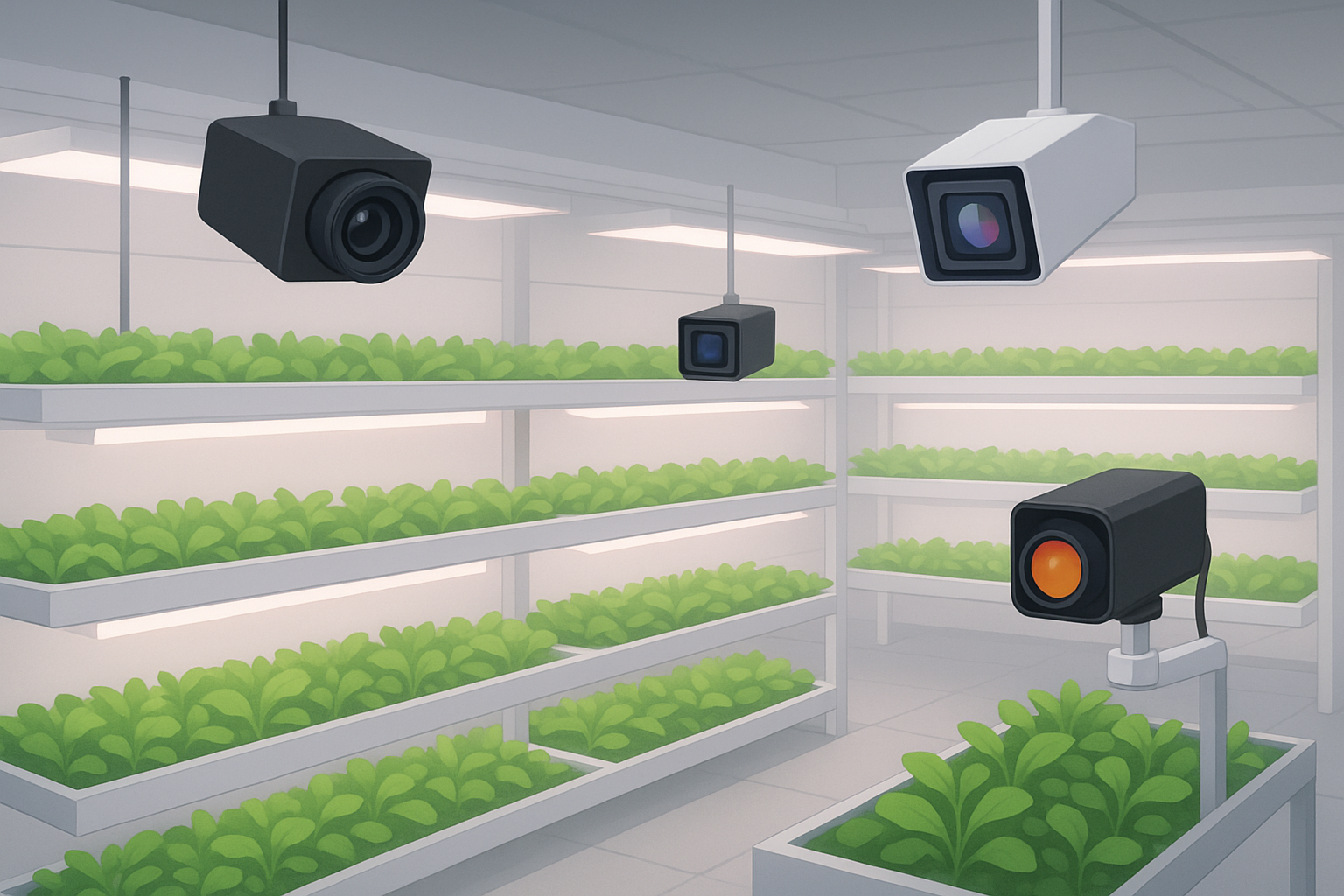
Remote sensing in indoor farming is an essential technology for monitoring plant growth, environmental conditions, and operational efficiency within controlled environment agriculture (CEA) facilities, without human labour intervention. By using cameras and other non-contact sensing devices, growers can collect detailed visual and spectral information without disturbing plants or altering their growing environment. These systems range from standard high-resolution RGB cameras to advanced hyperspectral and thermal imaging platforms, each serving a distinct role in understanding plant health and optimising production. Remote sensing bridges the gap between real-time observation and actionable data, enabling a more precise and informed approach to vertical farming.
The Role of Cameras in Controlled Environment Agriculture
In a vertical farm, space is limited and access to plants may be restricted by stacked shelving, automated machinery, or biosecurity protocols. Cameras offer a non-invasive way to continuously monitor crops from seedling stage to harvest. Standard RGB cameras provide visual records for quality control and documentation, allowing operators to track plant morphology and detect visible symptoms of stress or disease. Time-lapse imaging can reveal subtle growth trends, while stereoscopic camera systems can estimate plant height, canopy cover, and biomass. These visual data streams often feed into computer vision algorithms that automate the detection of growth anomalies and forecast harvest readiness.
Beyond the Visible Spectrum: Multispectral and Hyperspectral Imaging
While conventional cameras capture light in the visible range, many plant health indicators occur outside this spectrum. Multispectral and hyperspectral imaging systems detect light in specific wavelength bands, including near-infrared (NIR) and shortwave infrared (SWIR) regions. These wavelengths can reveal early signs of nutrient deficiencies, water stress, or pathogen presence before symptoms become visible to the human eye. For example, the Normalised Difference Vegetation Index (NDVI) calculated from NIR and red light measurements can provide a rapid assessment of plant vigour across an entire growing area. Hyperspectral cameras, which capture dozens or hundreds of narrow spectral bands, allow for more detailed physiological assessments, supporting targeted interventions.
Thermal Imaging for Environmental and Plant Health Monitoring
Temperature is a critical variable in indoor farming, influencing transpiration, metabolism, and disease susceptibility. Thermal cameras measure infrared radiation to produce heat maps of plants and infrastructure. These maps can identify localised hotspots caused by faulty lighting or ventilation, detect plant water stress through changes in leaf temperature, and confirm the uniformity of climate control systems. Thermal data, when combined with other sensing modalities, provides an additional layer of insight into crop performance and environmental stability.
Integrating Remote Sensing into Farm Management Systems
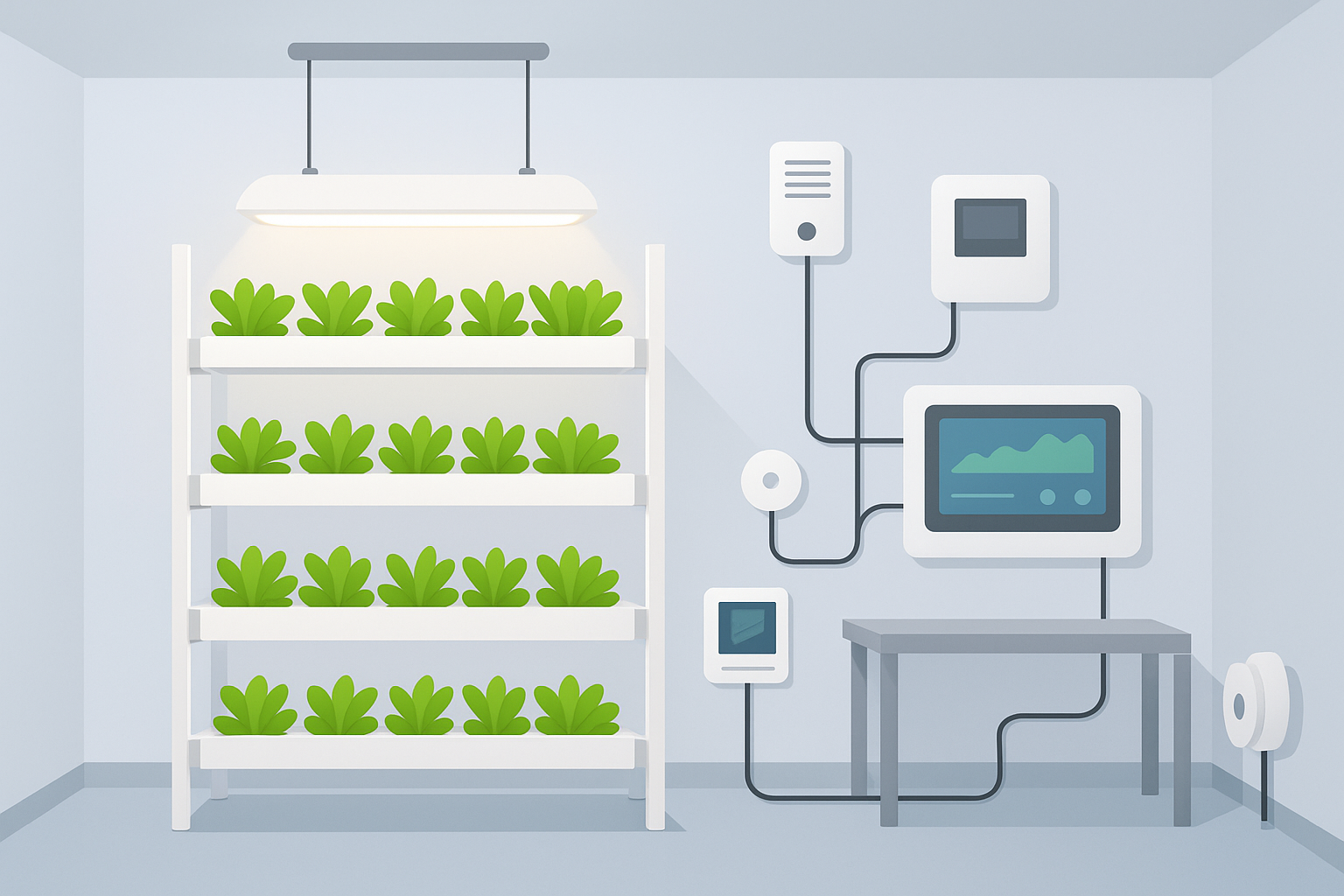
The true value of remote sensing in indoor farming emerges when imaging data is integrated with other sensor outputs, such as temperature, humidity, CO2 concentration, and nutrient solution parameters. Advanced control systems and data platforms can correlate visual or spectral anomalies with environmental events, enabling root-cause analysis and proactive management. For instance, if multispectral imaging reveals a drop in plant chlorophyll levels, the system can cross-reference nutrient dosing records and suggest adjustments. Over time, these data-rich environments support machine learning models that improve predictive accuracy and reduce input waste.
Applications for Research and Commercial Operations
In research contexts, cameras and remote sensing equipment provide high-quality datasets for studying plant physiology under specific light spectra, nutrient regimes, or environmental stresses. Controlled trials can be documented with precision, enabling repeatability and peer review. In commercial production, the same technologies support operational efficiency by reducing labour costs associated with manual inspection and improving uniformity in crop quality. Remote sensing also facilitates compliance with certification schemes and traceability requirements, as imagery can serve as an auditable record of production practices.
Challenges and Considerations
Despite their benefits, remote sensing and camera systems present certain challenges in vertical farming environments. Lighting conditions in LED-lit farms can interfere with imaging, particularly in narrow-spectrum light recipes. This may require synchronising camera capture with lighting cycles or employing sensors calibrated for specific wavelengths. Data storage and processing demands can also be significant, especially for high-resolution or hyperspectral datasets. Furthermore, while cameras are non-invasive, their placement must avoid shading plants or obstructing other systems. Investment costs remain a consideration, although these have decreased over time as technology has matured and become more widely adopted.
The Future of Remote Sensing in Indoor Agriculture
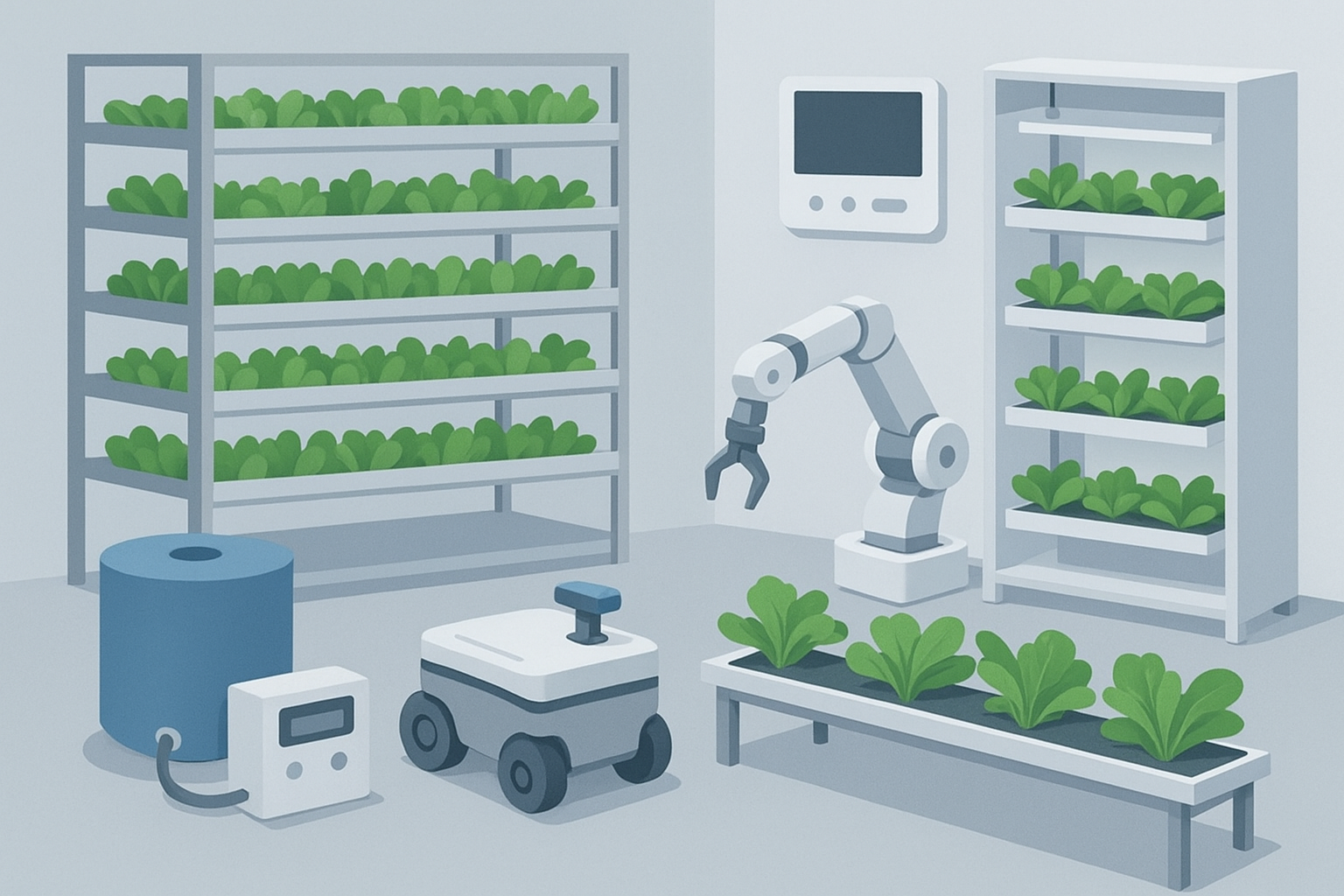
As vertical farms evolve towards greater automation and precision, remote sensing will likely become a foundational component of their design. Emerging trends include compact hyperspectral cameras integrated into robotic platforms, AI-driven disease detection, and the use of 3D imaging for automated pruning or harvesting systems. Integration with digital twins of farm environments could allow real-time simulation of crop performance under different conditions, supporting rapid decision-making. Ultimately, remote sensing technologies are set to play a pivotal role in making indoor farming more data-driven, resource-efficient, and resilient to operational variability.