Understanding Microclimate Sensing Approaches for Vertical Farming
Microclimate sensing approaches for vertical farming focus on measuring and managing the small-scale environmental conditions that directly surround plants within an indoor production system. In a vertical farm or other form of Controlled Environment Agriculture (CEA), the term microclimate refers to the immediate combination of temperature, humidity, airflow, light intensity, and other parameters at plant level. These conditions can differ significantly from general ambient measurements taken elsewhere in the facility. For this reason, accurate and strategically placed microclimate sensors are critical to understanding the true growing environment and to ensuring uniform, predictable crop development.
By capturing detailed, spatially resolved environmental data, microclimate sensing enables growers to identify and correct subtle but important differences across crop zones. These differences can be caused by factors such as uneven airflow, heat build-up from lighting, varying plant densities, or gradients in humidity caused by irrigation events. Without reliable microclimate monitoring, such variations may remain undetected, leading to inconsistent growth rates, reduced yield quality, and an increased risk of disease.
Why Microclimate Sensing Matters in CEA
Unlike traditional greenhouses or open-field agriculture, CEA systems are enclosed, engineered environments where climate variables are actively manipulated. This allows for precise control but also means that any lapse in monitoring can quickly result in suboptimal conditions. In a multi-tier vertical farm, for example, temperature and humidity can vary from the upper racks near lighting fixtures to the lower racks closer to cooling equipment. Even small fluctuations can alter plant transpiration, photosynthetic efficiency, and nutrient uptake.
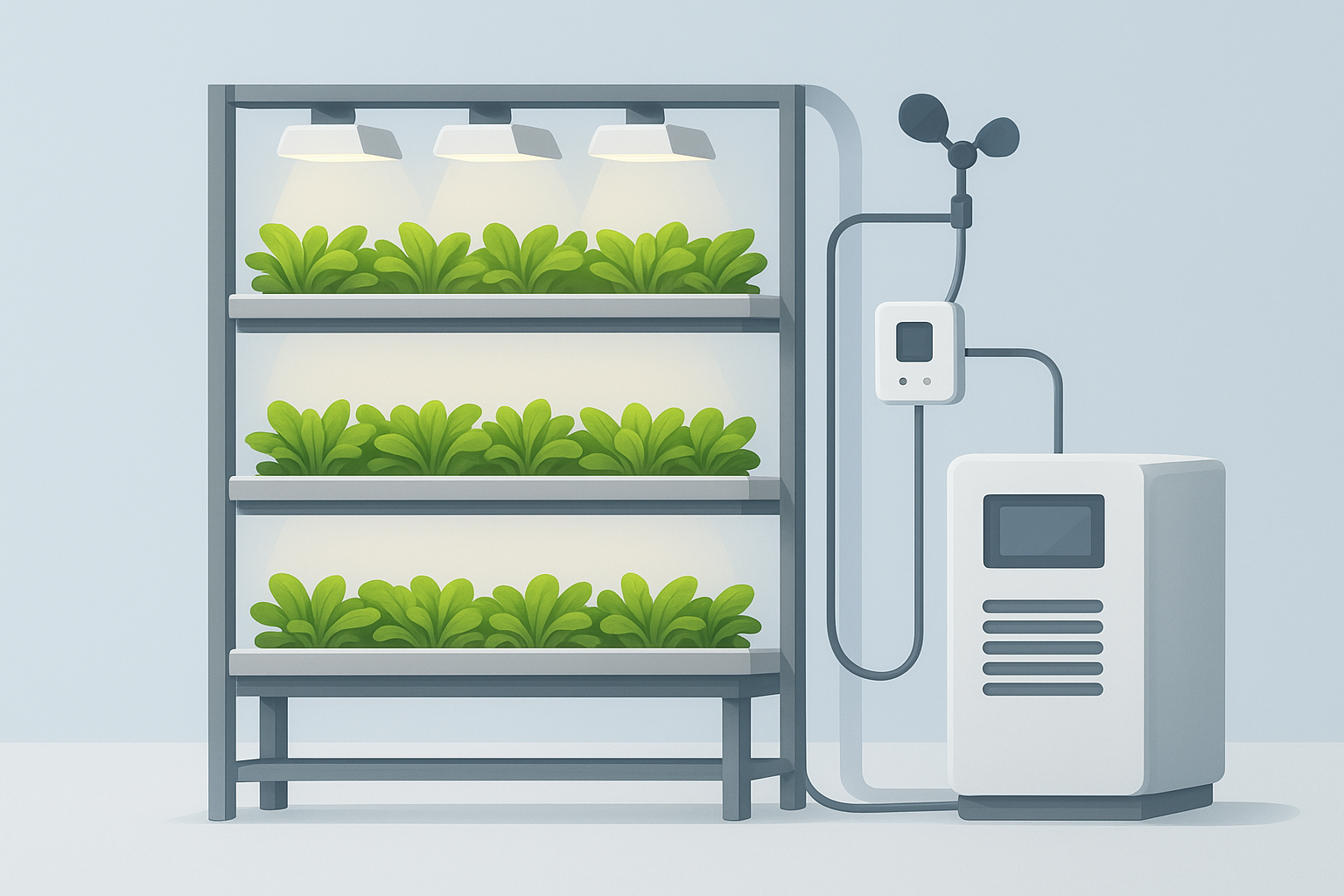
Microclimate sensing approaches provide the data required to fine-tune climate control systems. Rather than relying on single centralised sensors that represent an averaged condition, distributed sensor arrays can map environmental differences across and within racks. This allows for targeted interventions such as adjusting airflow patterns, fine-tuning LED intensities, or varying irrigation schedules for specific crop zones. Such precision is especially important in high-value leafy greens, herbs, and microgreens production, where uniform appearance and texture are essential for market acceptance.
Types of Parameters Measured
Microclimate sensors for vertical farming are typically designed to capture a combination of core environmental variables. Temperature sensors measure thermal conditions at canopy level; relative humidity sensors track moisture in the air and help determine vapour pressure deficit (VPD), a critical metric linking plant water loss and stress. Light sensors quantify photosynthetically active radiation (PAR), ensuring plants receive the correct spectrum and intensity for their growth stage. Airflow sensors assess ventilation effectiveness, while CO2 sensors measure carbon availability for photosynthesis.
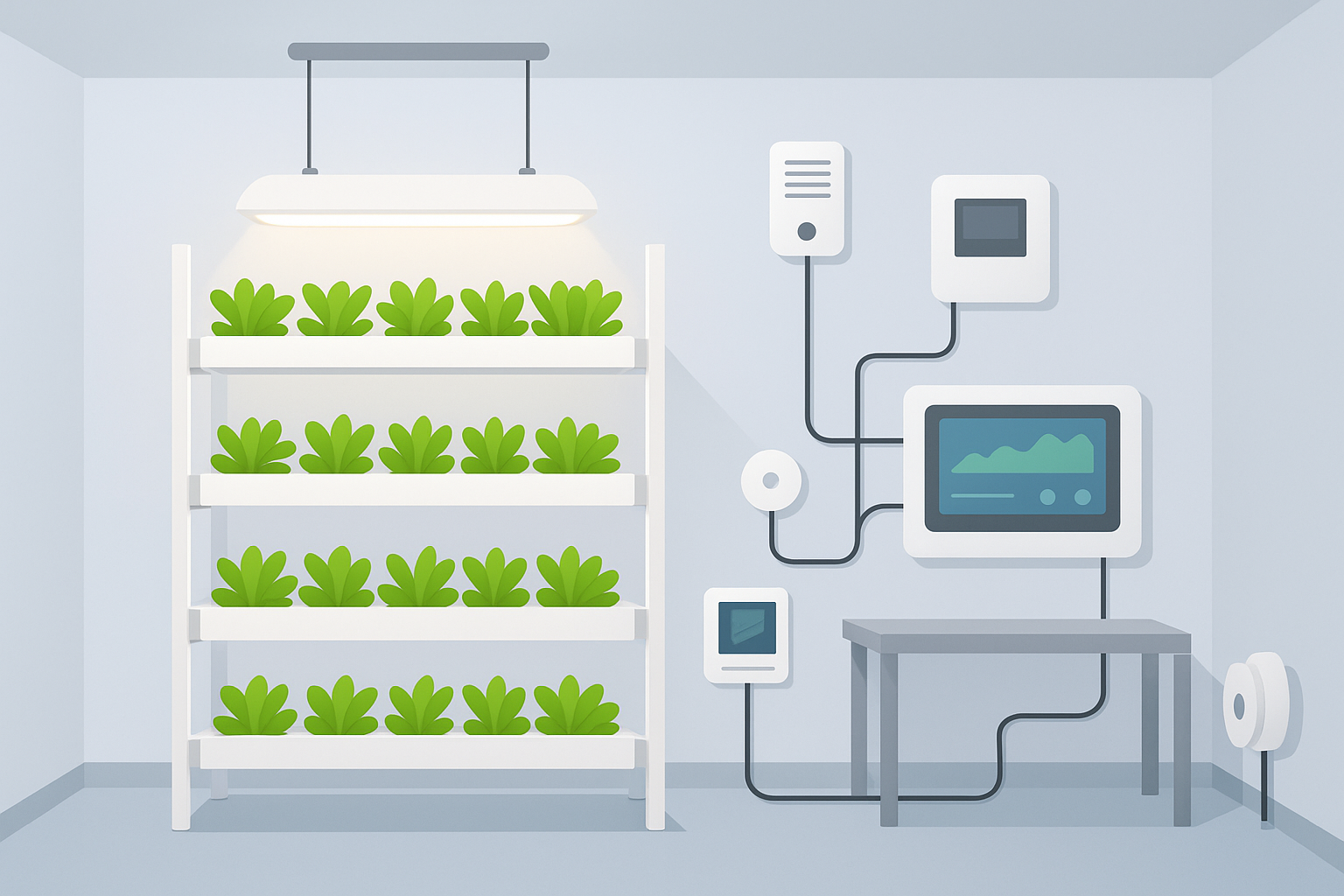
Increasingly, microclimate sensing devices integrate multiple parameters into compact modules. This reduces installation complexity and enables a more holistic understanding of the plant environment. For example, a combined sensor may simultaneously track temperature, humidity, light, and CO2 at multiple points in the farm, feeding continuous data to a central monitoring system. The ability to measure conditions at fine spatial and temporal resolutions supports more responsive and adaptive environmental control.
Approaches to Sensor Deployment
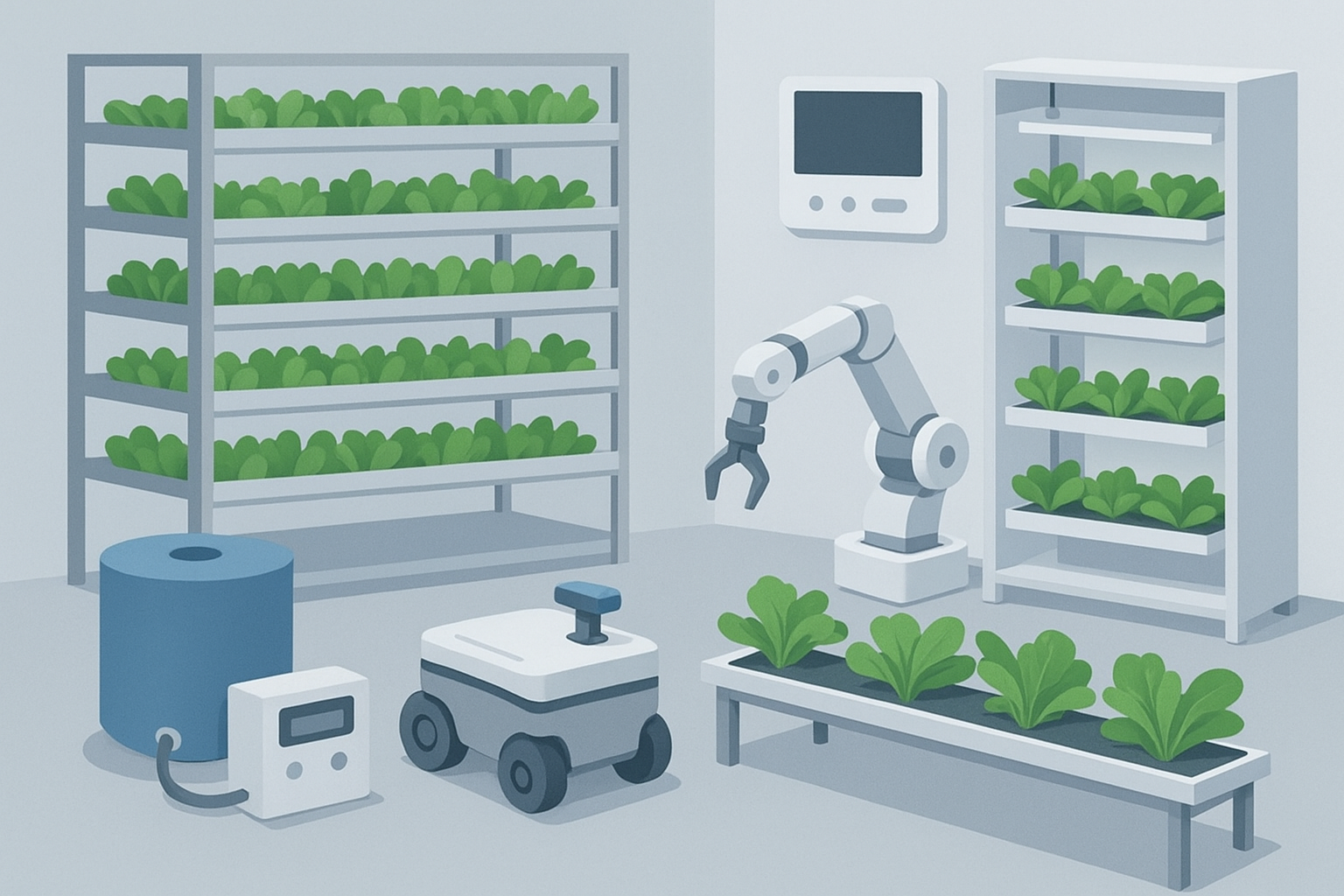
The effectiveness of microclimate sensing depends not only on the technology but also on the placement and density of sensors. In vertical farms, this involves positioning sensors at representative canopy heights, within each tier, and in zones known to be prone to variability such as corners or near air inlets. Mobile sensor units, mounted on gantries or automated transport systems, can supplement fixed arrays by scanning multiple locations over time.
Wireless sensor networks are increasingly common in CEA due to reduced cabling requirements and improved scalability. These networks transmit real-time data to cloud-based platforms, where analytics and visualisation tools allow growers to track trends, detect anomalies, and generate alerts. Some advanced systems incorporate predictive modelling, using sensor data to forecast microclimate changes before they occur. This predictive capacity supports preventive rather than reactive management.
Linking Microclimate Data to Crop Outcomes
The ultimate value of microclimate sensing lies in its ability to inform decisions that improve crop quality, consistency, and profitability. For example, if sensors detect that the vapour pressure deficit in a certain zone is outside the optimal range, adjustments to humidity control or irrigation can be made immediately. Over time, recorded data can be correlated with yield measurements and plant health indicators to refine climate strategies.
Research has shown that even modest improvements in microclimate uniformity can lead to measurable gains in crop homogeneity and shelf life. In commercial-scale operations, where thousands of plants are grown simultaneously, such gains translate into significant economic benefits. Moreover, maintaining optimal microclimates reduces plant stress, which can lower susceptibility to pests and diseases, thereby decreasing reliance on chemical interventions.
Future Directions and Technological Integration
Microclimate sensing approaches are evolving rapidly. Emerging technologies include hyperspectral imaging systems capable of detecting plant stress signatures before visual symptoms appear, and distributed micro-sensors small enough to be embedded directly within plant canopies. Advances in edge computing allow some sensors to process data locally, enabling faster responses to environmental deviations.
Integration with other CEA systems is also becoming more sophisticated. Microclimate sensors can now be linked to automated ventilation, irrigation, and lighting controls through central management software. Artificial intelligence algorithms can analyse historical and live data to optimise set points dynamically. For instance, an AI system might use microclimate inputs to slightly adjust lighting intensity to balance heat load and photosynthetic efficiency, or to stagger irrigation cycles to maintain uniform humidity.
Challenges and Considerations
Despite their benefits, microclimate sensing systems present certain challenges. High-density sensor networks generate large volumes of data that must be stored, processed, and interpreted correctly. Sensor calibration is essential; poorly maintained sensors can introduce errors that lead to inappropriate control decisions. Costs can be significant, particularly for large-scale installations, although these may be offset by productivity gains and reduced resource use.
There is also a human factor: operators must be trained to understand and act upon microclimate data. Without a clear decision-making framework, even the most advanced sensing systems risk becoming underutilised. Therefore, successful implementation combines robust technology with clear operational protocols.
Conclusion
Microclimate sensing is a cornerstone of precision environmental control in vertical farming. By revealing spatial and temporal variations in the immediate plant environment, it enables growers to create consistently optimal conditions across all production zones. As technology advances, these systems are becoming more integrated, more predictive, and more accessible, offering opportunities for improved yields, resource efficiency, and crop quality. For vertical farming enterprises seeking to maximise control over their production environment, investment in a well-designed microclimate sensing approach is both a practical necessity and a driver of long-term success.