Introduction
VisNIR spectroscopy refers to the use of visible and near-infrared light measurements to assess material properties without destructive sampling. In a controlled environment agriculture (CEA) system, where growing conditions such as light, temperature, humidity, and nutrient delivery are precisely managed, VisNIR spectroscopy offers a rapid and non-invasive means of monitoring crop health, growth status, and produce quality. This technology enables growers, researchers, and quality assurance teams to detect subtle physiological changes in plants long before they are visible to the human eye, supporting timely interventions that can optimise yield and resource efficiency.
Principles of VisNIR Spectroscopy
VisNIR spectroscopy operates within the spectral range of approximately 400 to 2500 nanometres, encompassing both the visible region (where plant pigments strongly influence reflectance) and the near-infrared region (where water content, cell structure, and biochemical composition affect absorption patterns). When light is directed onto plant tissue, specific wavelengths are absorbed or reflected depending on the leaf’s pigment profile, moisture levels, and structural integrity. By analysing this spectral signature with suitable sensors, it is possible to infer a wide range of plant traits such as chlorophyll concentration, nitrogen status, and even the onset of stress due to pests, disease, or nutrient imbalance.
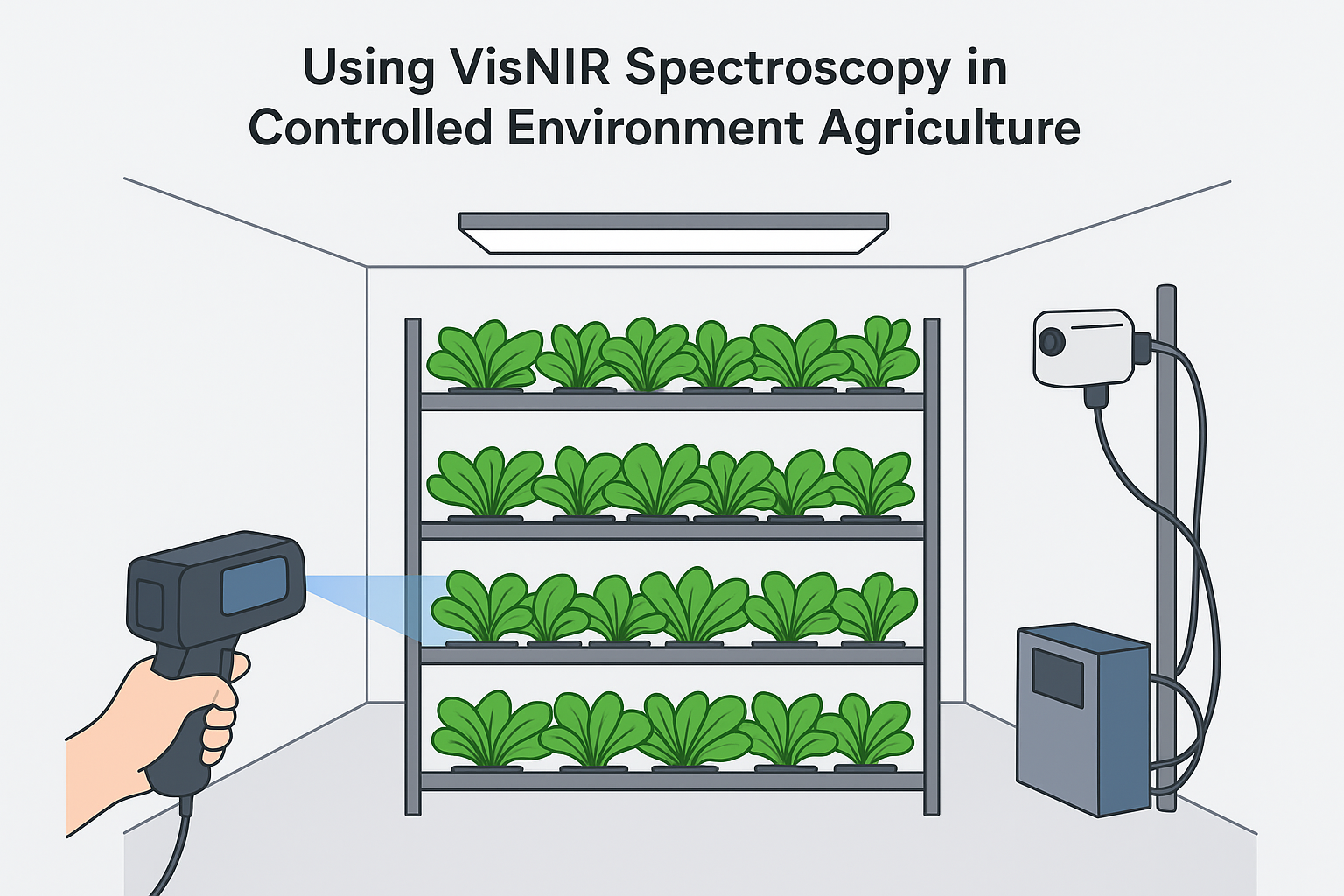
In practice, a VisNIR spectrometer collects reflected light from leaves or canopies, often using fibre optics or imaging devices. The resulting spectral data can be processed through mathematical models, such as partial least squares regression, to translate raw reflectance values into actionable physiological or biochemical indicators.
Applications in Indoor Farming
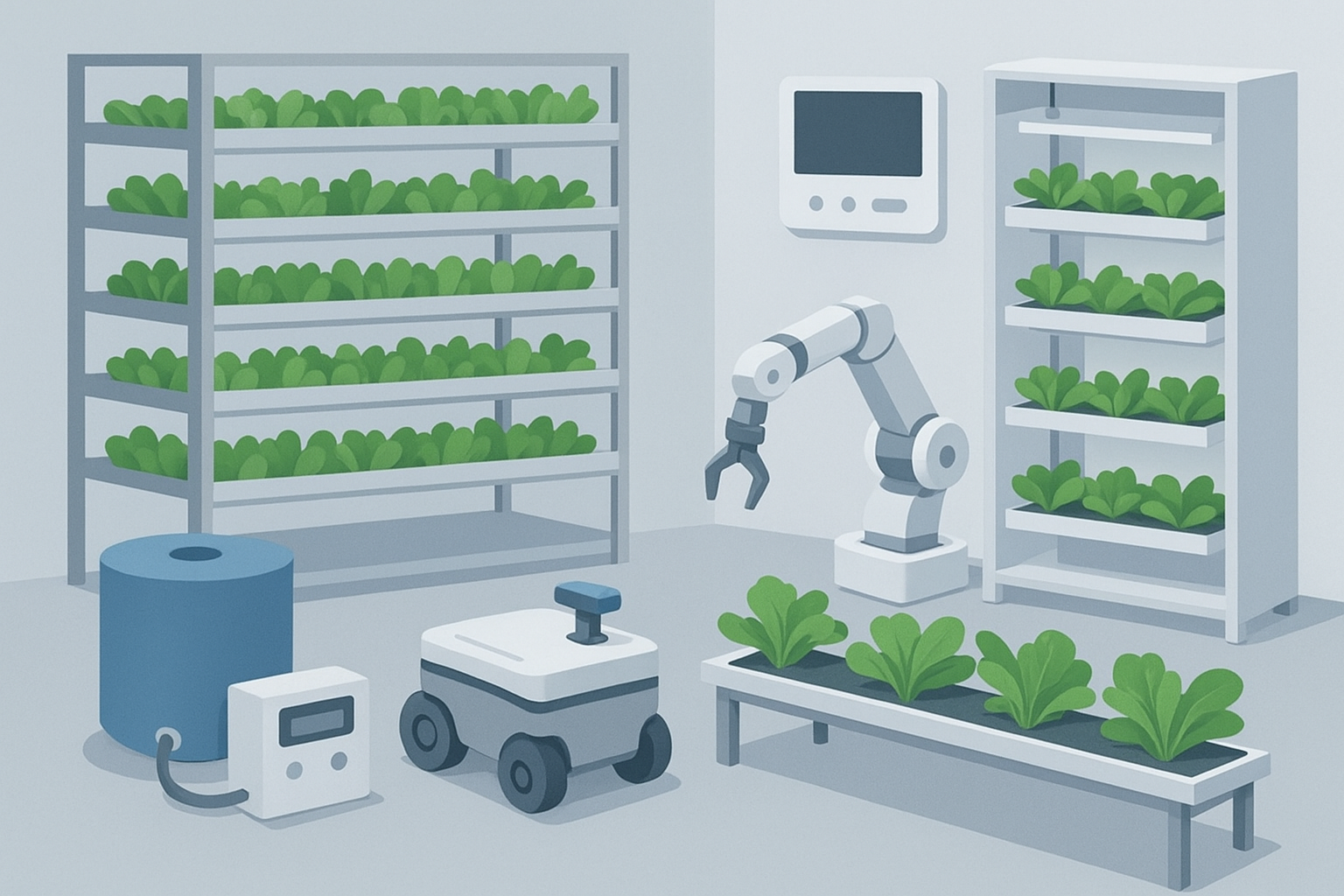
Within CEA facilities, VisNIR spectroscopy can be integrated into hand-held measurement tools, fixed-position sensors, or automated scanning systems mounted on gantries or robotic arms. This flexibility means it can be applied across various scales: from research benches assessing experimental cultivars to commercial vertical farms monitoring thousands of plants daily.
A primary use is in nutrient management. For example, chlorophyll-related absorption features in the visible range can be correlated with nitrogen levels, allowing growers to adjust fertigation regimes before deficiencies impact growth. Similarly, near-infrared reflectance changes can reveal early signs of water stress, enabling more precise irrigation control.
Another application lies in quality assessment at harvest. Spectral patterns can indicate sugar accumulation in fruits, dry matter content in leafy greens, or even post-harvest shelf life potential. Because the measurements are non-destructive, the same plant or batch can be monitored repeatedly over time, building a comprehensive profile of development and quality progression.
Advantages over Conventional Monitoring
Traditional plant health monitoring in indoor farms often relies on manual inspection, destructive sampling, or laboratory assays. While these methods can be accurate, they are time-consuming, labour-intensive, and not always practical for continuous monitoring. VisNIR spectroscopy provides a rapid, repeatable alternative that can be automated, reducing human error and allowing higher sampling frequency.
Its non-invasive nature means that plants remain intact, which is essential for both commercial production and long-term research trials. Moreover, because spectral measurements can detect physiological changes before visible symptoms appear, interventions can be made earlier, potentially preventing yield loss or quality degradation.
Integration with Data Systems
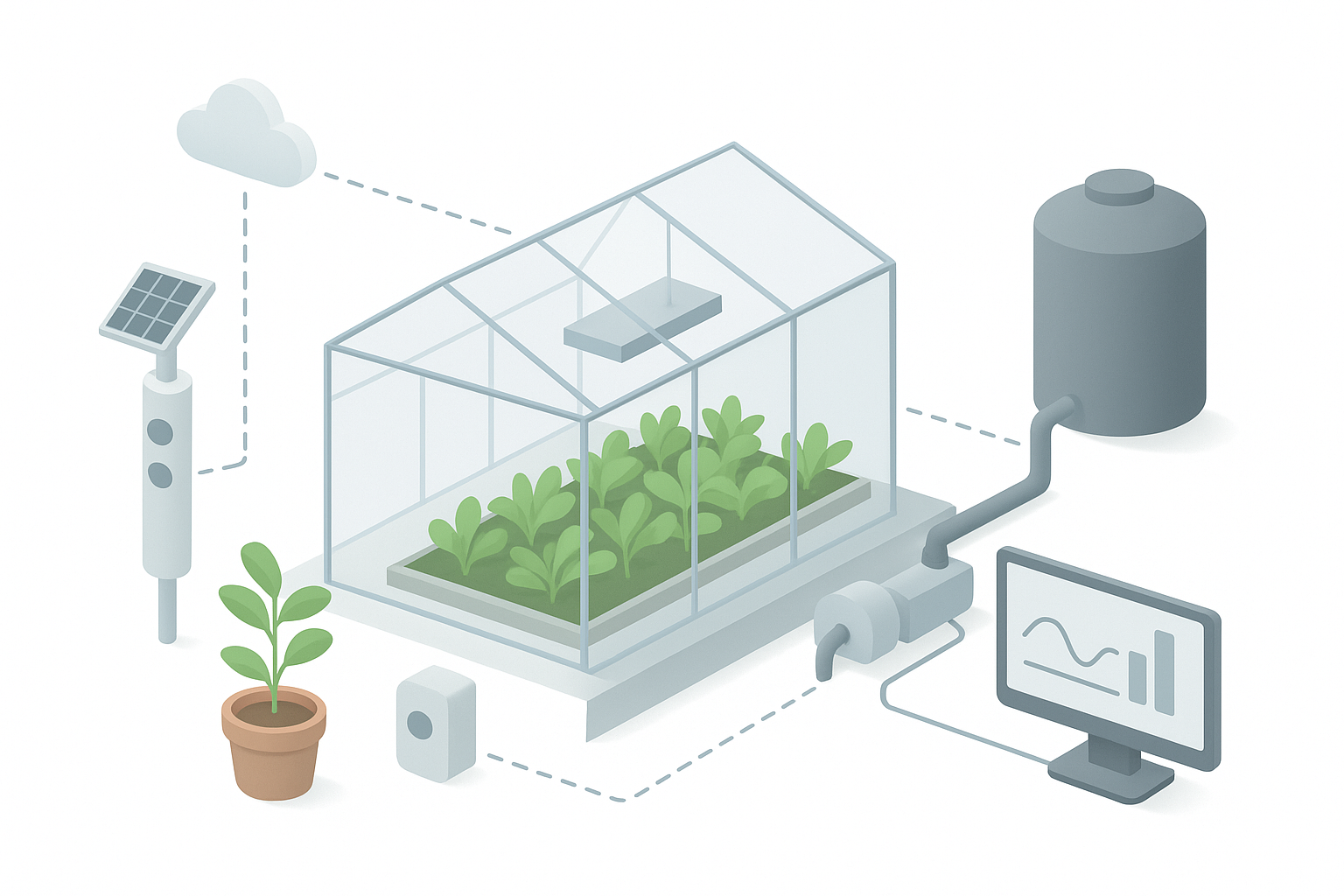
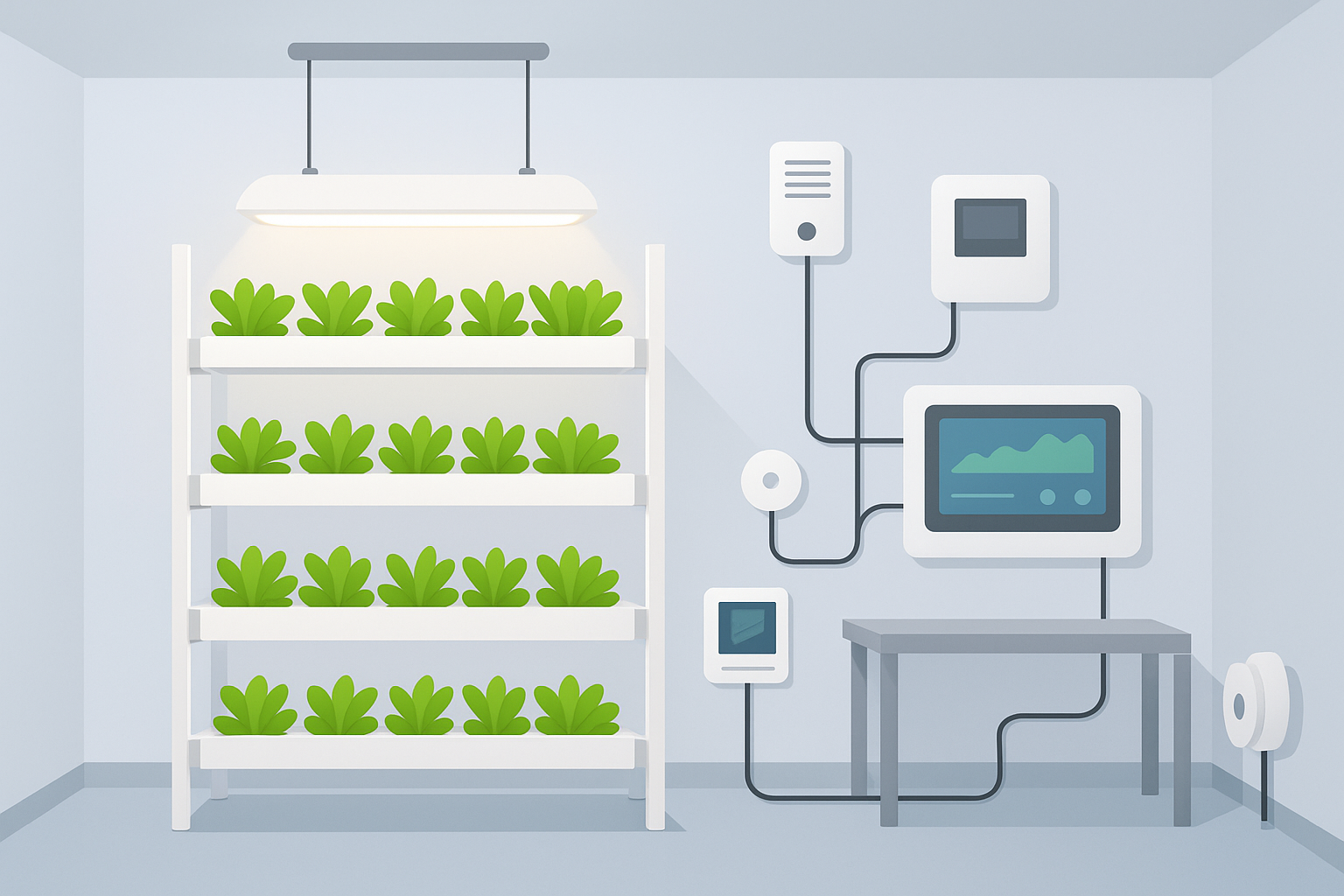
In advanced CEA operations, VisNIR spectroscopy does not operate in isolation. Data from spectroscopic measurements can be integrated with environmental sensor networks, climate control systems, and AI-based decision-support tools. This creates a feedback loop where spectral data triggers automated adjustments in lighting spectra, nutrient dosing, or ventilation. For example, a detected drop in leaf water content could automatically prompt a controlled increase in irrigation, while changes in pigment profiles could inform adaptive lighting strategies.
When combined with other spectral modalities such as hyperspectral imaging or thermal sensing, VisNIR spectroscopy can form part of a multi-layered monitoring approach. This holistic dataset enables more accurate crop models and predictive analytics, supporting both short-term operational decisions and long-term strategic planning.
Technical and Practical Considerations
While VisNIR spectroscopy is a powerful tool, its effective use in indoor farming requires careful consideration of calibration, measurement geometry, and environmental factors. Spectral readings can be influenced by lighting conditions, sensor distance, and leaf orientation, so protocols must be standardised for consistent results. In practice, many indoor farms use dedicated measurement stations or standard reference panels to ensure data reliability.
Interpretation of spectral data also relies on robust calibration models, which are typically built using reference measurements from laboratory analysis. These models may need to be tailored to specific crops, varieties, and growth stages. As a result, successful deployment often involves collaboration between growers, equipment manufacturers, and research institutions.
Future Outlook
The role of VisNIR spectroscopy in indoor farming is expected to grow as sensor technology becomes more compact, affordable, and integrated into automated systems. Advances in machine learning are enhancing the accuracy of trait prediction from spectral data, reducing the need for large calibration datasets. Furthermore, as vertical farming scales globally, the demand for real-time, high-throughput, non-destructive monitoring will increase, placing VisNIR spectroscopy at the core of precision crop management.
Ongoing research is exploring its use for detecting complex plant stress responses, mapping canopy variability in three dimensions, and linking spectral features to nutritional and phytochemical profiles. These developments have potential benefits not only for commercial yield and quality but also for food safety and nutritional research.
Conclusion
VisNIR spectroscopy offers indoor farming operators a science-based, non-invasive method for monitoring plant health, growth, and quality with speed and precision. By harnessing light in the visible and near-infrared spectrum, it reveals detailed information about plant physiology that cannot be captured through conventional inspection alone. In a sector where control, consistency, and efficiency are paramount, this technology is well-positioned to become a standard tool for sustainable, high-performance production in controlled environments.