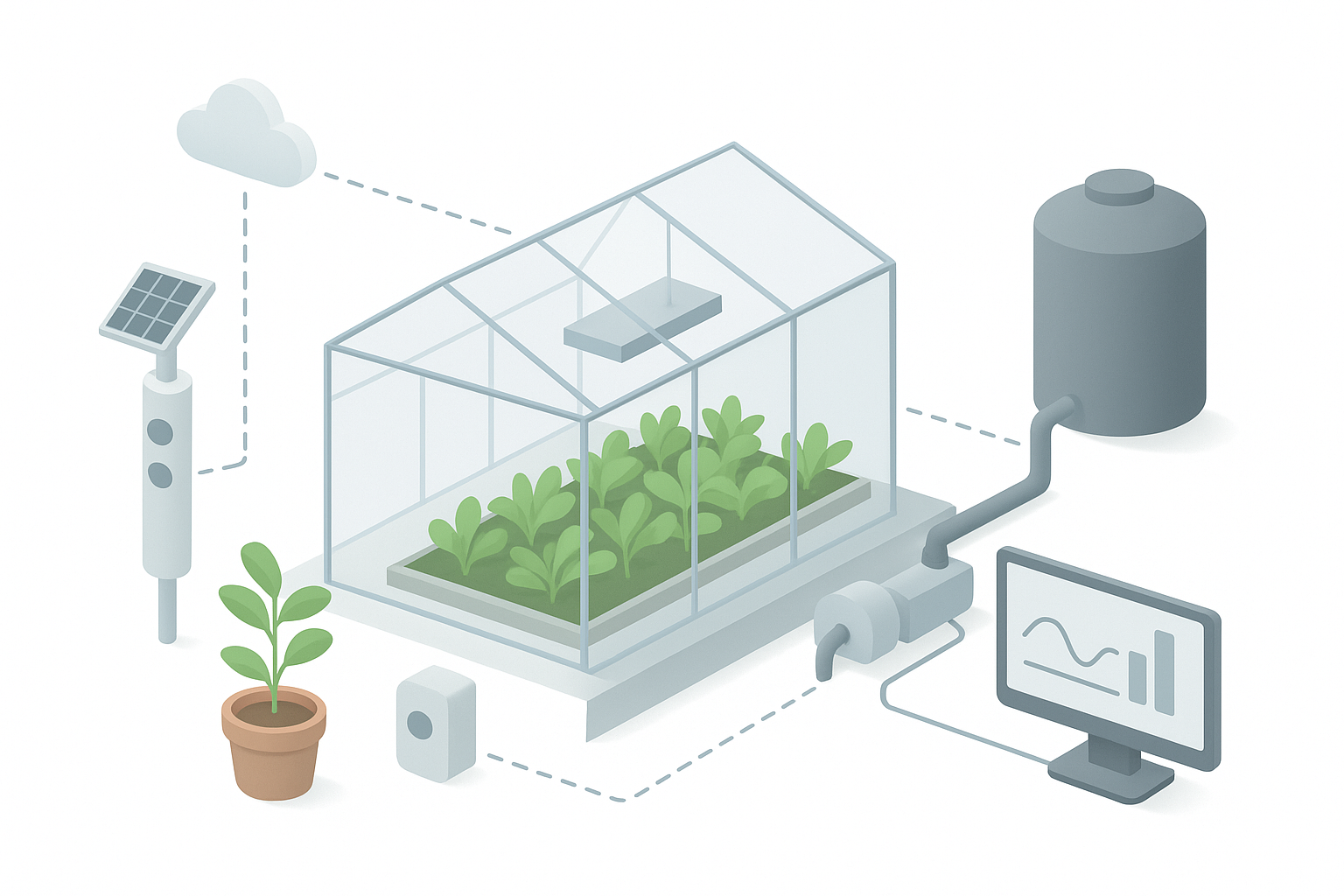
Introduction: connecting systems for precision in plant production
The Internet of Things (IoT) is a network of interconnected physical devices equipped with sensors, software, and communication technologies that collect and exchange data, enabling them to be monitored, controlled, and coordinated remotely. In indoor farming this technology allows the integration of connected devices, sensors, and control systems that collect, transmit, and analyse real-time data to optimise growing conditions within controlled environments. In vertical farms, greenhouses, and other Controlled Environment Agriculture (CEA) facilities, IoT enables growers to monitor critical parameters such as temperature, humidity, CO₂ concentration, nutrient delivery, and light intensity with exceptional accuracy. This interconnected approach supports data-driven decision-making, reduces waste, and helps maintain consistent crop quality regardless of external climatic conditions.
The role of IoT in modern CEA
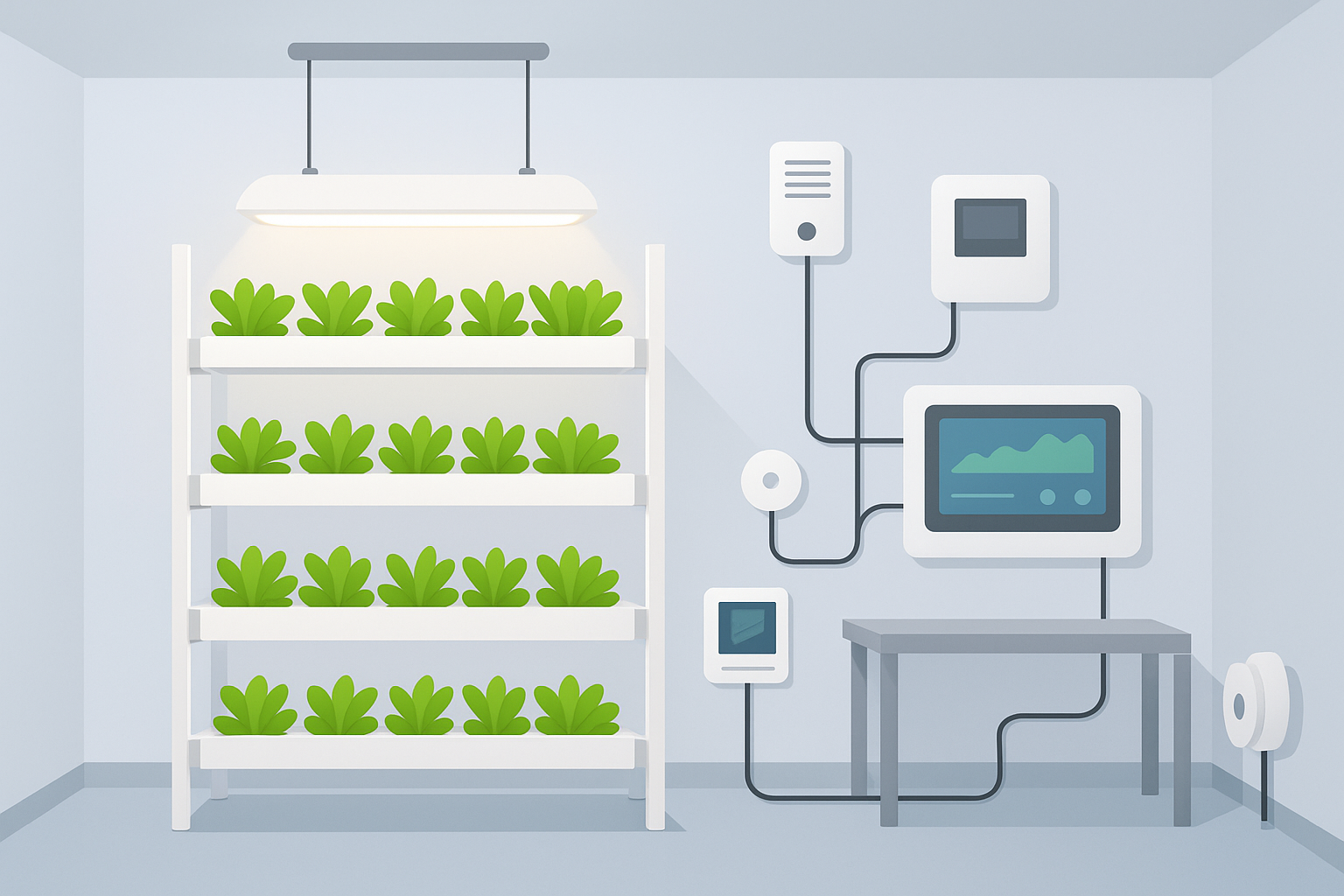
The controlled nature of indoor farming creates an ideal setting for IoT deployment: the environment is closed, sensor placement can be optimised, and communication networks can be designed for high reliability. IoT systems in this context typically involve an array of networked sensors linked to cloud-based or on-site computing platforms. These platforms aggregate and process environmental and operational data, enabling automated control of equipment such as climate systems, LED lighting arrays, and fertigation units.
For example, soil moisture probes or hydroponic nutrient sensors can trigger precise irrigation schedules based on actual plant needs, rather than fixed time intervals. Light sensors may adjust spectrum and intensity dynamically to support specific growth stages. In more advanced setups, machine learning models process IoT data streams to predict plant stress, detect disease onset, or anticipate yield, providing early alerts to farm operators.
Benefits and efficiencies
The principal value of IoT in indoor farming lies in its ability to integrate environmental sensing with responsive control systems. This not only stabilises plant growth conditions but also improves resource efficiency. Precise environmental management can reduce water use by up to 90% compared with traditional agriculture and minimise fertiliser runoff. Moreover, IoT-enabled monitoring helps detect and address equipment faults before they affect crop health, improving operational resilience.
From an economic standpoint, continuous performance tracking allows farms to benchmark productivity, assess the impact of different cultivation strategies, and fine-tune workflows to reduce energy consumption during non-critical periods. For instance, HVAC systems can be programmed to run in energy-saving modes when sensors confirm conditions remain within acceptable ranges.
Data integration and interoperability
A significant aspect of IoT in CEA is the integration of heterogeneous data sources. Indoor farms may use sensors from multiple manufacturers, each with its own data format and communication protocol. To ensure interoperability, many farms adopt standardised protocols such as MQTT or LoRaWAN, enabling low-power, long-range communication between devices. Data is often stored in centralised platforms that allow cross-referencing between environmental variables, plant performance records, and historical datasets. This integration supports comprehensive analysis and improves predictive accuracy for crop scheduling and market supply planning.
The trend towards open application planning interfaces (APIs) and modular IoT architectures further facilitates system expansion. Growers can integrate new sensors or control devices without replacing existing infrastructure, allowing technology upgrades to be phased in as needs evolve.
Challenges and considerations
While the benefits are significant, IoT deployment in indoor farming presents several challenges. Connectivity reliability is critical: interruptions in data flow can cause automation failures that affect crop health. Cybersecurity is another concern, as connected devices and cloud platforms can be vulnerable to unauthorised access. In addition, there are practical considerations around calibration, sensor drift, and the cost of maintaining complex hardware over time.
Data overload is also a risk. Without proper analytics and decision-support tools, large volumes of data can overwhelm operators rather than aid them. Therefore, successful IoT adoption depends on pairing robust sensing networks with actionable insights, ideally supported by intuitive visual dashboards.
The future of IoT in indoor agriculture
Advances in artificial intelligence, low-cost sensor manufacturing, and wireless communication will continue to expand IoT’s role in CEA. Increasing miniaturisation and energy efficiency mean that sensors can be deployed more densely, capturing granular microclimate variations within growing spaces. As predictive algorithms improve, farms will move towards fully autonomous climate and nutrient management systems that adjust to changing conditions without human intervention, improving productivity and sustainability simultaneously.
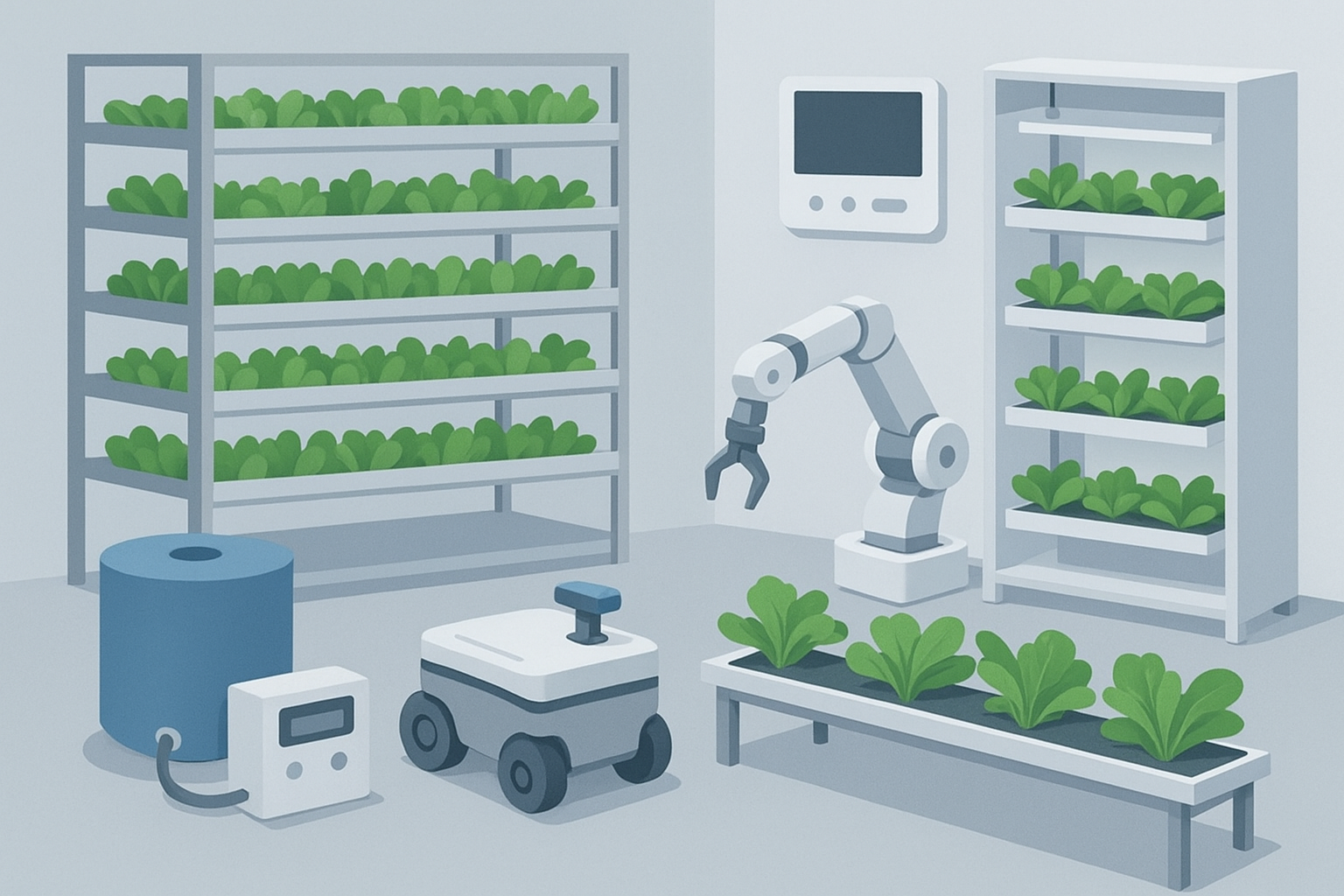
The convergence of IoT with complementary technologies such as computer vision, robotics, and blockchain-based supply chain tracking will further enhance transparency, traceability, and operational control. In this way, IoT is not simply a set of tools for monitoring conditions: it is becoming the central nervous system of the smart farm, connecting biological processes with computational intelligence in real time.