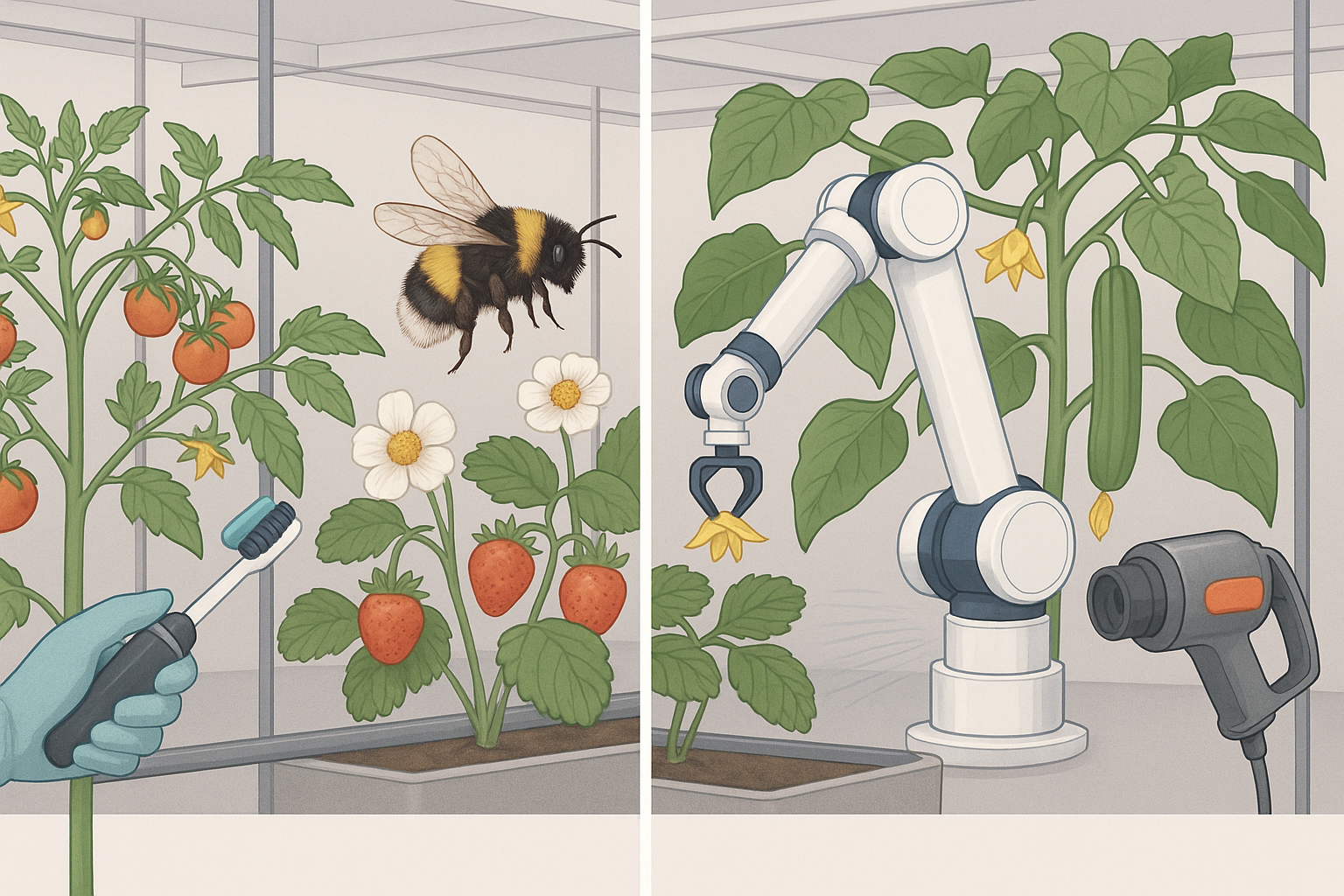
Pollination is a critical process in plant reproduction and crop productivity, yet it presents unique challenges in controlled environment agriculture (CEA). In natural ecosystems and open-field agriculture, insects, wind and other agents facilitate pollen transfer between flowers. In enclosed vertical farms and greenhouses, however, such natural vectors are absent or severely limited, which means growers must adopt specific or modified pollination methods to ensure reliable fruit and seed production. Understanding how to manage this process is essential for any indoor farming system that aims to grow crops such as tomatoes, peppers, strawberries or cucumbers, which require successful fertilisation to yield consistent harvests.
Why Pollination Matters in CEA
In CEA systems, environmental parameters such as light, temperature and humidity can be carefully managed to optimise plant growth. Pollination, however, introduces a biological requirement that is not automatically met by these controls. Without effective pollen transfer, crops dependent on sexual reproduction may suffer from poor fruit set, reduced yields, and misshapen produce. Leafy greens and herbs grown for vegetative parts are largely unaffected, but for fruiting crops pollination is indispensable. Growers therefore face the dual challenge of replicating the natural mechanisms of pollination and doing so in a cost-effective, reliable manner that integrates seamlessly into automated production cycles.
Manual Pollination Techniques
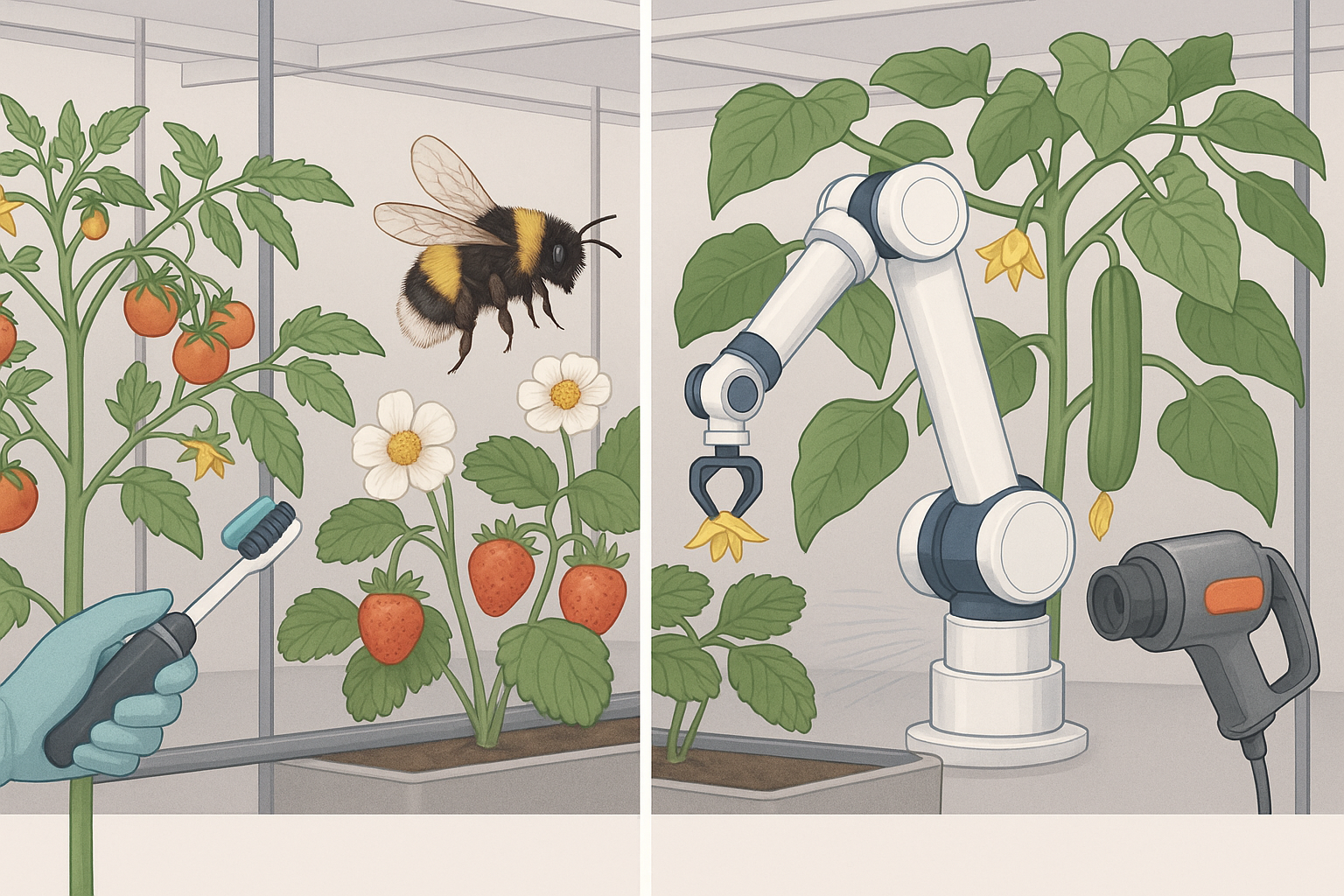
One of the most straightforward CEA pollination methods is manual pollination. This typically involves workers using tools such as electric toothbrushes, hand-held vibrators or fine brushes to transfer pollen between flowers. Tomato flowers, for example, release pollen when vibrated at the correct frequency, a task easily achieved with an electric device. While this method provides precise control and is effective in small-scale operations or research contexts, it becomes labour-intensive and economically impractical at commercial scale. Nonetheless, manual pollination remains a vital practice in certain high-value niche systems, particularly for crops where consistency and quality outweigh labour costs.
Insect Pollinators in Indoor Farms
Introducing managed pollinators into controlled environments has become an increasingly common strategy. Bumblebees (Bombus spp.) are widely used in commercial greenhouses, particularly for tomato and soft-fruit production. Their efficiency lies in their ability to perform buzz pollination, a behaviour where the bee vibrates the flower to release pollen. The use of bumblebees has been shown to increase yields and fruit quality, but it introduces challenges in vertical farming environments where space is constrained and artificial lighting may disrupt insect behaviour. Moreover, biosecurity concerns such as disease transfer, regulation of non-native species and animal welfare considerations complicate the use of live pollinators in enclosed CEA facilities. This approach also has ethical considerations, as the use of these invertebrates as tools in an enclosed environment rarely offers benefit to the bee.
Mechanical and Robotic Systems
Automation has opened the door to mechanical and robotic pollination solutions. Some commercial systems mimic the vibration of bee wings using air jets or mechanical shakers that stimulate pollen release. More advanced approaches include robotic arms or drones equipped with soft brushes or electrostatic surfaces to collect and distribute pollen. These technologies hold promise for large-scale indoor farming because they can be integrated into automated crop management systems, reducing dependence on human labour or live insects. However, their adoption remains limited by cost, complexity and the need for further refinement to achieve the consistency of natural pollinators.
Optimising Environmental Conditions
Pollination success is not solely dependent on vectors such as humans, insects or machines; the surrounding microclimate plays a critical role. Humidity levels influence pollen viability and stigma receptivity, while temperature affects pollen tube growth. Air circulation systems designed primarily for climate control can also enhance pollen dispersal, especially in self-pollinating species. In this way, CEA facilities can optimise pollination indirectly by aligning environmental control strategies with reproductive biology. For example, maintaining relative humidity between 65 and 75% in tomato production has been found to support pollen viability and maximise fruit set.
Crop-Specific Considerations
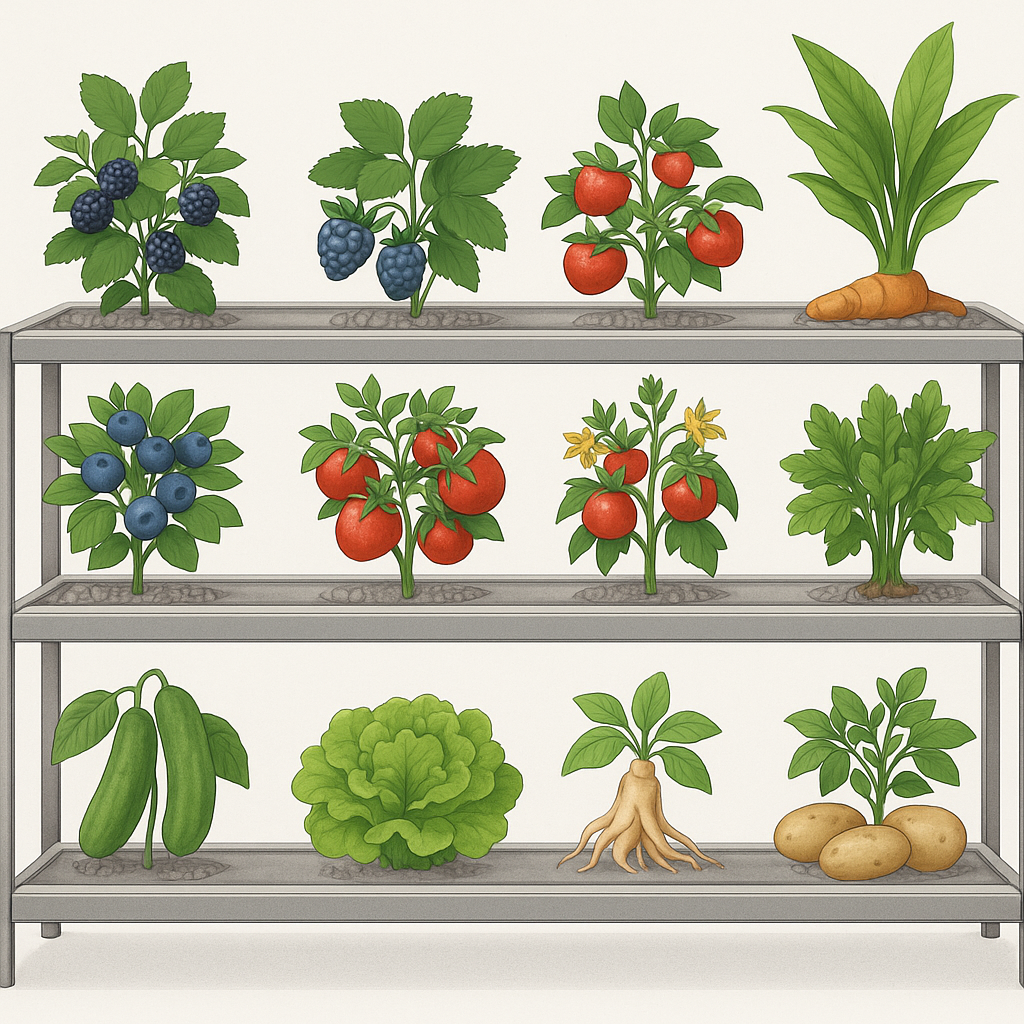
Different crops demand different pollination strategies. Tomatoes and peppers require vibration or buzz pollination, which can be delivered by bees, mechanical tools or manual methods. Strawberries may benefit from bees or air-flow systems to ensure uniform pollination across the receptacle, thus preventing misshapen fruit. Cucumbers and melons may be parthenocarpic varieties that set fruit without pollination, offering a breeding solution that bypasses the problem entirely. Understanding the reproductive biology of each target crop is therefore central to designing appropriate CEA pollination methods.
Research and Innovation
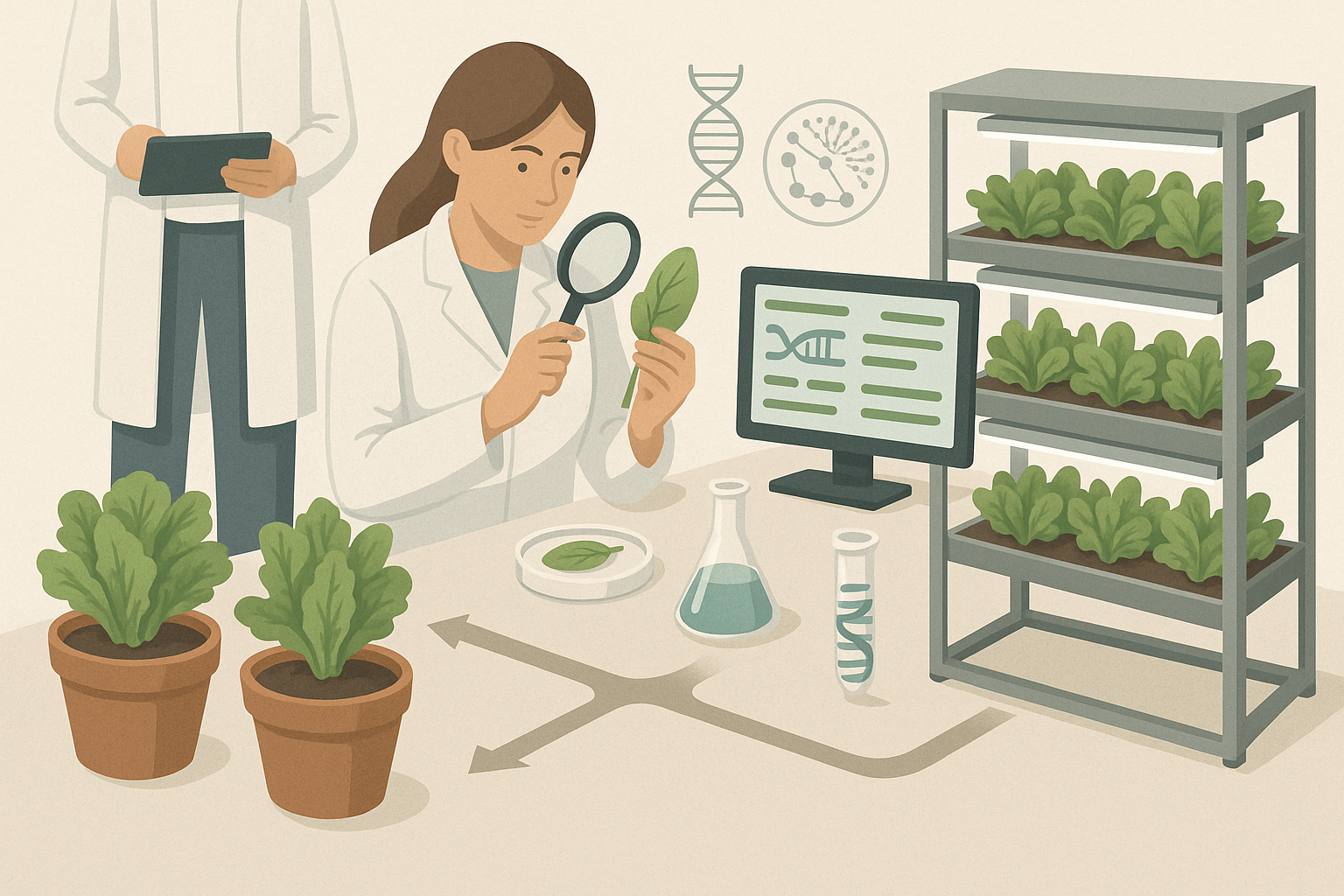
CEA pollination is an area of active innovation, blending plant science with engineering and robotics. Research has focused on developing crop varieties better suited to enclosed environments, including parthenocarpic cultivars that eliminate the need for pollination, or varieties with flowers optimised for mechanical pollen transfer. Parallel developments in artificial intelligence and robotics may eventually provide fully automated pollination systems capable of learning and adapting to crop cycles. Pilot studies of small drones or robotic bees have demonstrated proof of concept, but practical integration into commercial farms remains a future challenge.
The Strategic Importance of Pollination in CEA
Pollination is not an ancillary detail but a fundamental determinant of productivity in fruiting crops. Effective strategies must balance biological knowledge, technological innovation and economic feasibility. For small-scale or research facilities, manual pollination may suffice; for medium-scale commercial greenhouses, bumblebees remain effective; for large-scale vertical farms aiming for high levels of automation, mechanical and robotic systems are likely to dominate future practice. That, or system-based design choices may mean avoiding fruiting crops is the optimal approach. Policymakers and investors considering the future of indoor farming must therefore recognise that CEA pollination methods represent a key constraint as well as an opportunity for innovation.
Conclusion
Pollination within controlled environments illustrates the broader challenges and opportunities of indoor farming. It requires an understanding of plant reproductive biology, adaptation of natural processes to artificial conditions, and the integration of human, biological or mechanical agents to ensure success. While leafy crops and herbs dominate the current vertical farming market precisely because they bypass this complexity, the expansion into fruiting crops will depend heavily on reliable pollination strategies. Future advances are likely to come from a combination of breeding, environmental optimisation and technology-driven solutions. As CEA systems mature, pollination will remain central to achieving productivity, quality and sustainability in indoor farming.
Bibliography and further reading:
- Free, J. B. (1993). Insect Pollination of Crops. Academic Press.
- van Ravestijn, W., & van der Sande, J. (1991). Use of bumblebees for the pollination of glasshouse tomatoes. Acta Horticulturae, 288, 204-212.
- McGregor, S. E. (1976). Insect Pollination of Cultivated Crop Plants. USDA Handbook.
- Velthuis, H. H. W., & van Doorn, A. (2006). A century of advances in bumblebee domestication and the economic and environmental aspects of its commercialization for pollination. Apidologie, 37, 421-451.