Introduction
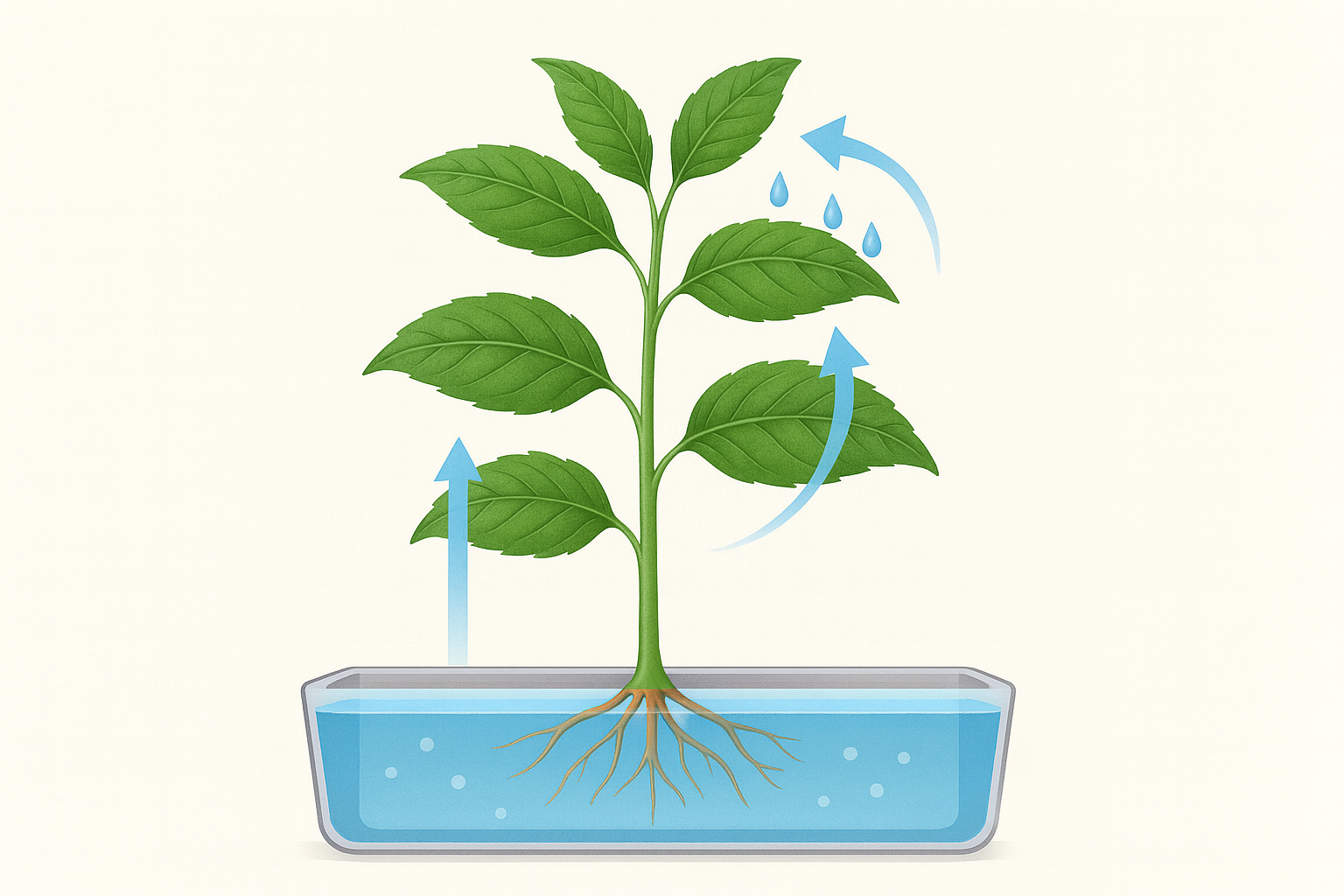
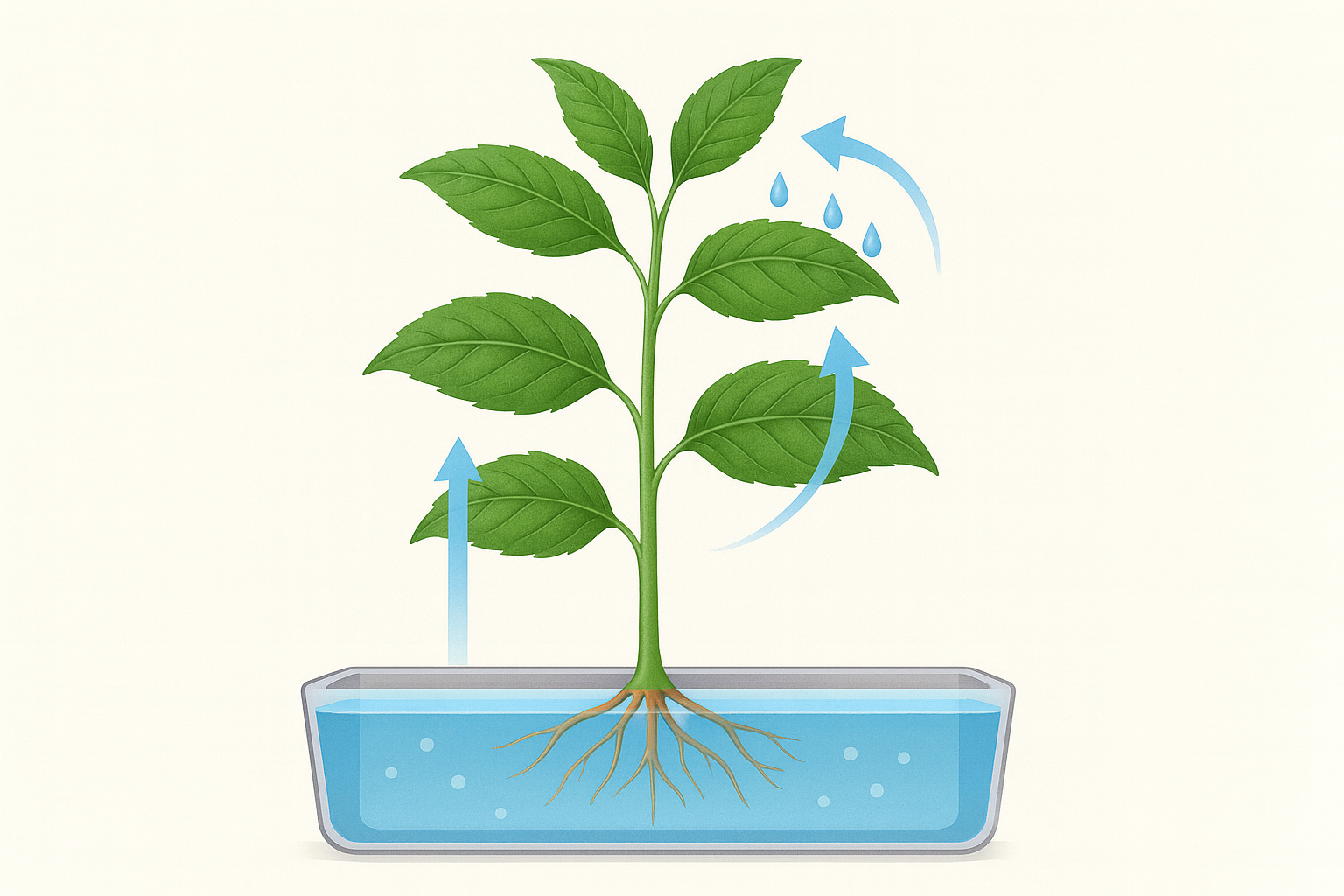
Managing plant transpiration in indoor farming is one of the most significant yet often overlooked aspects of controlled environment agriculture (CEA). Transpiration refers to the process by which water moves through plants, from the roots up through the vascular system, before evaporating from specialised pores called stomata. In natural ecosystems, this process regulates not only the plant’s internal water balance but also wider hydrological and climatic systems. In a vertical farm or hydroponic greenhouse, however, transpiration takes on additional layers of importance: it influences humidity levels, nutrient uptake, temperature management, and the efficiency of energy use in climate control. Without careful attention, transpiration can either undermine crop yields or become a controllable driver of growth.
The Biological Basis of Transpiration
Transpiration occurs primarily through stomata, small openings on the leaf surface that also facilitate gas exchange. When stomata open, carbon dioxide enters for photosynthesis, and water vapour is simultaneously released. This water loss is not wasteful: it drives the flow of nutrients from the root zone to the aerial tissues and helps regulate leaf temperature through evaporative cooling. In an indoor farm, where water and nutrient solutions are closely managed, the balance between stomatal opening and closing becomes central to plant health and productivity.
The rate of transpiration is influenced by several factors, including leaf anatomy, the light environment, air temperature, vapour pressure deficit (VPD), and crop stage. For example, leafy greens with high surface areas can transpire more readily than fruiting crops. Understanding these biological differences allows growers to fine-tune environmental setpoints and irrigation strategies.
Transpiration and the Indoor Climate
One of the defining challenges of indoor farming is that transpired water vapour accumulates within an enclosed structure. Unlike in open fields, this moisture does not simply dissipate into the atmosphere. As crops transpire, humidity can rise rapidly, sometimes to levels that increase the risk of fungal diseases or interfere with optimal photosynthesis.
Climate control systems in vertical farms and greenhouses therefore need to manage both sensible heat (temperature) and latent heat (humidity). The relationship between transpiration and humidity is often described through vapour pressure deficit: the difference between the amount of moisture in the air and the maximum it could hold at a given temperature. A low VPD means the air is saturated and transpiration slows; a high VPD means rapid water loss that can stress plants. Maintaining an appropriate VPD range is thus a cornerstone of managing plant transpiration in indoor farming.
Nutrient Transport and Growth Implications
Transpiration is the primary mechanism by which dissolved nutrients move from the root zone to the leaves and fruits. If transpiration rates are too low, nutrient transport slows, which can lead to deficiencies in fast-growing tissues. For example, inadequate transpiration is associated with disorders such as tip burn in lettuce or blossom end rot in tomatoes. Conversely, excessively high transpiration can dehydrate plants or lead to imbalances in nutrient concentration.
Indoor farming systems often rely on hydroponic or aeroponic solutions where nutrients are delivered directly to the roots. In these systems, the efficiency of nutrient uptake is tied directly to the rate of water flow driven by transpiration. Understanding how to stabilise this flow ensures that crops grow consistently and predictably.
Energy Use and System Efficiency
From an engineering perspective, transpiration is a major driver of energy demand in CEA. Every litre of water transpired becomes latent heat that must be removed or rebalanced by ventilation, dehumidification, or HVAC systems. This means that the biological process of transpiration has direct implications for operational costs. In climates with high outside humidity, managing internal vapour loads can become energy intensive; in drier climates, recapturing transpired water may be advantageous. Some advanced vertical farms use condensation recovery systems to reclaim transpired water, effectively closing the loop in resource use.
Practical Strategies for Growers
Effective management of plant transpiration requires an integrated approach. Light spectra and intensity influence stomatal behaviour; air circulation patterns determine how quickly water vapour is removed from the leaf boundary layer; irrigation timing and nutrient concentration interact with root uptake dynamics. In practice, growers use sensor networks to monitor humidity, VPD, and leaf temperature, adjusting setpoints for HVAC and irrigation accordingly.
Technological innovations are also advancing. Dynamic lighting regimes that reduce transpiration stress, adaptive dehumidification systems, and AI-driven models for predicting crop transpiration under different environmental conditions are increasingly being applied. These tools allow indoor farms to strike a balance between optimising growth and minimising energy expenditure.
Why It Matters for the Future of CEA
Transpiration is not simply a passive loss of water: it is a physiological process that underpins nutrient uptake, plant cooling, and yield stability. In the tightly controlled spaces of vertical farms and greenhouses, mismanagement of transpiration can quickly escalate into crop loss, resource inefficiency, or unsustainable operating costs. Conversely, well-managed transpiration supports consistent production, lowers risk, and enhances sustainability by optimising both water and energy use.
As CEA scales globally, managing plant transpiration in indoor farming will remain a central scientific and operational challenge. It links plant physiology with engineering design and resource management in ways that are unique to enclosed environments. By developing a clear understanding of how plants move and use water, growers, investors, and researchers can ensure that CEA delivers on its promise of reliable, efficient, and sustainable food production.
Bibliography and further reading:
Nobel, P. S. (2009). Physicochemical and Environmental Plant Physiology. Academic Press.
Taiz, L., Zeiger, E., Møller, I. M., & Murphy, A. (2018). Plant Physiology and Development (6th ed.). Oxford University Press.
Jones, H. G. (2013). Plants and Microclimate: A Quantitative Approach to Environmental Plant Physiology. Cambridge University Press.
Körner, O., & Challa, H. (2003). Process-based humidity control regime for greenhouse crops. Computers and Electronics in Agriculture, 39(3), 173-192.
Boulard, T., & Wang, S. (2000). Greenhouse crop transpiration simulation from external climate conditions. Agricultural and Forest Meteorology, 100(1), 25-34.