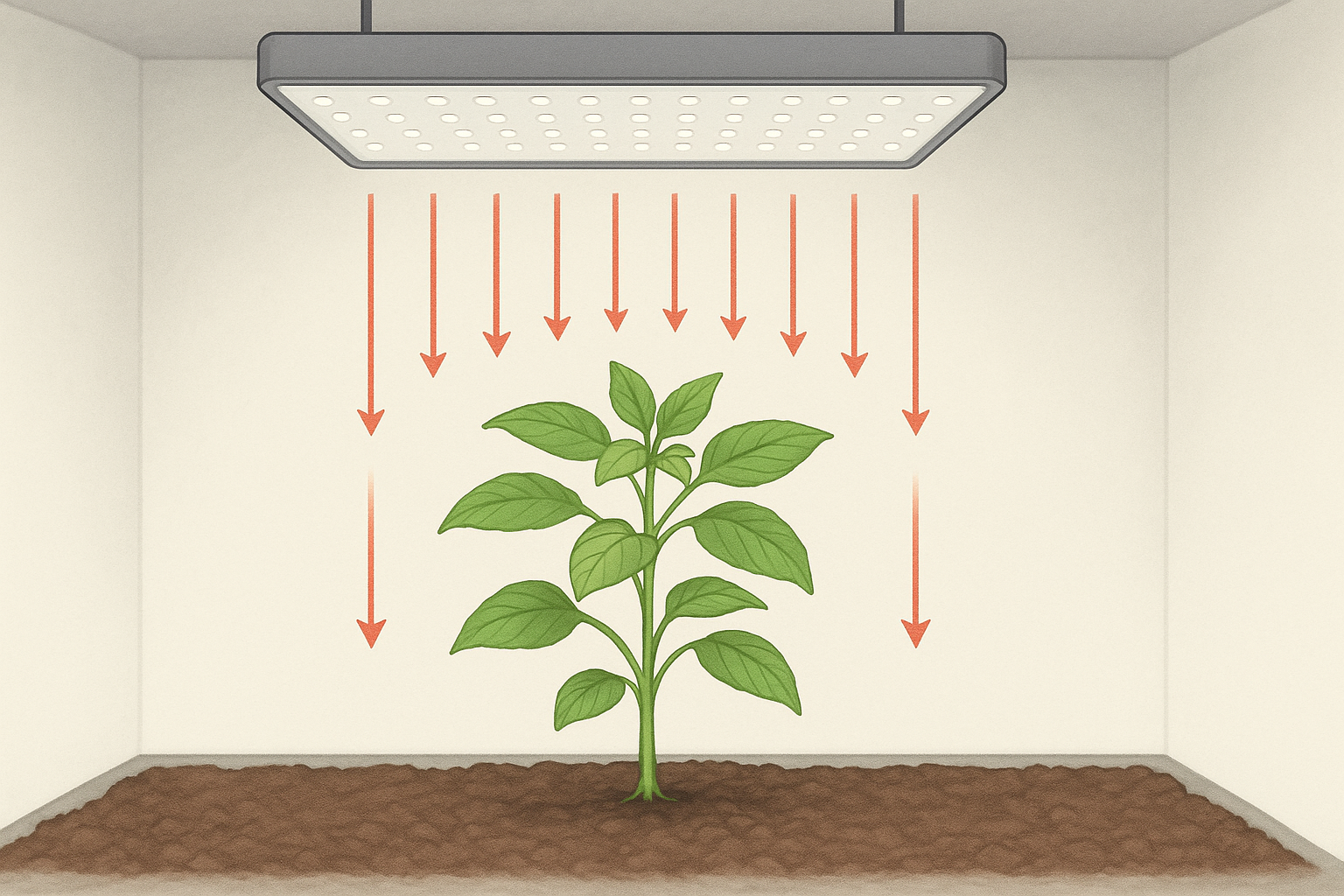
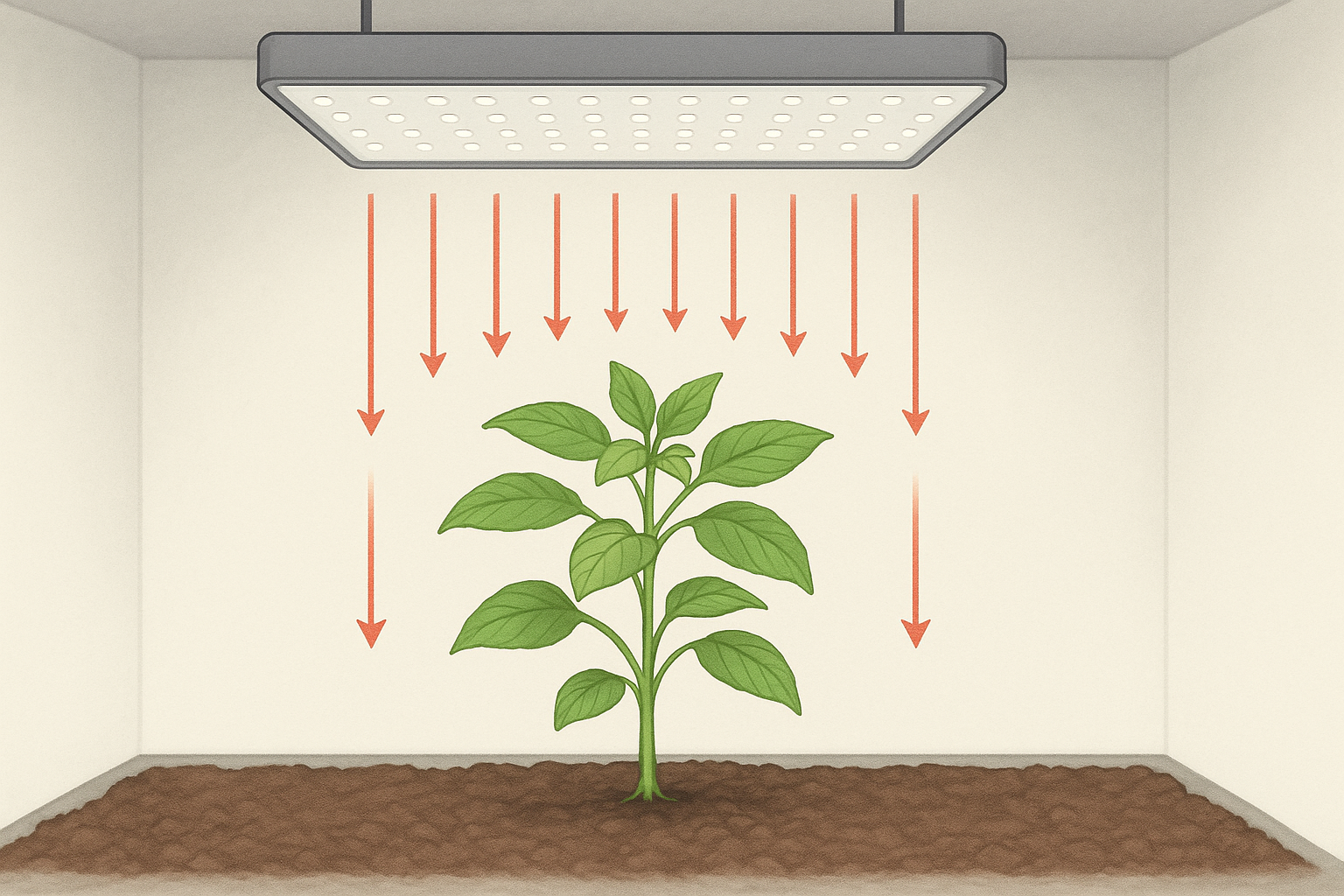
Understanding how plants perceive and respond to light is central to the practice of Controlled Environment Agriculture (CEA). Light is not only the energy source for photosynthesis but also a key environmental signal that influences plant development, morphology, and productivity. In CEA systems such as vertical farms and greenhouses, growers have the unique capacity to manipulate both the quantity and quality of light with a precision that is impossible in open-field cultivation. This capacity to direct plant response to light underpins many of the advantages attributed to indoor farming.
Light as Energy and Signal
At its most fundamental level, light provides the energy that plants use to fix carbon dioxide into carbohydrates through photosynthesis. However, beyond this metabolic role, light also acts as a signalling cue that regulates growth and developmental processes. The spectrum, intensity, duration, and direction of light all influence plant physiology. For example, blue light tends to promote compact growth and stomatal opening, while red light is closely tied to stem elongation and flowering responses. Far-red light, which lies at the edge of the visible spectrum, affects shade avoidance and competitive behaviours. In CEA systems, light-emitting diode (LED) technology enables fine-grained control of these spectral qualities, allowing growers to tailor conditions for specific crops and growth stages.
Photosynthesis and Growth Responses
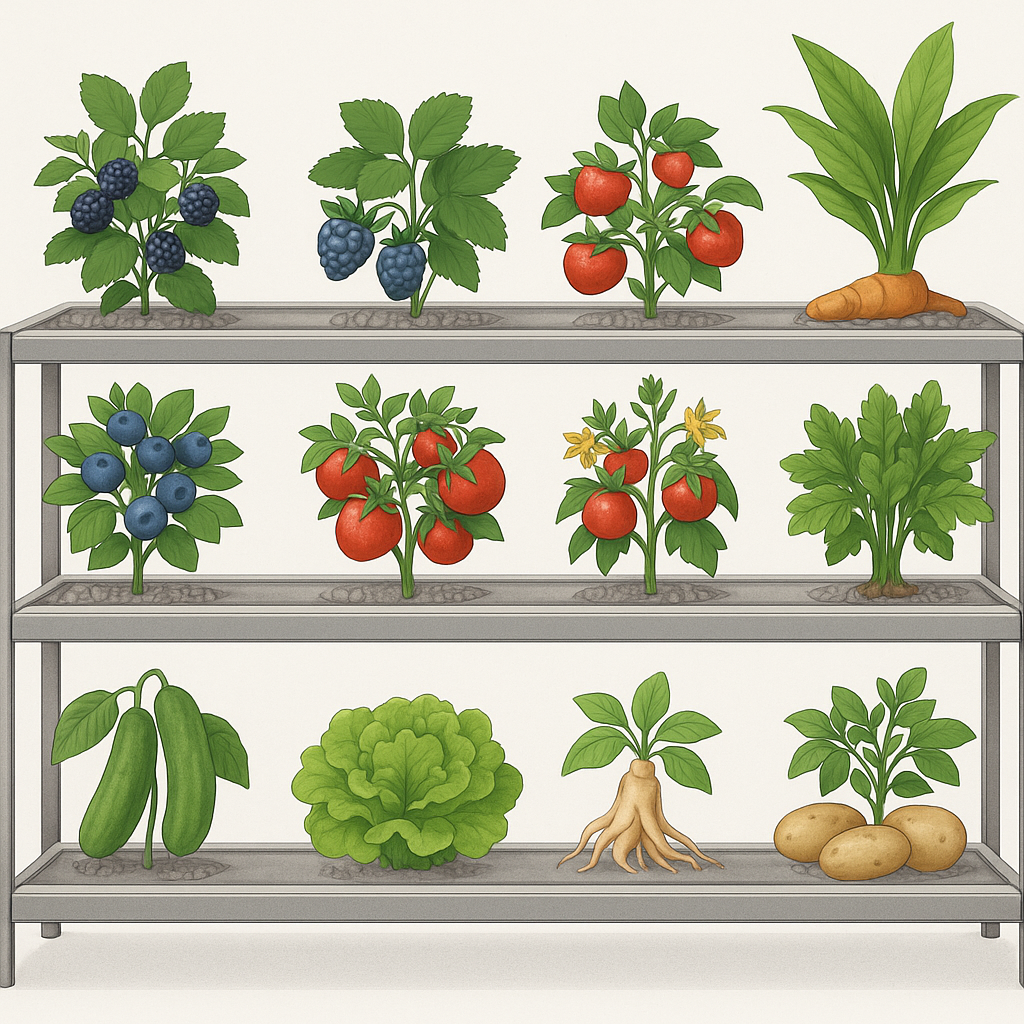
The primary plant response to light is the rate of photosynthesis, which is driven by the number of photons absorbed in the photosynthetically active radiation (PAR) range of 400–700 nanometres. The relationship between light intensity and photosynthetic rate is not linear; plants reach a saturation point beyond which additional light does not proportionally increase growth. This is particularly important in vertical farming where energy efficiency is a critical economic factor. A balance must be struck between providing sufficient light to maximise yield and avoiding excess energy expenditure. Crops such as lettuce, herbs, and microgreens often require lower light intensities than fruiting crops like tomatoes or strawberries, making them well suited to early-stage CEA adoption.
Morphological and Developmental Effects
Plants adjust their form and function in response to light cues in a process known as photomorphogenesis. Seedlings grown under insufficient light often exhibit etiolation, characterised by elongated stems and pale leaves. In contrast, exposure to appropriate light intensities and spectra produces compact, robust plants with well-developed chloroplasts. The control of photoperiod, or the duration of daily light exposure, is equally important. Many crops have specific photoperiodic requirements for flowering: strawberries can be induced to flower under long days, whereas lettuce may bolt prematurely under extended photoperiods. Managing these responses is essential for synchronising crop production cycles in commercial CEA facilities.
Direction and Quality of Light
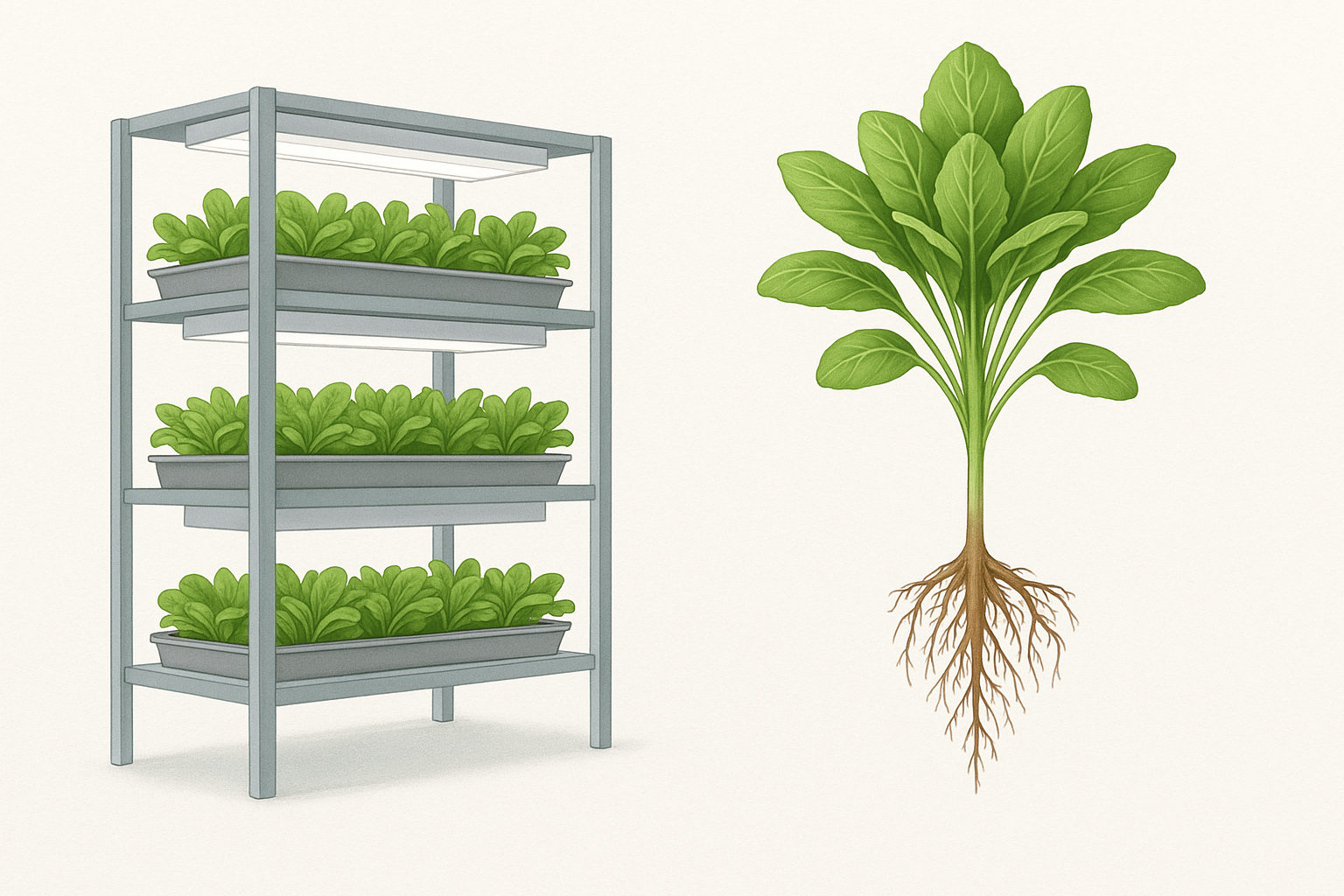
The angle and distribution of light also matter. In natural settings, plants orient their leaves to maximise light capture, but in vertical farms the geometry of stacked layers and reflective surfaces creates unique light environments. Uniformity of light distribution is vital to prevent uneven growth within the same growing tray or shelf. Spectral quality has become a focus of research and practice, with experiments demonstrating that mixtures of red and blue light can enhance photosynthetic efficiency, while supplemental green light penetrates deeper into leaf canopies. Far-red supplementation can accelerate flowering in some crops but may reduce leaf density if over-applied. These interactions underscore the complexity of plant response to light and the need for evidence-based lighting strategies.
Light Management as a Tool in CEA
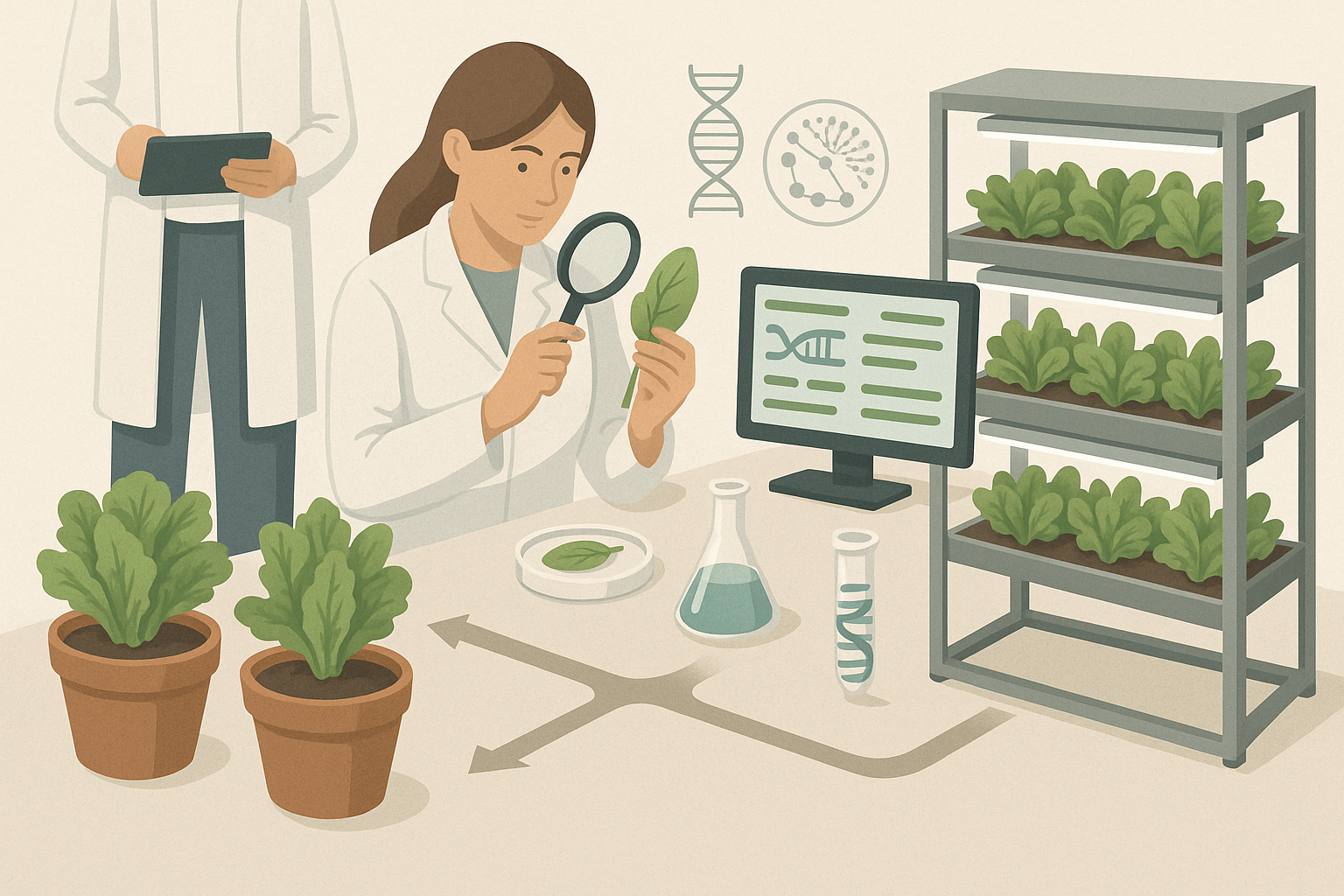
CEA systems provide an unprecedented ability to design light regimes that are optimised for crop performance. Advances in LED engineering mean that growers can now select specific spectral ratios, adjust intensities dynamically, and programme light schedules to mimic dawn-dusk transitions or stimulate stress responses that improve nutritional content. The manipulation of light environments is not simply about maximising yield; it can also influence flavour, shelf-life, and nutritional qualities. For example, controlled exposure to UV-A or UV-B can increase the production of secondary metabolites, enhancing antioxidant levels in leafy greens.
Practical and Economic Considerations
While the biological principles of plant response to light are well understood, their application in CEA must always be balanced against energy costs and infrastructure constraints. Lighting remains one of the largest operational expenditures in vertical farming. The challenge for growers is therefore to translate scientific insights into commercially viable practices. Ongoing research into light-use efficiency, crop-specific spectral requirements, and dynamic control systems is helping to close the gap between biological potential and economic reality.
Conclusion
Light is a fundamental driver of plant life, acting both as a source of energy and as a regulator of development. In controlled environments, the capacity to manipulate light represents both the greatest opportunity and the greatest challenge for growers. By understanding the nuances of plant response to light, it becomes possible to design systems that not only sustain growth but also optimise quality, efficiency, and resilience. As technologies continue to evolve, the interplay between biology and engineering in this field will remain central to the future of sustainable food production.
Bibliography and further reading:
- Bantis, F., Smirnakou, S., Ouzounis, T., Koukounaras, A., Ntagkas, N., & Radoglou, K. (2018). Current status and recent achievements in the field of horticulture with the use of light-emitting diodes (LEDs). Scientia Horticulturae, 235, 437–451.
- Hernández, R., & Kubota, C. (2016). Physiological responses of cucumber seedlings under different blue and red photon flux ratios using LEDs. Environmental and Experimental Botany, 121, 66–74.
- Kaiser, E., Weerheim, K., Schipper, R., & Dieleman, J. A. (2019). Partial replacement of red and blue by green light increases biomass and yield in tomato. Frontiers in Plant Science, 10, 75.
- Mitchell, C. A., & Sheibani, F. (2020). LED advancements for plant-factory artificial lighting. Trends in Plant Science, 25(9), 882–893.
- Smith, H. (2000). Phytochromes and light signal perception by plants. Nature, 407(6804), 585–591.