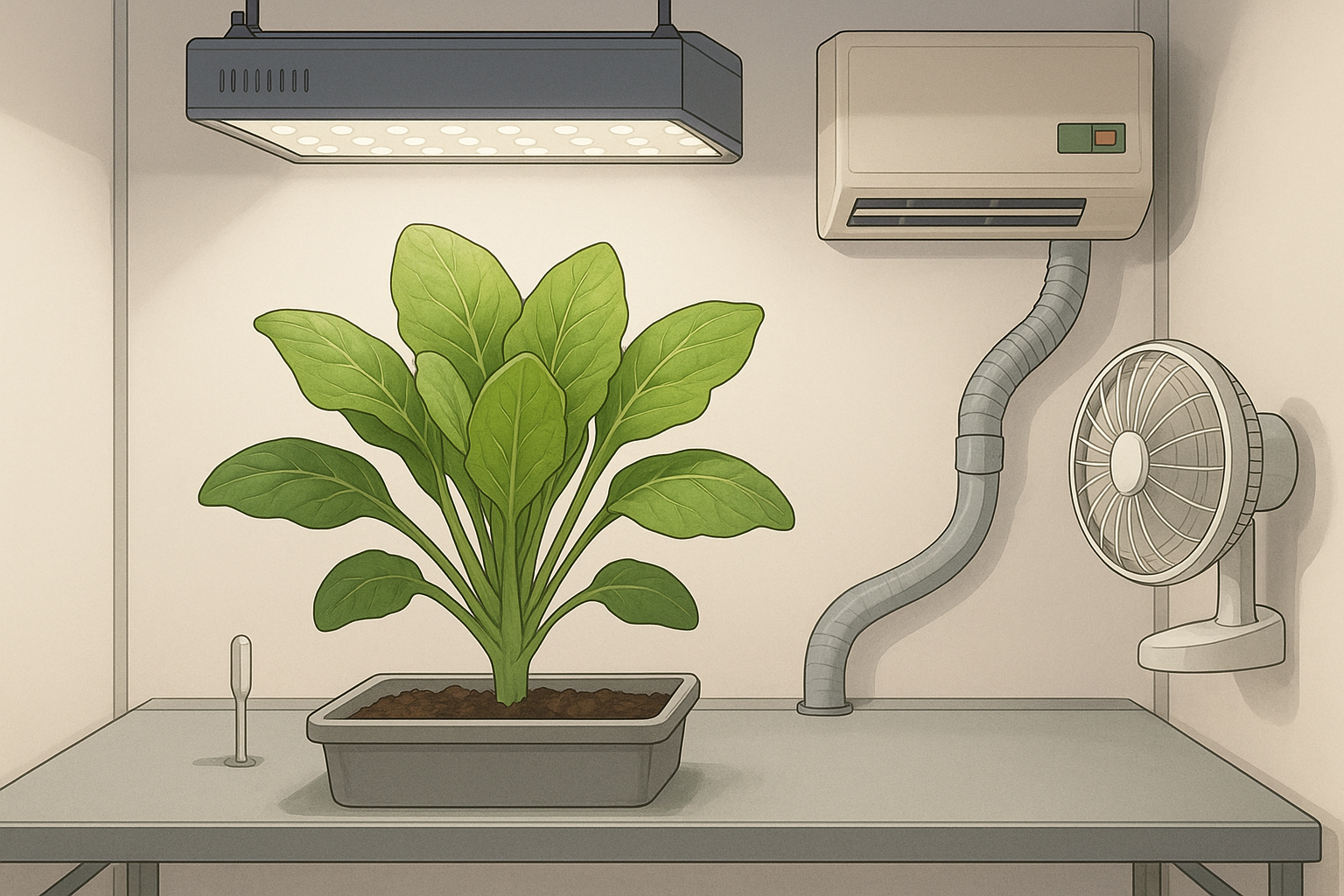
Temperature is one of the most fundamental abiotic factors shaping plant growth and development. In controlled environment agriculture (CEA) systems, growers must understand plant response to temperature in order to optimise yields, maintain crop quality, and ensure resource efficiency. Unlike open-field agriculture, where plants are subject to unpredictable weather and seasonal variation, indoor farms allow precise regulation of temperature. Yet this control does not make temperature management simple: different species, and even different stages of growth within the same crop, require carefully tuned conditions.
Why Temperature Matters in CEA
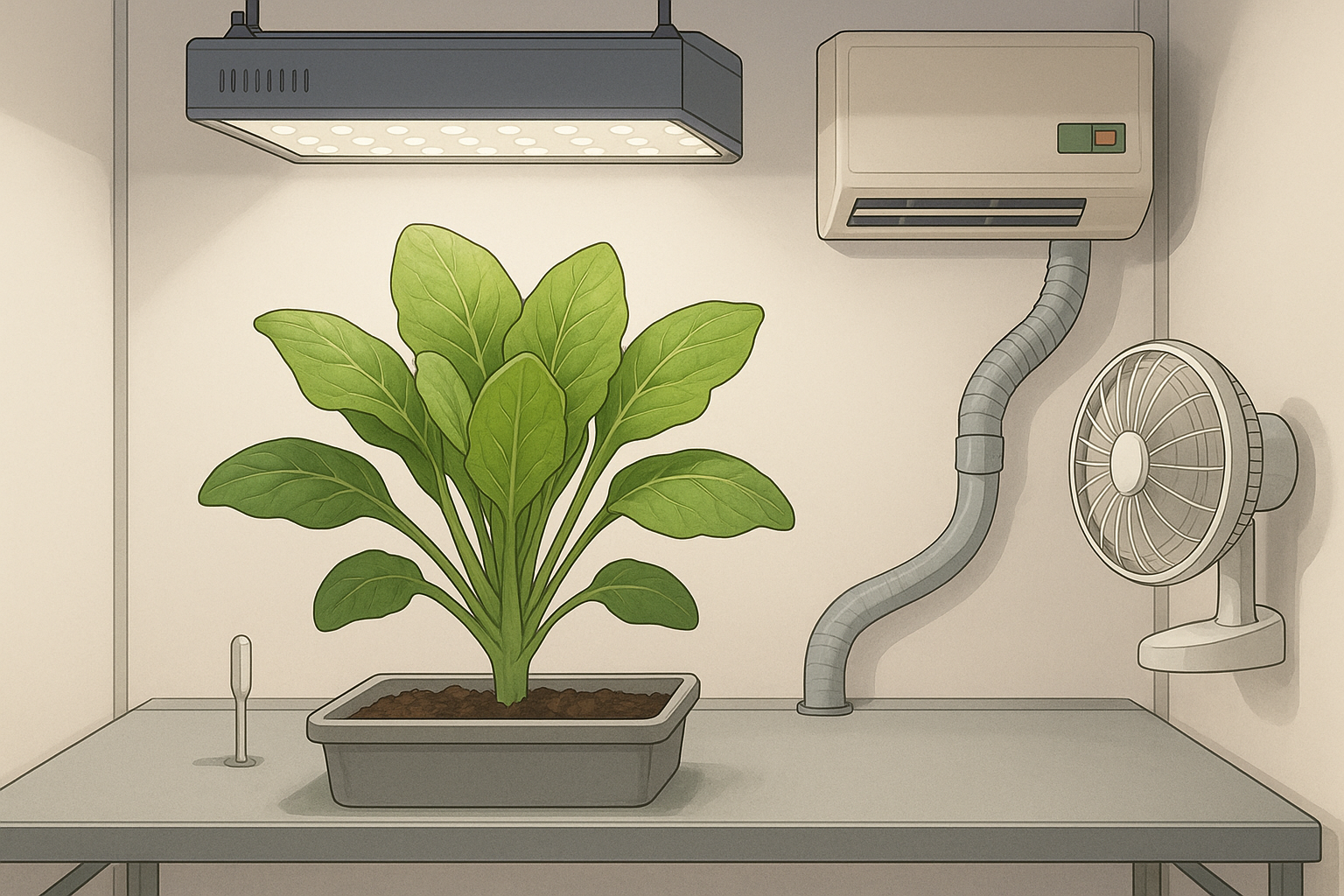
Plants are ectothermic organisms. Their metabolism, growth rate, flowering behaviour, and reproductive success depend on the surrounding temperature. Every species has defined thresholds: a base temperature below which growth slows or ceases, an optimum range where growth is maximised, and a ceiling beyond which physiological processes begin to fail. In CEA, these thresholds can be managed with HVAC (heating, ventilation, and air conditioning) systems, thermal insulation, and integration with lighting and humidity control. The challenge is to balance energy expenditure with plant requirements.
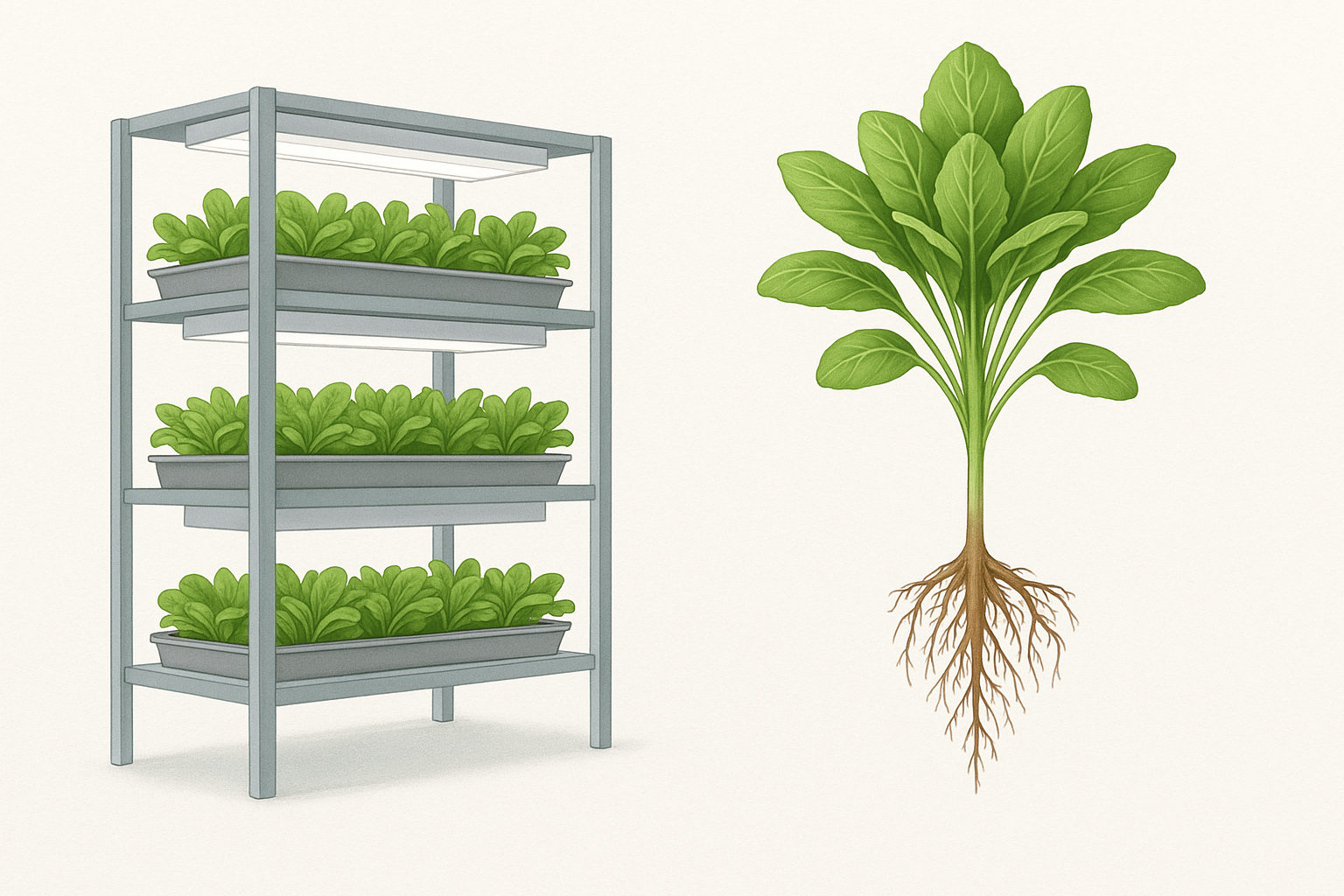
Temperature directly influences enzymatic reactions. For example, the Calvin cycle in photosynthesis and respiration processes accelerate with warmth, but decline if enzymes denature under excessive heat. Similarly, cell membrane fluidity changes with temperature, altering nutrient uptake and water transport. This is why lettuce develops tip burn in overly warm vertical farms, while tomatoes may fail to set fruit if night-time temperatures drop too low.
Growth, Development, and Phenology
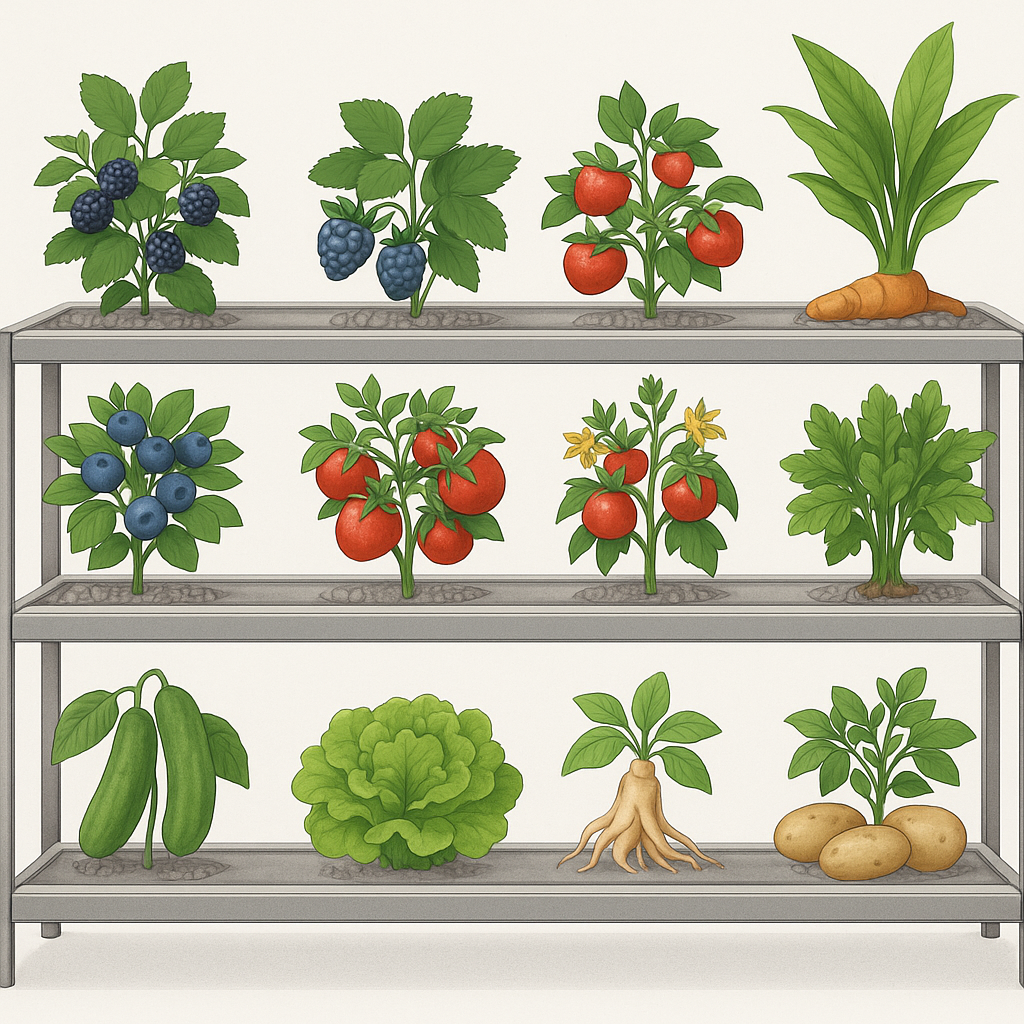
Plant response to temperature in CEA systems can be seen in growth patterns and developmental timing. Cool-season crops such as spinach and pak choi thrive at lower set-points, whereas basil, cucumbers, and peppers require warmer conditions to maintain active growth. Vernalisation, the requirement of a cold period before flowering, remains relevant even indoors. Some crops will not progress to reproductive stages without carefully managed low-temperature exposure.
Developmental rate is often quantified using thermal time or growing degree days. This approach measures how cumulative temperature exposure drives growth milestones. For instance, leafy greens may reach harvest size in fewer days when grown at the upper end of their optimum range. However, pushing temperatures beyond the optimum can shorten the growth cycle at the expense of quality, with outcomes such as elongated stems, reduced flavour, or increased susceptibility to pathogens.
Interactions with Other Abiotic Factors
Temperature does not act alone. It interacts with light, humidity, and carbon dioxide levels to shape the plant microclimate. Warmer air holds more water vapour; therefore, temperature management directly affects transpiration rates and humidity control. In vertical farms, insufficiently cooled LEDs can raise canopy-level temperatures, creating localised stress zones. This is particularly important in multilayer systems where air circulation may be uneven.
Carbon dioxide enrichment is another variable that depends on temperature. Plants require both warmth and elevated CO2 for maximum photosynthetic efficiency. If air temperature is too low, CO2 uptake slows; if too high, stomata may close to conserve water, again limiting assimilation. Effective CEA design therefore integrates temperature management with lighting schedules, air movement, and irrigation.
Stress Responses and Damage
When temperatures exceed a plant’s tolerance, stress responses are triggered. Heat stress can lead to protein denaturation, reactive oxygen species build-up, and disruption of photosynthetic machinery. Leaves may wilt, chlorophyll may degrade, and crops may develop visible damage such as necrotic patches. Cold stress has its own effects: reduced membrane fluidity, impaired enzyme activity, and in some cases chilling injury, where sensitive crops such as cucumbers suffer damage at temperatures well above freezing.
Plants have evolved mechanisms to cope, including the expression of heat shock proteins that stabilise enzymes and cellular structures. In CEA, understanding these natural defences allows growers to design interventions: for example, brief night-time cooling can reduce stress accumulation, while pre-conditioning seedlings with mild temperature variation can improve resilience later in the cycle.
Practical Considerations for Indoor Farms
Temperature management in indoor farms is both a biological and economic concern. Energy used for heating and cooling constitutes one of the largest operational costs in vertical farming. As a result, growers must balance crop requirements with financial sustainability. This often involves selecting crop species that align with the existing thermal profile of the facility, rather than attempting to grow highly temperature-sensitive crops that demand constant adjustment.
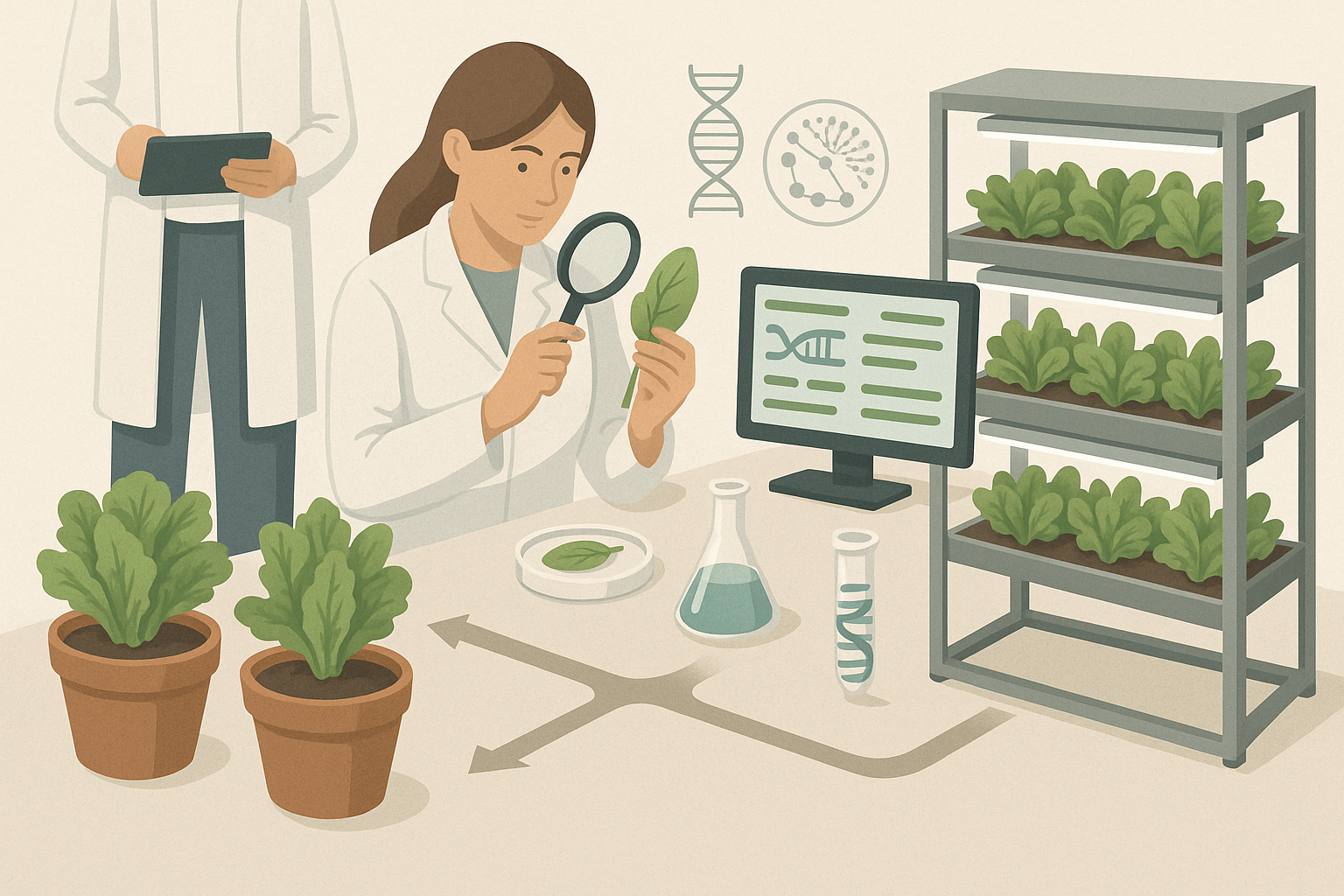
Real-time monitoring with sensors and digital twins is becoming increasingly common. By modelling plant response to temperature in CEA systems, growers can anticipate growth rates and adjust set-points dynamically. Predictive control systems can link energy tariffs to environmental parameters, lowering operational costs while maintaining crop quality.
Conclusion
Temperature is not simply a background condition in CEA: it is a central driver of plant physiology, growth, and productivity. Understanding how crops respond to warmth and cold, how these responses interact with light, humidity, and carbon dioxide, and how stress thresholds manifest in real-world systems, is essential for designing effective indoor farms. By mastering the relationship between plants and temperature, growers can improve yields, enhance quality, and reduce resource use, laying the foundation for resilient and efficient controlled environment agriculture.
Bibliography and further reading:
Bita, C.E., & Gerats, T. (2013). Plant tolerance to high temperature in a changing environment: scientific fundamentals and production of heat stress-tolerant crops. Frontiers in Plant Science, 4, 273.
Prasad, P.V.V., Staggenborg, S.A., & Ristic, Z. (2008). Impacts of drought and/or heat stress on physiological, developmental, growth, and yield processes of crop plants. Response of Crops to Limited Water: Understanding and Modelling Water Stress Effects on Plant Growth Processes, 301–355.
Taiz, L., Zeiger, E., Møller, I.M., & Murphy, A. (2015). Plant Physiology and Development (6th ed.). Oxford University Press.