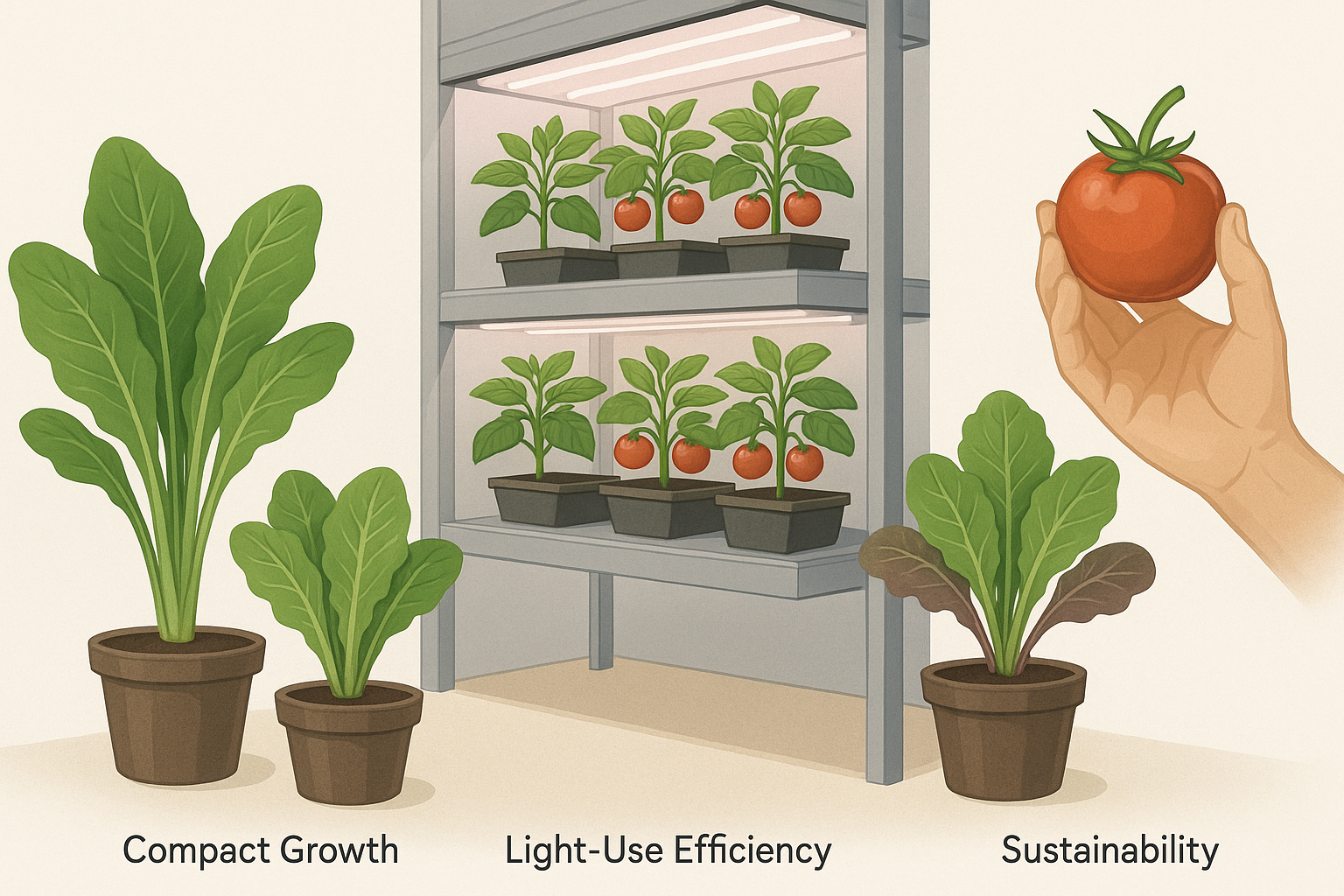
Plant breeding goals for vertical farming are distinct from those developed for conventional agriculture. Traditional breeding has historically prioritised yield, pest resistance, and adaptability to outdoor conditions such as fluctuating weather, soil type, and water availability. By contrast, crops grown within Controlled Environment Agriculture (CEA) and vertical farming systems are cultivated under carefully managed and often highly uniform conditions. This difference opens new opportunities for breeding strategies that are tailored to controlled environments. Such objectives include not only optimising yield and quality but also ensuring efficient resource use, compatibility with indoor production technologies, and alignment with market demand.
Rethinking Breeding Priorities for Indoor Agriculture
Conventional plant breeding has been shaped by field-based challenges: resistance to pest and disease pressure, drought tolerance, and the ability to thrive in variable soils. In CEA systems, these pressures are significantly reduced. Pets and disease risks can be managed with biosecurity measures, and soil is often replaced with hydroponic or aeroponic systems. Instead, breeding objectives must shift towards traits that enhance performance in artificially lit, nutrient-controlled, and often space-constrained systems. For instance, compact plant architecture, accelerated growth cycles, and predictable uniformity are highly valued in vertical farming. This does not negate traditional goals such as flavour and nutritional quality, but it reframes them within an environment where light spectra, carbon dioxide, and nutrient regimes are adjustable variables.
Compact Growth and Spatial Efficiency
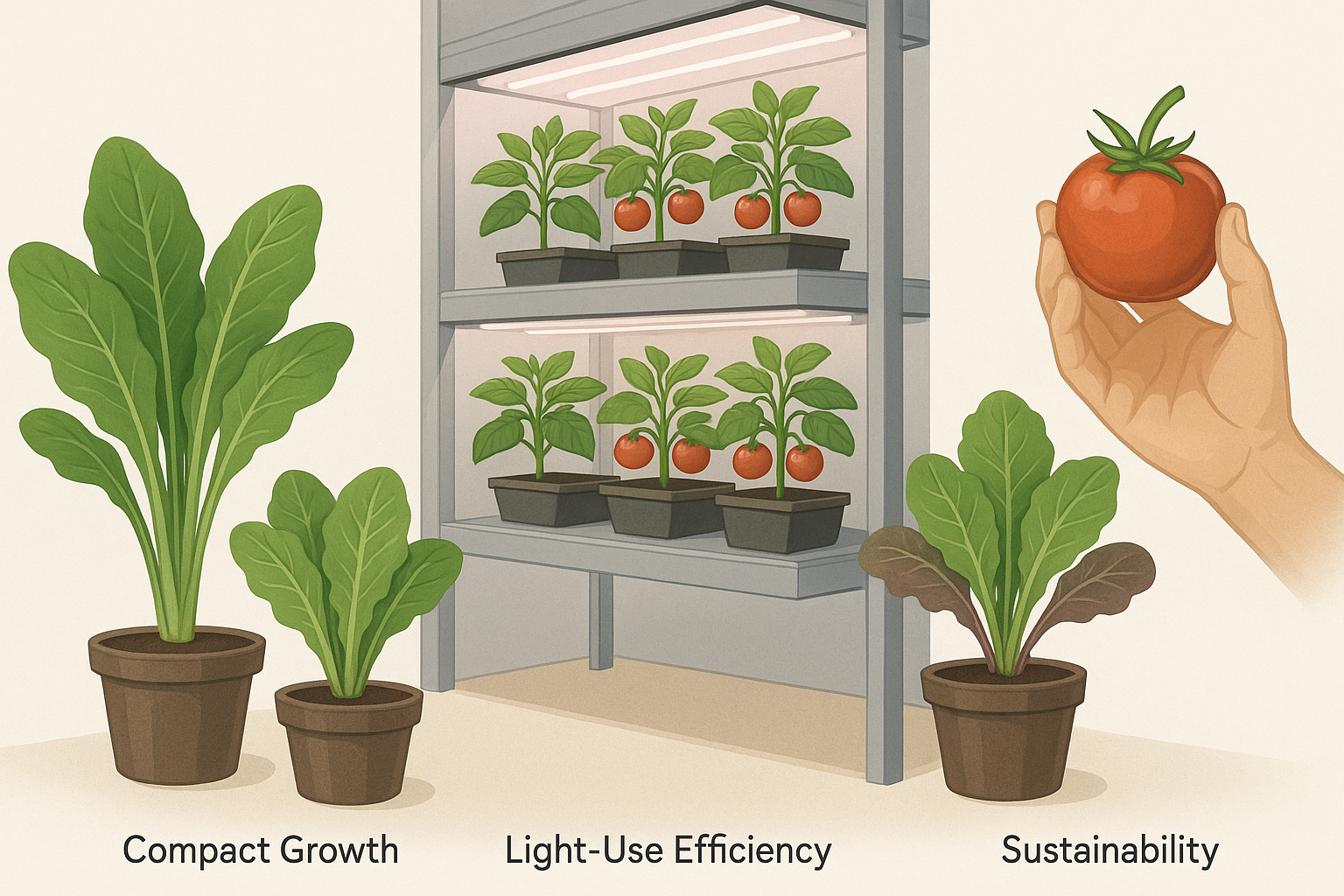
One of the clearest breeding objectives for vertical farming is compactness. In multi-tiered systems, space is a premium resource. Plants with shorter internodes, smaller root systems, or bushier forms are better suited to dense planting without compromising airflow or light penetration. Breeding for dwarf or semi-dwarf phenotypes has a precedent in field agriculture, particularly the Green Revolution cereals of the twentieth century, yet the reasoning here is different: the emphasis is not on preventing lodging under field conditions, but on maximising productivity per cubic metre indoors.
Optimising Light Use and Photosynthetic Efficiency
Light is the principal energy input in vertical farms, and the cost of artificial lighting is one of the largest operational expenses. Plant breeding objectives therefore include optimising canopy structure and leaf morphology to make efficient use of artificial light spectra. Studies show that thinner leaves, modified pigment profiles, and altered chlorophyll content can improve performance under LED lighting regimes. Breeding could also prioritise varieties with enhanced photosynthetic efficiency at elevated CO2 concentrations, which are typical in CEA systems. Such refinements ensure that every photon delivered to the crop translates into biomass, improving both sustainability and profitability.
Accelerated Growth and Controlled Reproduction
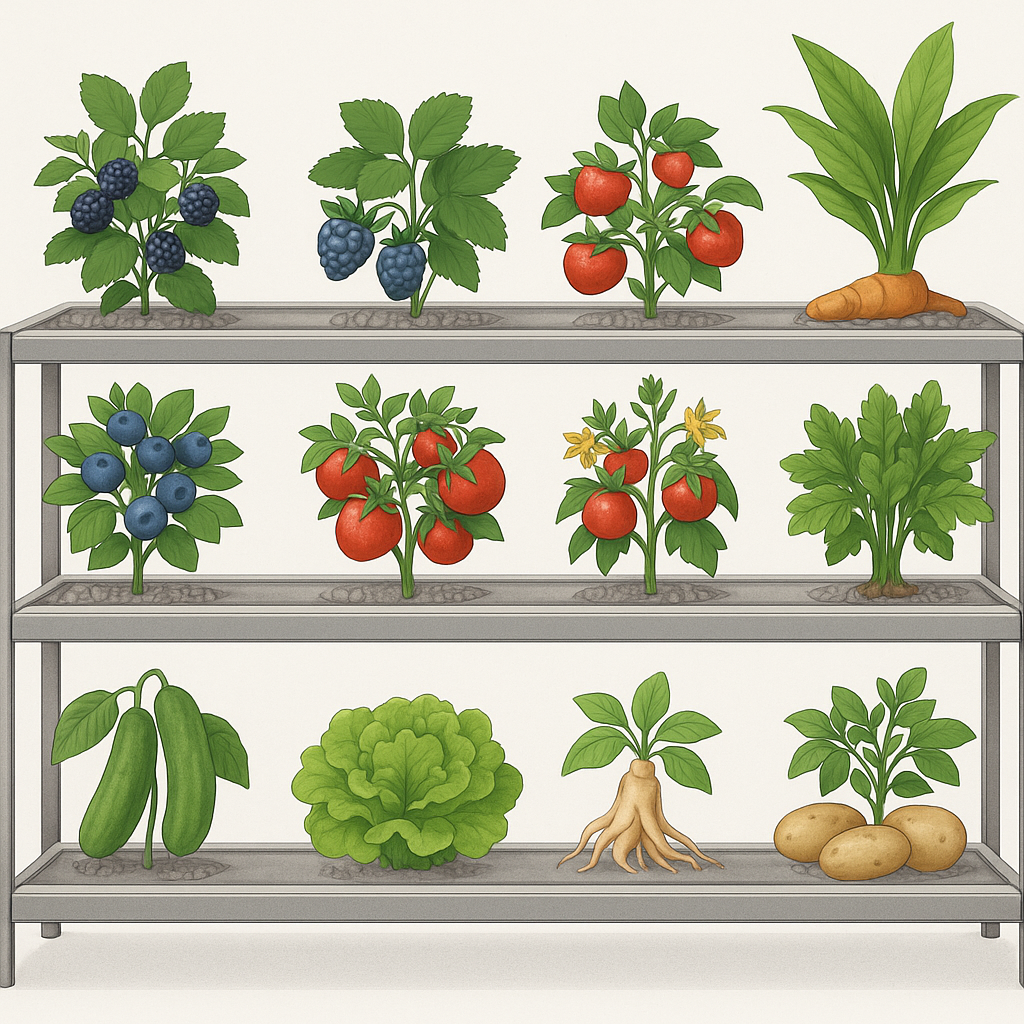
Speed to harvest is a critical economic factor in vertical farming. Short growth cycles allow for more production cycles per year, increasing output from limited space. Breeding programmes can select for faster germination, earlier flowering, or reduced juvenile phases, particularly in leafy greens and herbs where the vegetative stage is the marketable product. In fruiting crops such as tomatoes and strawberries, compact plants with rapid fruit set and predictable ripening are advantageous. Indoor pollination challenges also inform breeding goals: parthenocarpic varieties that set fruit without pollination are already being developed for greenhouse systems and are particularly relevant to vertical farms where natural pollinators are absent or challenging to introduce.
Quality, Nutrition, and Consumer Preferences
While yield remains important, consumer expectations around quality are a strong driver for breeding objectives. Flavour, aroma, texture, and nutritional density can all be prioritised more directly in indoor farming because environmental stresses are managed more predictably. For example, basil grown indoors can be bred for enhanced volatile oil content without concern for field variability. Likewise, lettuce varieties might be optimised for higher levels of beneficial phytochemicals such as anthocyanins or flavonoids, traits that may be enhanced under specific LED light treatments (Ouzounis et al., 2015). These quality-focused breeding objectives align closely with premium urban markets that vertical farms often serve.
Resource Efficiency and Sustainability
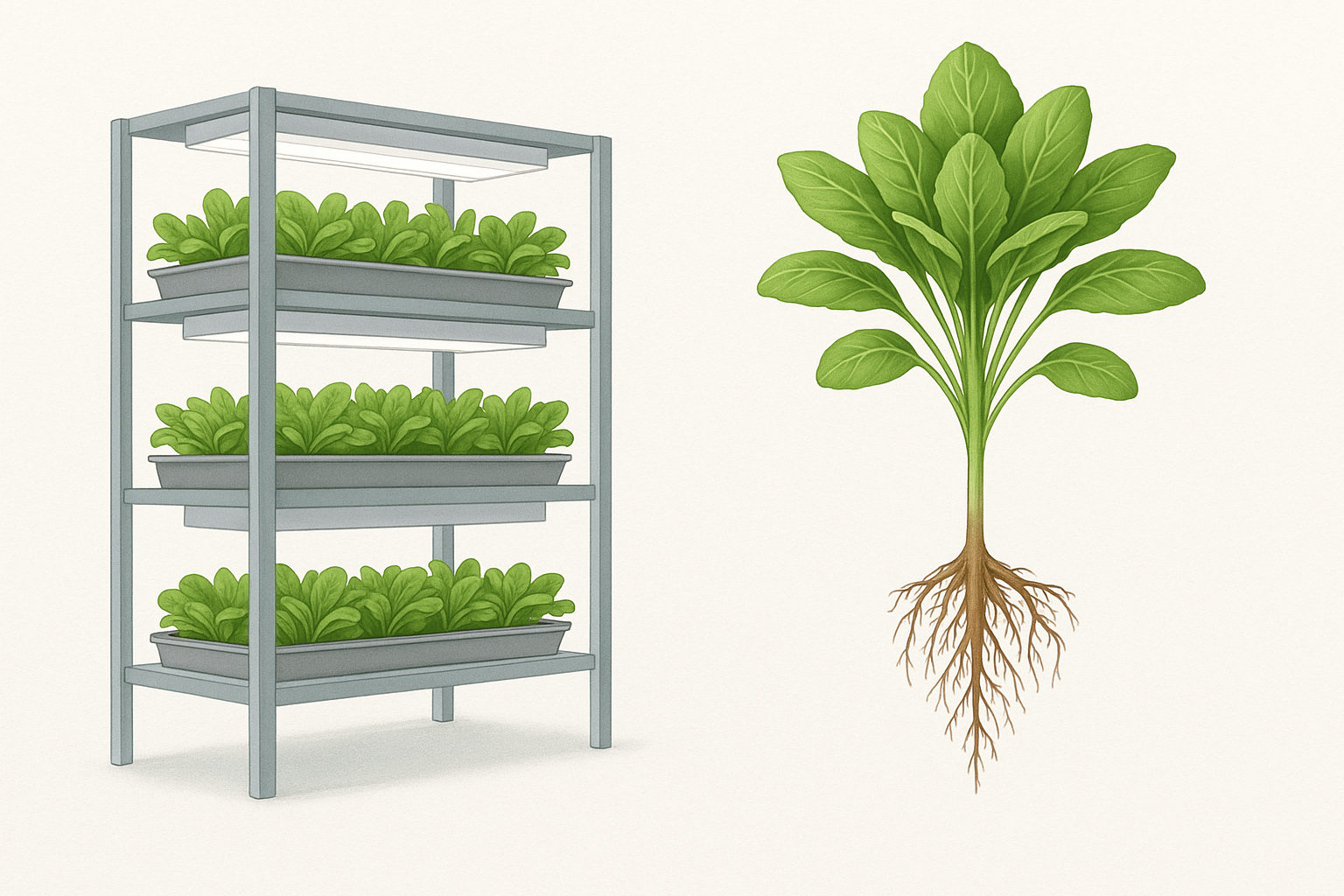
CEA systems offer the advantage of precise resource management: water is recirculated, nutrients are supplied with accuracy, temperature and humidity regulated. Breeding can contribute to these efficiencies. Crops may be selected for low nutrient demand, efficient water use under hydroponic conditions, or reduced susceptibility to certain physiological disorders associated with the temperature and humidity variables of indoor growing. Root system architecture is another target: compact but highly absorptive root traits may be preferable in hydroponics, contrasting sharply with field crops bred for deep, extensive root networks.
Genetic Tools and Future Prospects
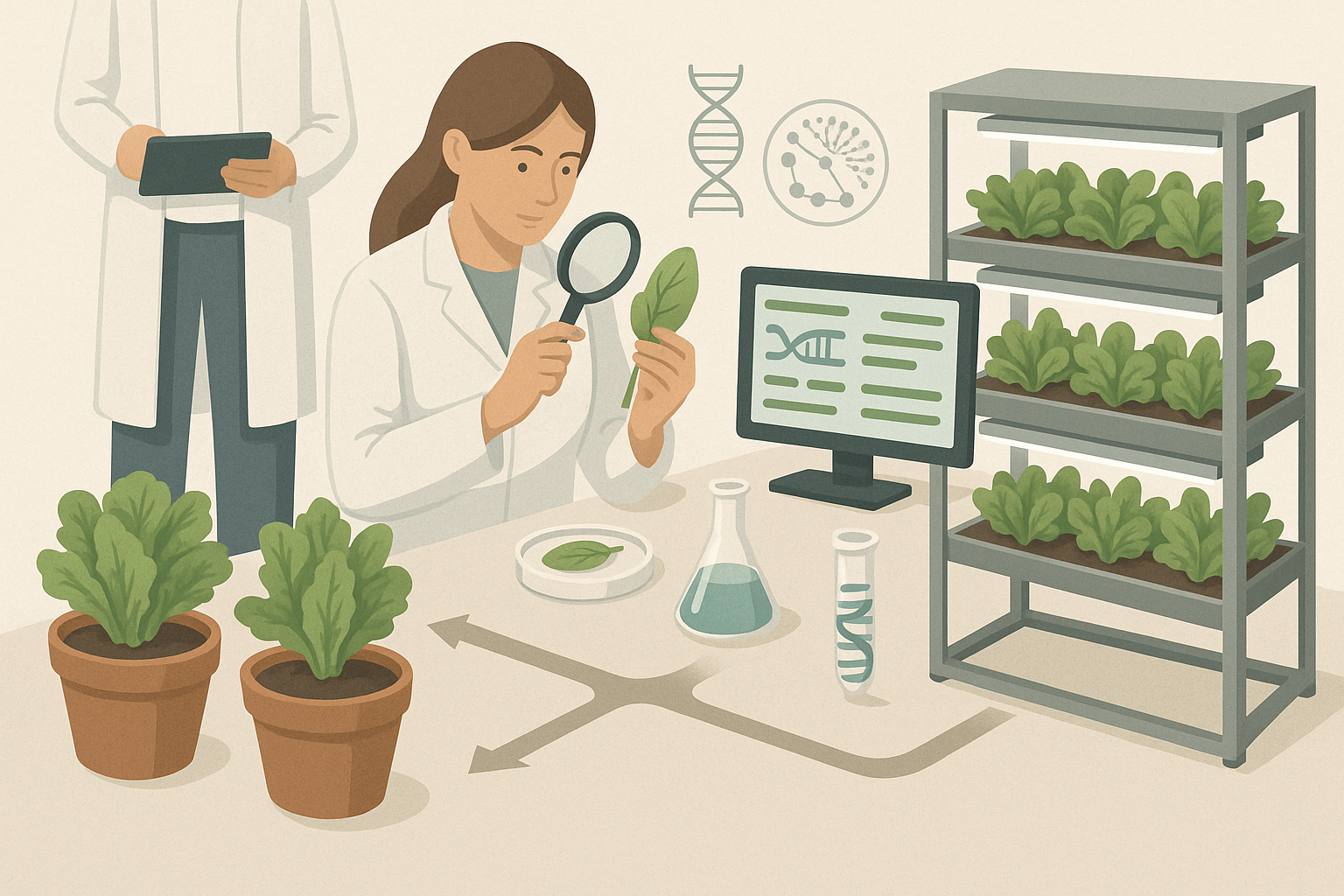
Modern breeding technologies accelerate the ability to target these traits. Genomic selection, marker-assisted breeding, and CRISPR gene editing allow for precise modification of traits suited to vertical systems. For example, CRISPR has already been used to develop tomato plants with altered architecture, producing compact plants with higher yields under controlled environments. The capacity to design crops explicitly for vertical farming represents a fundamental shift: crops may be created not for adaptation to nature, but for compatibility with engineered environments.
Policy, Investment, and Market Implications
The development of varieties specifically suited to vertical farming requires coordinated investment in breeding programmes. Traditional crop improvement has relied on public breeding institutions and multinational seed companies; however, vertical farming is a relatively new industry with emerging market incentives. Policymakers and investors must recognise that crop genetics underpin the viability of indoor agriculture. Without dedicated breeding pipelines, vertical farms will remain reliant on varieties optimised for greenhouses or open fields, which may not fully exploit the potential of controlled environments.
Conclusion
Plant breeding goals for vertical farming represent both a challenge and an opportunity. By moving beyond conventional field-based priorities, breeders can create crops that thrive in controlled environments: compact, efficient, fast-growing, and rich in quality traits valued by consumers. The intersection of advanced breeding techniques and highly engineered production systems opens a new frontier in agriculture. Success in this domain will depend not only on technical innovation but also on investment, collaboration, and a clear vision of the role that CEA can play in future food systems.
Bibliography and further reading
Kaiser, E., Weerheim, K., Schipper, R., & Dieleman, J. A. (2019). Partial replacement of red and blue by green light increases biomass and yield in tomato. Scientia Horticulturae, 249, 271-279.
Ouzounis, T., Rosenqvist, E., & Ottosen, C. O. (2015). Spectral effects of artificial light on plant physiology and secondary metabolism: a review. Horticulture Science, 50(8), 1128-1135.
Teo, Z. W. N., & Yu, H. (2024). Genetic breeding for indoor vertical farming. Npj Sustainable Agriculture, 2(1), 13.
Zsögön, A., Cermak, T., Naves, E. R., Notini, M. M., Edel, K. H., Weinl, S., … & Peres, L. E. P. (2018). De novo domestication of wild tomato using genome editing. Nature Biotechnology, 36(12), 1211-1216.