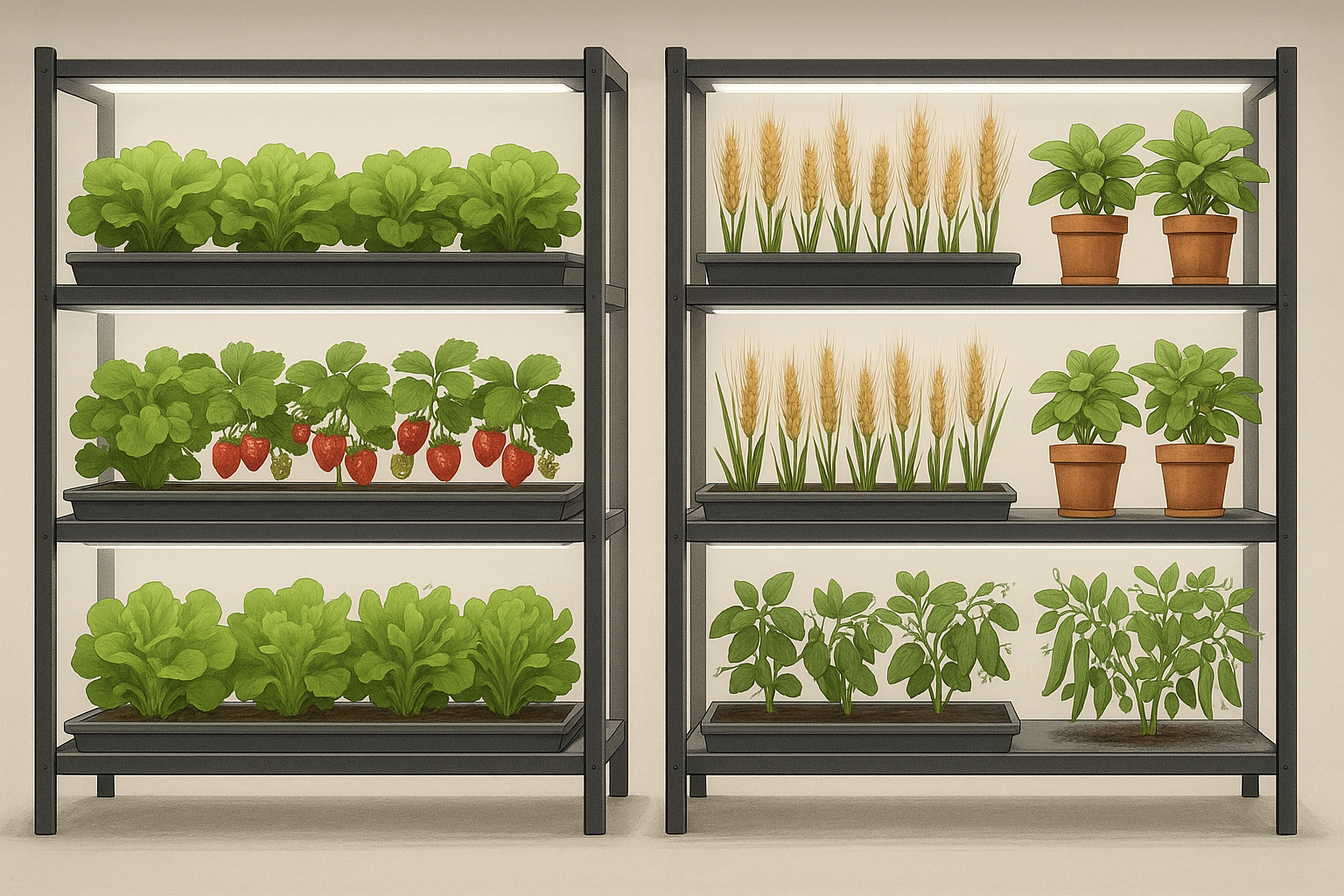
The idea of emerging crops in vertical farming is no longer limited to leafy greens and herbs; researchers, entrepreneurs, and policy-makers are increasingly asking what the next generation of crops for controlled environments might look like. Emerging crops in vertical farming represent both an economic opportunity and a scientific challenge: expanding production beyond a narrow range of fast-growing, high-value species could improve diet diversity, stabilise supply chains, and create new markets for crops previously considered unsuited to indoor cultivation. Here we will consider how plant biology and technology intersect to define possibilities, and what avenues are most likely to influence the trajectory of indoor farming systems.
Moving beyond leafy greens
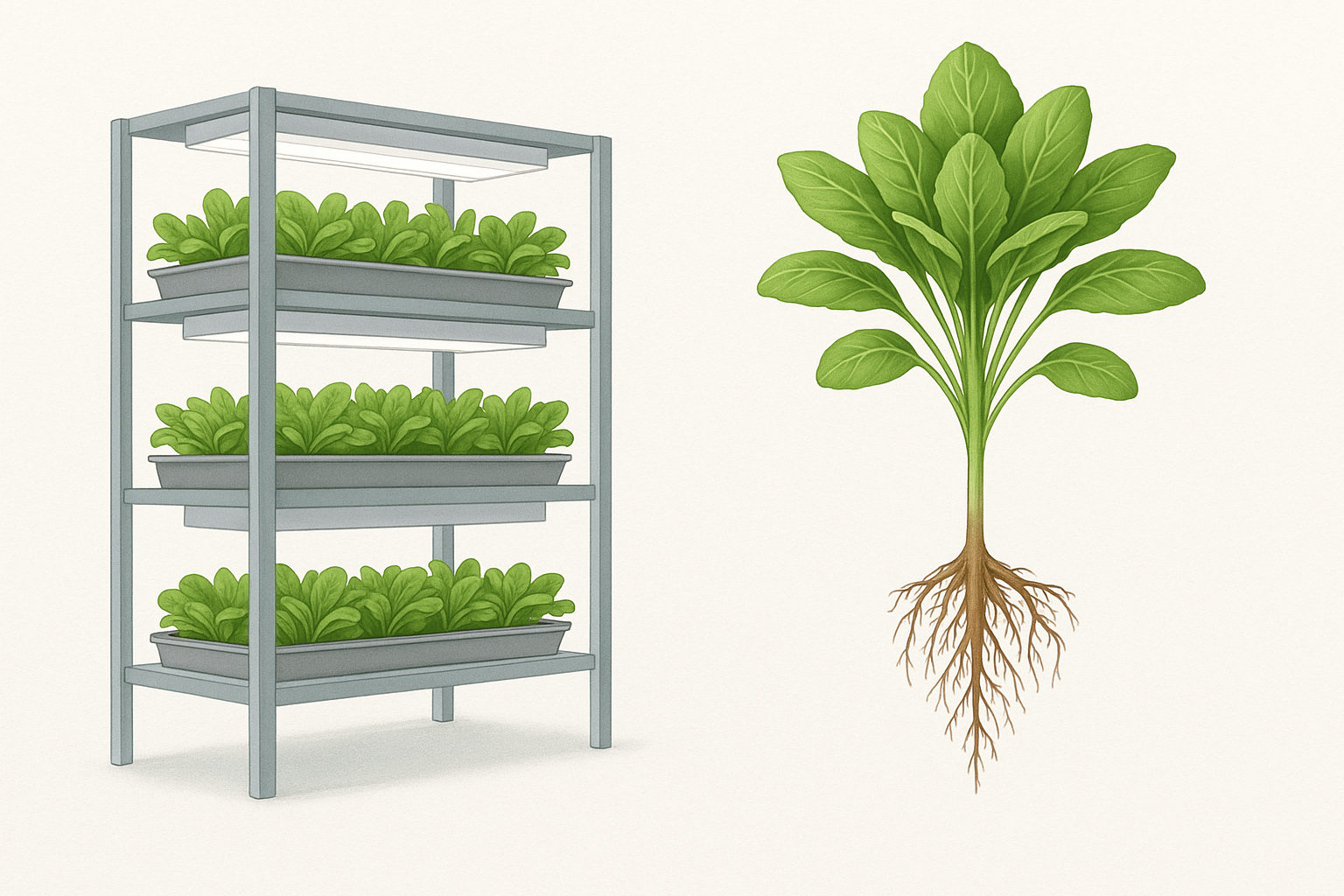
Since the late 1990s, commercial vertical farms have relied on salad leaves, basil, and microgreens because these crops have short growth cycles, high retail value, and relatively simple nutrient demands. Such species are well suited to hydroponic or aeroponic systems and they can tolerate the dense planting arrangements required for vertical rack production. However, the limitations of this model are increasingly apparent. Relying on a small crop portfolio narrows consumer choice and constrains profitability in markets where leafy greens are already abundant. Consequently, the industry is beginning to investigate crops with longer cycles, more complex growth forms, or novel uses in food, medicine, and materials.
Drivers of diversification
Several factors are pushing vertical farming towards crop diversification. At the consumer level, there is growing demand for nutrient-dense foods such as berries, legumes, and speciality vegetables. From an economic perspective, farms that can deliver produce not easily grown in local fields may achieve a stronger competitive advantage. Policy is also a driver: both the UK Agriculture Act 2020 and the EU Farm to Fork Strategy stress resilience, nutrition, and reduced reliance on imports. Indoor farming has a potential role here if it can expand beyond current staples. Technological progress in LED lighting spectra, precision fertigation, and AI-assisted phenotyping further enables the exploration of emerging crops, lowering the barriers once posed by high energy or labour costs.
Horticultural and physiological considerations
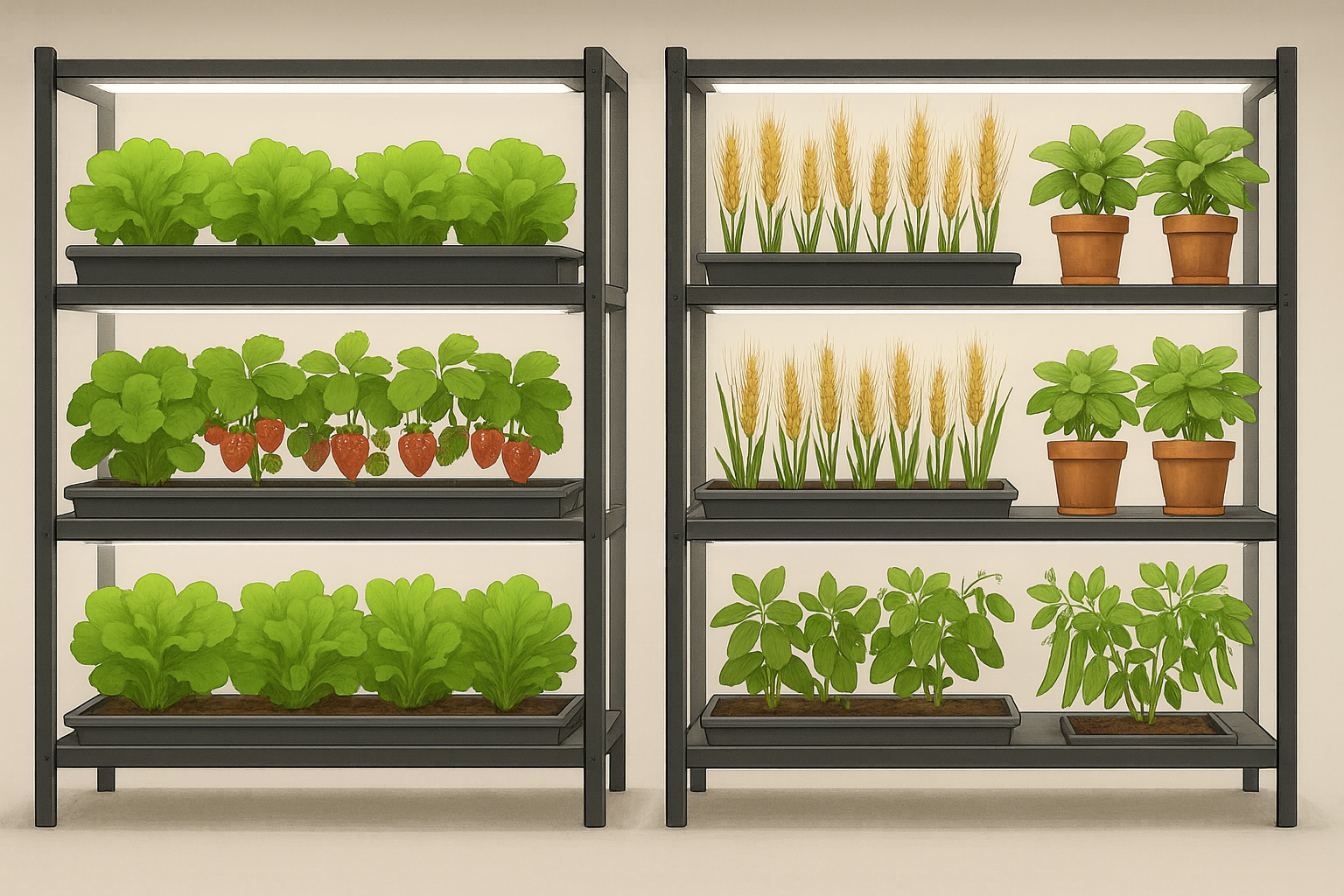
The suitability of a crop for vertical farming depends largely on morphology and physiology. Compact species with upright growth habits, shallow root systems, and tolerance to controlled microclimates are obvious candidates. For example, strawberries are now one of the fastest-growing indoor horticultural categories because they combine relatively compact growth with high market demand, however these yield relatively low biomass and large proportions of the plant are inedible. Cereals, such as wheat, barley, and oats, present structural challenges: their tall stature, extended growing cycle, and need for pollination make them challenging for production, although experiments in Japan and the United States have shown that dwarf wheat cultivars can be adapted under carefully controlled conditions.
Emerging crops in vertical farming are also influenced by light responses. Photoperiod sensitivity, spectral quality, and daily light integral all determine how efficiently plants convert photons into biomass or valuable compounds. For example, red-blue LED combinations may suit leafy greens, but fruiting crops often require supplementary far-red light to trigger flowering and fruit set. These considerations shape which species can be realistically incorporated into commercial systems.
Novel categories of indoor crops
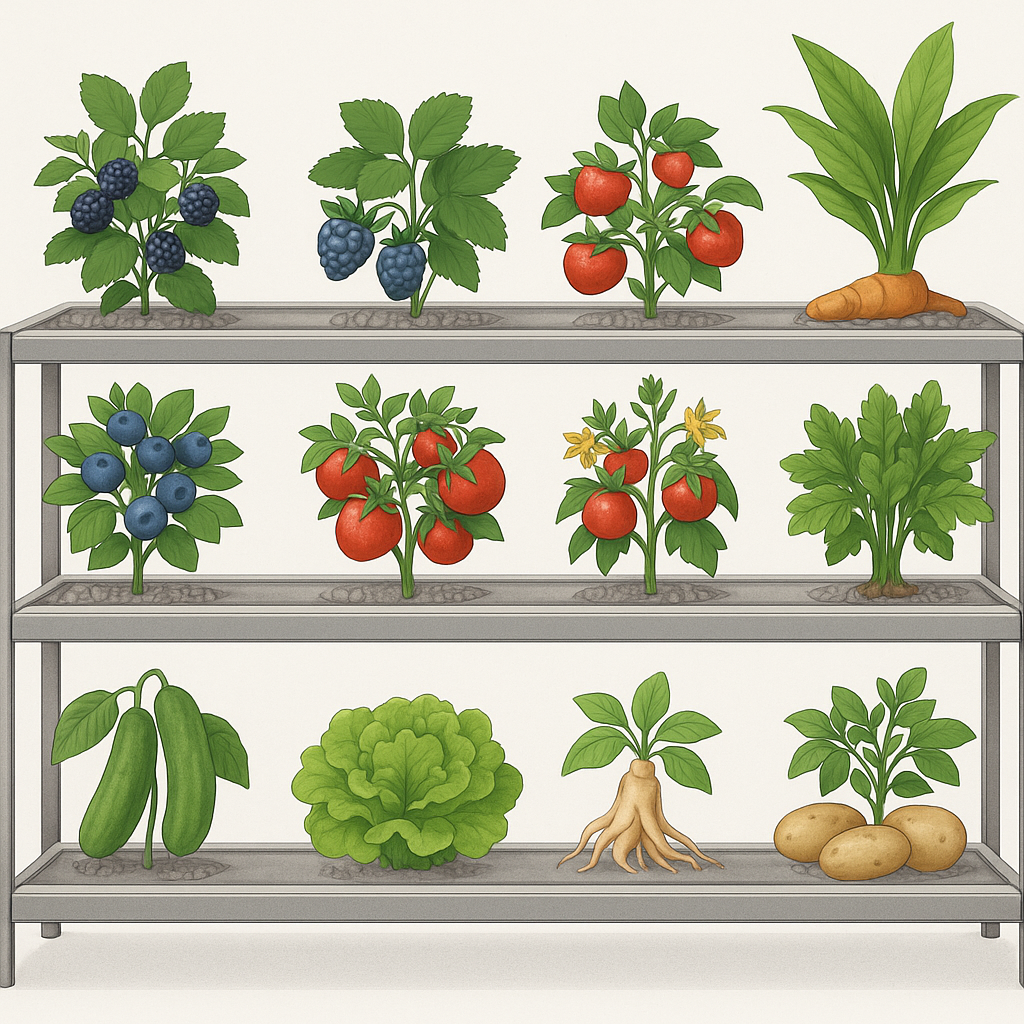
A number of categories illustrate the potential breadth of future crop options. Fruit crops, such as tomatoes, peppers, and blueberries, are increasingly trialled in vertical settings, though often at smaller scales than leafy greens. Pharmaceutical and nutraceutical plants, including those rich in alkaloids, flavonoids, or terpenes, are another area of interest: their high value per kilogram offsets the relatively high production cost of indoor farming. Protein-rich crops such as lentils and peas are the subject of early trials, given the global shift towards plant-based diets. Finally, non-food crops such as hops, cut flowers, and even fibre plants (for biocomposites and textiles) are occasionally considered, reflecting the adaptability of controlled environments to niche markets.
Research and breeding for indoor suitability
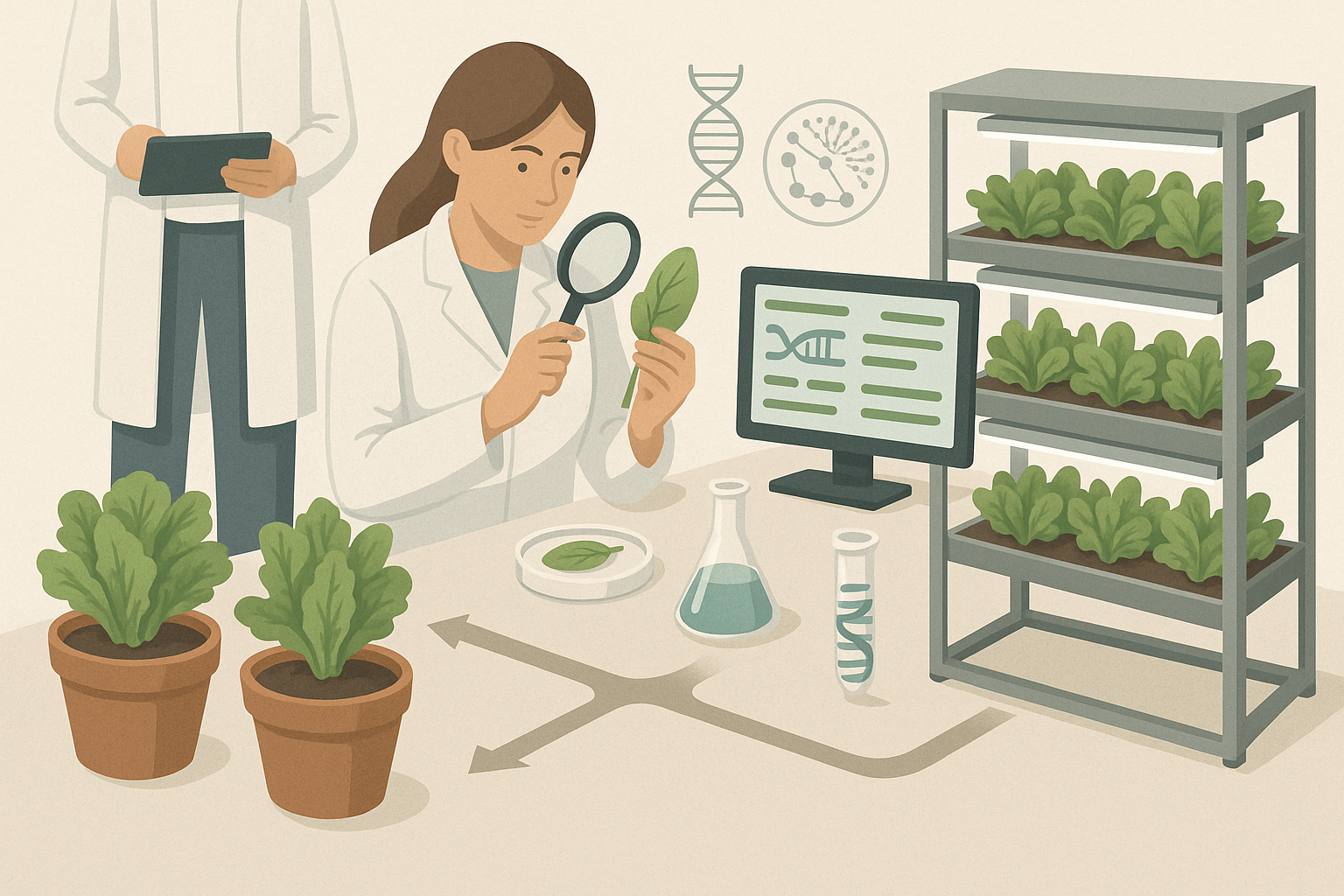
Emerging crops for vertical farming are not simply transplanted from outdoor agriculture; they often require breeding or selection to suit the constraints of stacked systems. Traits such as dwarfing, compact canopy architecture, and altered flowering responses are actively pursued. CRISPR gene editing and marker-assisted selection allow researchers to accelerate these adaptations. For instance, lettuce cultivars have been bred with reduced stem elongation under low UV environments, and experimental tomato lines are being tested for compact determinate growth cycles. Universities and commercial breeders are also working on developing varieties explicitly described as "CEA-optimised". This mirrors historical precedents in the Green Revolution, where semi-dwarf cereal varieties transformed productivity under field conditions; in the future, semi-dwarf or micro-dwarf variants of fruit and protein crops may become standard in indoor systems.
Economic and environmental implications
Diversifying crops carries both risks and rewards. High-value, niche species may offer better profit margins but come with greater uncertainty around consumer demand and production complexity. Conversely, expanding into staple crops such as rice or wheat could theoretically strengthen food security but would require technological breakthroughs to reduce costs and increase yields. Environmental assessments, such as life cycle analyses, suggest that while leafy greens in vertical farms can be resource-efficient compared to imported produce, energy use remains the dominant challenge. Adding longer-cycle or energy-intensive crops could exacerbate this unless renewable energy integration or improved lighting efficiency is achieved. Policymakers and investors must therefore weigh the trade-offs carefully when promoting emerging crops in vertical farming systems.
Looking ahead
The future of indoor agriculture will be defined not only by the efficiency of its technologies but also by the diversity and value of the crops it produces. Emerging crops in vertical farming may include everything from dwarf cereals to medicinal plants, each chosen according to a balance of consumer demand, biological feasibility, and economic return. The next decade will likely see research centres, breeding companies, and commercial farms testing an expanding portfolio of species, gradually moving beyond the early model of leafy greens alone. Whether such diversification will reshape global food systems remains uncertain, but it will almost certainly expand the role of vertical farming in specialised markets, from urban nutrition hubs to pharmaceutical bioproduction.
Bibliography and further reading:
- Kozai, T., Niu, G., and Takagaki, M. (2019). Plant Factory: An Indoor Vertical Farming System for Efficient Quality Food Production. Academic Press.
- Touliatos, D., Dodd, I. C., and McAinsh, M. (2016). Vertical farming increases lettuce yield per unit area compared to conventional horizontal hydroponics. Food and Energy Security, 5(3): 184–191.
- Kozai, T. (2018). Resource use efficiency of closed plant production system with artificial light: Concept, estimation and application to plant factory. Proceedings of the Japan Academy Series B, 89(10), 447-461.
- Shamshiri, R. R. et al. (2018). Advances in greenhouse automation and controlled environment agriculture: A transition to plant factories and urban agriculture. International Journal of Agricultural and Biological Engineering, 11(1): 1–22.