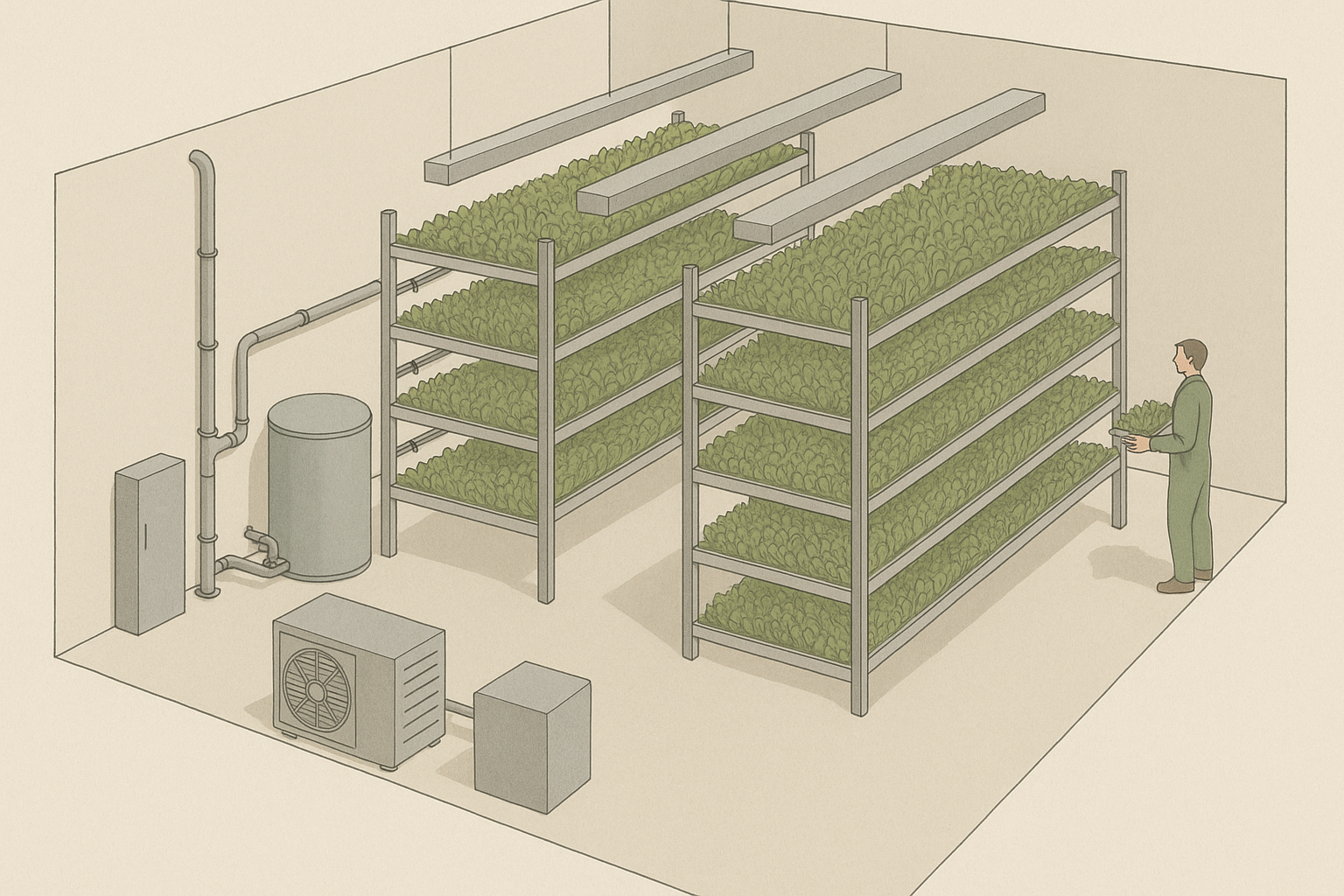
Designing an efficient farm layout is one of the most decisive factors in determining the success of controlled environment agriculture (CEA) and vertical farming systems. Unlike open-field cultivation, where space may be more flexible, indoor farming requires precise spatial organisation to balance crop productivity, energy efficiency, operational safety, and economic feasibility. A well-structured layout not only influences yield and workflow but also underpins the long-term sustainability and scalability of the farming system.
The role of space in controlled environment agriculture
CEA relies on the deliberate manipulation of growing conditions such as light, temperature, humidity, and nutrient delivery. These conditions are heavily influenced by how the physical space is arranged. For example, a poorly designed layout may cause uneven airflow and light distribution, resulting in variable plant growth across the farm. Conversely, a carefully planned space ensures that resources are delivered consistently to each crop, minimising waste and maximising uniformity.
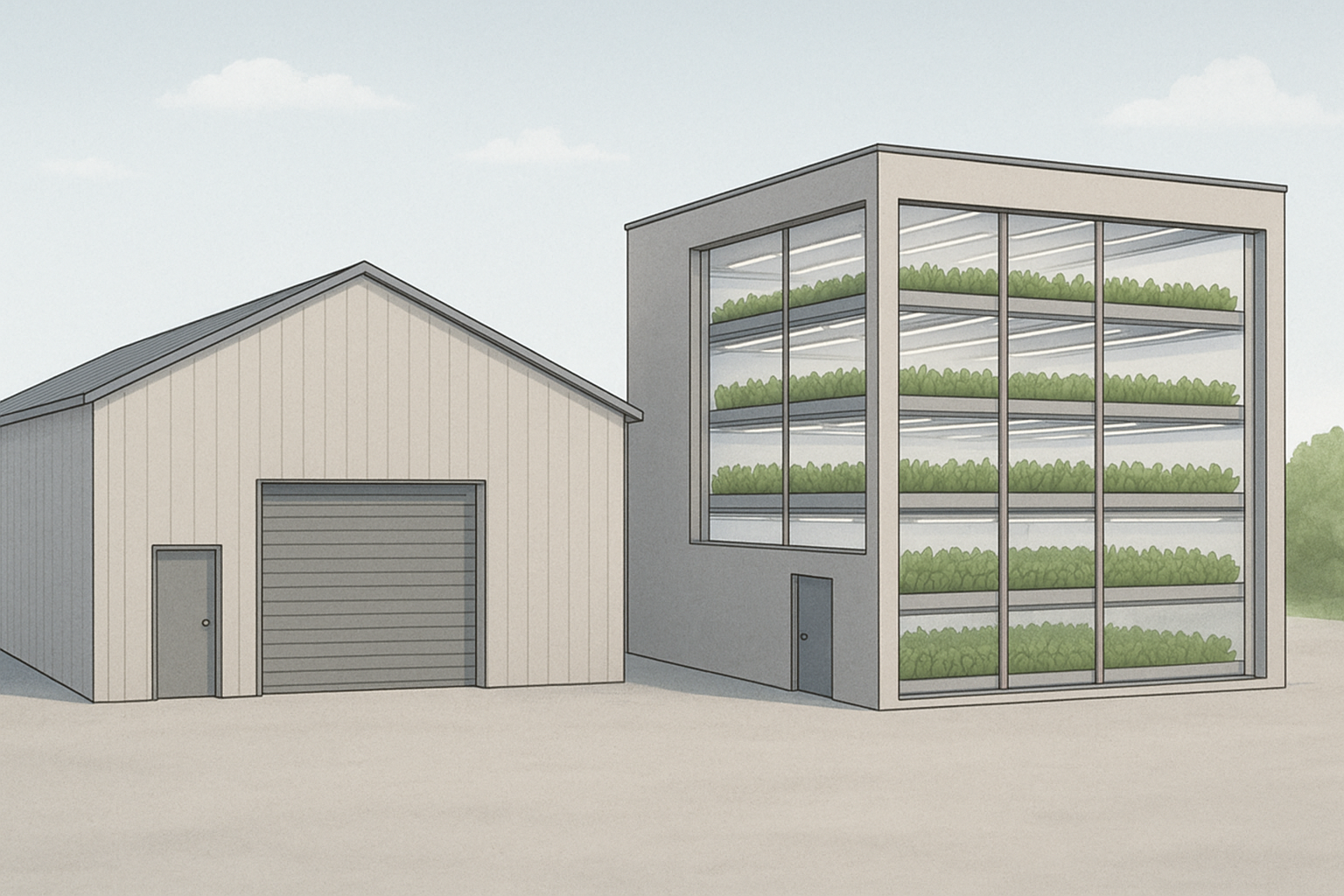
Space is also at a premium in indoor environments, particularly in urban or peri-urban settings where vertical farms are most often located. Rent or construction costs for buildings suitable to house these systems are typically high, which makes the efficient use of every square metre essential. An optimised spatial strategy therefore allows growers to achieve the maximum return on their investment while maintaining high-quality outputs.
Balancing vertical and horizontal dimensions
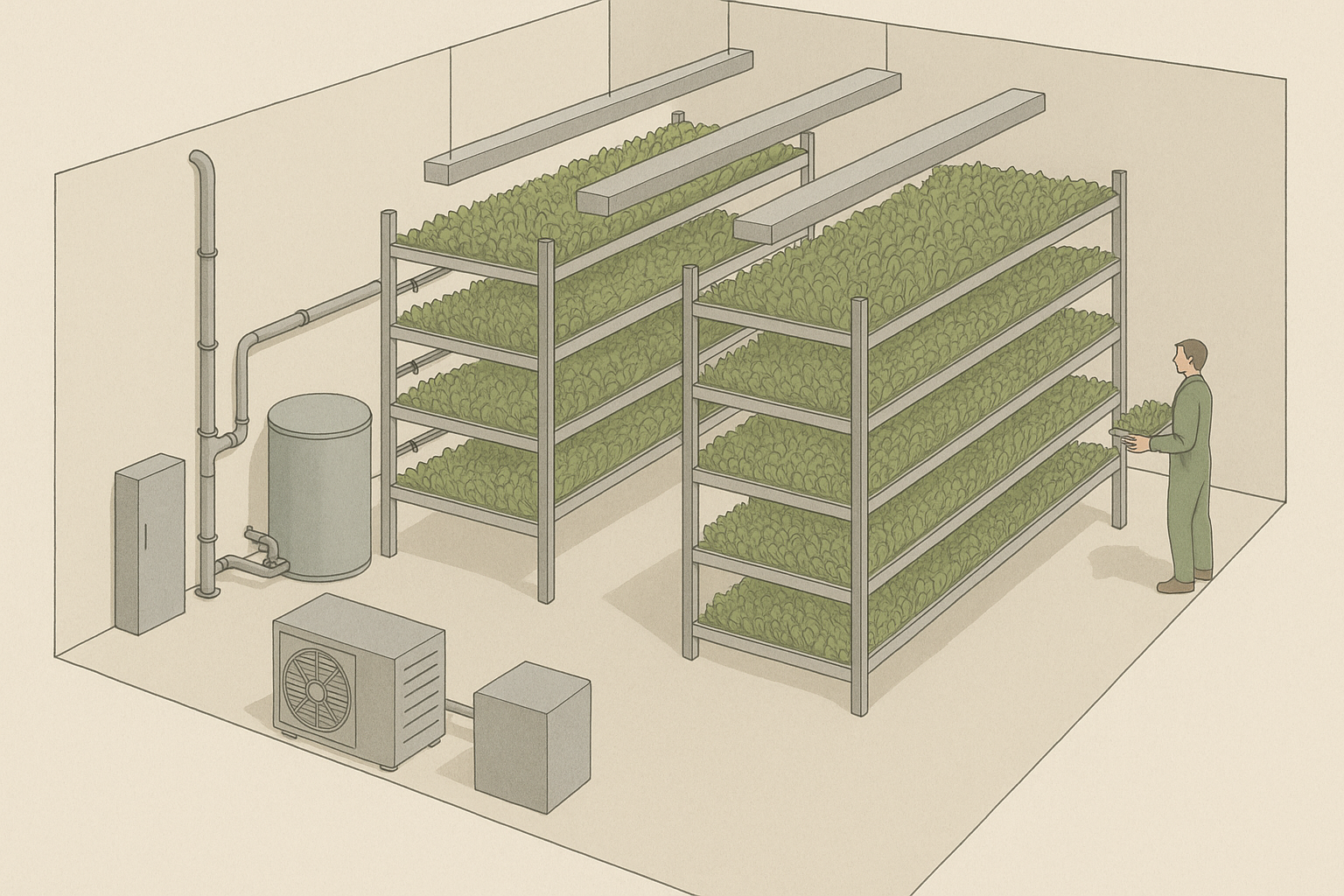
In traditional farming, the primary limitation is horizontal land area. In vertical farming, however, the additional vertical plane becomes equally critical. Decisions must be made about how to stack crops, how tall racks should be, and what aisle widths are required for access and maintenance. The choice of racking height is particularly significant: taller racks enable greater production density but can create challenges in terms of airflow management, light penetration, and worker access.
The layout must also accommodate irrigation and nutrient delivery systems. Piping, tanks, and pumps need to be positioned in ways that do not obstruct worker movement or compromise the growing environment. Many successful systems incorporate modular designs that allow reconfiguration as technology advances or as production goals shift.
Optimising workflow and operational efficiency
A CEA facility is more than a space for plants: it is a workplace that must facilitate human and robotic interaction. Layout planning must therefore consider pathways, access routes, and the positioning of critical infrastructure. Workers or automated systems should be able to move through the farm efficiently without unnecessary detours or bottlenecks. For example, locating germination chambers near planting areas and aligning harvest spaces close to storage or distribution zones reduces time and labour costs.
Maintenance is another key consideration. HVAC units, LED panels, water filters, and control systems must be accessible without disrupting growing zones. If equipment is positioned in ways that are difficult to reach, it can delay essential repairs and risk system downtime. Planning the space with maintenance in mind is a practical necessity rather than a secondary consideration.
Environmental control and spatial arrangement
Airflow, lighting uniformity, and thermal distribution all depend on how space is managed. In a tightly packed vertical farm, the risk of creating microclimates increases; these are areas within the facility where temperature, humidity, or CO2 levels deviate from the average. Such inconsistencies can negatively impact plant health and growth. Layout planning should therefore integrate computational modelling or empirical testing of airflow patterns to ensure even environmental control.
Lighting distribution is similarly sensitive to layout. LED systems must be configured to provide consistent intensity across all crop layers. Narrow aisles or poorly angled fixtures can result in shaded zones, which in turn reduce yields. Likewise, heat generated from lighting or equipment must be dissipated through a combination of ventilation and spatial spacing. An optimal design reduces energy use while preventing hotspots that could stress plants.
Safety and regulatory requirements
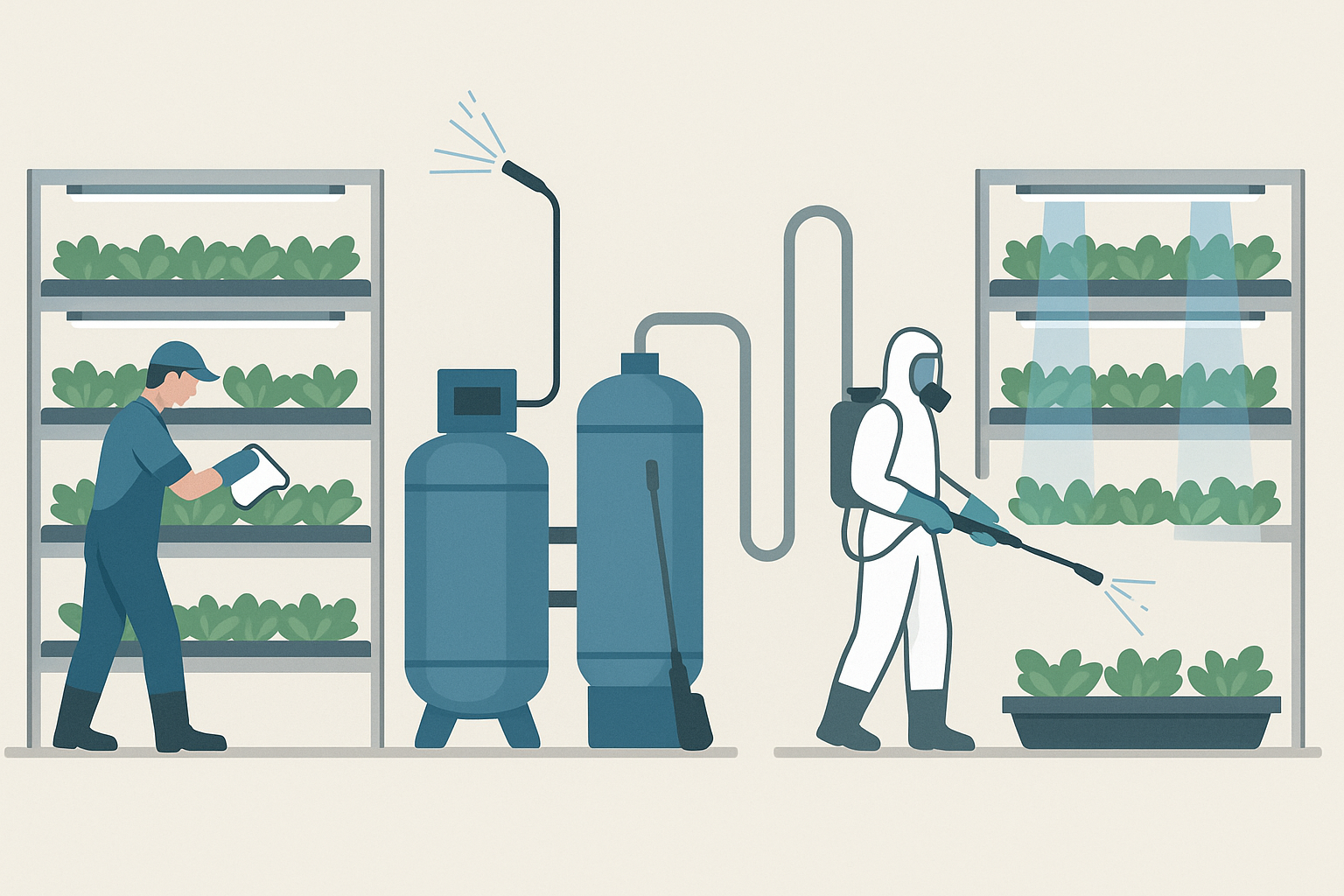
Indoor farms are workplaces as well as food production systems. Safety considerations must therefore be integrated from the outset. Layouts should meet fire safety regulations, include clear evacuation routes, and provide sufficient space for workers to operate equipment safely. Electrical installations and water systems must be organised to minimise hazards such as leaks or short circuits.
Regulatory standards for food safety also influence layout decisions. For instance, separation of clean and unclean areas is often required to prevent contamination. Designating distinct zones for propagation, cultivation, and post-harvest handling supports both compliance and operational efficiency.
Scalability and future-proofing
One of the most important strategic aspects of layout planning is anticipating future growth. Indoor farms that are designed too rigidly may struggle to adapt as market demands change or as technology evolves. Flexible layouts that can incorporate new lighting systems, robotic automation, or additional growing modules provide resilience against obsolescence.
A forward-looking design also considers integration with external systems. For example, a facility that anticipates future renewable energy inputs or water recycling technologies will find it easier to adopt these improvements without costly redesigns.
Case example: modular layouts for flexibility
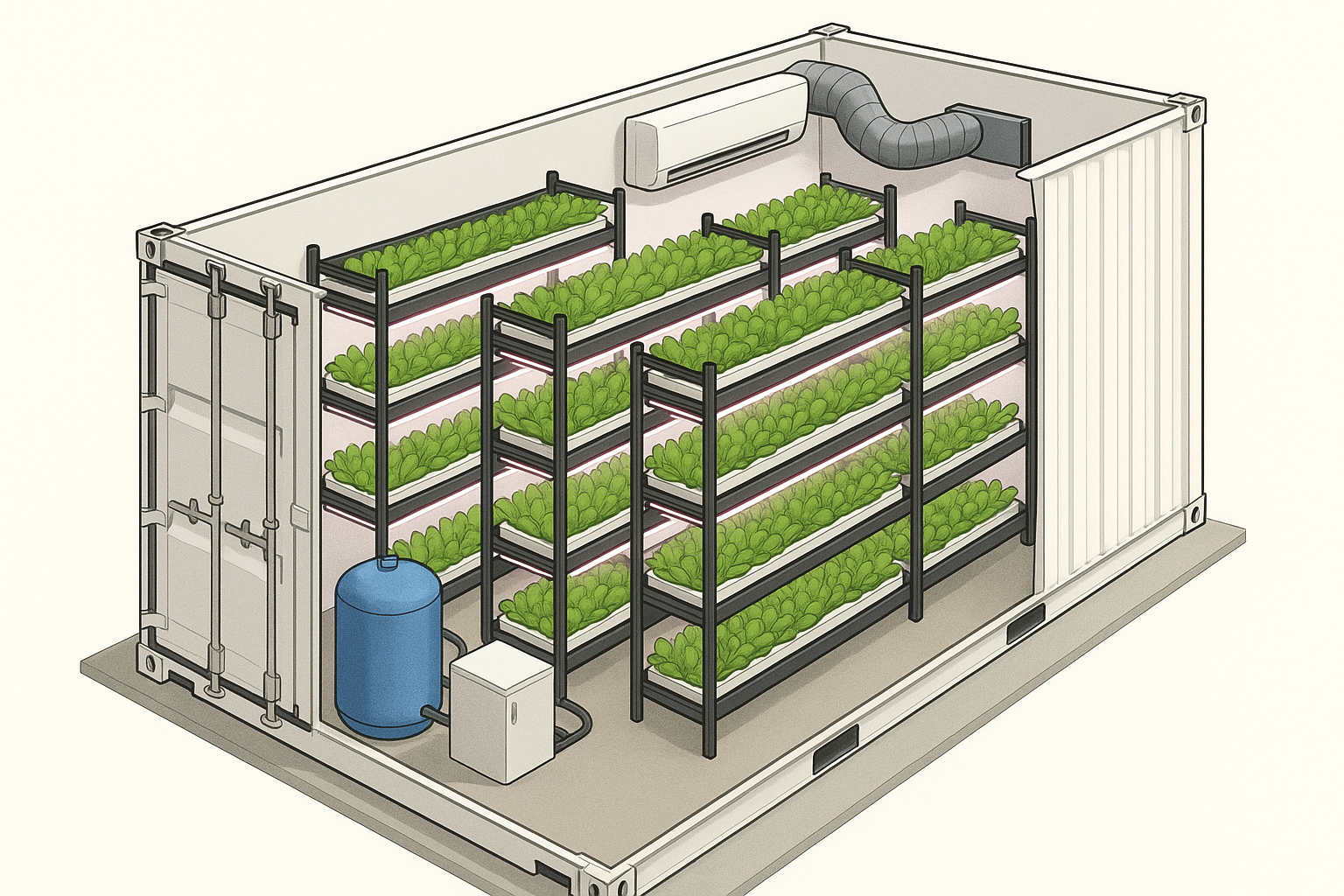
A frequently cited approach in CEA is the modular farm design, where the growing area is divided into discrete units or zones. Each module can be managed independently in terms of crop type, lighting recipe, or harvest cycle. Such designs provide a balance between high-density production and operational flexibility. They also allow expansion by replicating modules rather than reconfiguring an entire system, making them especially attractive for investors and operators in urban environments.
Conclusion
Farm planning layout for effective production in indoor farming is not simply a matter of arranging racks and equipment. It is a complex integration of biological, environmental, and operational requirements within the constraints of available space and budget. A well-considered layout ensures that plants receive optimal conditions, that staff or automated systems can operate efficiently, and that safety and regulatory standards are upheld. At the same time, it must provide flexibility for future technological and market developments.
By approaching layout design as a strategic action rather than a secondary task, CEA and vertical farm designers can maximise yields, reduce operational inefficiencies, and build systems that remain viable over the long term.