Introduction
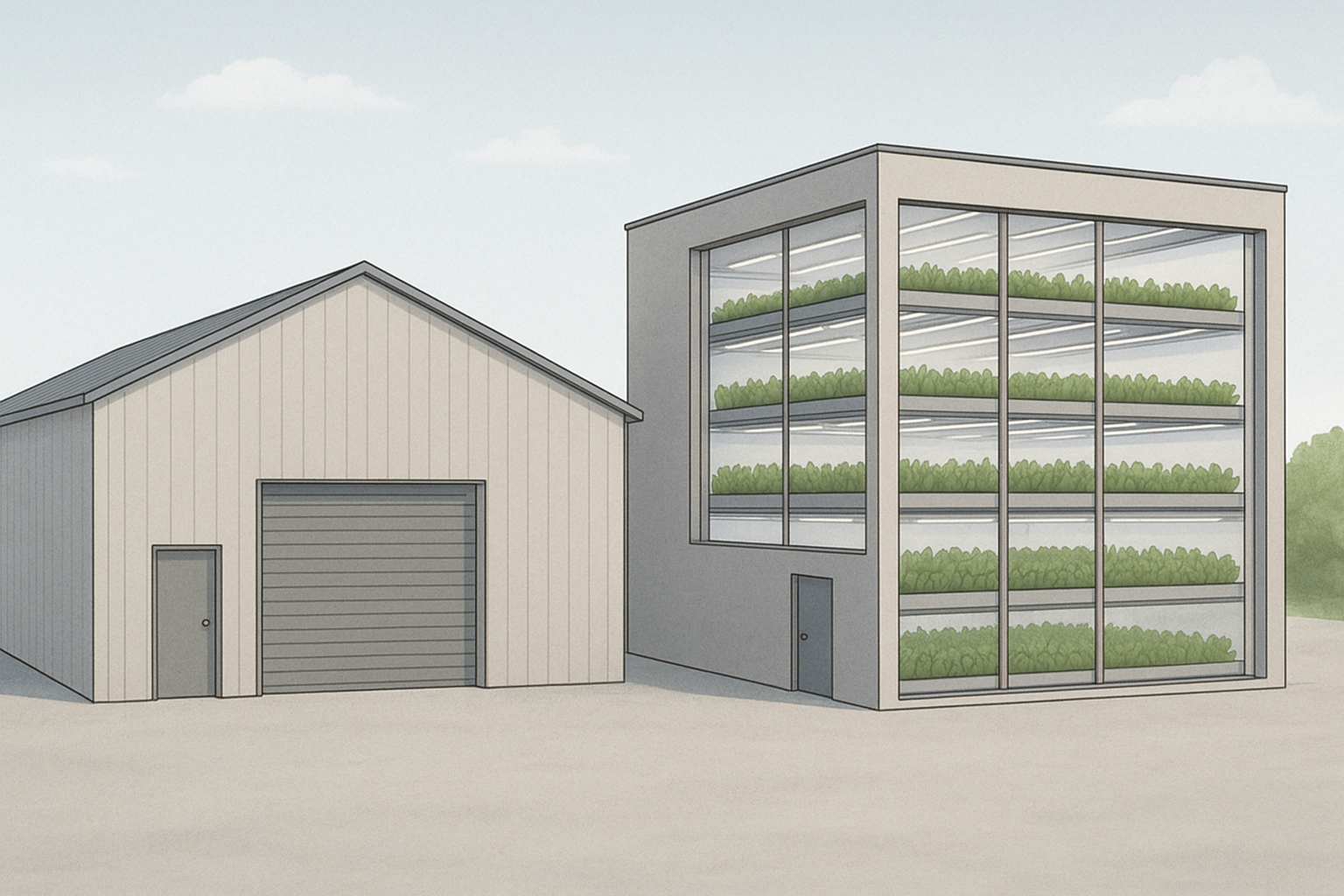
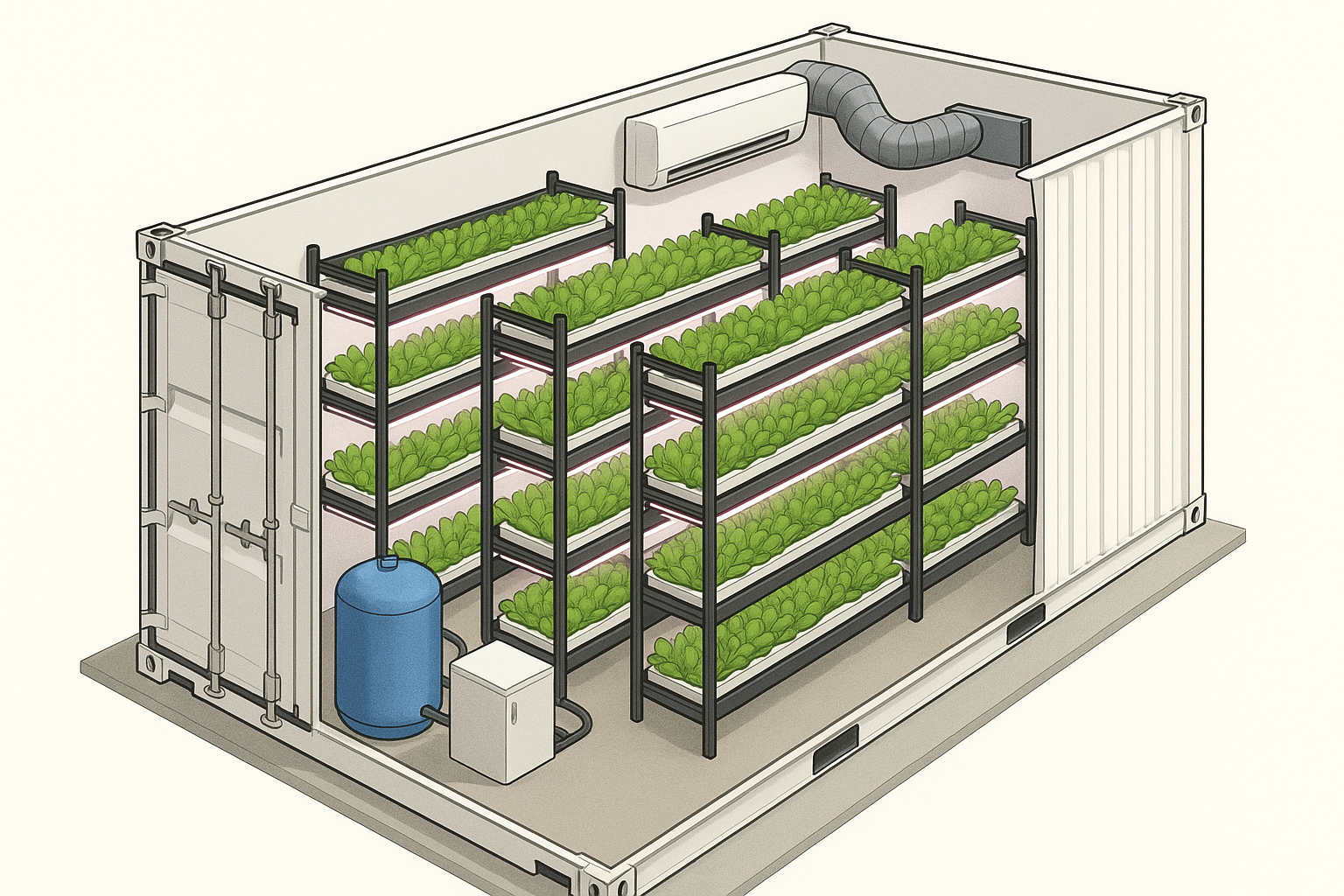
The rapid expansion of Controlled Environment Agriculture (CEA) and vertical farming has prompted an important debate: should we retrofit old buildings or build entirely new farms? This choice affects not only costs and timelines, but also efficiency, scalability, and long-term sustainability. In practice, many projects must weigh whether to adapt existing structures such as warehouses, factories, or shipping containers, or to design purpose-built facilities optimised for plant production. Both routes have advantages and drawbacks, shaped by local conditions, financial resources, and technological requirements.
The appeal of retrofitting
Retrofitting existing buildings can offer an immediate and sometimes cost-effective entry into indoor farming. Vacant industrial warehouses and disused urban properties can be transformed into productive farms, breathing new life into under-utilised real estate. This approach reduces initial construction costs and may shorten the time to operation, especially where planning permission and utilities are already in place.
From a sustainability perspective, reusing existing structures can reduce embodied carbon compared to new construction. Life cycle assessment studies highlight that building reuse often carries a lower environmental footprint, since demolition and new materials are avoided. For urban agriculture, retrofits also make use of central locations, cutting transport distances to consumers and aligning with policy goals for local food production.
However, retrofitting presents technical compromises. Many existing structures were not designed for the energy-intensive requirements of CEA. Ceiling heights, floor load-bearing capacities, insulation standards, and HVAC integration may be limiting factors. Retrofitting may also restrict system layouts, particularly in multi-level vertical farms where optimal rack spacing and access corridors are essential. These adjustments can lead to higher ongoing energy use and operational inefficiencies, eroding the initial financial and environmental savings.
Purpose-built farms
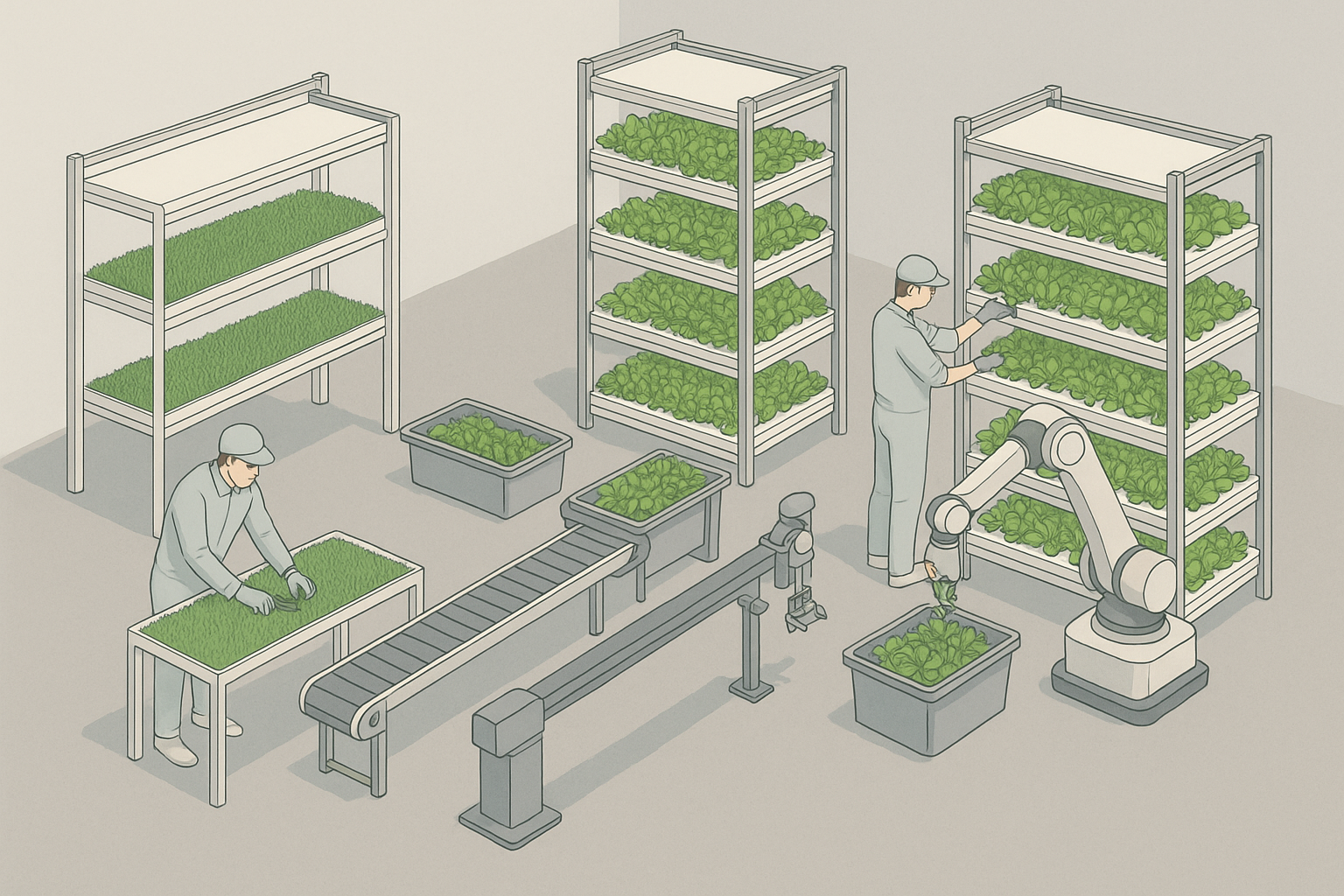
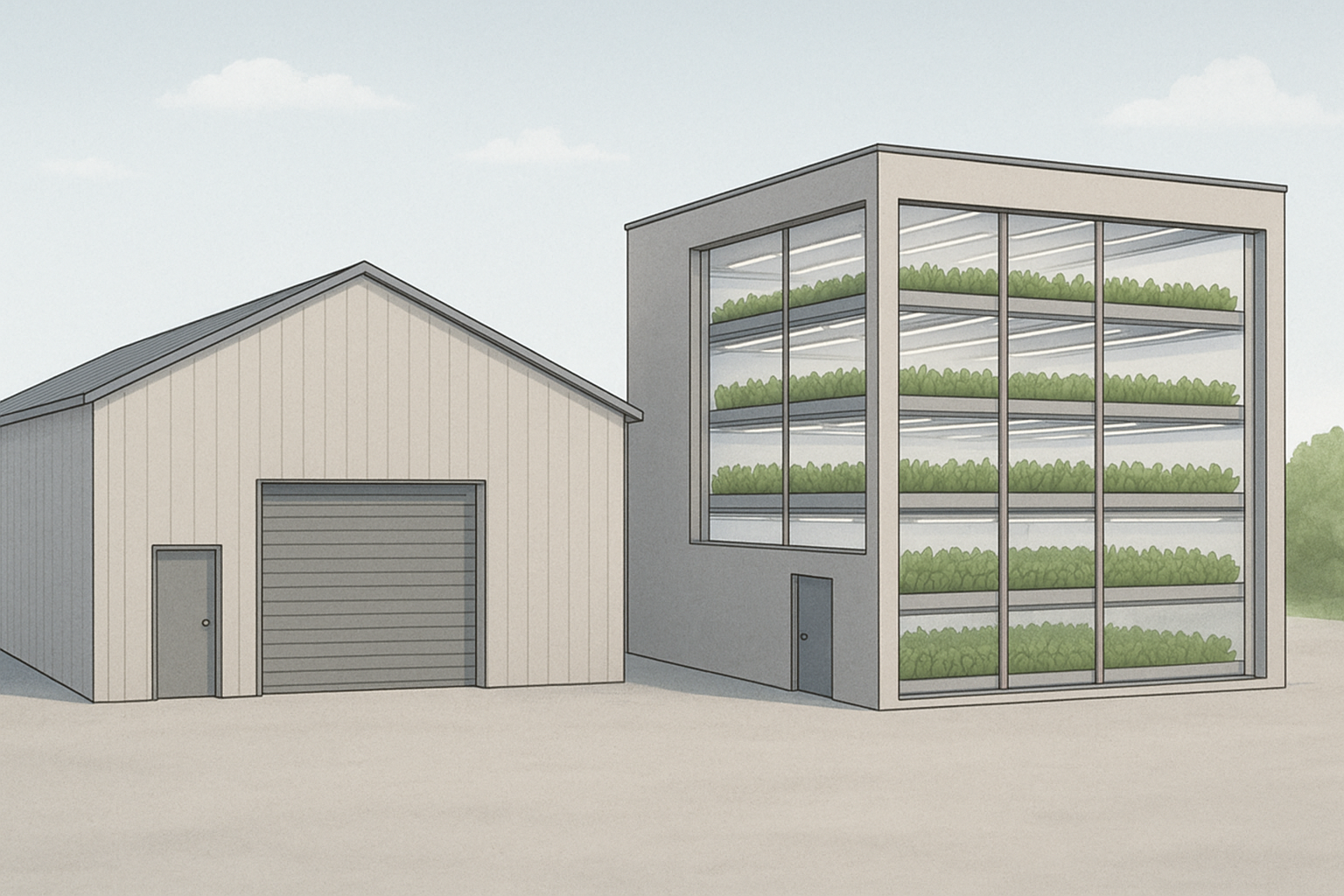
Purpose-built structures allow designers to start with plant biology and environmental requirements, then shape the building accordingly. A purpose-built CEA facility can optimise insulation, integrate renewable energy systems, and ensure load-bearing structures are tailored for vertical racking. This holistic approach often delivers higher energy efficiency, better climate control, and smoother integration of water, nutrient, and automation systems.
In addition, purpose-built farms are scalable. By standardising design, operators can replicate successful models in multiple locations, which is difficult with retrofits due to variations in existing building stock. Investors often prefer the predictability of a purpose-built design, where operational costs and outputs can be modelled with greater accuracy.
The drawbacks are mainly financial and temporal. New builds require significant upfront capital and may face planning delays, land acquisition hurdles, and longer construction timelines. From a carbon perspective, the embodied emissions of new concrete and steel structures can be substantial, although these impacts may be offset over decades of efficient operation. For smaller enterprises or experimental farms, the scale of investment may be prohibitive.
Balancing economic and environmental factors
The decision between retrofitting and building new is not absolute; it depends on context. For example, an urban farm aiming to serve local restaurants might favour a retrofitted warehouse with quick access to distribution routes. By contrast, a large-scale grower targeting supermarket supply chains may prefer the efficiency and reliability of a custom facility.
In recent years, hybrid approaches have emerged. Some operators retrofit buildings but apply modular purpose-built interior systems: pre-engineered racks, insulation panels, and climate control units that can be installed within an existing shell. This balances speed and cost savings with operational performance. Others design new facilities using recycled materials or build on brownfield sites to reduce environmental impact.
Technical and policy considerations
Technical performance is only part of the picture. Local planning frameworks, building regulations, and sustainability incentives strongly influence the choice. Retrofitting may be constrained by listed building protections or inadequate grid connections. New builds may benefit from renewable energy integration grants or agricultural investment programmes.
Policy-makers are beginning to recognise the importance of both pathways. Encouraging adaptive reuse of underused urban spaces can deliver social and environmental benefits, while supporting purpose-built CEA hubs can drive innovation and large-scale production. For operators and investors, understanding these external factors is as critical as the technical design.
Conclusion
Retrofitting vs new farm builds for indoor farming is a decision that hinges on balancing cost, speed, and long-term efficiency. Retrofitted facilities often provide accessible, lower-cost entry points that align with urban regeneration goals, but may entail technical compromises. Purpose-built farms deliver precision, scalability, and efficiency, but demand higher upfront investment and longer development horizons. The optimal choice depends on scale, location, available capital, and environmental priorities.
As CEA and vertical farming mature, both approaches will continue to play vital roles. Retrofitted spaces will serve as agile, decentralised nodes for local food production, while purpose-built farms are likely to anchor larger supply networks. The most successful strategies may be those that combine the best features of both, ensuring that indoor farming develops not only as a technological innovation, but as an integrated element of resilient urban and regional food systems.