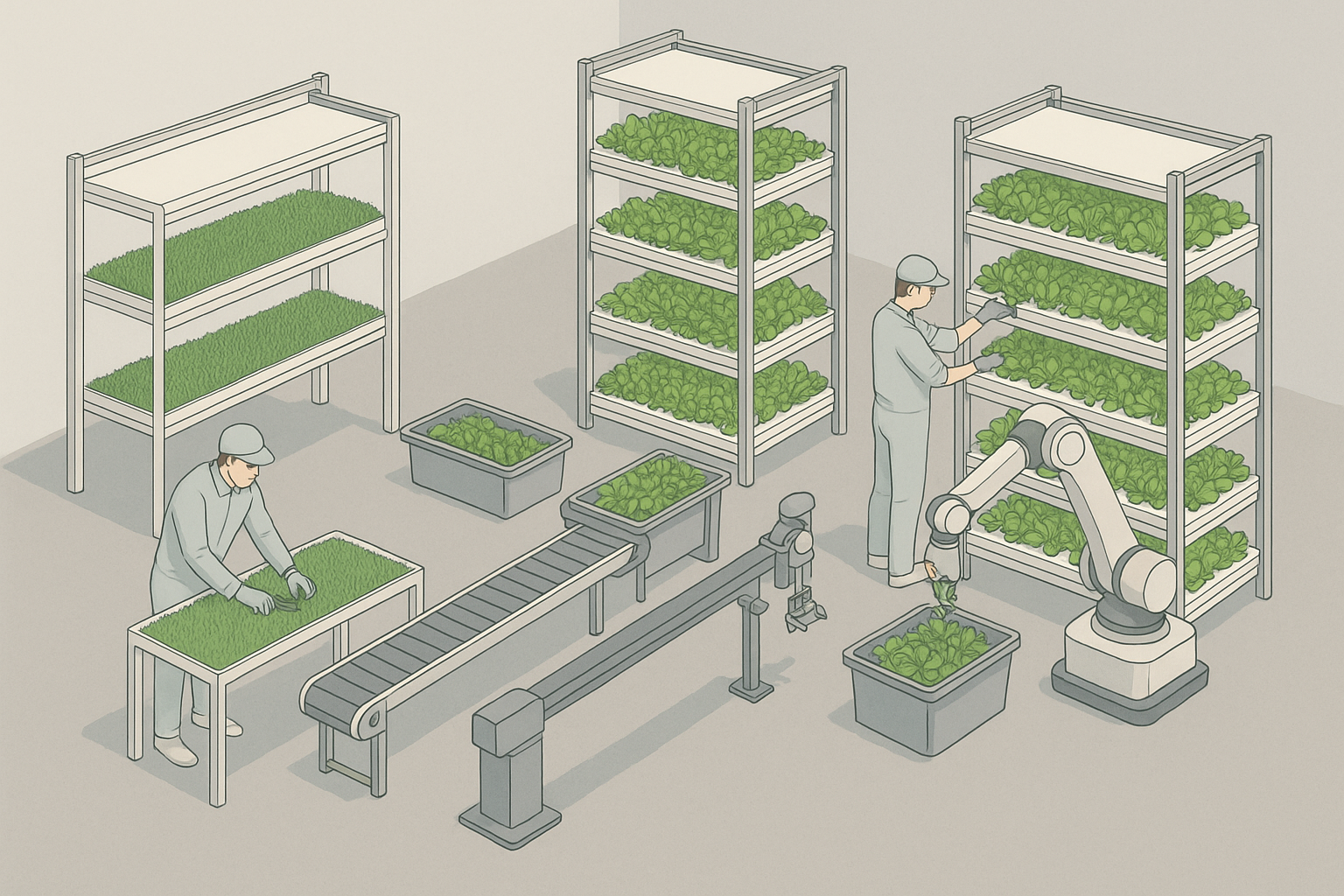
Harvesting is the defining stage that marks the transition from plant growth to food production. In controlled environment agriculture (CEA) and vertical farming, harvesting techniques and technologies are central to ensuring both crop quality and economic viability. Unlike conventional field-based agriculture, where seasonal cycles and mechanisation shape how crops are collected, indoor farms operate year-round and at high densities. This requires careful planning of harvesting strategies that align with labour efficiency, crop physiology, food safety standards, and the integration of automation.
The importance of harvest in CEA systems
In indoor agriculture, the harvest stage is not a simple end point: it is a key determinant of yield, product consistency, and profitability. Leafy greens, herbs, microgreens, strawberries, and other high-value crops grown in vertical systems demand precision handling to preserve freshness and minimise post-harvest losses. Because CEA systems aim to optimise every stage of the crop cycle, harvesting must be understood not only as a physical process of removal but also as an integral component of the production workflow. Decisions about when and how to harvest influence labour costs, crop throughput, shelf life, and the ability to meet market specifications.
Manual harvesting in indoor farms
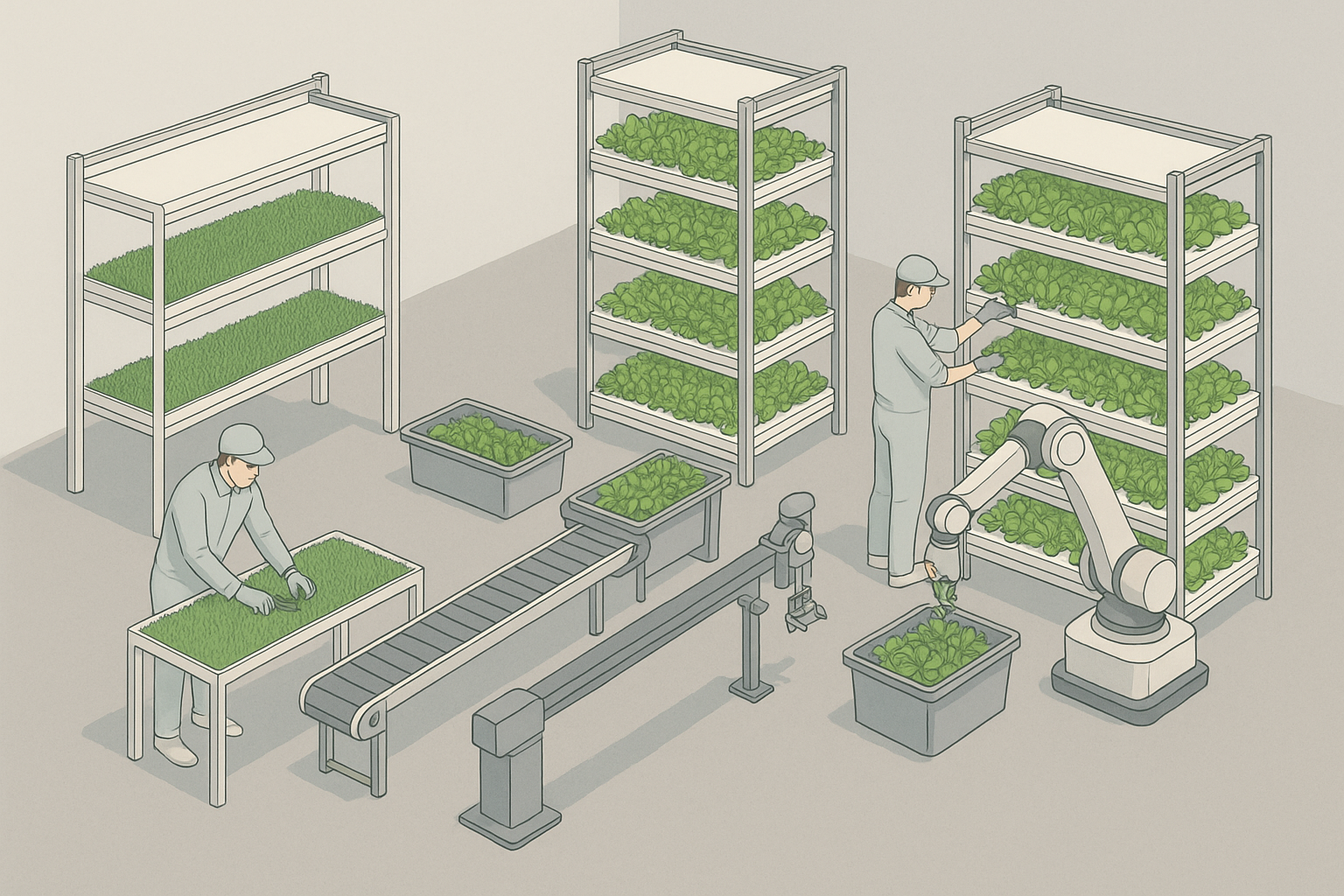
Manual harvesting remains common in many vertical farming operations, particularly where delicate crops such as basil, lettuce, or microgreens are concerned. Human dexterity allows for careful handling, selective picking, and quality assessment during the harvest. However, reliance on manual labour presents challenges: it can be time-intensive, costly, and difficult to scale in large facilities. In addition, food safety protocols in enclosed farm environments require strict training and hygiene standards, which further increase operational complexity. Nonetheless, manual techniques retain a role where flexibility and precision are essential, particularly in smaller-scale farms or research facilities.
Mechanised and semi-automated systems
Mechanisation of harvesting in CEA seeks to address the limitations of manual labour by introducing tools and machinery that streamline repetitive tasks. Examples include conveyor-integrated cutting systems for leafy greens, rotating blade harvesters for microgreens, and suction-assisted pickers for herbs. These technologies reduce the physical burden on workers and accelerate throughput. Semi-automated solutions are often designed to complement modular rack systems, allowing growers to integrate harvesting into their overall workflow. For instance, mobile platforms can move along aisles, lifting trays and cutting produce before transferring it to packaging. Such approaches help standardise quality while lowering labour intensity.
Robotics and advanced automation
The push towards robotics in vertical farming represents one of the most dynamic areas of current research and commercial development. Robotic arms equipped with cameras, sensors, and machine learning algorithms are being designed to identify ripeness, select individual plants, and harvest them with minimal damage. These systems offer significant potential in crops such as strawberries or tomatoes, where selective picking is required. Automated harvesting is particularly valuable in 24-hour CEA environments, where continuous lighting and rapid growth cycles demand highly responsive harvesting systems. However, the capital costs, complexity of integration, and technical challenges of handling delicate plant tissues mean that full automation is not yet widespread.
Integration with post-harvest handling
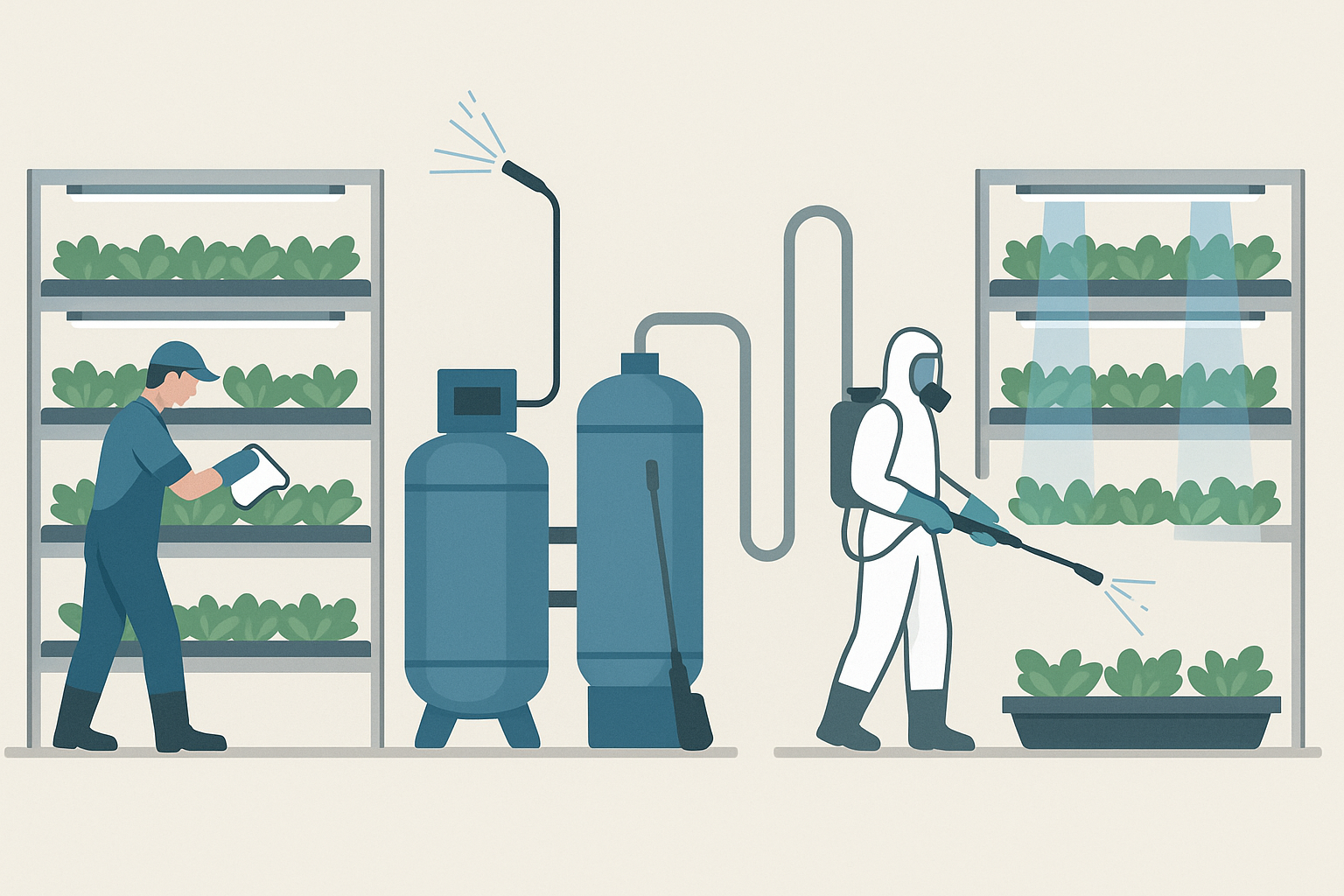
Harvesting cannot be considered in isolation: it is directly linked to the post-harvest chain, including washing, cooling, packaging, and distribution. In indoor farms, where crops are often harvested just metres from the point of packing, there are opportunities to reduce post-harvest losses compared with conventional supply chains. Technologies such as in-line washing systems, automated portioning, and modified atmosphere packaging are frequently integrated into harvesting workflows. This reduces handling steps, minimises microbial risk, and extends product shelf life. The design of harvesting systems must therefore consider not only the act of crop removal but also the entire sequence of post-harvest operations.
Sustainability and labour considerations
From an economic perspective, harvesting is one of the most labour-intensive stages of indoor farming. Studies indicate that labour can account for up to 30 per cent of total operating costs in vertical farms, with harvesting contributing a significant share. For this reason, improving harvesting efficiency is critical to the financial sustainability of CEA enterprises. At the same time, automation strategies must be evaluated against their energy demands, maintenance requirements, and adaptability across different crops. In regions with high labour costs, robotic harvesting may offer competitive advantages; in areas with lower costs, manual or semi-automated techniques may remain more practical.
Future directions
Research into harvesting technologies for indoor farming continues to evolve. Machine vision systems capable of detecting subtle colour changes, AI-driven scheduling platforms that predict optimal harvest timing, and collaborative robots designed to work alongside human pickers are all under active development. As CEA expands globally, the efficiency of harvesting will be a decisive factor in scaling production and meeting market demands. Future solutions are likely to involve hybrid approaches: integrating manual precision with robotic assistance and linking harvesting more seamlessly to packaging and distribution.
Conclusion
Harvesting techniques and technologies in indoor farming form the bridge between cultivation and consumption. The approaches used are not merely operational choices but strategic decisions that shape efficiency, profitability, and product quality. From traditional manual cutting to advanced robotics, harvesting in CEA reflects both the opportunities and challenges of growing crops in controlled environments. As innovation progresses, harvesting will remain central to the long-term viability of vertical farms, with the most successful systems combining precision, efficiency, and adaptability.