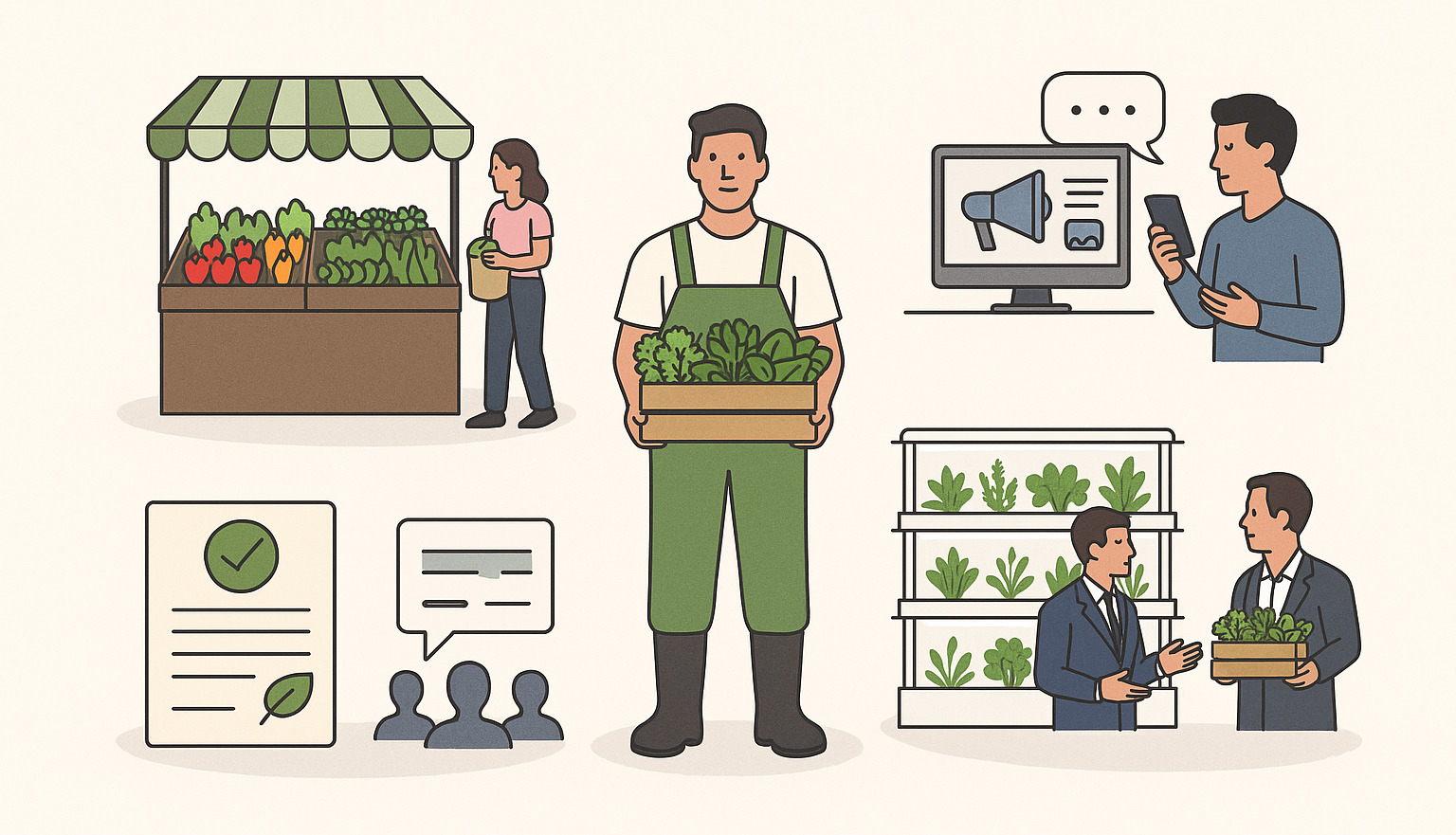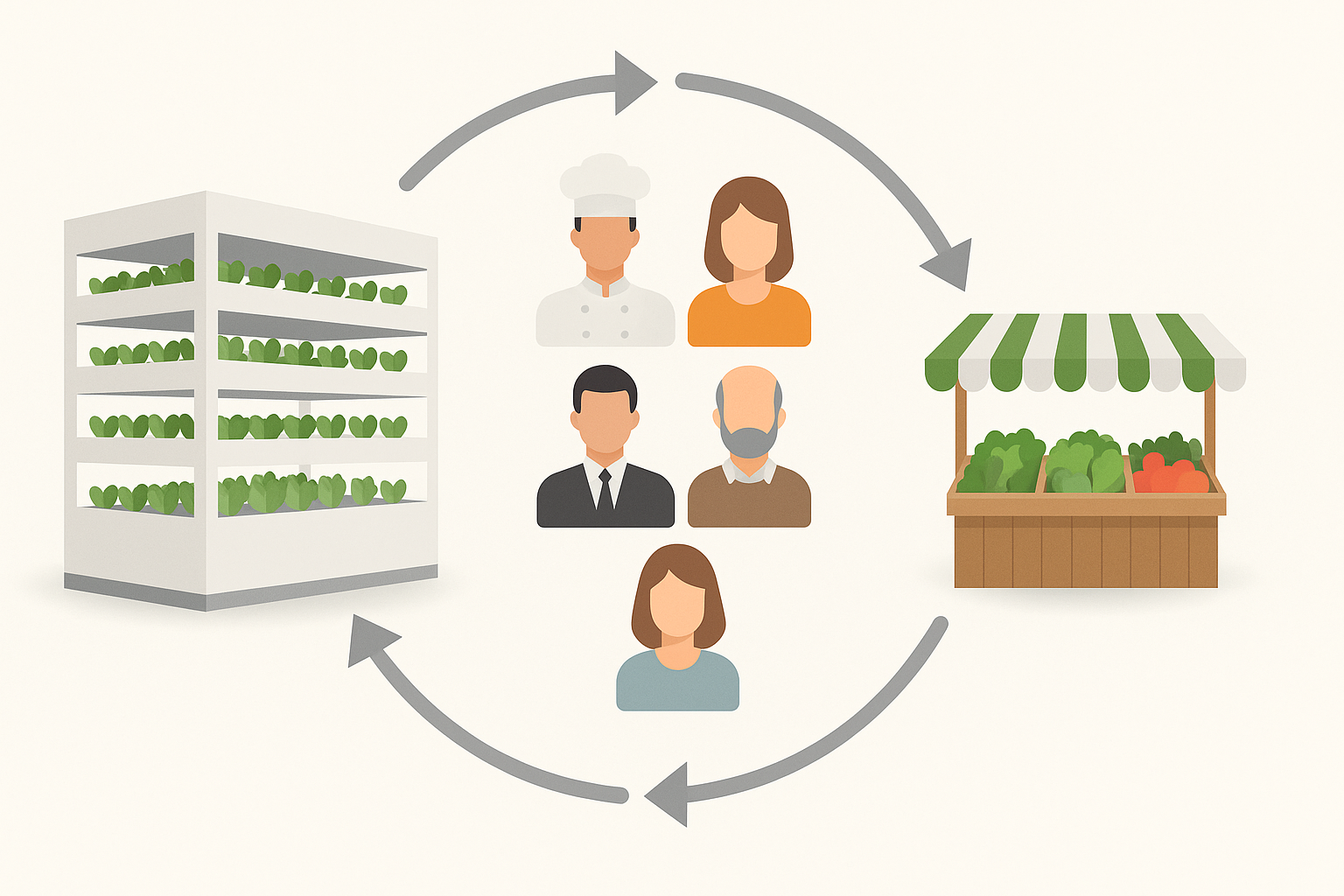
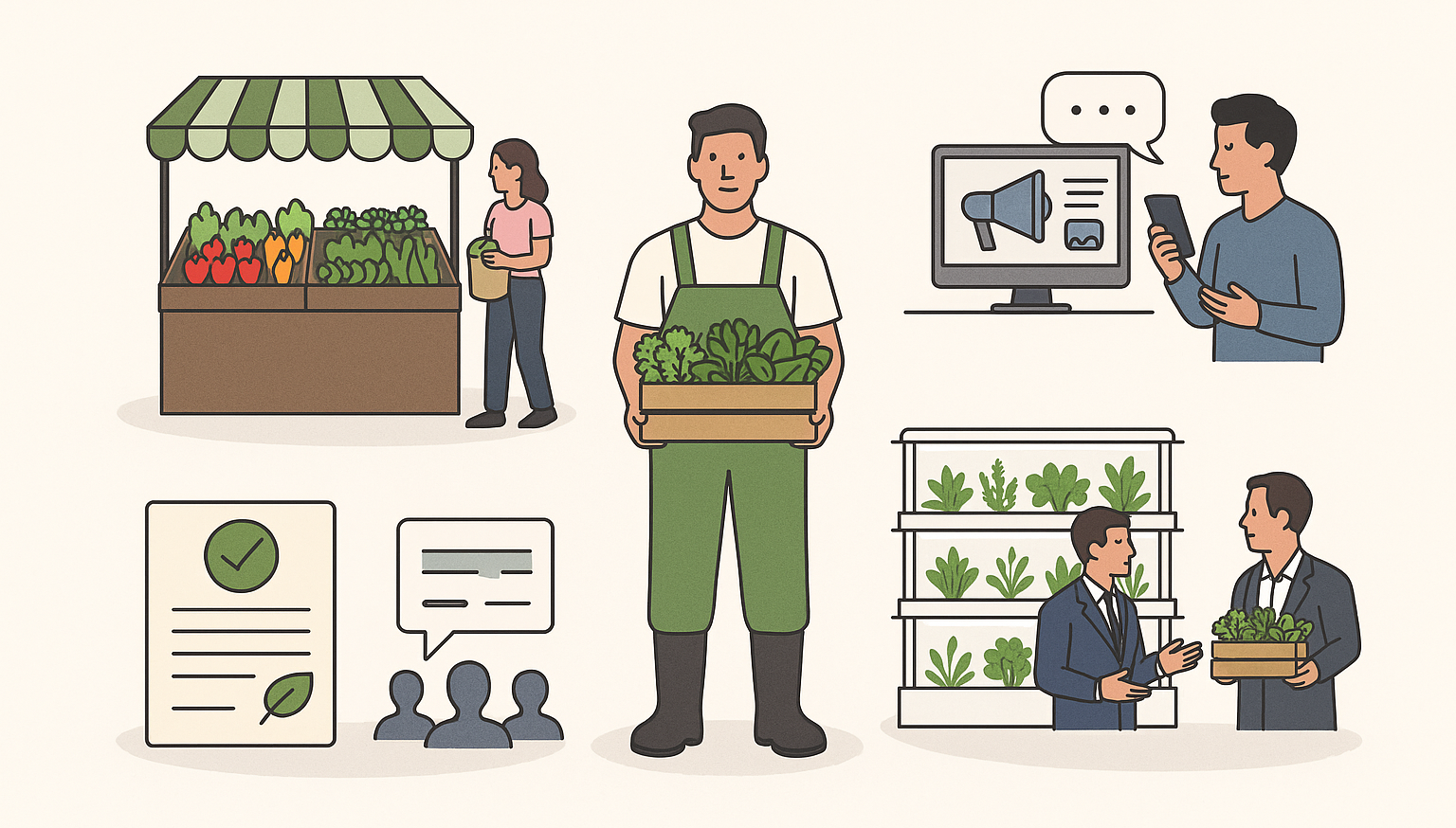
Marketing produce grown through Controlled Environment Agriculture (CEA) systems can present some unique opportunities and challenges. Effective marketing strategies should highlight the distinctive features of these systems: high levels of control, year-round production, reduced environmental impact, and reduced food miles. However, the benefits do not sell themselves. Consumers, wholesalers, and policymakers often require clear evidence of value, and growers must carefully position their produce in increasingly competitive markets. This introduction examines why marketing is crucial for CEA ventures, how different approaches can shape consumer perception, and the broader considerations that influence successful adoption.
Importance of Marketing in CEA and Vertical Farming
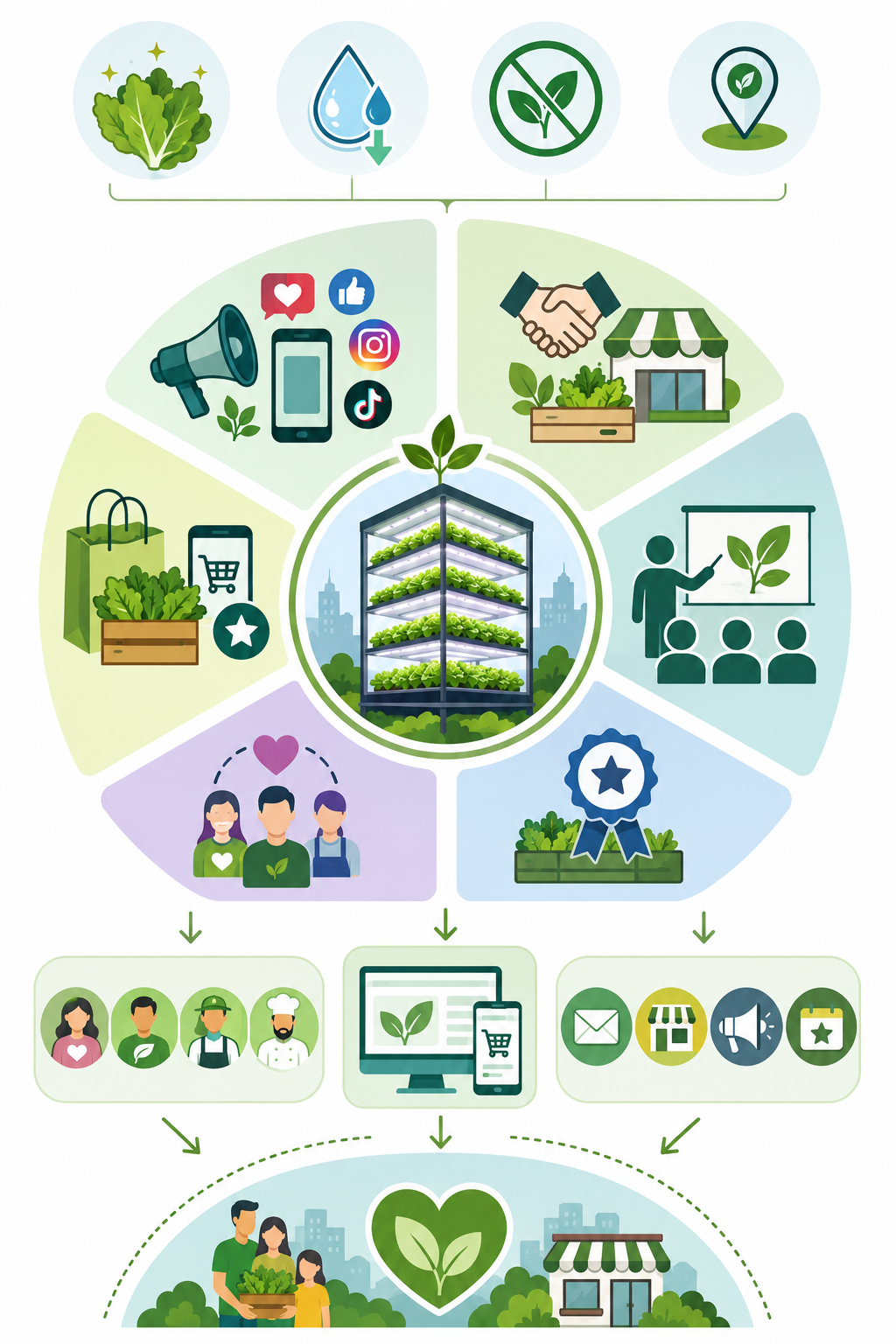
Indoor farms operate within a unique economic landscape. High capital and operational costs mean that profitability hinges not only on yields but also on market access. Unlike open-field farming, which often sells into commodity supply chains, vertical farms typically rely on niche positioning. The key lies in communicating the attributes that make CEA produce distinctive: freshness, food safety, consistent supply, and often a smaller environmental footprint. For example, retailers in the United Kingdom are beginning to promote vertically farmed herbs and salad leaves as an alternative to imports, emphasising reduced food miles and pesticide-free production. Without effective communication, these advantages risk remaining invisible to end users.
Differentiating Produce in Crowded Markets
CEA farms cannot easily compete on price against conventional imports, as the cost electricity, labour, and infrastructure means produce price points will likely be higher. Instead, successful ventures differentiate through quality and story-telling. Branding that emphasises freshness within 24 hours of harvest, or the precision of growing environments that avoid seasonal fluctuations, helps frame the produce as premium. In some cases, sustainability credentials such as reduced water use, renewable energy integration, or local employment opportunities provide further marketing leverage. Evidence from case studies in Europe and Asia shows that consumers respond positively when production methods are transparent and benefits are explained in accessible terms.
Routes to Market
The choice of distribution channels shapes marketing strategies. Direct-to-consumer sales through farmers' markets, subscription boxes, or local delivery schemes allow a farm to control its narrative and retain more margin. Supplying restaurants or high-end retailers requires different positioning, often focusing on consistent quality and supply reliability. Larger farms may integrate into wholesale supply chains, but this typically demands price competitiveness and certifications. Each route requires distinct messaging. For instance, chefs may value delicate herbs grown under LED light for flavour intensity, whereas supermarkets emphasise shelf life and continuity of supply.
Building Consumer Trust
Trust is central to marketing in emerging food sectors. Many consumers are still unfamiliar with indoor farming, and scepticism about technology-driven production can hinder acceptance. Educational outreach, farm tours, transparent labelling, and partnerships with trusted retailers help build confidence. In the UK, some vertical farms collaborate with universities and public institutions to demonstrate environmental performance metrics such as carbon savings. By presenting verifiable evidence, farms can counter perceptions of being a novelty and instead position themselves as part of a credible, future-focused food system.
The Role of Digital and Community Engagement
Digital tools extend the reach of CEA marketing strategies. Social media platforms allow farms to highlight daily harvests, sustainability milestones, and partnerships, while e-commerce systems facilitate direct sales. Importantly, digital channels enable storytelling: showing the growing process, highlighting growers' expertise, and reinforcing the locality of supply. Yet digital marketing alone cannot replace physical engagement. Many successful farms combine online presence with community integration: sponsoring local events, engaging with schools, or supporting regional food strategies. Such approaches embed the farm within the social as well as the economic fabric of the area.
Policy, Certification, and Institutional Markets
Effective marketing does not occur in isolation from regulation and policy. Certification schemes, such as organic standards or pesticide-free assurances, can influence consumer confidence, though current certification frameworks often lag behind technological innovations in CEA. Institutional markets, such as hospitals, schools, or government catering contracts, provide opportunities for indoor farms to demonstrate value beyond the retail sector. For example, inclusion in public procurement frameworks not only creates stable demand but also reinforces messaging around public benefit. Aligning marketing narratives with national or regional policy goals on sustainability, food security, or health can enhance both visibility and legitimacy.
Balancing Narratives of Technology and Nature
A central challenge in CEA marketing lies in balancing the technological nature of production with consumers' preference for naturalness. Vertical farms are often portrayed as high-tech, with LED lighting, automated systems, and AI-driven monitoring. While these elements are accurate, they must be presented carefully. Overemphasis on technology risks alienating those who view farming as fundamentally natural. Instead, successful narratives highlight how technology enables natural plant growth in a controlled environment. Phrases such as "grown with precision" or "harvested at peak freshness" help communicate benefits without overstating technical complexity.
Looking Ahead: Strategic Considerations
As vertical farming and CEA become more mainstream, marketing strategies must evolve. Early adopters may focus on premium herbs and microgreens for high-end markets, but broader uptake requires affordable products and mass-market messaging. This transition will demand evidence of value for everyday consumers: longer shelf life, consistent availability, or reduced reliance on imports. Future success will depend on integrating economic realities with compelling storytelling, ensuring that the market sees CEA not as a niche experiment but as a practical part of the food system.
Conclusion
Effective marketing strategies for produce grown via CEA and vertical farming are essential for the success of any indoor farming enterprise. Unlike commodity crops, indoor-grown produce relies on differentiation, trust-building, and alignment with consumer values. Routes to market, digital engagement, and policy contexts all shape the way farms present themselves and their products. As the industry matures, careful positioning will be essential not only to achieve profitability but also to shape public perception of indoor farming as a credible, sustainable contributor to future food systems. By combining transparency, quality, and narrative, growers can ensure that their produce stands out in competitive markets while advancing the broader case for CEA.