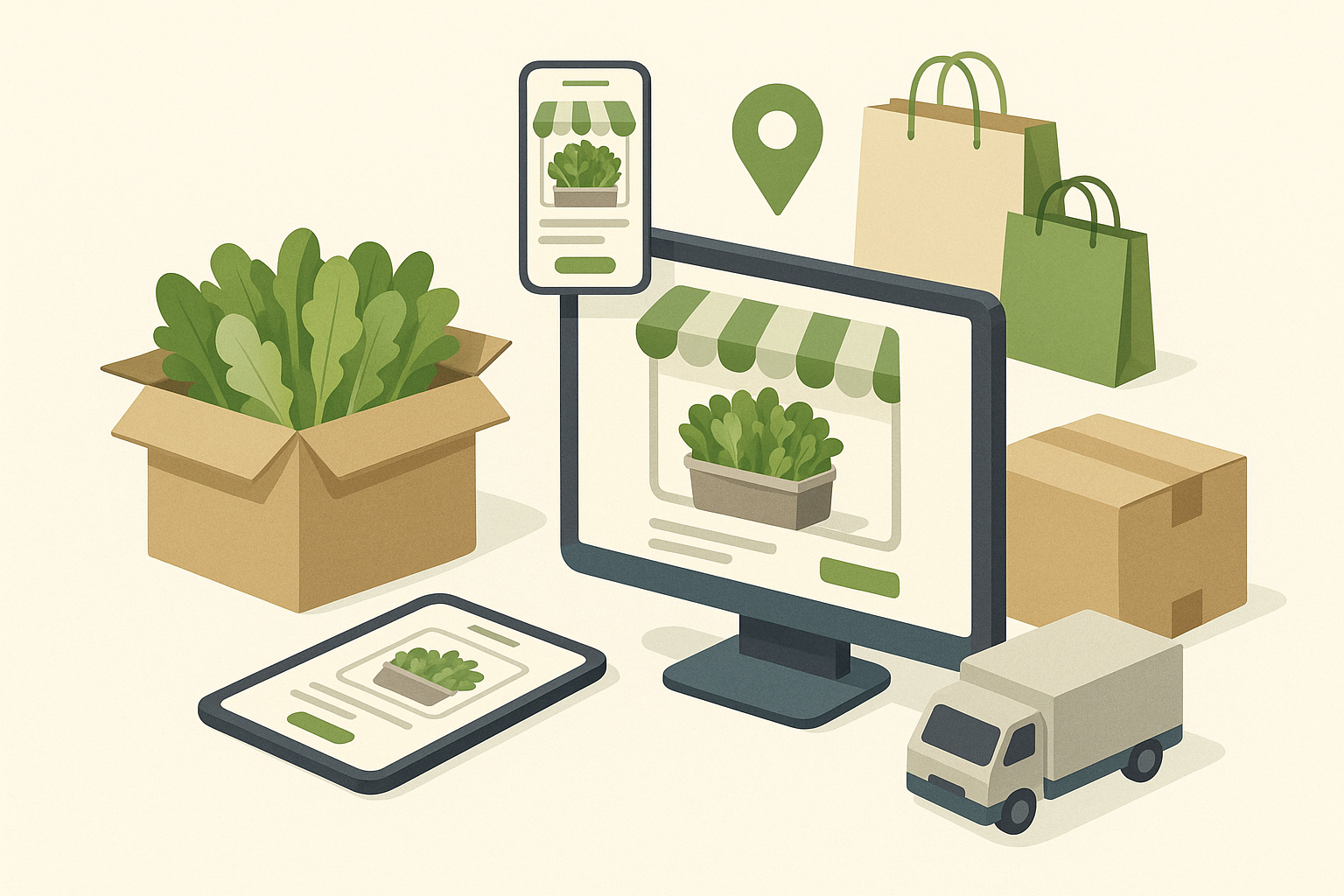
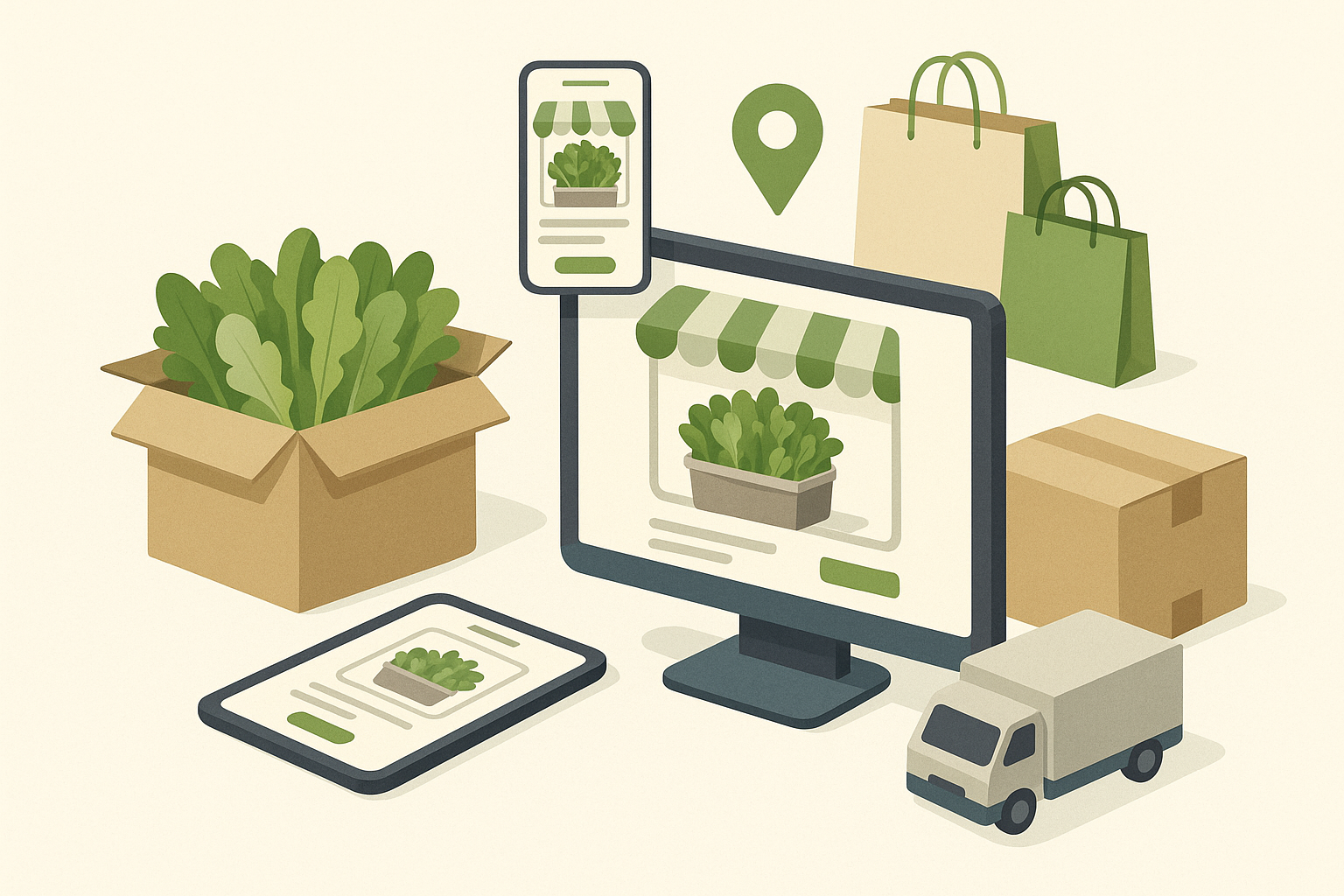
The ability to connect directly with consumers has never been more important for agricultural businesses. For vertical farms and other controlled environment agriculture (CEA) systems, selling produce online offers a means of building brand recognition, securing premium prices, and maintaining greater control over distribution channels. Effective ecommerce strategies for produce grown via CEA and vertical farming require more than simply launching a website; they involve understanding how customers search for fresh produce, how digital platforms can support trust and transparency, and how logistical factors such as packaging and delivery shape consumer experience. Here we consider the key principles of ecommerce for indoor-grown produce, showing why they matter and how they can be utilised.
Why Ecommerce Matters for CEA and Vertical Farming
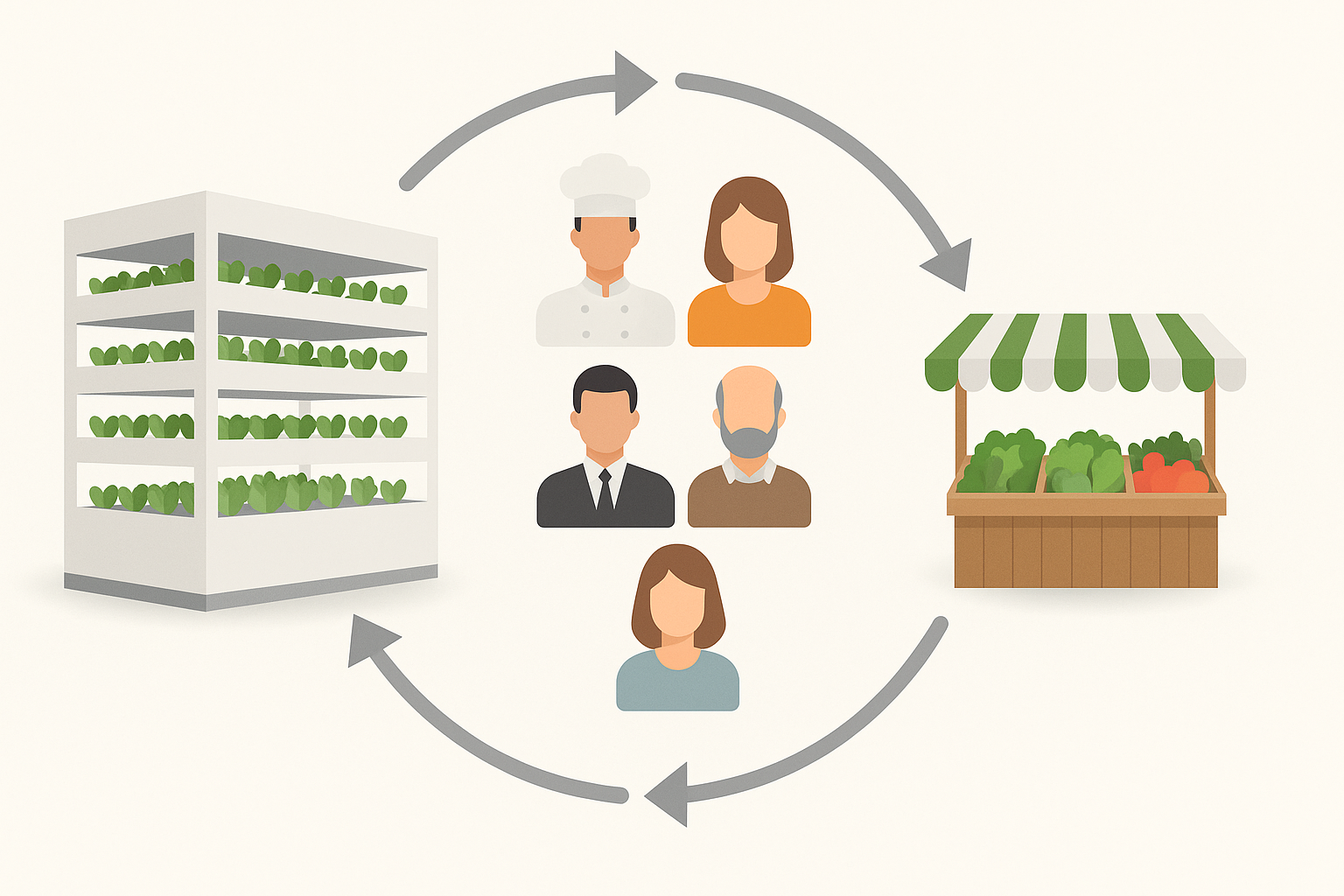
Vertical farms differ from conventional farms not only in how they produce food but also in how they engage with markets. By producing consistently high-quality crops all year round, they are uniquely positioned to supply local consumers, restaurants, and retailers without the seasonal fluctuations that characterise field production. Online sales provide a channel that aligns with these strengths: consumers can be offered regular deliveries, subscription models, and information-rich content that highlights freshness, sustainability, and provenance. In a marketplace where consumers increasingly seek transparency about where their food comes from, ecommerce can bridge the gap between farm and table.
The broader food retail sector illustrates this trend. In the UK, online grocery sales accounted for over 11% of the market in 2023, compared with less than 7% in 2019 (Kantar, 2023). This expansion has been accelerated by changing consumer habits following the pandemic, but it is now embedded in the retail landscape. For vertical farms, positioning within this growing channel is not optional but strategic.
Building a Digital Presence
The foundation of any effective ecommerce strategy is visibility. A website dedicated to the farm’s produce should be professional, mobile-friendly, and capable of handling secure transactions. However, beyond technical competence, content is central. Consumers are drawn to stories: how crops are grown, why vertical farming uses less land, and what sustainability benefits it offers. Blogs, photography, and short video content all help to establish credibility. Integrating social media channels can further extend reach, particularly for engaging local communities or niche audiences such as restaurants seeking reliable year-round suppliers.
Search engine optimisation (SEO) plays an equally important role. Pages that highlight keywords such as “fresh microgreens delivered in [location]” or “indoor farm salad boxes subscription” can ensure that a farm’s offering is visible when potential customers search online. Unlike wholesale markets, where sales are driven by established networks, ecommerce success is determined by discoverability.
Choosing the Right Ecommerce Model
Several models exist for selling vertical farm produce online, and each comes with distinct advantages. Direct-to-consumer (D2C) websites allow farms to retain control over branding and pricing. Subscription models, in which customers receive weekly or monthly boxes, build loyalty and reduce sales volatility. Partnerships with established online marketplaces, such as Ocado in the UK or local equivalents, offer access to large customer bases but may involve tighter margins. Restaurants and catering companies can also be supplied via digital ordering platforms, where consistency and reliability are valued above all else.
The most successful farms often adopt a hybrid approach: maintaining their own ecommerce platform while also using third-party services to broaden exposure. The key is to align the model with production capacity, ensuring that supply can reliably meet demand without compromising quality.
Packaging, Delivery, and the Consumer Experience
Freshness is central to consumer perception of value in food. For indoor farms selling online, packaging must preserve product integrity during transit. Recyclable materials are increasingly expected, and temperature control is essential for items such as leafy greens and herbs. Efficient logistics are equally important. Consumers have grown accustomed to rapid and predictable delivery, and small delays can erode trust. Partnering with local courier services or establishing neighbourhood drop-off points can provide solutions that are both cost-effective and environmentally responsible.
This aspect of ecommerce demonstrates how the physical and digital must be integrated. No matter how compelling the online shopfront, consumer loyalty is shaped by the quality of produce upon arrival. Farms that invest in well-designed fulfilment systems often find that their retention rates are higher, and that word-of-mouth referrals grow naturally.
Pricing and Value Communication
Selling produce online is not simply about convenience; it also provides opportunities to articulate value. Vertical farms often face higher production costs compared with open-field agriculture, but consumers are willing to pay a premium if quality, sustainability, and transparency are communicated effectively. Online platforms make it possible to provide detailed information about growing methods, nutrient content, and environmental benefits such as reduced food miles or water use efficiency. These narratives help justify price points that reflect the true cost of production.
Market research is vital here. While some customers prioritise price, others are motivated by convenience or ethical considerations. For example, a family seeking pesticide-free produce delivered weekly may be less sensitive to price than a student household browsing for occasional salad packs. By segmenting audiences and tailoring online messaging accordingly, vertical farms can maximise their reach while remaining competitive.
Policy, Regulation, and Trust
Food sold online must meet the same safety and labelling standards as food sold in shops. In the UK, the Food Standards Agency provides guidance on online sales, including requirements for allergen information and traceability. Farms venturing into ecommerce need to ensure compliance with these regulations, as trust is central to consumer confidence. Digital tools such as QR codes can enhance transparency, allowing customers to scan a product and view its harvest date, growing conditions, and supply chain journey.
In addition, consumer protection regulations apply to ecommerce transactions, covering returns policies and data security. Farms that take these responsibilities seriously not only avoid legal risk but also build reputational strength. In an era when consumers are increasingly attentive to data privacy, clarity on how customer information is stored and used is as important as clarity on the growing process itself.
Looking Ahead: Ecommerce as a Core Strategy
The growth of online food retail shows no signs of slowing. For vertical farms, ecommerce is not merely an additional sales channel but a strategic opportunity to demonstrate distinctiveness. Indoor farms can position themselves as transparent, innovative, and responsive suppliers, capable of meeting consumer expectations with reliability and flair. Effective ecommerce strategies for produce grown via CEA and vertical farming combine technical competence, storytelling, and logistical excellence. Those that master this integration will not only sell produce successfully but also shape the perception of vertical farming as a whole.
By understanding both the opportunities and challenges of online sales, vertical farms can turn digital platforms into a central pillar of their business model, securing both immediate revenues and long-term consumer loyalty.