Soilless plant production methods form the foundation of modern Controlled Environment Agriculture (CEA) and are integral to vertical farming systems. These approaches, which allow plants to thrive without traditional soil substrates, enable more precise control over nutrients, water, and environmental conditions. As agriculture adapts to the pressures of urbanisation, climate change, and the need for resource efficiency, hydroponics and other soilless systems offer scalable, data-driven alternatives to conventional cultivation. This page explores the core principles, significance, and applications of these methods in contemporary horticulture and food production.
Defining Soilless Cultivation
Soilless growing refers to the cultivation of plants without the use of natural soil. Instead, crops are supported by inert substrates or grown directly in nutrient-enriched water. The roots are either suspended in or intermittently exposed to nutrient solutions, or anchored in media such as rockwool, perlite, or coconut coir (amongst many others). The key feature of soilless systems is the separation of plant growth from soil ecosystems; this allows precise modulation of mineral nutrition, root zone aeration, and moisture levels.
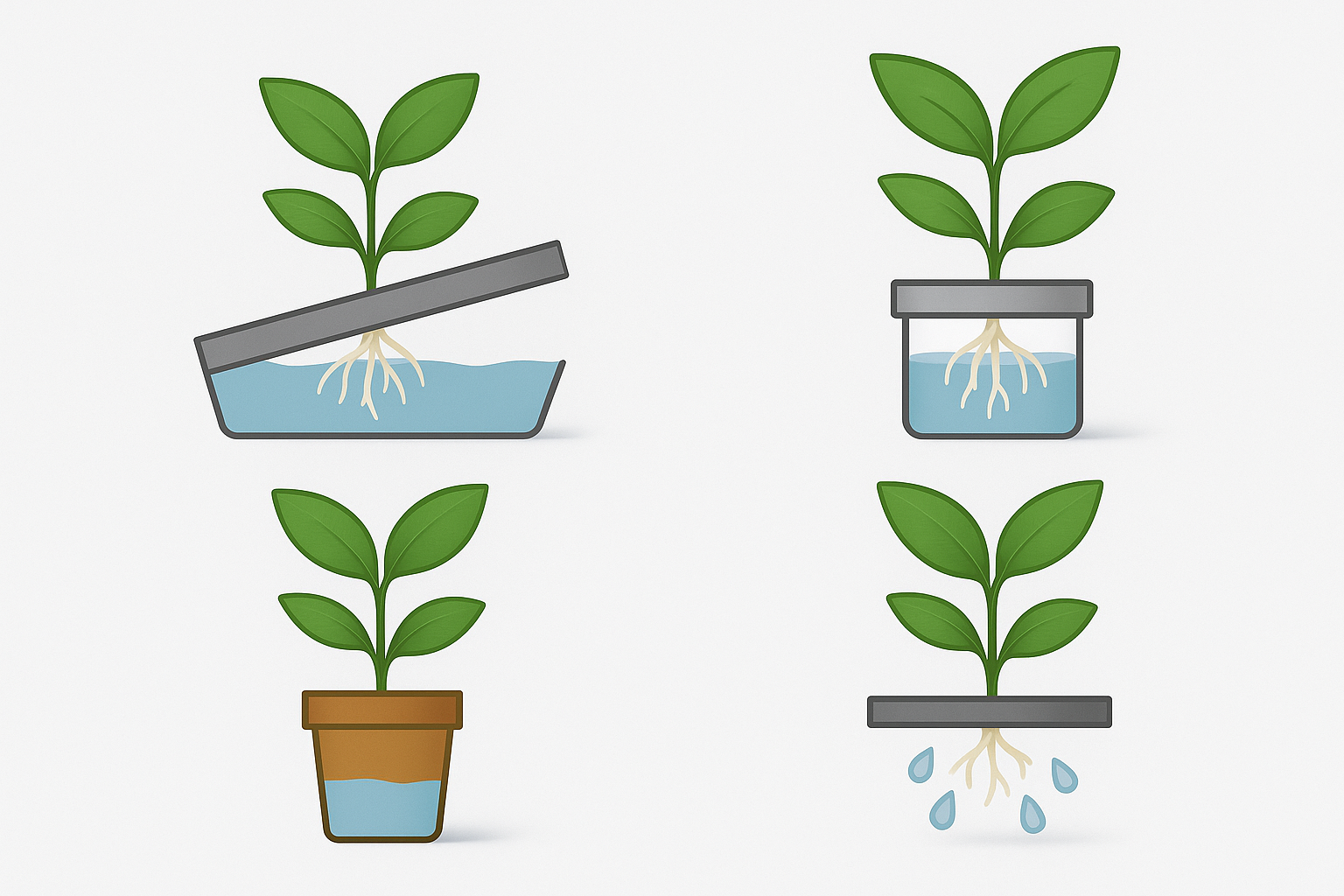
Hydroponics is the most widely known branch of soilless cultivation. It includes several subsystems such as Nutrient Film Technique (NFT), Deep Water Culture (DWC), aeroponics, wick systems, and ebb and flow designs. While each system differs in mechanics and complexity, all share a common advantage: they enable optimised plant performance in settings where arable land is limited or absent.
The Case for Soilless Methods in CEA
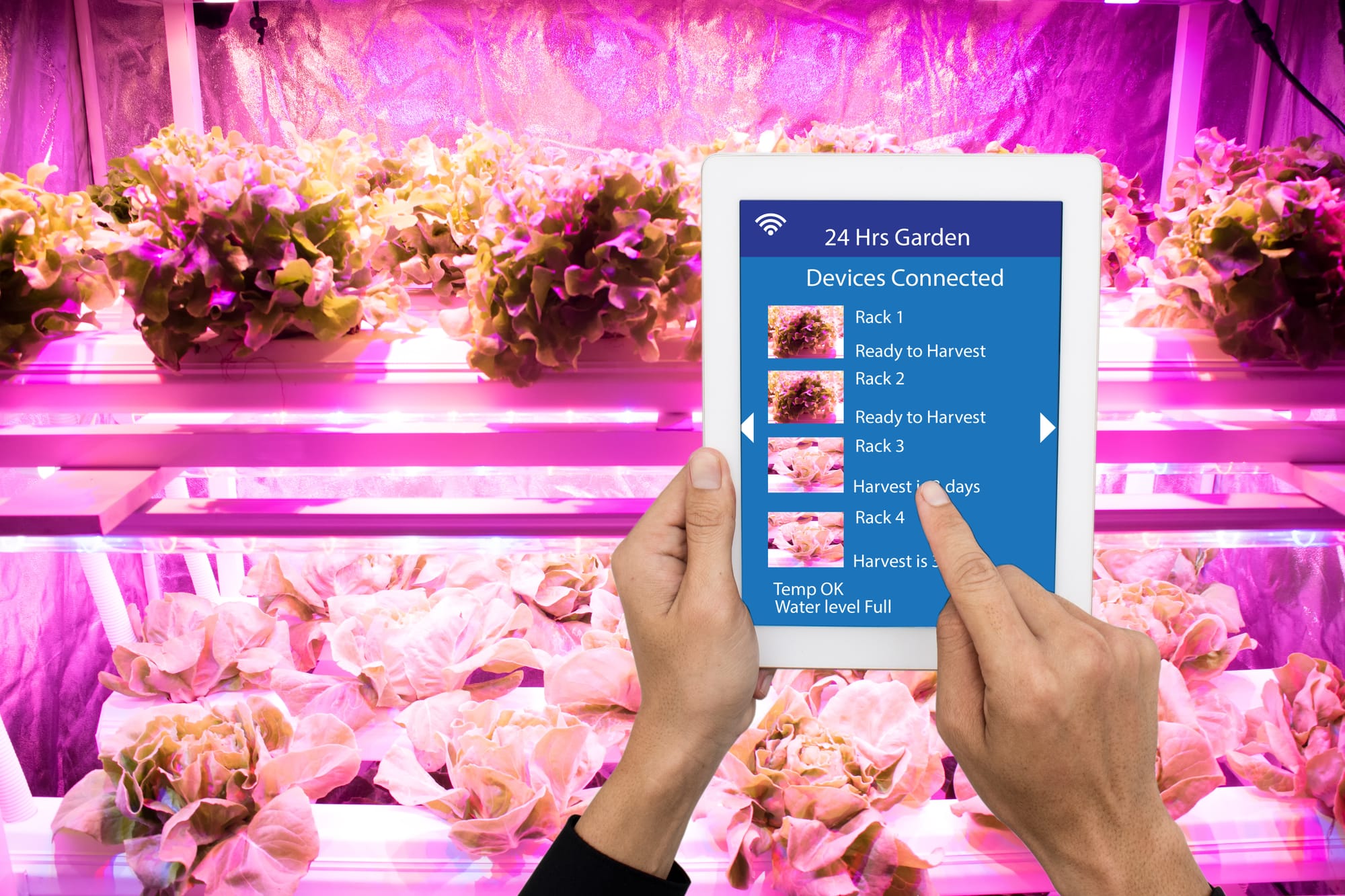
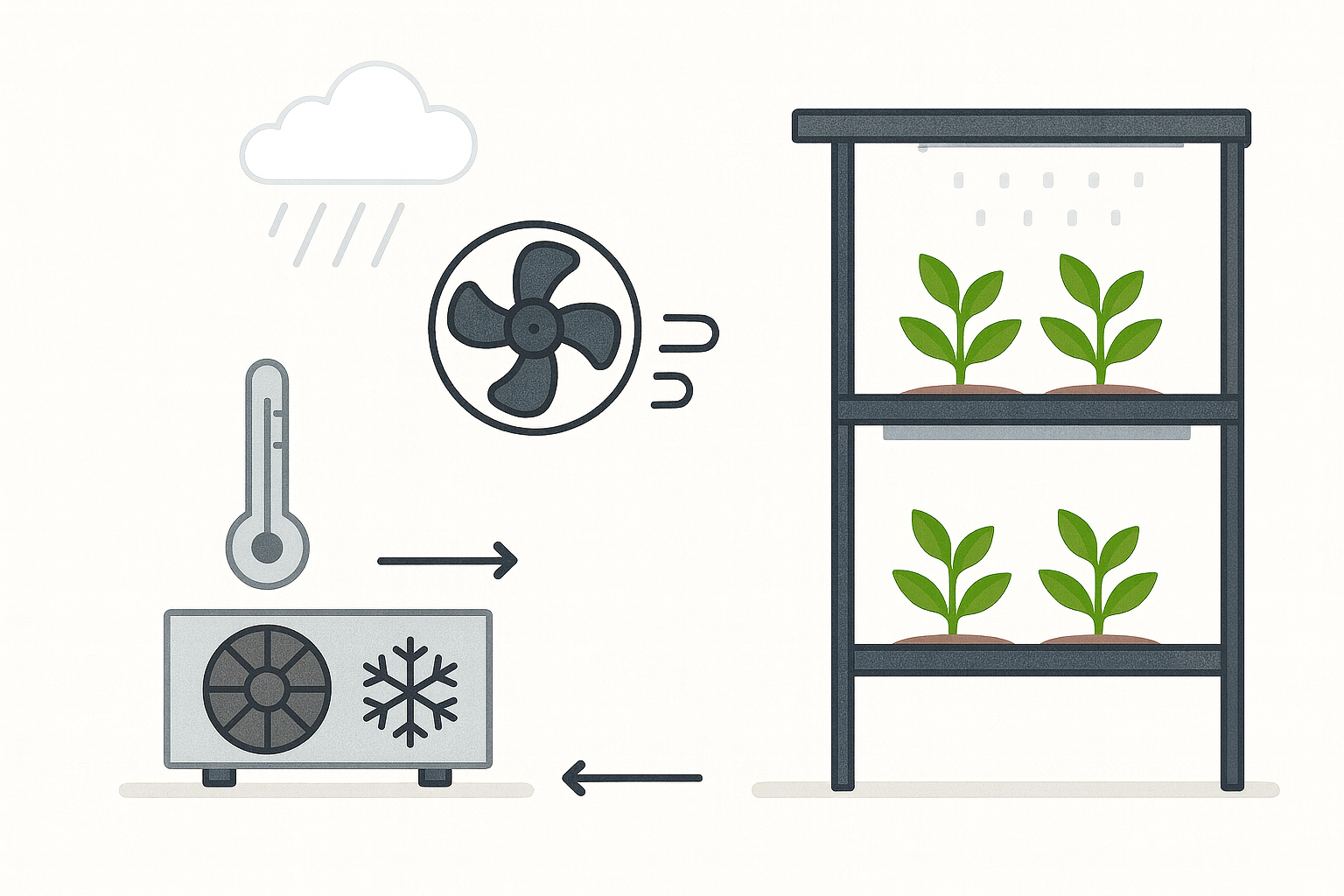
In traditional open-field agriculture, soil quality, climate variability, and pest pressure impose limitations on crop consistency and yields. Soilless plant production methods offer a means of overcoming these challenges by decoupling plant development from the unpredictability of natural ecosystems. Within a CEA facility, such as a greenhouse or vertical farm, environmental parameters can be adjusted and monitored continuously: light intensity, photoperiod, air temperature, humidity, CO₂ levels, and irrigation can all be tightly managed.
This fine-tuned control translates into higher productivity per unit area, reduced water use, and the ability to grow crops in locations otherwise unsuitable for agriculture (urban rooftops, derelict warehouses, arid zones, or polar regions). For instance, hydroponic lettuce grown in a closed-loop NFT system can use up to 90 percent less water than its field-grown counterpart while achieving faster growth cycles and more uniform quality.
System Types and Technical Principles
Hydroponic and soilless systems fall broadly into two categories: liquid-based and substrate-based.
Liquid-based systems, such as deep water culture (DWC) and aeroponics, support plant roots directly in nutrient solution. DWC immerses roots in oxygenated water, while aeroponics mists roots with a fine spray. These systems are particularly well suited to high-tech vertical farming operations, where automation and system integration are prioritised. The challenge lies in maintaining adequate oxygenation and preventing biofilm formation or pathogen proliferation in nutrient reservoirs.
Substrate-based systems, including drip-fed rockwool slabs or coco coir grow bags, provide a stable root environment with passive or active irrigation. These systems often mimic soil in terms of water retention and drainage but without the biological complexity or variability. Substrates must be inert, structurally stable, and capable of being sterilised or replaced between growing cycles.
The chemistry of the nutrient solution is fundamental to all soilless methods. Macro- and micronutrients must be supplied in precise ratios, adjusted according to plant developmental stages and environmental feedback. Electrical conductivity (EC), pH, and temperature of the solution are continuously monitored to ensure nutrient availability and uptake efficiency.
Advantages and Limitations
One of the most compelling advantages of soilless growing methods is their resource efficiency. With appropriate design, water and nutrients can be recirculated, reducing both input costs and environmental impact. Pest and disease risks can be mitigated through physical separation, biological controls, and hygiene protocols. Furthermore, soilless systems eliminate soil-borne pathogens and the need for fumigation or crop rotation.
However, these systems also come with complexities. They require upfront capital investment, technical knowledge, and regular maintenance. System failures, such as pump outages or contamination, can lead to rapid plant losses due to the absence of soil as a buffer. Additionally, achieving uniformity across plant beds and maintaining nutrient balance demand both automation and operator skill.
Environmental sustainability is also a mixed picture: while water and fertiliser use is reduced, reliance on synthetic fertilisers, plastics, and energy for climate control may offset some gains unless renewable energy sources and sustainable inputs are used.
Applications and Research Frontiers
Soilless plant production methods are now being deployed across a wide range of crops beyond leafy greens. Strawberries, tomatoes, peppers, herbs, and even high-value medicinal plants are cultivated hydroponically. In urban agriculture, containerised vertical farms and rooftop greenhouses are increasingly using these systems to deliver fresh produce with minimal transport footprint.
Ongoing research is addressing critical challenges: the development of organic hydroponic nutrients; the use of biodegradable substrates; and the integration of machine learning to manage irrigation and nutrient delivery. Moreover, work is being done on the rhizosphere microbiome in soilless contexts, examining how beneficial microbes can be reintroduced to promote plant health and resilience in the absence of soil.
Academic and commercial interest in aquaponics, a hybrid system combining hydroponics with fish farming, is also growing. Here, fish waste serves as a nutrient source for plants, creating a semi-closed loop. While aquaponics remains complex to manage and scale, it exemplifies the innovative potential of integrated soilless agriculture.
Future Outlook
As global agriculture faces rising challenges from climate instability, urbanisation, and resource scarcity, soilless growing methods offer a promising path forward. Their adaptability to non-arable environments and capacity for precision cultivation make them particularly suited to the demands of urban food security and decentralised production models.
Nonetheless, their wider adoption will depend on continued improvements in system design, affordability, and knowledge dissemination. Policy frameworks and funding mechanisms also have a role to play in supporting adoption, particularly among small and medium-scale growers who may not have access to advanced infrastructure.
Hydroponic and soilless systems represent more than just an alternative to soil-based farming: they are a distinct and evolving branch of plant science, bringing together agronomy, engineering, data science, and sustainability. As understanding deepens and technologies mature, soilless plant production methods are likely to become central to the agricultural systems of the future.