The techniques of hydroponics, aeroponics and aquaponics are central to the advancement of Controlled Environment Agriculture (CEA) and vertical farming. Each method represents a distinct approach to soilless cultivation: all three are designed to maximise resource efficiency, improve crop yields, and enable farming in locations where traditional soil-based agriculture may be impractical or unsustainable. Understanding the principles behind these systems is essential for anyone exploring sustainable food production, particularly within the context of climate change, urbanisation and the increasing demand for local, high-quality produce.
Understanding Soilless Cultivation Techniques
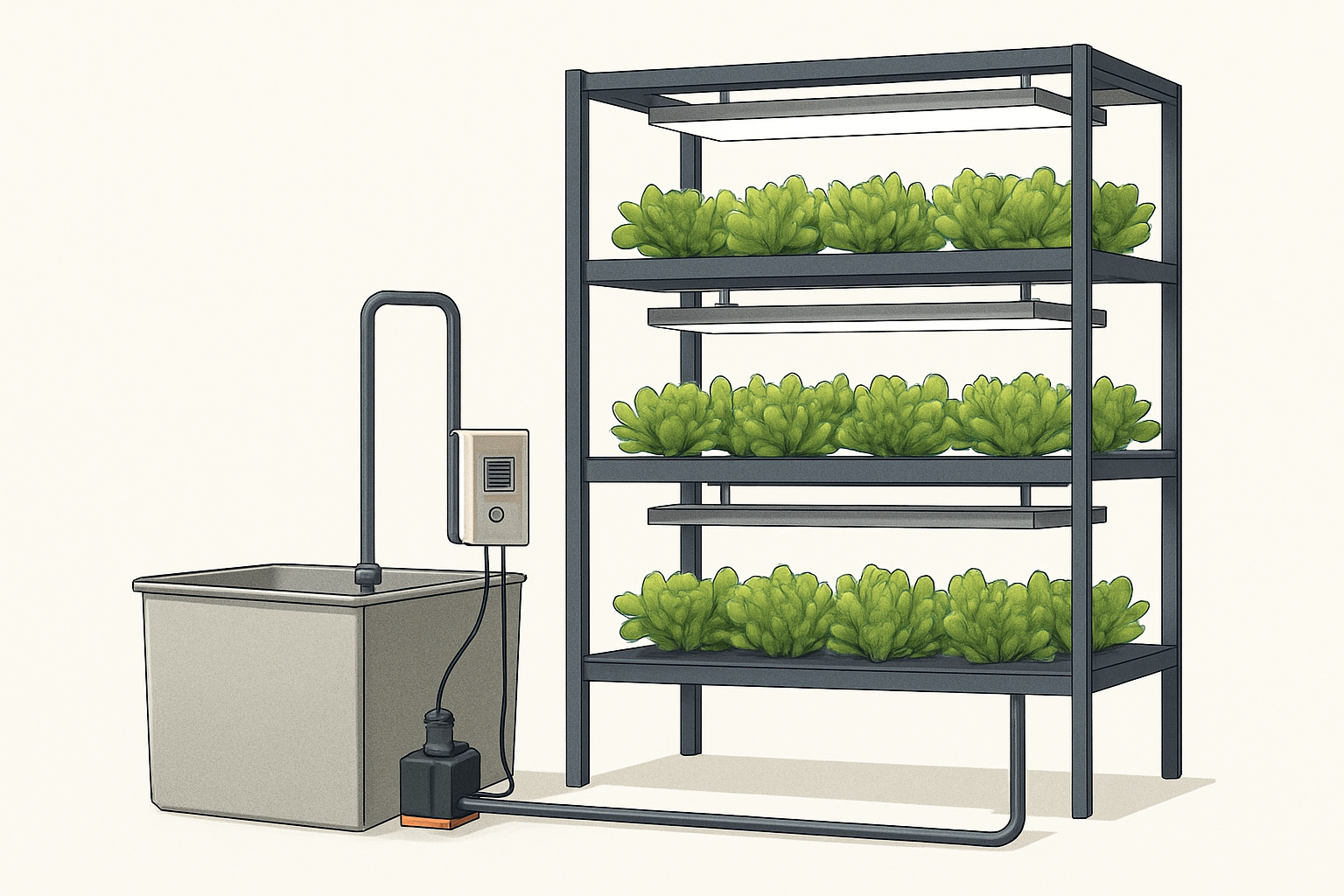
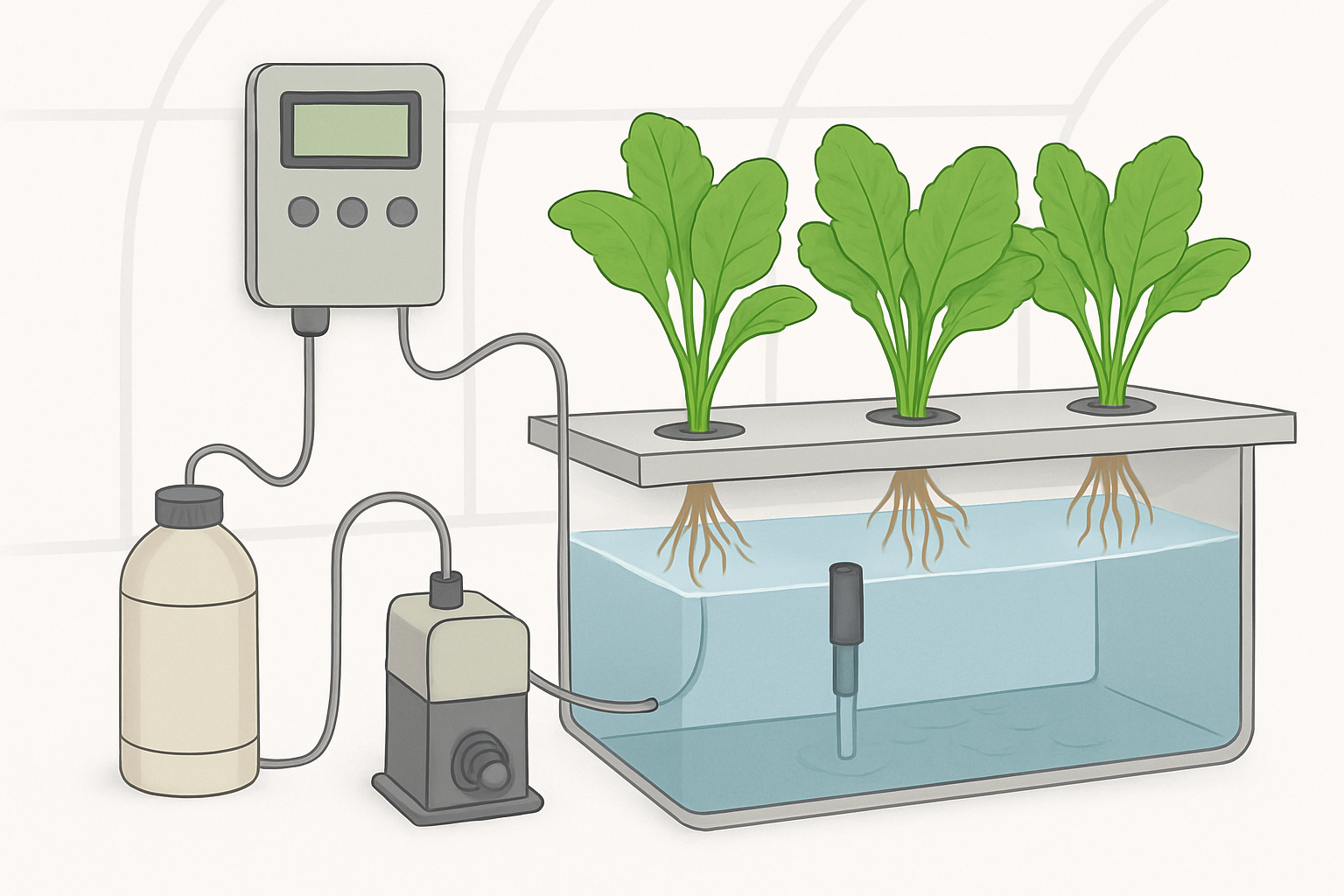
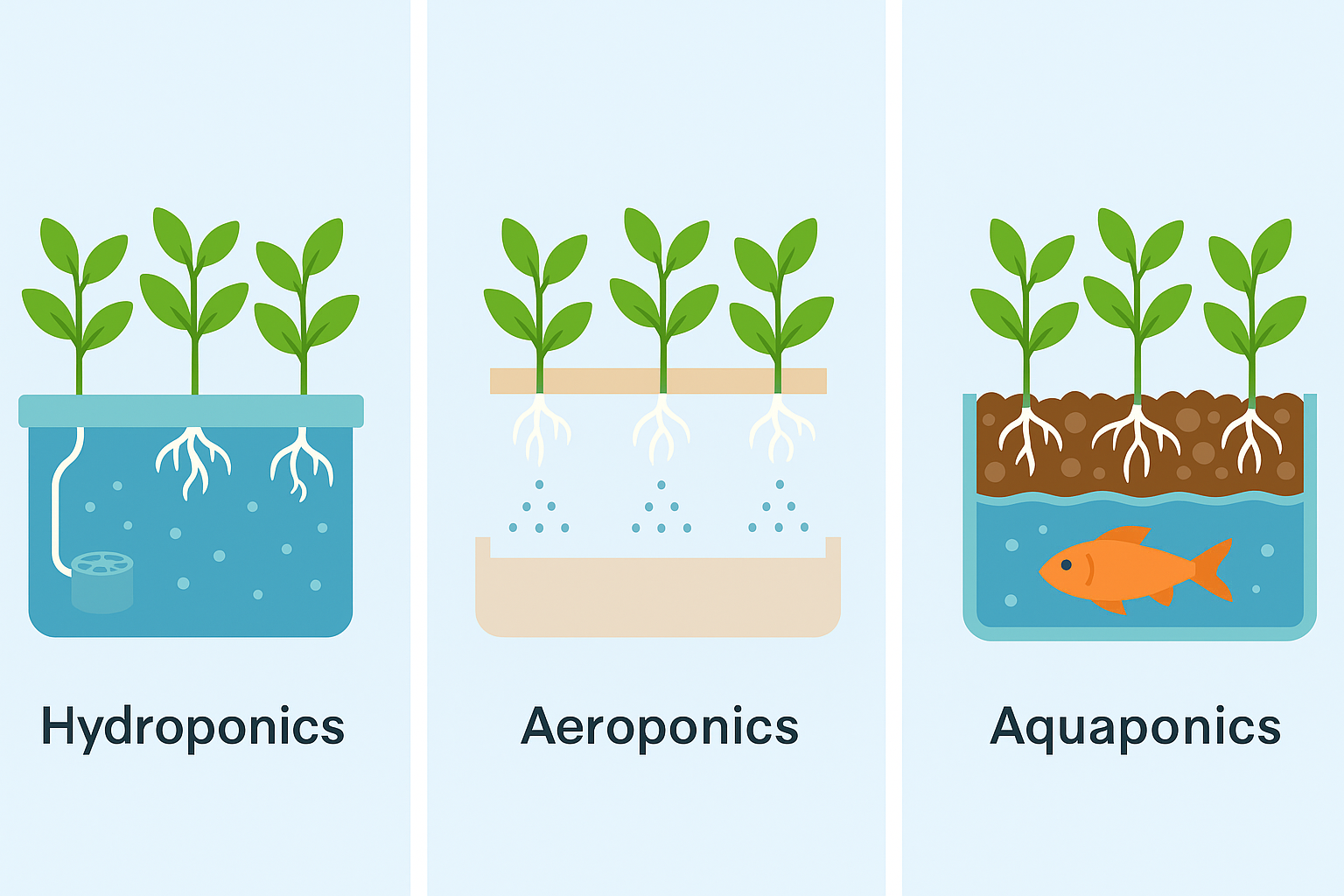
Hydroponics is the most widely adopted of the three systems and refers to the practice of growing plants in a nutrient-rich water solution without soil. There are many different approaches for hydroponics, including flood and drain (which is also know as ebb and flow), nutrient film technique (NFT), deep water culture (DWC), and drip irrigation. Across the different techniques, plant roots are either partially or fully submerged directly in the irrigant solution (as in DWC or NFT) or periodically irrigated using inert substrates such as rockwool, perlite or coco coir (as in flood and drain or drip systes). These techniques allow precise control of nutrients, pH, and water availability, making it highly suitable for vertical farming where environmental uniformity and input efficiency are paramount. The closed-loop nature of many hydroponic systems also reduces water usage significantly, by up to 90% compared to conventional field agriculture, while mitigating nutrient run-off and its associated environmental impacts.
Aeroponics, by contrast, suspends plant roots in air and delivers water and nutrients through a fine mist. It is the most water-efficient of the three systems and offers exceptional oxygenation to the root zone, promoting rapid plant growth. Because roots are exposed rather than submerged, the microclimate around them must be carefully controlled: humidity, misting intervals and droplet size are all critical variables. Aeroponics is often associated with research and high-value crops, but its potential for broader deployment is increasingly being explored, particularly where space and water are constrained, or in mobile growing units designed for remote or urban locations.
Aquaponics integrates hydroponic plant cultivation with aquaculture: the raising of fish or other aquatic organisms. In this system, nutrient-rich waste produced by the aquatic animals is biologically converted, primarily through nitrifying bacteria, into forms that can be absorbed by plants. The plants, in turn, purify the water, which is recirculated back to the fish tanks. This symbiotic relationship creates a semi-closed loop system that, when properly balanced, minimises external inputs and waste. Aquaponics requires a deeper understanding of biological systems than either hydroponics or aeroponics, as it must balance the needs of plants, fish and microbial communities. However, it offers a compelling model of integrated, multifunctional agriculture and is being trialled in a variety of educational, commercial and humanitarian contexts.
Technological and Operational Considerations
The adoption of hydroponics, aeroponics and aquaponics techniques in vertical farming settings depends heavily on system design, crop selection and environmental control. Hydroponics is currently the dominant technique due to its relative simplicity and commercial maturity; it scales effectively and is supported by a well-developed supply chain. Aeroponics, while less common in large-scale operations, offers advantages in root-zone oxygenation and nutrient uptake, particularly for leafy greens and microgreens. Its use in NASA’s controlled experiments for space farming reflects its efficiency and precision under constrained conditions.
Aquaponics presents greater complexity, especially in nutrient balancing and biosecurity. The dual-production model (fish and crops) means that operators must possess interdisciplinary expertise or collaborate with specialists. However, it may also provide economic resilience through diversified revenue streams and can support the production of crops that thrive under organically derived nutrient regimes, where synthetic fertilisers are undesirable or restricted.
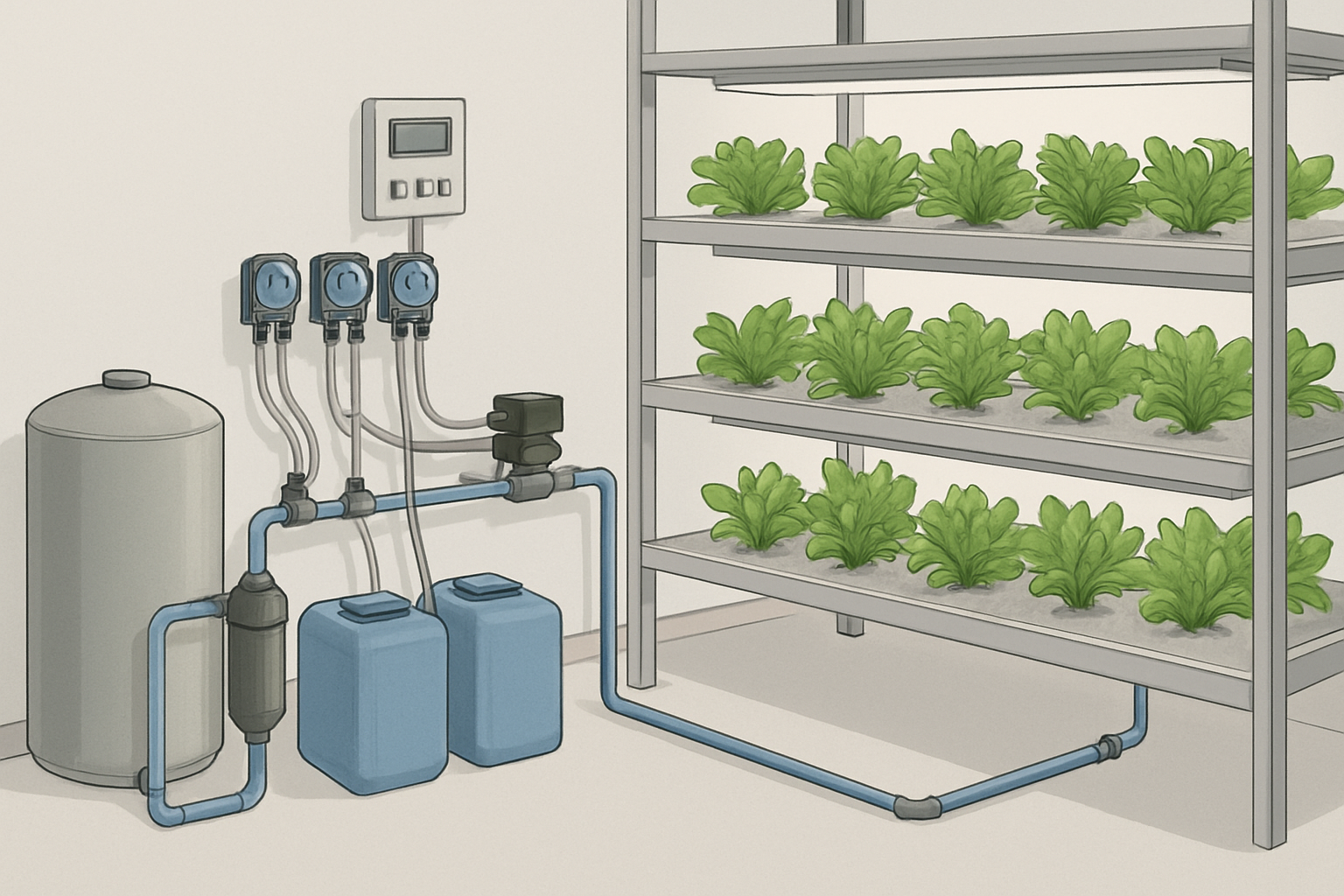
System integration with environmental sensors, data analytics and automation technologies is increasingly common across all three methods. Nutrient solution monitoring, root-zone temperature regulation and real-time feedback systems allow for greater consistency and traceability. Nevertheless, even advanced systems require skilled oversight; understanding plant physiology, water chemistry and microbial interactions remains crucial for success.
Environmental and Economic Relevance
The significance of these soilless techniques extends beyond their technical merits. In a world facing escalating resource scarcity, environmental degradation and population growth, the development of sustainable food systems is a global imperative. Hydroponics, aeroponics and aquaponics techniques enable high-density, year-round crop production with reduced land and water inputs. Moreover, they allow food to be grown closer to urban centres, reducing transport emissions and improving shelf life.
Their environmental credentials are particularly relevant in regions with limited arable land, degraded soils or erratic weather patterns. In such contexts, vertical farming systems utilising these techniques can provide localised food security and employment opportunities. That said, energy demands, especially for lighting and climate control, must be carefully managed. The carbon footprint of each system is highly dependent on the energy source used and the efficiency of system design. Renewables integration and energy optimisation strategies are, therefore, key enablers of long-term sustainability.
From an economic standpoint, initial capital costs and operational complexity can present barriers to entry. However, as technologies mature and economies of scale are realised, cost structures are becoming more competitive. Public and private investment in agri-tech innovation, along with government support for sustainable agriculture, continues to shape the future landscape of commercial viability.
Educational and Policy Implications
For students, researchers and policy-makers, hydroponics, aeroponics and aquaponics serve as practical examples of how science and engineering can contribute to sustainable development. These systems offer living laboratories for studying plant biology, nutrient dynamics, microbial ecology and systems engineering. They also provide a framework for developing policy around urban agriculture, food system resilience and sustainable land use.
Policymakers can support these technologies through research funding, regulatory frameworks that encourage innovation, and incentives for sustainable practice adoption. In particular, there is growing interest in incorporating vertical farming into urban planning strategies, using rooftops, repurposed industrial spaces or underground facilities to contribute to food sovereignty and climate adaptation goals.
Conclusion
Hydroponics, aeroponics and aquaponics techniques represent vital tools in the evolving field of Controlled Environment Agriculture. Each method offers distinct advantages, technical challenges and environmental implications; together, they form the foundation of modern soilless farming. As vertical farming continues to expand in response to global pressures on food, land and water, a clear understanding of these core techniques will be essential for growers, innovators, investors and decision-makers alike. Their ongoing refinement and integration into scalable, sustainable systems will play a significant role in shaping the future of agriculture.