The automation of lighting, irrigation and fertigation in CEA systems can help to improve the potential for consistent crop quality, efficient resource use, and scalable production. As interest in vertical farming continues to grow, approaches for automation of lighting, irrigation and fertigation are also evolving. Here we consider the foundational concepts and technologies that underpin these automated systems, highlighting why they matter and how they are applied in modern indoor plant production.
The Role of Environmental Control in Plant Productivity
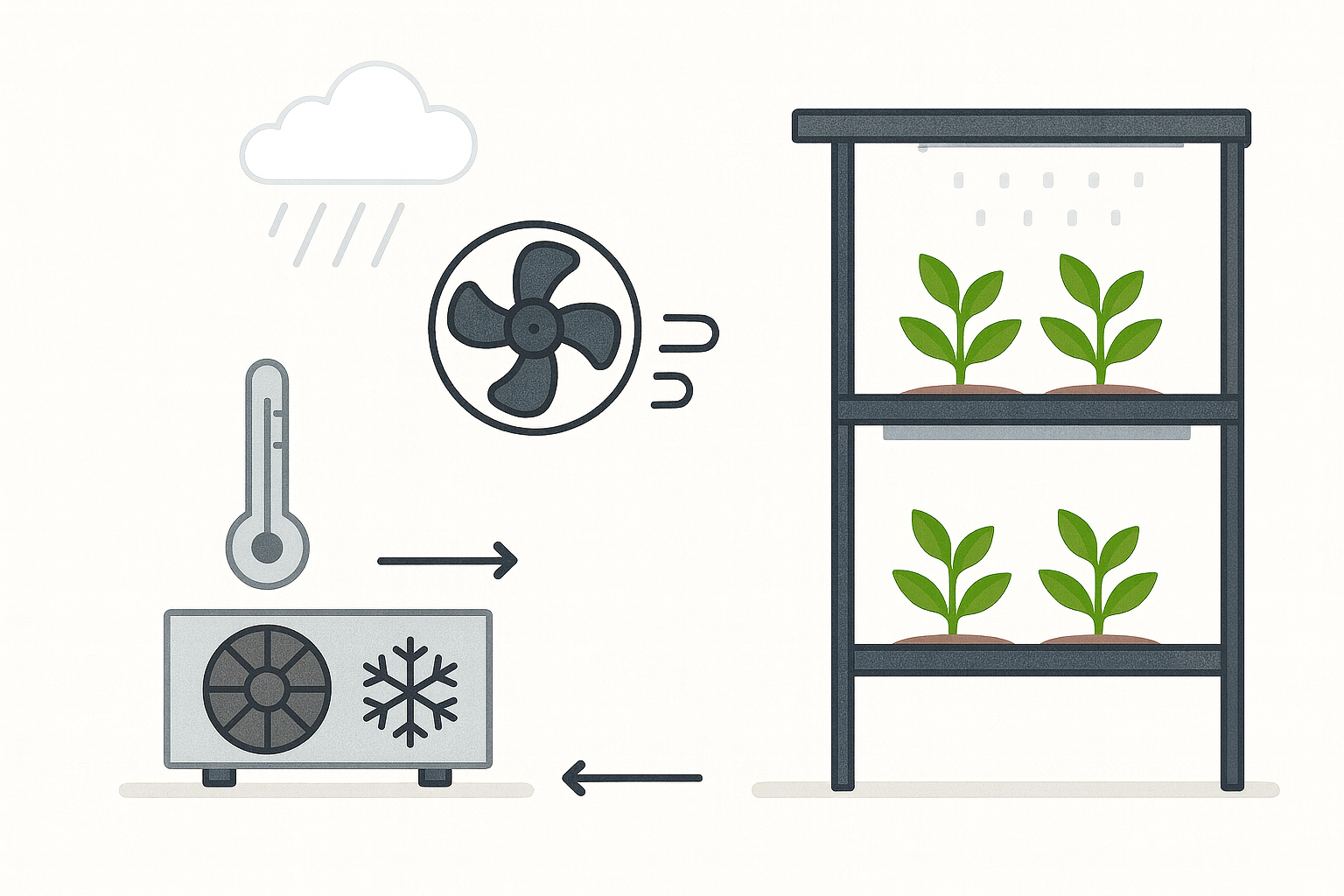
CEA systems, including greenhouses and indoor vertical farms, aim to remove or reduce the variability inherent in traditional agriculture. By regulating key environmental variables, such as temperature, humidity, carbon dioxide levels, and, crucially, light and water, growers can create optimal conditions for plant development throughout the crop cycle. Among these factors, lighting, irrigation and fertigation are particularly important because they directly affect photosynthesis, nutrient uptake and biomass accumulation.
Automation introduces precision, timing and consistency to these processes. Without automation, the manual control of these inputs is not only labour-intensive but also prone to error; over- or under-application of water and nutrients, or poorly timed lighting schedules, can lead to reduced yields, poor crop uniformity, or wasted resources. For vertical farms and other high-density CEA systems, which often involve hundreds or thousands of crop units in stacked configurations, scale means that automation becomes a necessity.
Automated Lighting: Matching Spectra and Schedules to Plant Needs
Lighting is both a technical and economic challenge in indoor plant production. Plants require specific light spectra at different stages of growth; too much or too little light, or the wrong spectral quality, can impair development. Automated lighting systems allow growers to programme and dynamically adjust both light intensity and spectral composition in response to crop stage, species, and even real-time plant performance data.
The shift to LED lighting has made this level of control feasible. LEDs are energy-efficient, produce little heat, and can be finely tuned in terms of wavelength. Advanced lighting control platforms integrate with sensor networks to adjust output in response to variables such as canopy height, ambient light levels and photosynthetic efficiency. In research-led facilities, algorithms may modulate spectra in real time, supporting experiments on how light quality influences secondary metabolites or flowering.
Time-based lighting schedules (typically following photoperiods that mimic natural day/night cycles or enhance vegetative or generative growth) are the simplest form of automation. More advanced systems use feedback loops, integrating environmental and crop data to modify lighting regimes. The result is not only energy efficiency, but also optimisation of growth rates and yields.
Automated Irrigation: Delivering Water Precisely and Efficiently
Water is another critical input, and irrigation systems in CEA must provide moisture in precise quantities at appropriate intervals, avoiding both drought stress and waterlogging. Automated irrigation replaces manual watering with programmable or sensor-triggered systems that distribute water through drip lines, emitters or recirculating channels.
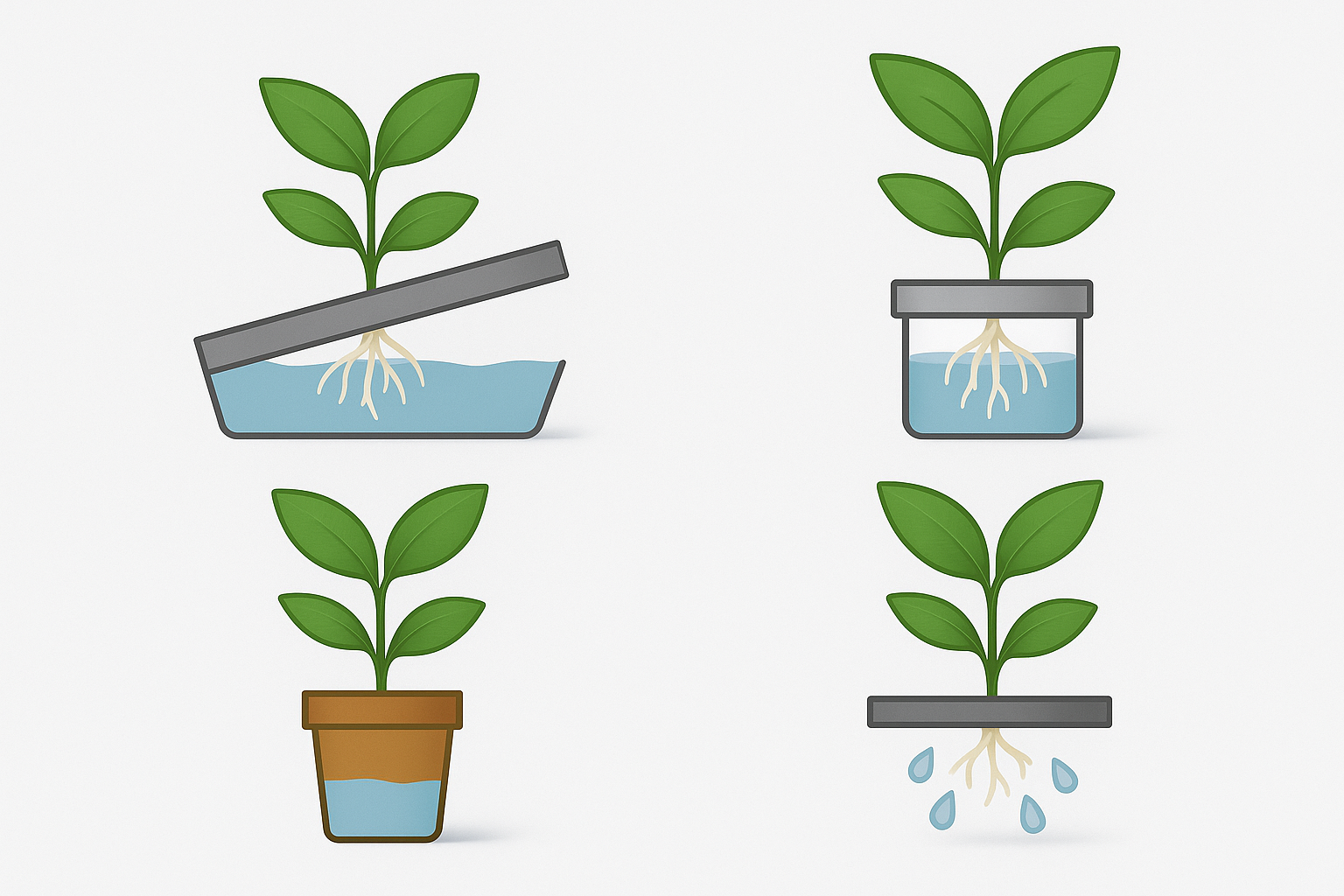
In closed-loop systems, such as NFT (Nutrient Film Technique) or aeroponics, irrigation is closely tied to water reuse and filtration, requiring coordinated control of pumps, valves and reservoirs. Automation allows integration of flow meters, moisture sensors, and substrate weight data to inform when and how much to irrigate. In vertical farms, where plant trays may be isolated from direct human observation, automated systems ensure consistency across levels and growing zones.
Time-based control, while common, is gradually giving way to demand-driven irrigation models that rely on root-zone sensors or predictive algorithms based on evapotranspiration rates and weather forecasting in greenhouse contexts. These methods minimise water use without compromising plant health, aligning with both environmental and commercial goals.
Automated Fertigation: Precision Nutrition at Scale
Fertigation, the process of delivering nutrients through irrigation water, is particularly amenable to automation in CEA. It enables precise control of nutrient concentrations, pH, and electrical conductivity (EC), ensuring that plants receive the right balance of macro- and micronutrients throughout their life cycle.
Automated fertigation systems typically involve dosing units, stock tanks, mixing chambers and inline sensors. These systems measure and adjust nutrient formulations in real time, guided by recipes stored in control software or cloud-based platforms. For crops with specific nutrient uptake patterns or growth-stage requirements, automation ensures rapid transitions between feed profiles without manual mixing or recalibration.
The integration of pH and EC sensors allows continuous monitoring and adjustment, preventing nutrient lockout or deficiencies. In closed systems, automation also supports the recirculation and adjustment of spent nutrient solutions, reducing fertiliser costs and environmental discharge. Modular fertigation units are increasingly used in vertical farms to tailor nutrition to different crop types or growing levels, enabling crop diversification within a single facility.
Integrating Systems Through Centralised Control Platforms
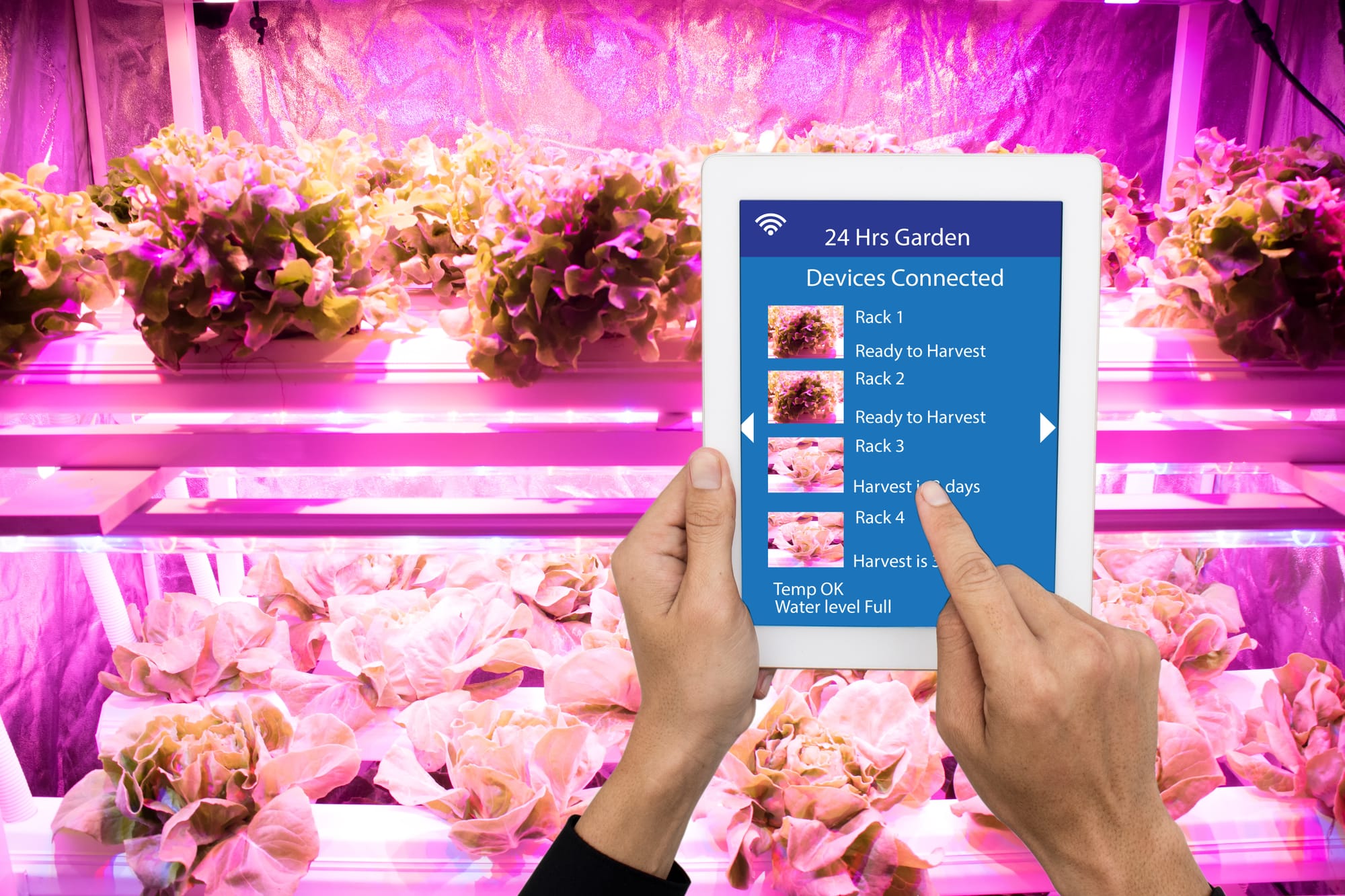
The full potential of automation in CEA is realised when lighting, irrigation and fertigation systems are integrated into a central control platform. These platforms aggregate sensor data, execute control algorithms, and present system status through user interfaces that range from simple dashboards to AI-driven analytics tools.
This integration enables responsive, coordinated actions: for example, reducing irrigation volumes during periods of lower transpiration, or modifying nutrient supply in tandem with altered lighting conditions. Some advanced systems use machine learning to optimise conditions based on historical crop performance, while others are linked to digital twins for simulation and planning.
Connectivity via Internet of Things (IoT) infrastructure means that growers can remotely monitor and adjust systems, receive alerts, and analyse performance data in real time. This not only reduces operational risks but also supports scalability, allowing multiple growing zones or facilities to be managed with minimal staffing increases.
Conclusion: Why Automation Matters in Modern CEA
Approaches for automation of lighting, irrigation and fertigation are fundamental to the viability of high-performance CEA systems. They reduce the labour burden, enhance consistency, and make it possible to fine-tune environmental parameters with a level of precision that manual methods cannot match. In commercial settings, they improve yield predictability and reduce input waste; in research, they provide the control needed for repeatable experimentation, though advances are still needed for certain factors, such as real-time nutrient sensing.
As global challenges such as water scarcity, energy use and food security drive the development of sustainable agriculture, automation is becoming a central component of efficient and effective indoor plant production systems.