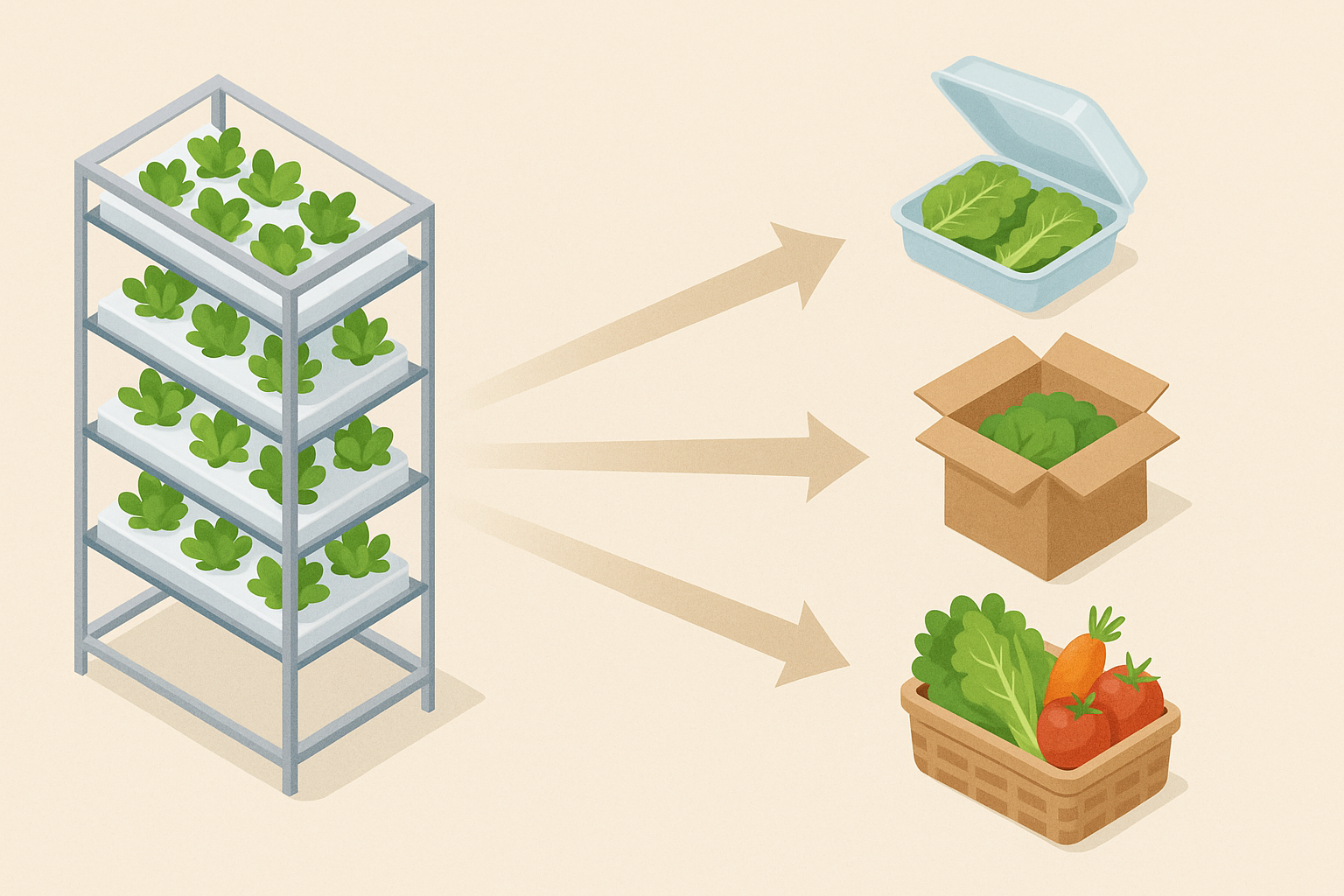
The success of a Controlled Environment Agriculture (CEA) or vertical farming enterprise depends not only on technical efficiency and yield but also on the ability to secure reliable routes to market and adopt sound pricing strategies. Pricing strategies for indoor farming produce are a potential challenge for growers, since production often incurs higher capital and operational costs than conventional open-field systems. If pricing is set too low, the venture may fail to cover costs; if set too high, demand may be limited. Understanding how to balance production economics with consumer expectations and market positioning is therefore essential for long-term viability.
The Economic Context of Indoor Farming
Indoor farming operates within a distinctive cost structure. Capital expenditure is concentrated in technology such as LED lighting, climate control, and hydroponic or aeroponic systems, while operational expenditure is dominated by energy and labour. These costs create a higher baseline for break-even pricing compared with soil-based agriculture. Consequently, indoor farms must position their crops carefully in markets that value premium attributes such as freshness, year-round availability, reduced pesticide use, and shorter supply chains.
However, production costs alone cannot dictate pricing. Market access, distribution partnerships, and consumer perception all play important roles. For example, a kilogram of basil produced in a vertical farm may be several times more expensive to produce than in an open field, but if it can be supplied consistently to urban restaurants within hours of harvest, its value proposition is therefore distinct and compelling.
Market Segmentation and Target Audiences
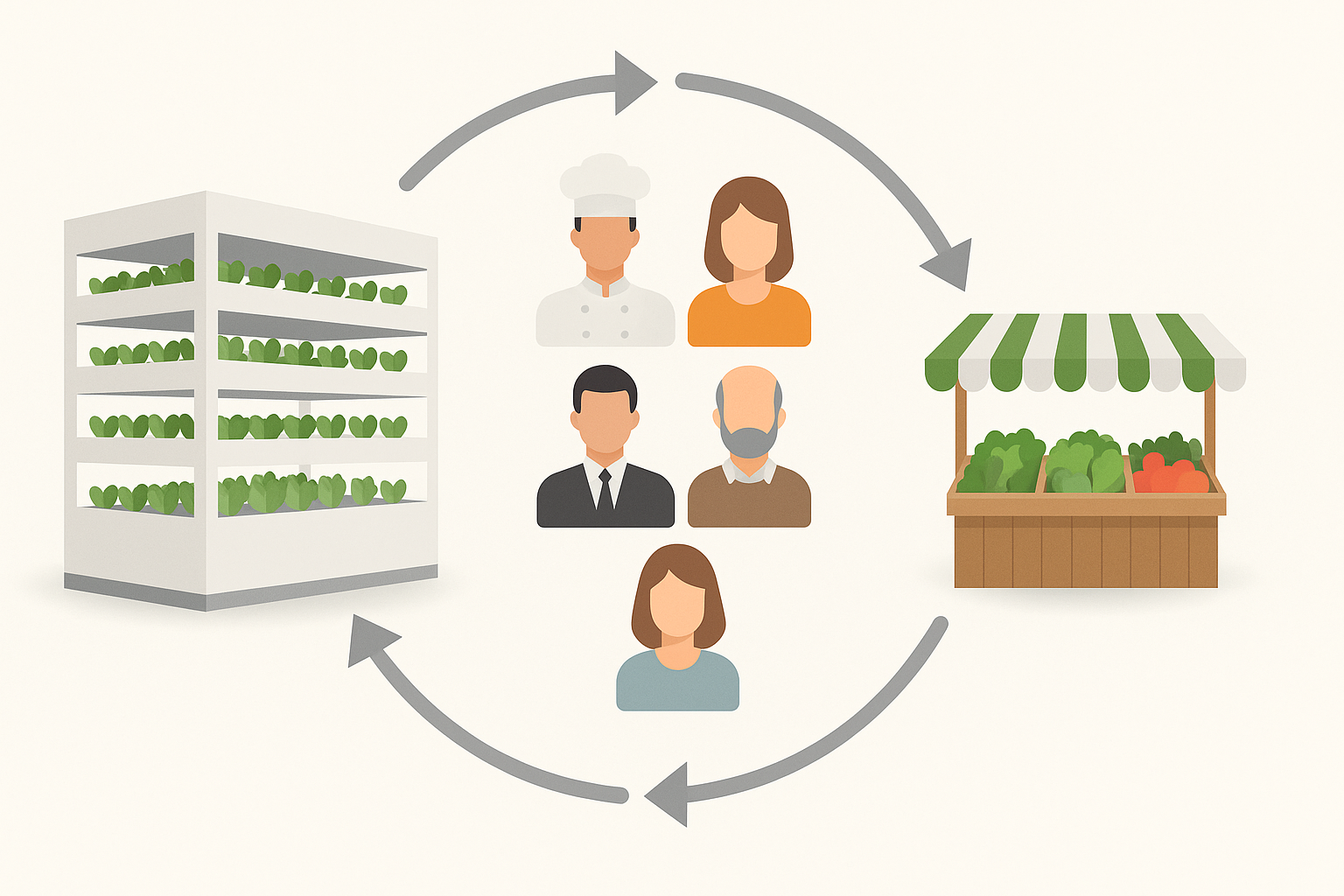
One of the first steps in defining pricing strategies for indoor farming is identifying the target customer base. Retail supermarkets, high-end restaurants, local farmers’ markets, and direct-to-consumer subscription models all present different pricing pressures and opportunities. Supermarkets generally demand lower wholesale prices but offer scale and stability. Restaurants may be willing to pay more for premium quality, aesthetic consistency, and reliability of supply. Farmers’ markets and direct sales provide maximum control over pricing but require investment in marketing and distribution.
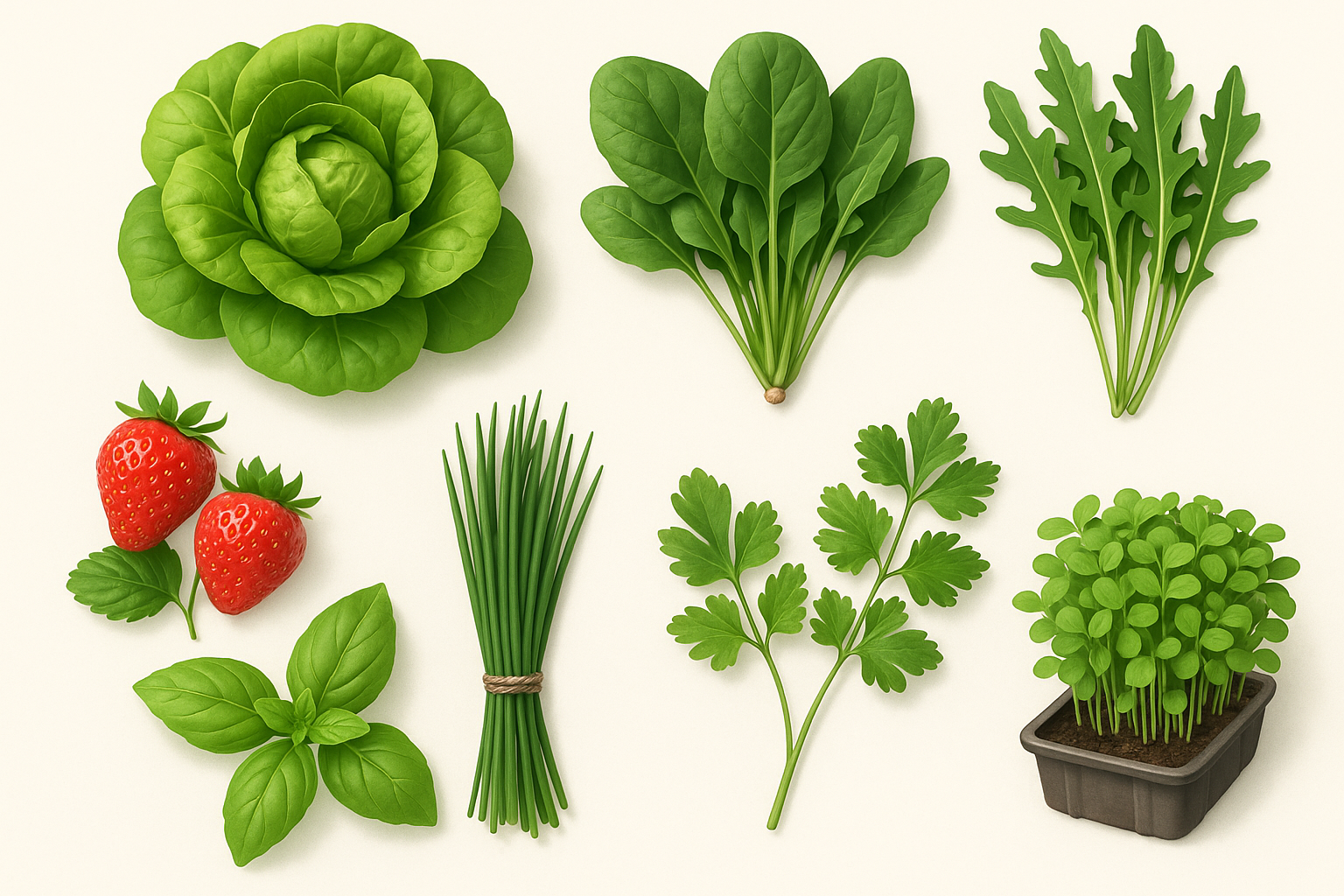
The ability of CEA enterprises to grow crops not readily available in the local environment offers a further avenue for premium positioning. Exotic herbs, edible flowers, and microgreens often command higher margins due to their specialised markets. Nonetheless, this approach requires careful assessment of demand and the risk of over-saturating niche sectors.
Strategies for Pricing Crops
There are three broad approaches to pricing within indoor farming. Cost-plus pricing begins with the calculation of production costs per unit and adds a margin to ensure profitability. This is straightforward but can overlook market realities if customers are not willing to pay the resulting price. Market-based pricing considers prevailing prices for similar crops in a given region and positions the product competitively. This can be challenging for indoor farms whose costs are substantially higher than field-grown competitors. Value-based pricing, by contrast, emphasises the unique qualities of indoor-grown crops and charges according to the perceived benefits. For example, customers may be willing to pay more for pesticide-free produce with a consistent year-round supply. Growers must understand what unique selling points their produce offers and emphasise these points in the branding and marketing.
In practice, successful indoor farms often combine these approaches. They must first ensure that production costs are covered, then adjust pricing in line with competitive pressures, while also highlighting the distinctive qualities that justify a premium.
Distribution Channels and Their Impact on Price
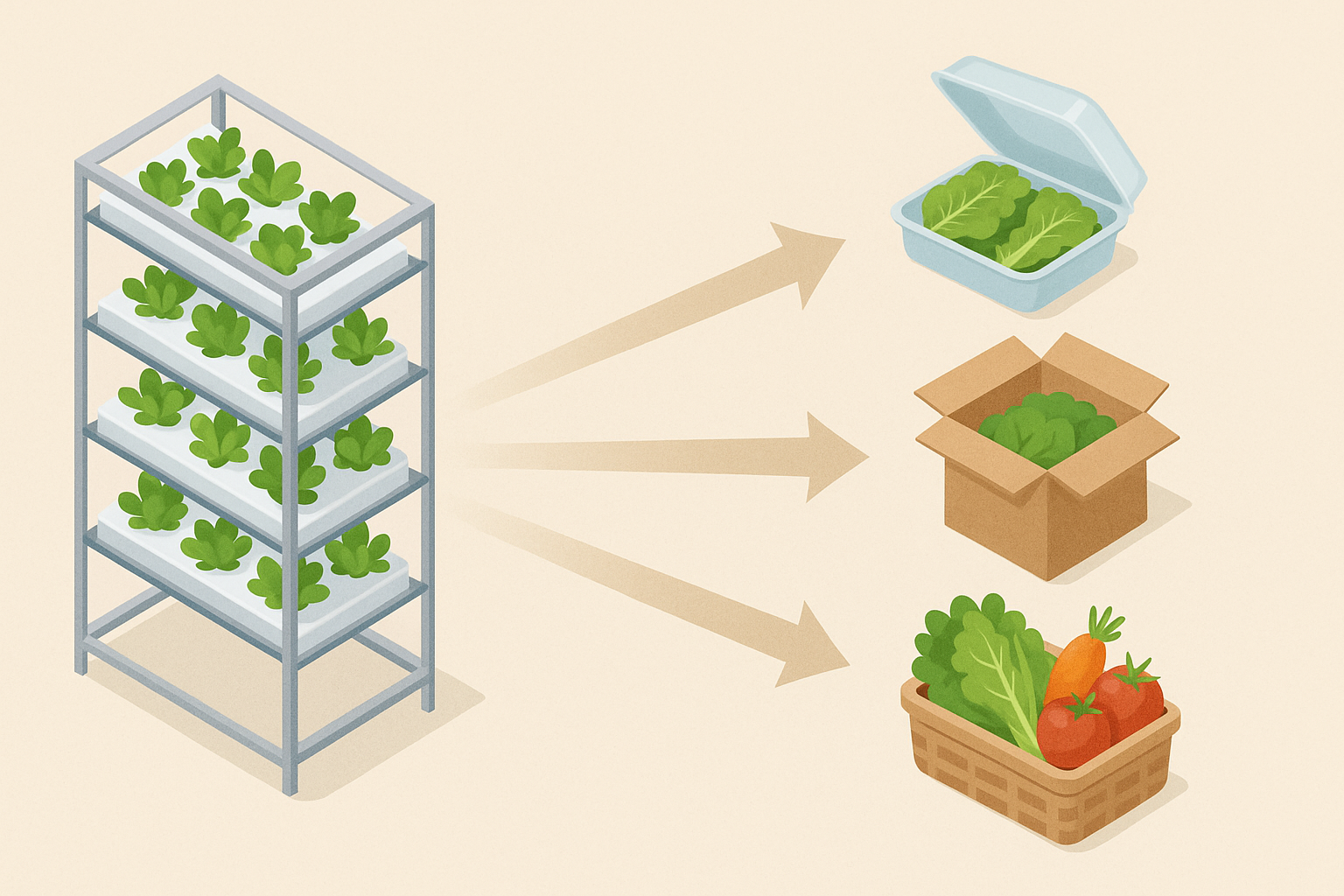
Access to markets is closely linked to distribution strategy. Selling directly to consumers can yield higher returns per unit but may require more logistical coordination and marketing. Supplying supermarkets demands lower prices but can provide predictable volumes and long-term contracts. Supplying restaurants often sits in between these two extremes, offering a premium over wholesale but requiring close relationship management. Each channel carries its own expectations of quality standards, packaging, and delivery times, all of which influence pricing decisions.
In the United Kingdom, for example, vertical farming companies such as GrowUp Farms and Jones Food Company have sought retail partnerships to secure reliable demand for leafy greens. In parallel, smaller urban farms often focus on restaurant supply chains or community-supported agriculture schemes, which allow them to capture greater value per unit sold. The choice of distribution strategy is therefore integral to both price setting and financial resilience.
Positioning for Competitive Advantage
Indoor farming enterprises must articulate a clear narrative about why their produce merits the price charged. This narrative may emphasise sustainability credentials, reduced food miles, or the consistency of supply despite adverse weather conditions. For investors and policymakers, such positioning highlights the broader contribution of CEA to food system resilience. For consumers, it provides assurance that the higher price reflects genuine value rather than mere novelty.
Branding and transparency are also critical. Evidence suggests that consumers are more willing to pay premium prices when they understand how and why crops were produced (i.e. Hartmann et al., 2017). By communicating benefits such as reduced pesticide use, water efficiency, or enhanced flavour, indoor farms can strengthen their pricing position within competitive markets.
Challenges and Risks
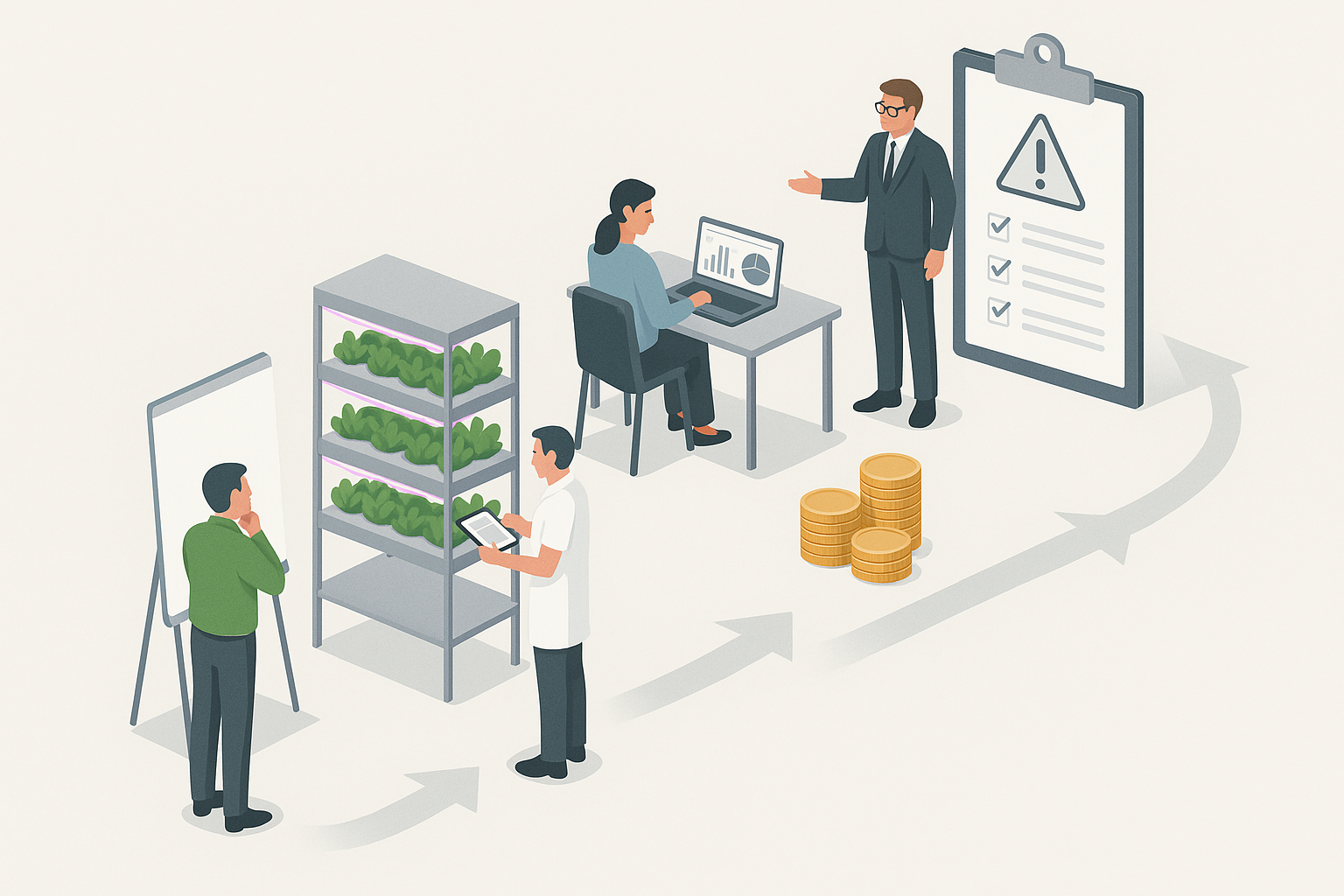
Despite the opportunities, pricing strategies for indoor farming face persistent risks. If energy costs rise or supply chain disruptions occur, margins can quickly erode. Furthermore, competition from imported produce, often produced under lower cost conditions, can limit the scope for premium pricing in domestic markets. Over-reliance on a single distribution channel may also expose farms to sudden shifts in demand. Diversification of both crop portfolio and sales channels can therefore provide greater resilience.
Future Considerations
As the sector matures, new pricing models are likely to emerge. These may include long-term contracts with retailers to stabilise prices, dynamic pricing for high-demand urban markets, or collaborative platforms where multiple vertical farms coordinate supply to reduce competition and improve bargaining power. Advances in automation and renewable energy integration may also reduce baseline production costs, creating more flexibility in pricing and broadening access to mainstream markets.
Conclusion
Pricing strategies for indoor farming represent a critical factor determining the success or failure of CEA enterprises. They must balance the high costs of production with consumer expectations, while leveraging the unique advantages of controlled environment production. Effective strategies require a clear understanding of production economics, target markets, distribution channels, and competitive positioning. As the industry grows, the capacity to refine pricing models and communicate value will be central to achieving both financial sustainability and broader contributions to resilient, sustainable food systems.
Reference:Hartmann, C., Hieke, S., Taper, C., & Siegrist, M. (2018). European consumer healthiness evaluation of 'Free-from' labelled food products. Food Quality and Preference, 68, 377-388.