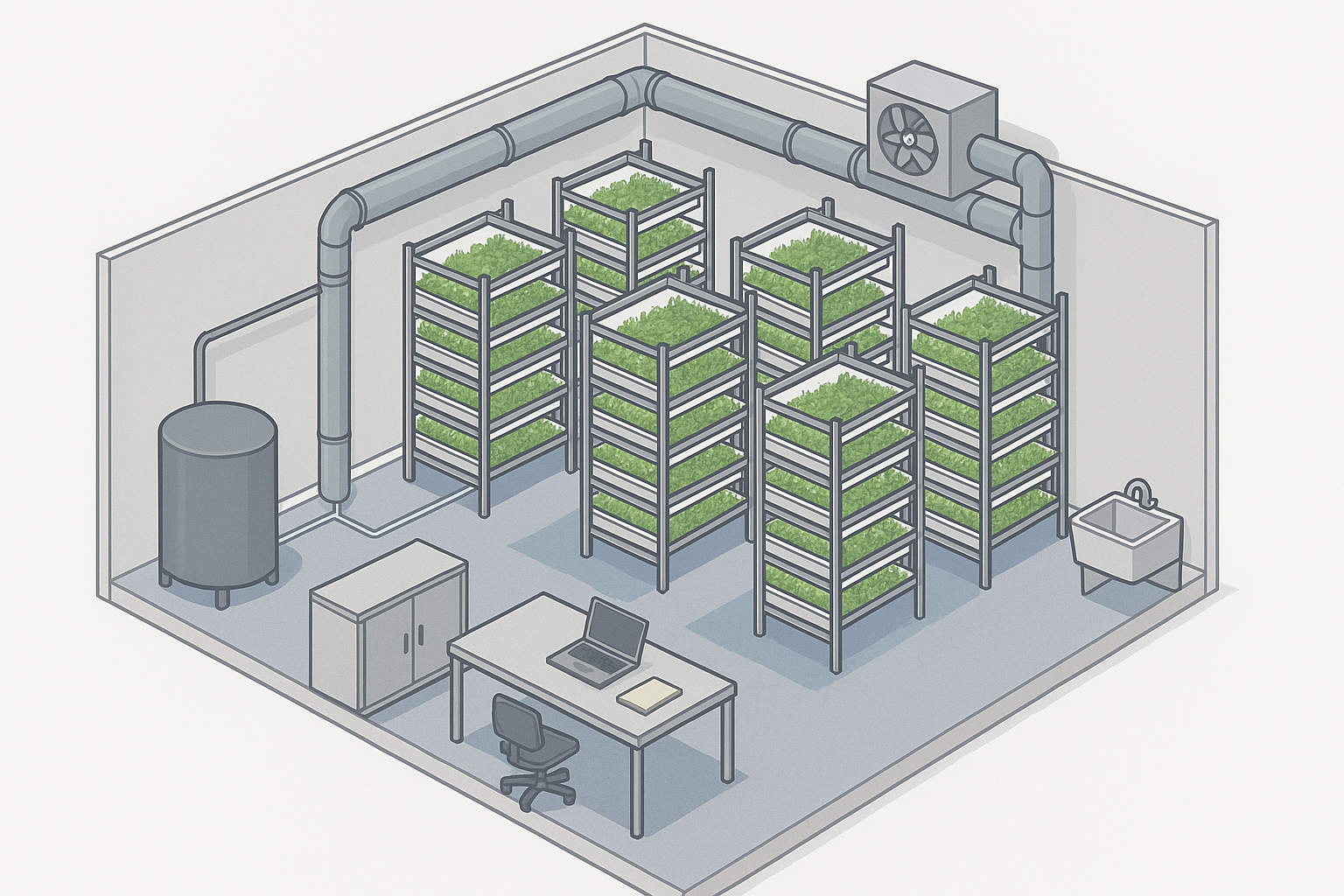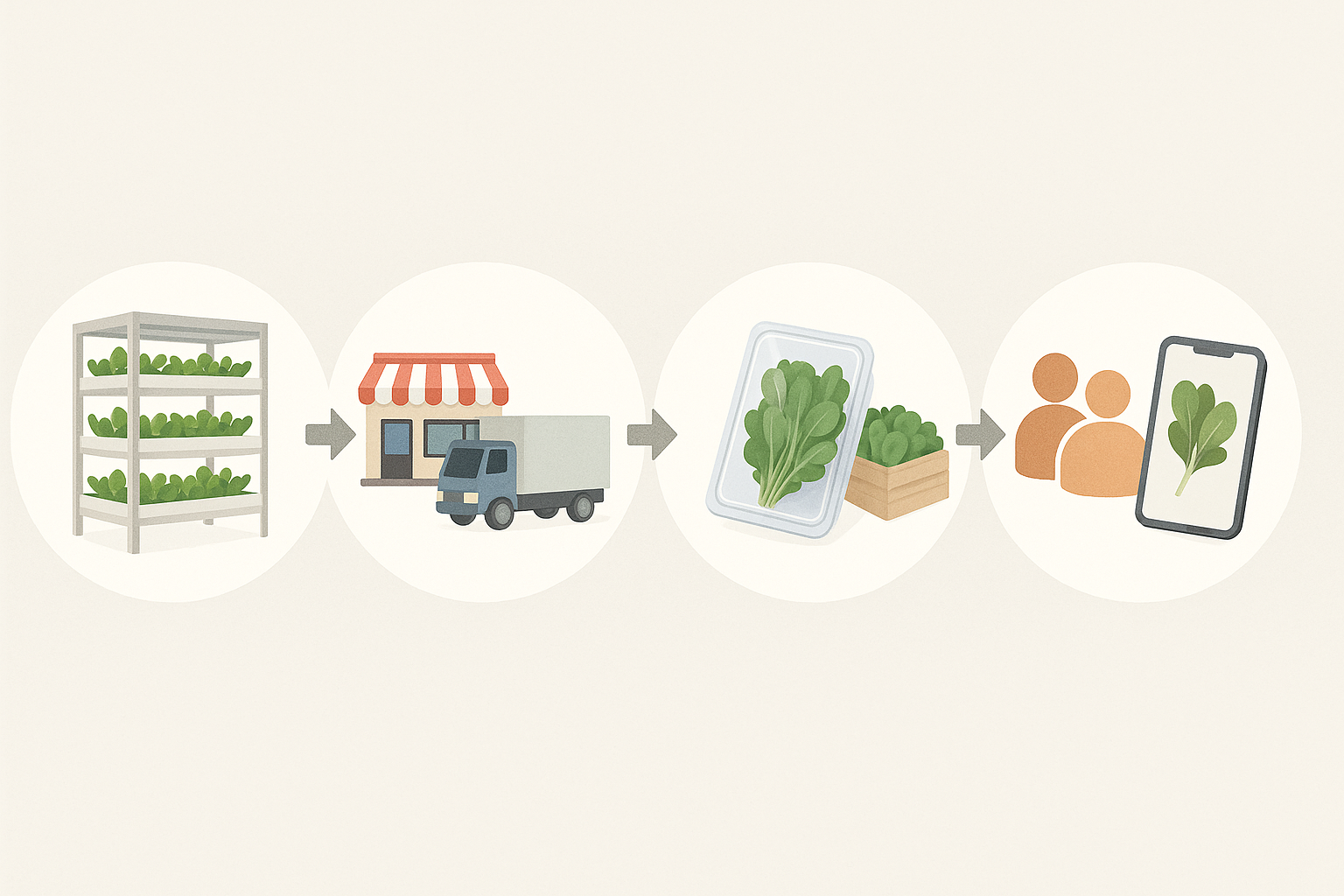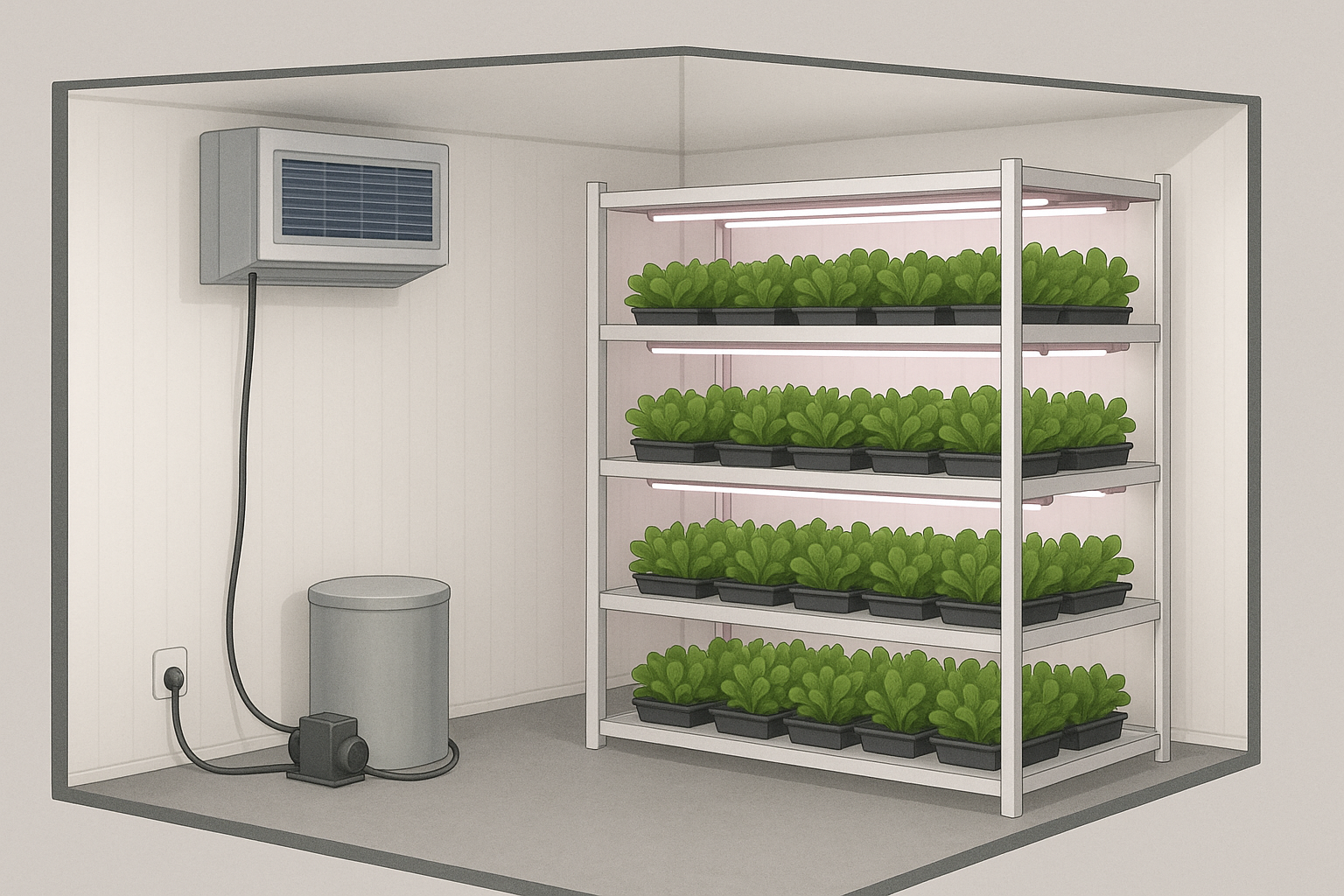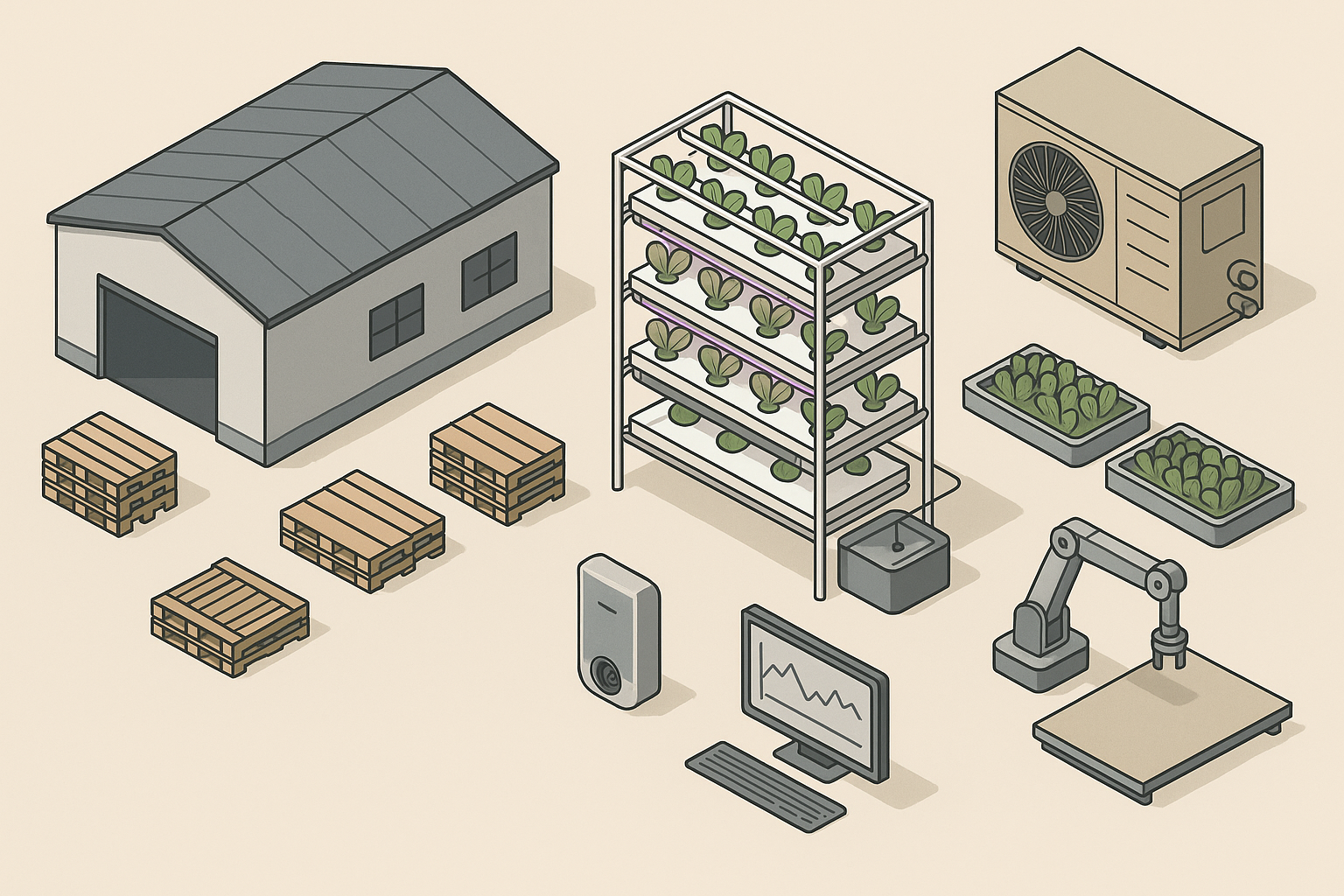
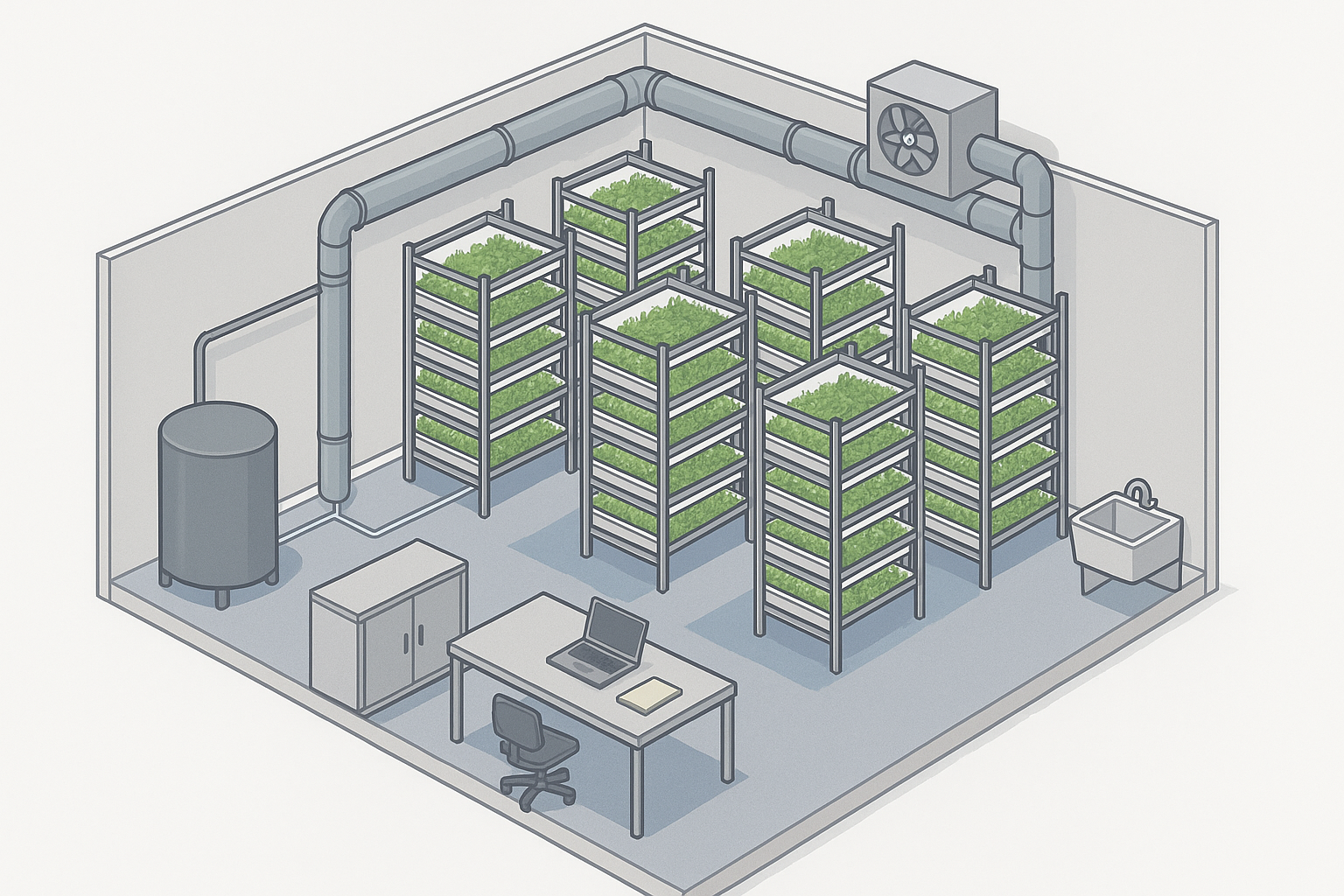
Designing an indoor plant production system is as much about spatial strategy as it is about technology. An optimal vertical farm layout will govern the efficiency, productivity, and sustainability of the entire enterprise. Whether established in a warehouse, a retrofitted barn, or a purpose-built facility, the way space is organised determines how well crops grow, how easily staff can operate, and how effectively resources such as light, air, and water are used. This introduction outlines the key principles behind creating a functional and future-proof growing environment.
Why Layout Design Matters
Indoor farming is distinguished by the degree of control it affords over environmental factors: temperature, humidity, carbon dioxide, light intensity, and nutrient delivery. Yet the promise of this control can only be realised when the farm is designed with flow and integration in mind. Poorly configured spaces can lead to wasted energy, uneven crop performance, and operational bottlenecks. By contrast, well-planned layouts reduce labour costs, improve yields, and enable scaling.
For example, a warehouse farm with racking arranged in tight parallel rows may maximise plant density, but if aisles are too narrow, access for maintenance, harvesting, and cleaning becomes inefficient. Similarly, if HVAC systems are not positioned to ensure even air distribution across stacked levels, microclimates can develop that favour pests or diseases. Layout, therefore, is not only a logistical matter; it is central to biological and economic outcomes.
Principles of Spatial Planning
The starting point for optimal vertical farm layout design is understanding the interplay between biological needs and operational processes. Plants require reliable light, stable root-zone conditions, and consistent airflow. People require safe, ergonomic access to crops and equipment. The infrastructure requires space for water storage, nutrient tanks, pumps, ducting, and monitoring systems. A layout that balances these elements avoids the common pitfalls of over-optimisation in one area at the expense of another.
The principle of zoning is often applied in commercial indoor farms. A facility may be divided into areas for propagation, main production, harvesting, packaging, and storage. Separating clean and dirty processes reduces cross-contamination risks, while allowing staff to move efficiently between tasks. Digital tools such as computer-aided design (CAD) models and, increasingly, digital twins are being used to simulate airflow, energy flows, and operational movement before a facility is even built. This forward planning reduces costly mistakes at the construction stage.
Verticality and Access
Stacking crops is the defining feature of vertical farming. The number of tiers depends on ceiling height, light strategy, and crop type. Leafy greens, herbs, and microgreens tolerate dense stacking because of their compact morphology, whereas fruiting crops such as tomatoes or strawberries require more space. Designing the vertical layout is not simply a question of maximising shelf numbers: each tier must be accessible for inspection and harvesting, and lighting systems must be configured to avoid shading and overheating.
Automated systems such as mobile racks, robotic gantries, and conveyor trays can extend vertical efficiency but introduce their own spatial requirements. Designers must consider turning radii for robotic units, safe clearance for moving shelves, and access for human intervention when machines fail. The most resilient farms combine automation with pragmatic manual access routes.
Airflow, Water, and Energy
The physical layout of a farm strongly influences environmental uniformity. HVAC systems require unobstructed circulation paths to maintain consistent temperature and humidity. Similarly, irrigation and fertigation systems must be designed with pressure equalisation and redundancy in mind, ensuring that water and nutrients reach every plant without leakage or imbalance.
Energy use is particularly sensitive to layout. LED lighting must be arranged to deliver uniform photosynthetic photon flux density (PPFD) across the crop canopy, with spacing and reflectivity taken into account. Inefficient layouts can double electricity consumption for the same yield. Integrating reflective wall materials, optimising shelf spacing, and placing HVAC inlets strategically can reduce wasted energy.
Safety, Hygiene, and Workflow
Beyond efficiency, layout design plays a critical role in maintaining biosecurity. Smooth staff workflows limit unnecessary cross-movement between propagation and harvest zones. Clearly designated entry points with handwashing and clothing changes reduce the risk of pathogens. Floors must be accessible for cleaning, and drainage must prevent water pooling that could harbour bacteria.
Safety considerations also extend to equipment access. High racks require safe platforms or lifts for staff; electrical systems must be isolated from irrigation lines; and escape routes must remain unobstructed. A well-designed farm integrates these safety protocols without compromising production density.
Novel Rack Configurations
Moveable or rolling racks are often introduced to maximise the use of available space by eliminating fixed aisles. These systems allow racks to be shifted laterally, so that access is provided only where it is needed at a given time. The benefits are clear: higher planting density, reduced wasted floor area, and greater flexibility in reconfiguring the growing space. However, they also introduce challenges. The mechanisms add capital cost and ongoing maintenance requirements, and in the event of a breakdown, access to crops can be compromised. Safety considerations become more complex, since staff must work with moving structures in confined areas. Additionally, this approach may require some inventive solutions for incorporating infrastructure such as electrical or irrigation lines, as these will need to be able to extend/move with the racks. Designing a farm around rolling racks therefore demands careful risk assessment, considerate engineering, and contingency planning to ensure that the gains in space efficiency are not offset by operational vulnerabilities.
Looking Ahead
Optimal vertical farm layout design is not a fixed formula but a set of principles that evolve with technology and crop choices. The increasing use of sensors and data-driven optimisation means farms can adapt layouts dynamically, shifting racks or airflows in response to measured performance. The goal is not simply to fit plants into a building, but to create a spatial ecosystem where biology, engineering, and human activity work in harmony.
As the sector matures, comparative research and published case studies are helping to identify best practice. Academic work in controlled environment agriculture, supported by institutions such as Wageningen University, University of Arizona, and UK-based research bodies, is building an evidence base that links spatial design with measurable outcomes in yield, labour efficiency, and energy use. For growers, investors, and policy-makers, engaging with these principles early in the planning process is essential for building farms that are resilient, productive, and sustainable.