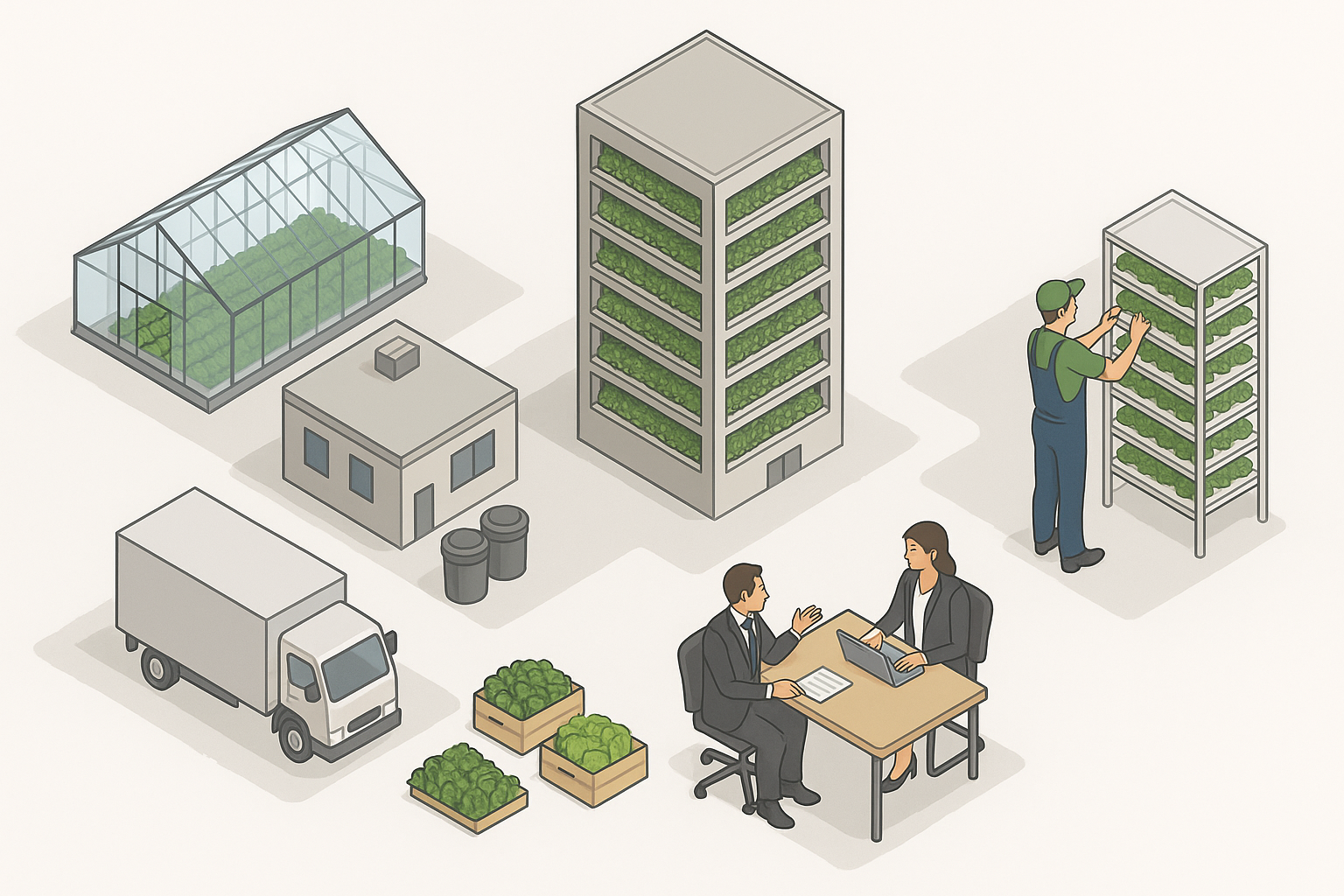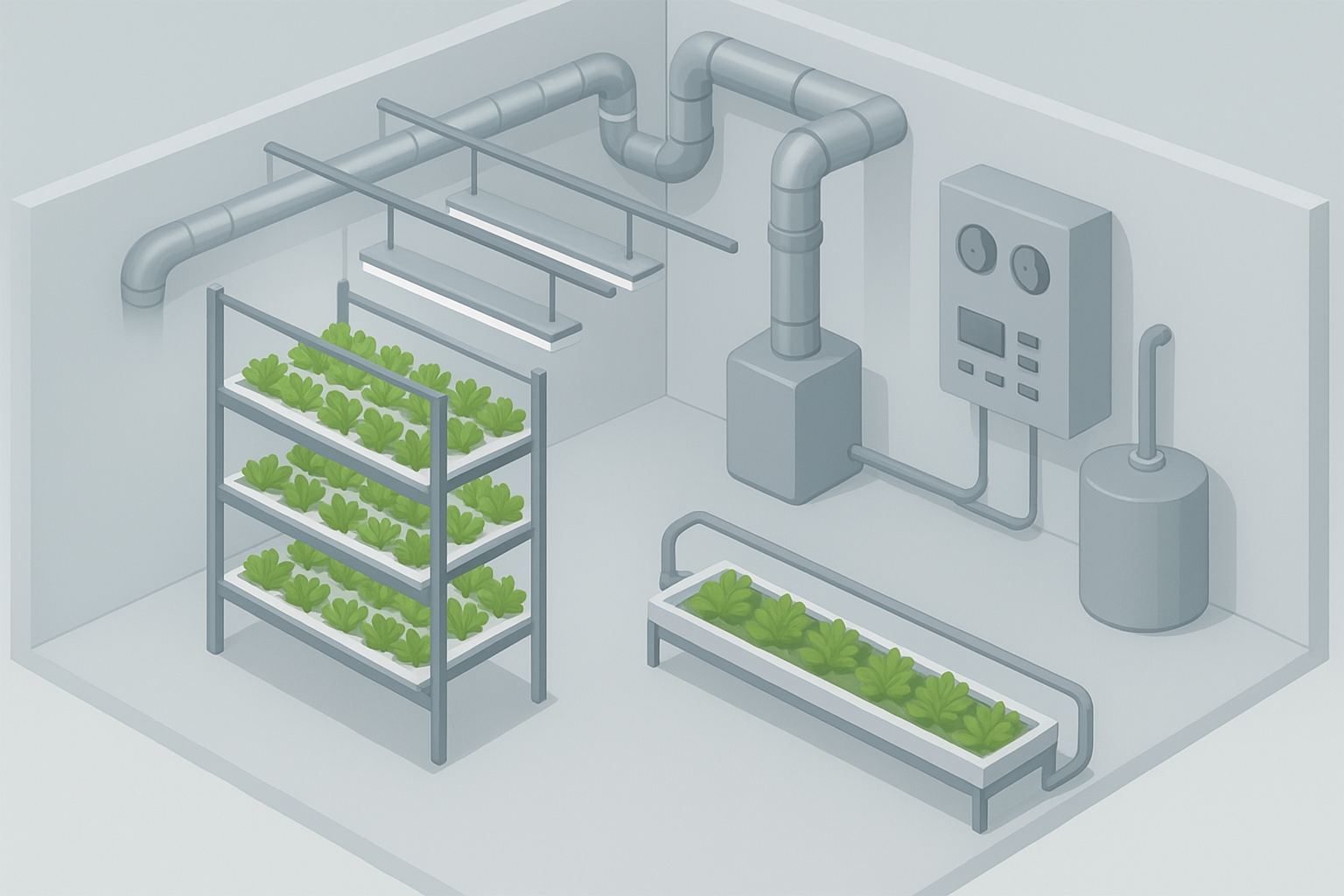
Regulatory considerations for indoor food production systems are central to the successful development of Controlled Environment Agriculture (CEA) and vertical farming. These approaches to food production are increasingly recognised for their potential to contribute to sustainable supply chains, urban resilience, and diversification of agricultural production. However, they do not exist in a regulatory vacuum. Operators must navigate planning frameworks, food safety legislation, environmental regulations, and trade standards in order to establish and manage compliant facilities. This introduction provides an overview of the regulatory landscape in the United Kingdom and European context, with wider international relevance, to illustrate why regulatory literacy is as important as technological and horticultural expertise.
Planning and Land Use Regulation
The physical location of indoor farms is often one of the first challenges that new entrants face. Planning permission may be required when agricultural activity is undertaken within existing buildings, converted warehouses, and will almost certainly be required for the establishment of purpose-built facilities. In the UK, local planning authorities apply policies set out in the National Planning Policy Framework (England) or Planning Policy Wales, with additional considerations under the Town and Country Planning Act. Indoor food production systems may not always fit neatly into established categories of "agricultural" or "industrial" use, which can create ambiguities. For instance, a vertical farm in a city-centre warehouse might be assessed differently from a glasshouse complex on peri-urban land. Issues of traffic, waste management, visual impact, and compatibility with surrounding uses all fall under planning scrutiny. Beyond local permissions, land use classification may affect eligibility for agricultural rates relief, subsidies, or inclusion in agri-environment schemes, so engaging with the relevant authority early in the design phase is essential.
Food Safety and Hygiene
Indoor food production systems must adhere to the same food safety requirements as conventional agriculture, although the indoor context can provide both advantages and challenges. In the UK, the Food Standards Agency (FSA) oversees compliance with food safety legislation derived from retained EU law, including Regulation (EC) No 852/2004 on the hygiene of foodstuffs. Farms producing ready-to-eat crops such as leafy greens must implement Hazard Analysis and Critical Control Point (HACCP) systems, ensuring that microbial risks are managed effectively from seed to harvest.
Although vertical farms can reduce contamination risks by excluding soil, pests, and uncontrolled water sources, operators remain responsible for monitoring microbial quality of water, nutrient solutions, and contact surfaces. Furthermore, if crops are sold into retail supply chains, compliance with third-party assurance schemes such as Red Tractor, SALSA, or GLOBALG.A.P. may be required. These schemes often exceed statutory requirements, yet they are necessary to demonstrate due diligence and to secure market access.
Environmental Regulation
While indoor farms are controlled systems, they are still subject to environmental regulations that govern energy use, water discharge, and waste management. In the UK, the Environment Agency (England), Natural Resources Wales, and the Scottish Environment Protection Agency play central roles in enforcing environmental law. Discharge of nutrient-rich water, for example, may require environmental permits under the Environmental Permitting Regulations 2016.
Waste streams, including plant matter, packaging, and used substrates, fall under the Waste Framework Directive, with obligations to ensure proper classification and disposal. At the same time, indoor farms may benefit from exemptions or simplified permits if they recycle organic waste or integrate circular economy practices such as composting or anaerobic digestion. Energy use is another point of scrutiny: although CEA systems can be efficient in terms of land and water, they are often energy intensive. Regulations governing carbon reporting, renewable energy integration, and building energy performance (including Minimum Energy Efficiency Standards for commercial property) are increasingly relevant to operators.
Employment, Health and Safety
Like other food production businesses, indoor farms must comply with workplace health and safety legislation. In the UK, this falls under the Health and Safety at Work Act 1974 and associated regulations. Risks particular to indoor farms include working at height (when maintaining vertical racks), exposure to artificial lighting systems, and handling concentrated nutrient solutions and potentially other production-related chemicals. Employers are required to carry out risk assessments, provide training, and ensure that safe systems of work are in place.
In addition, the employment status of workers can affect compliance with minimum wages, working time regulations, and rights to training or protective equipment. Because indoor farms often recruit from both agricultural and urban labour pools, managers must be particularly attentive to their statutory duties and the expectations of a diverse workforce.
Trade Standards and Labelling
Indoor farms that sell produce directly to consumers or through wholesalers must also comply with labelling regulations. In the UK, the retained EU legislation on food information to consumers (Regulation (EU) No 1169/2011) sets requirements for the display of product origin, nutritional content, and allergen information. While crops such as lettuce or basil are typically straightforward to label, any value-added products (e.g. bagged salads, prepared herbs) carry additional obligations.
International trade adds further complexity. Exporting to the EU requires compliance with plant health certification and customs documentation – though this may be less pertinent for FMCG producers with localised supply chains. In other markets, such as the Gulf States or Asia, halal certification, phytosanitary standards, and differing packaging laws must also be considered. These frameworks can shape the commercial opportunities available to indoor food production systems and highlight the need for regulatory awareness from the earliest stage of business planning.
Why Regulatory Considerations Matter
The regulatory landscape for indoor food production systems is still evolving, and in some areas it lacks clarity. This presents both challenges and opportunities. On one hand, uncertainty can deter investment and complicate project delivery. On the other, there is scope for industry participants to engage with regulators, inform policy development, and help shape frameworks that reflect the distinct characteristics of CEA and vertical farming.
For growers and investors alike, regulatory compliance is not merely a legal obligation: it is a determinant of operational resilience, reputation, and market access. Facilities that proactively address food safety, environmental standards, and planning requirements are more likely to secure supply contracts, access financial support, and build trust with consumers. Conversely, neglecting regulatory considerations can result in enforcement action, reputational damage, and lost opportunities.
Conclusion
Regulatory considerations for indoor food production systems extend across multiple domains: planning, food safety, environmental law, health and safety, and trade standards. Each of these areas has direct implications for the viability and sustainability of vertical farming ventures. While the specifics of regulation differ by jurisdiction, the underlying principle is universal: indoor food producers must navigate a complex but essential framework in order to succeed.
In the UK and beyond, regulators are beginning to recognise the distinct role of CEA in modern food systems. This creates an important moment for growers, researchers, and policy-makers to collaborate in developing coherent standards that balance innovation with public interest. Understanding and engaging with the regulatory context is therefore not an optional exercise but a foundational aspect of building a credible and sustainable indoor farm enterprise.