Understanding indoor farm start-up costs is a central concern for anyone considering entry into Controlled Environment Agriculture (CEA). Whether a project is intended as a small urban enterprise supplying local restaurants or a medium-scale facility aiming to serve retail and wholesale markets, the capital requirements will be significant and varied. A clear grasp of these costs helps potential growers, investors, and policy-makers judge the feasibility of new ventures and identify the balance between investment, operational efficiency, and potential return.
Why Indoor Farm Costs Matter
Indoor farming systems rely on carefully managed environments to achieve consistent crop production irrespective of weather or season. This reliability comes with an initial financial burden: equipment, buildings, and technology all require investment before the first harvest is realised. Indoor farm start-up costs are not uniform, since they are shaped by the scale of the facility, the type of growing system used, the level of automation chosen, and the local context of energy, labour, and property markets. By considering examples at different scales, it is possible to illustrate the financial landscape new entrants are likely to encounter.
The Nature of Capital Investment
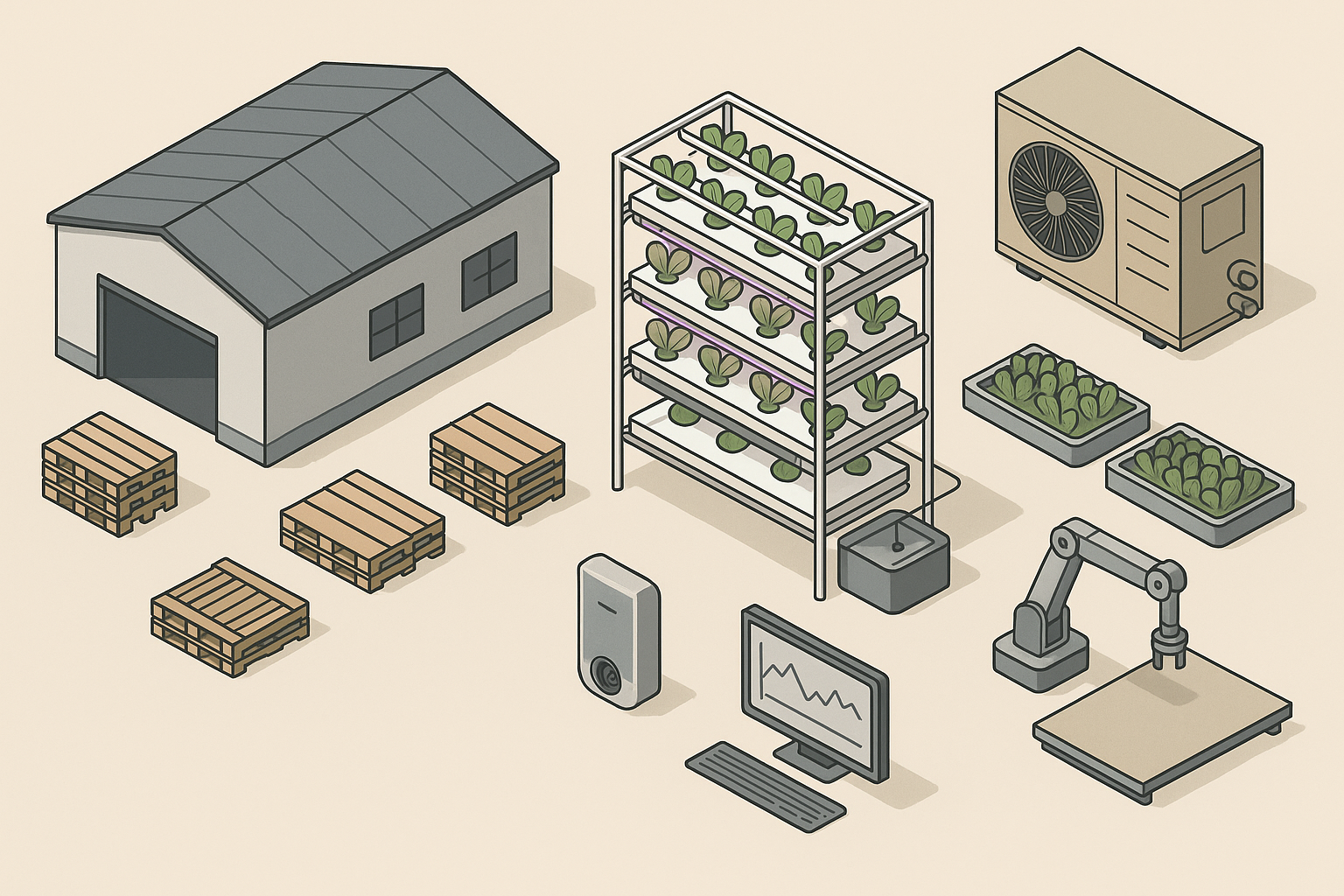
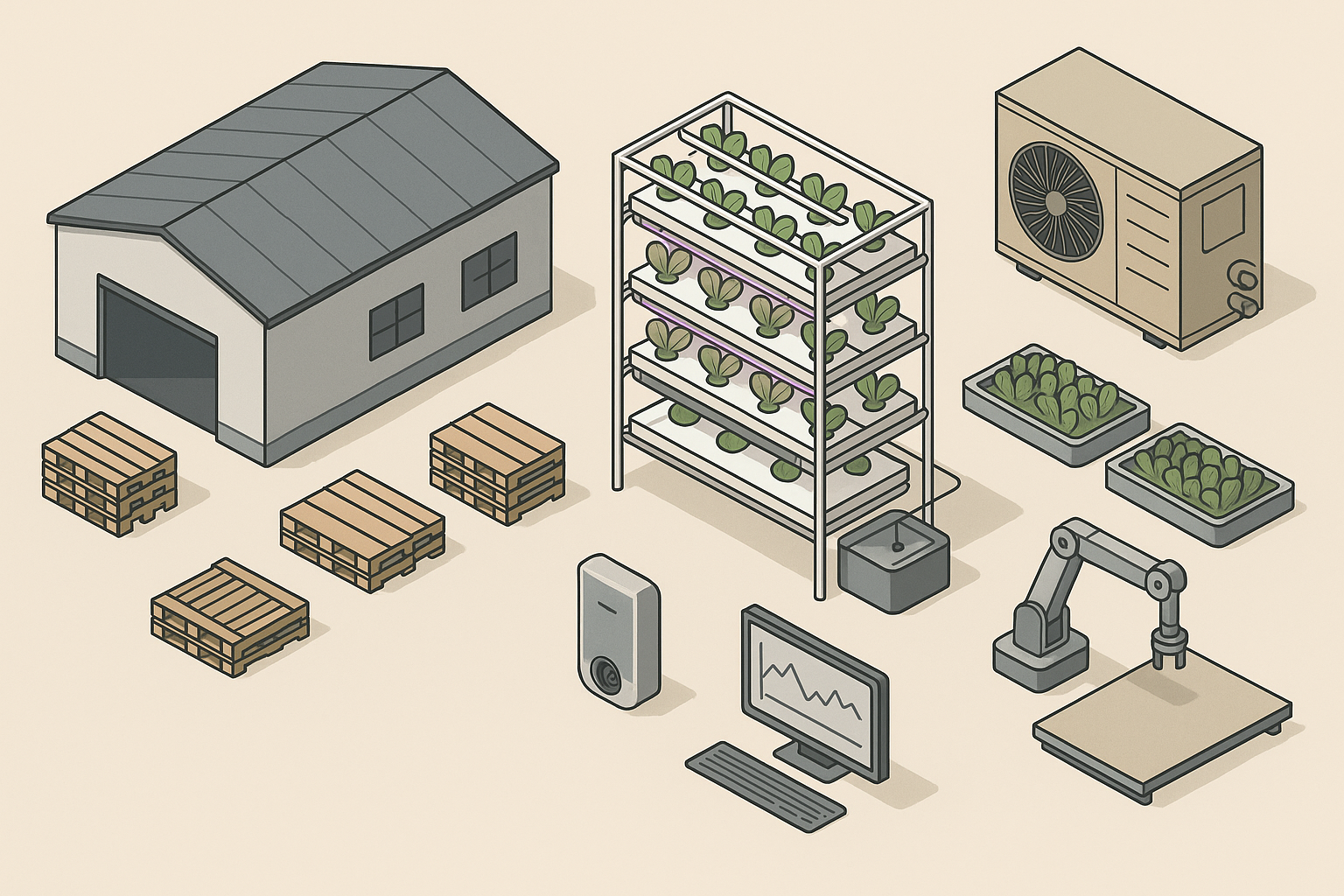
Start-up costs typically fall into three categories: the physical structure, the growing infrastructure, and the enabling technologies. Physical structure refers to the building itself, whether a converted warehouse, a repurposed shipping container, or a bespoke facility. Growing infrastructure includes racks, trays, lighting, irrigation, and climate control systems. Enabling technologies comprise monitoring sensors, data management software, and automation equipment. Each of these elements can vary in specification and quality, and together they establish the baseline capital expenditure required to make an indoor farm operational.
For example, a basic hydroponic installation in a small urban warehouse might require relatively low-cost racking and modest lighting arrays, whereas a medium-scale vertical farm producing leafy greens for supermarkets would likely demand high-density multi-tier systems, sophisticated LEDs, automated fertigation, and robust HVAC (heating, ventilation, and air conditioning) systems.
Small-Scale Start-up Examples
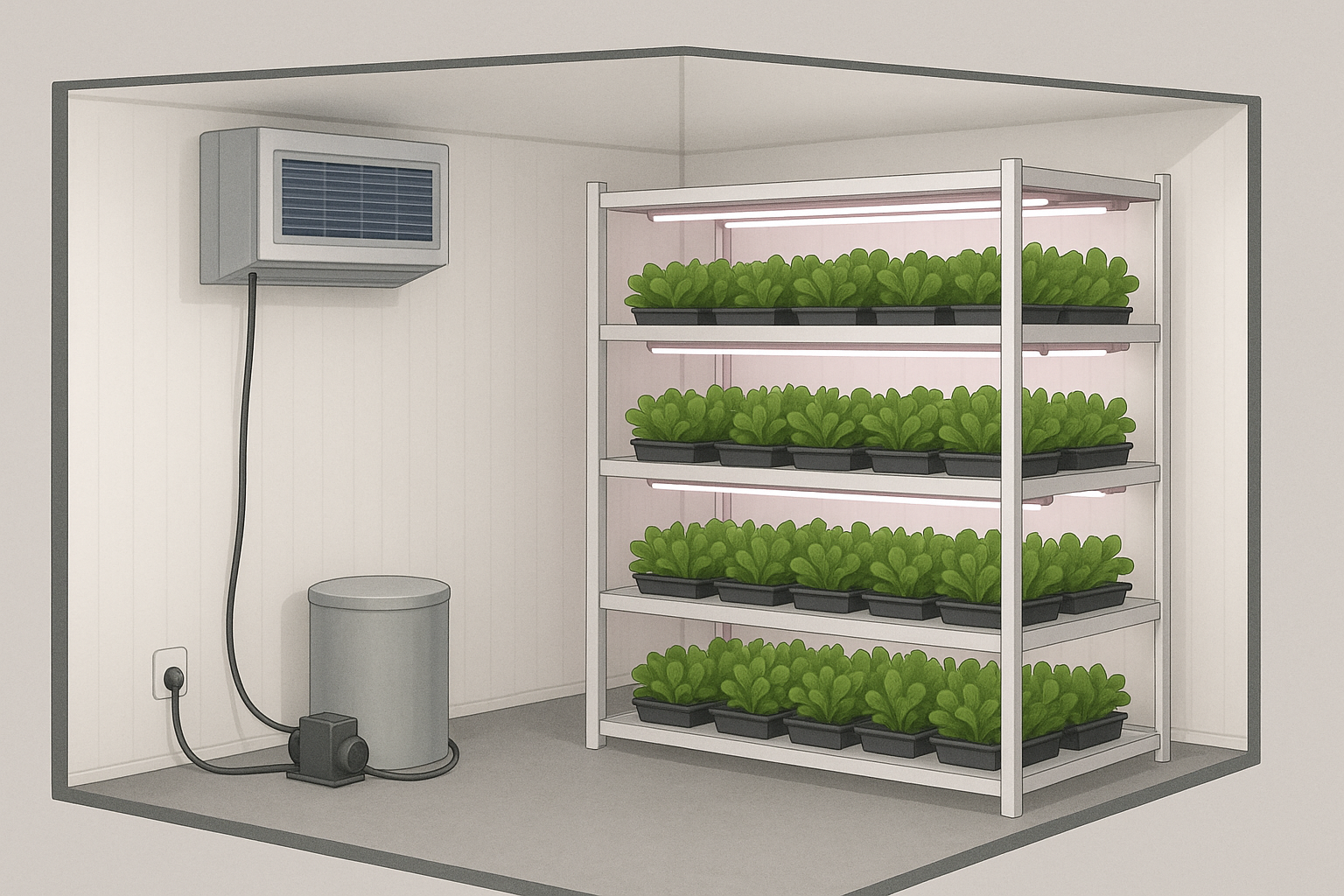
At the smaller end of the spectrum, an indoor farm designed to occupy a few hundred square metres could serve niche markets such as high-end restaurants, local food shops, or subscription-based produce boxes. In such cases, start-up costs are lower, but still substantial when compared to conventional soil-based horticulture. Indicative costs may include building fit-out, lighting rigs, a climate control unit, and simple hydroponic channels. A modest project of this scale could require anywhere between £10,000 to £100,000, depending on the level of technology adopted. If second-hand equipment and manual labour are prioritised over automation, costs can be kept closer to the lower end. Of course, it is possible to begin growing on a small-scale much more economically, by limiting the amount of infrastructure required for environmental control, but this in turn will limit the potential for full factory style solutions to be employed. Nevertheless, this approach will allow many fledgling business to get started and build early supply chains before committing to larger investment.
Medium-Scale Examples
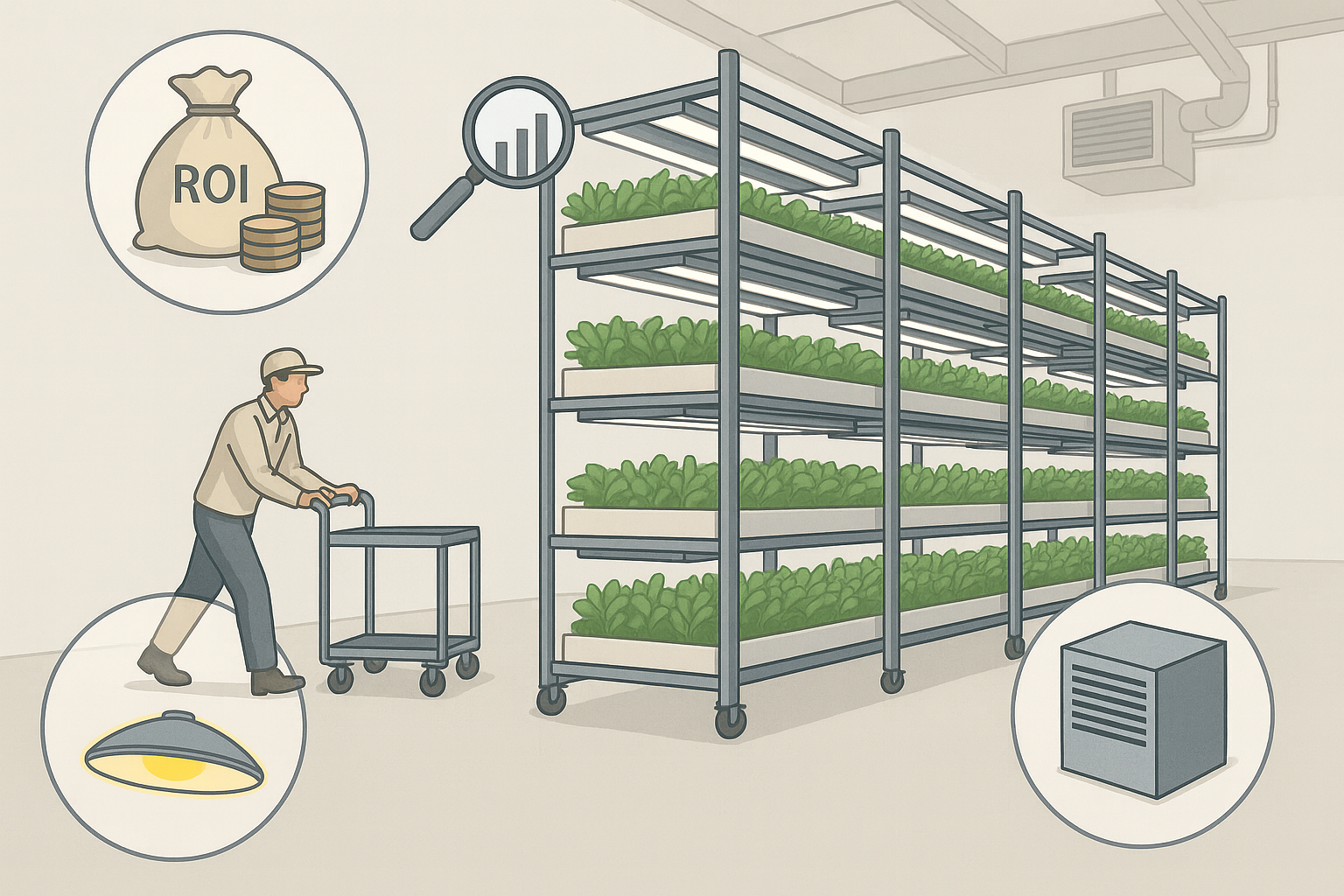
Scaling up to medium-sized facilities, where multiple tiers of crops are grown within purpose-built environments, costs rise sharply. A facility of 1,000–2,000 square metres, designed for continuous production of salads, herbs, or strawberries, might easily require an initial investment of £500,000 to over £2 million. Here the majority of expenditure is tied to environmental systems: LED lighting alone can account for a significant portion of capital outlay, while HVAC systems capable of managing humidity and temperature at scale are essential. Sophisticated monitoring and automation, such as automated nutrient delivery or robotic harvesting, can further increase costs, but they are often necessary to reduce labour intensity and ensure consistent output.
Why Costs Differ by Context
It is important to note that indoor farm start-up costs are shaped not only by the technical choices made, but also by wider contextual factors. Energy prices in the UK, for example, are relatively high compared with some countries, which makes efficient lighting and climate systems crucial. Property costs differ widely between urban centres and rural industrial estates, influencing the affordability of different scales of operation. Policy frameworks, grants, and investor appetite also affect how much risk can be absorbed and what technologies are considered justifiable.
Balancing Start-up and Operational Expenditure
A focus solely on initial costs can be misleading if operational expenditure is ignored. For instance, choosing lower-cost lighting or ventilation might reduce start-up investment, but this can result in higher electricity use over time. Similarly, under-investing in environmental control may compromise yields, leading to reduced revenue potential. Many successful models treat start-up costs and operational costs as interlinked: a decision to invest more at the outset may create a more efficient system that generates better returns in the long run.
The Role of Examples in Planning
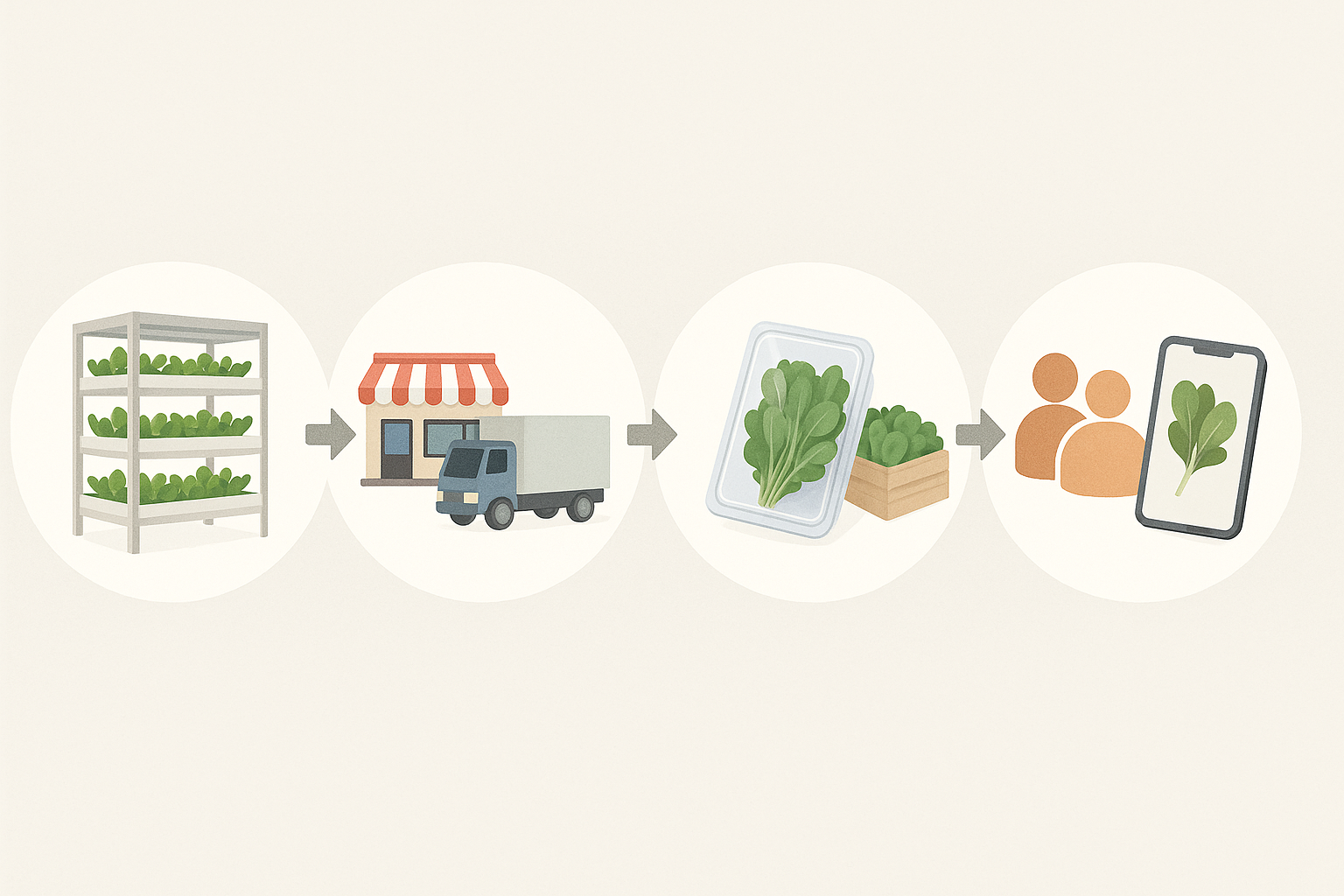
Examining specific examples of indoor farm start-up costs serves two main purposes. First, it provides a tangible sense of the scale of investment required, dispelling the notion that urban or vertical farms can be established with minimal outlay. Second, it highlights the diversity of pathways available: one grower might pursue a low-cost, hands-on approach suited to direct-to-consumer sales, while another might pursue high capital investment to achieve economies of scale and consistent supply to retailers. Both are valid, but they represent different strategies with different cost structures.
Conclusion
Indoor farm start-up costs are central to the viability of CEA ventures. They range from tens of thousands of pounds for small-scale operations serving niche markets to several million pounds for medium-sized enterprises designed for consistent, large-volume output. Understanding these costs is vital for growers, investors, and policy-makers seeking to evaluate opportunities in this evolving sector. Clear examples and transparent analysis help reduce uncertainty, enabling informed decisions and realistic expectations about what it takes to establish a functioning indoor farm.