Introduction: why start small
The idea of a minimum viable product vertical farm system is rooted in the recognition that the barriers to entry in Controlled Environment Agriculture (CEA) can be significant. Capital requirements, technical expertise, and operational risks are often cited as reasons why new entrants hesitate. An MVP approach offers a pragmatic alternative: instead of aiming for a fully scaled commercial facility from day one, the grower builds a smaller, functional unit designed to prove both concept and process. This scaled-down model provides a way to test assumptions about crop performance, technology integration, workflow, and market demand before committing to higher levels of investment.
Defining the MVP in an agricultural context
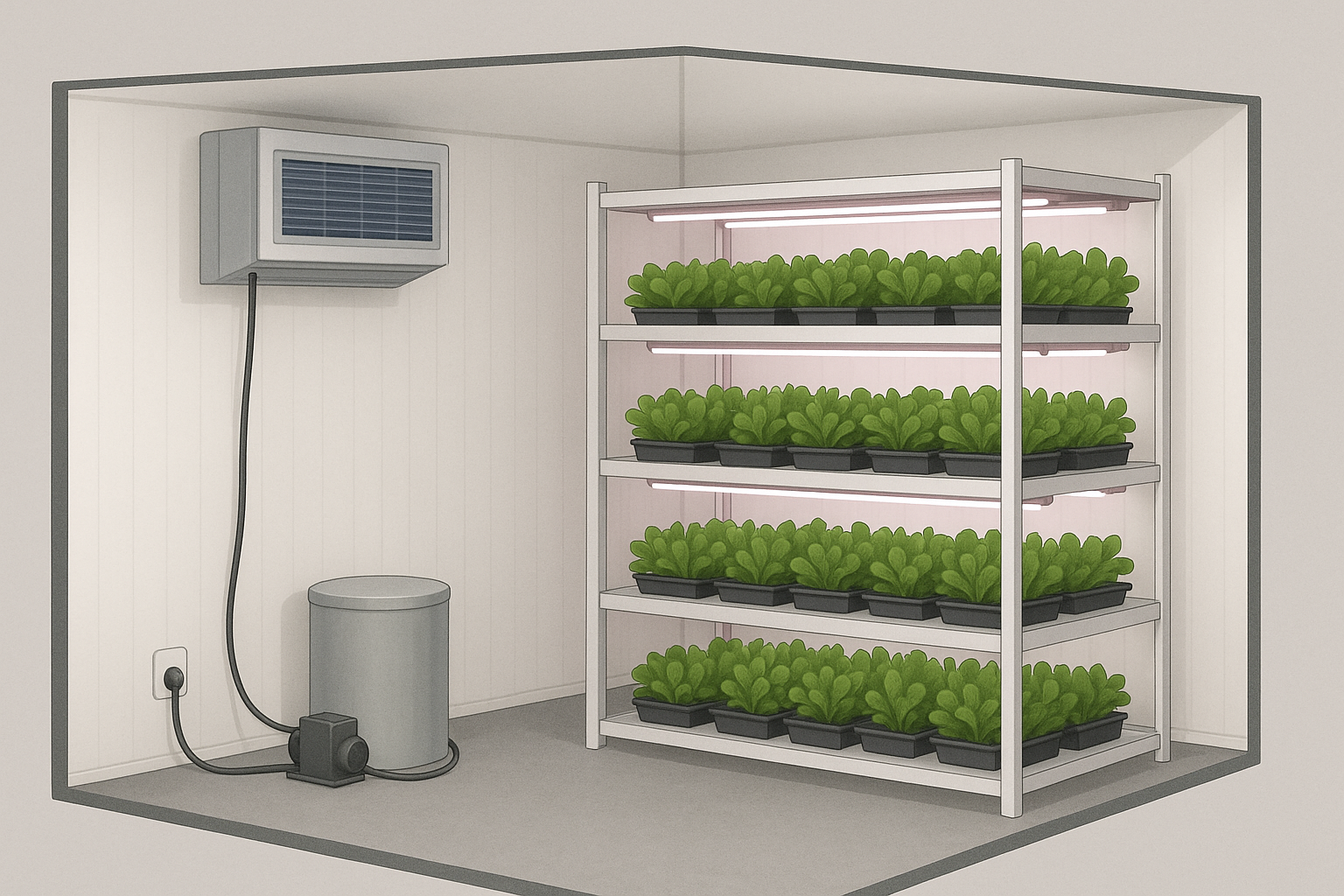
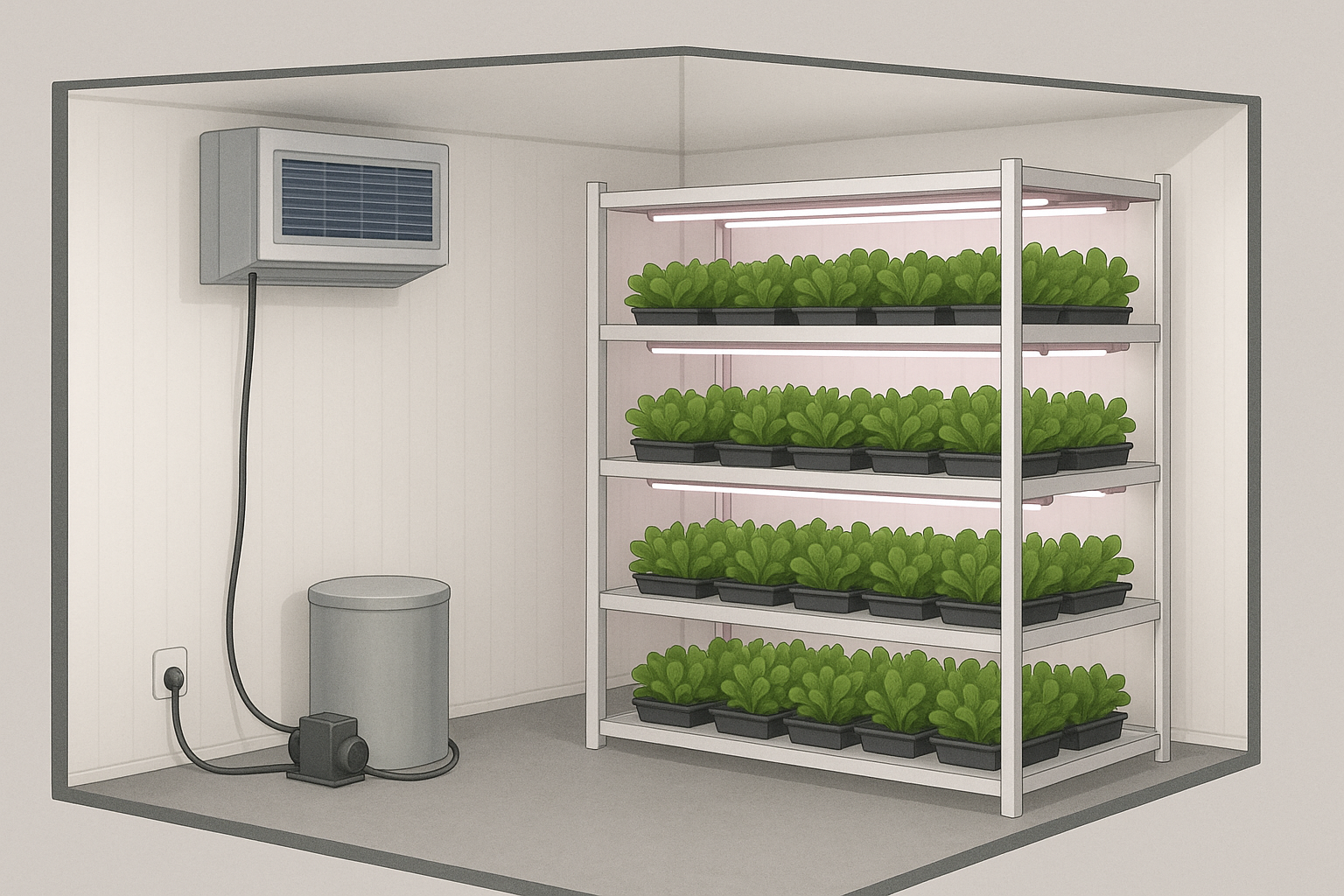
The term "minimum viable product" originates from the world of software development, where it describes an early version of a product built with just enough features to attract early users and validate learning. Applied to agriculture, and particularly vertical farming, the idea translates into creating a controlled growing space that demonstrates technical feasibility, crop quality, and operational routines. The farm is not intended to be optimised for maximum yield or profit at the outset; rather, it provides a real-world learning environment. A typical minimum viable product vertical farm system might consist of a single insulated container, a few racks within a small warehouse, or a converted room equipped with lighting, irrigation, and climate control.
Why an MVP approach matters
The principal value of an MVP farm is that it reduces uncertainty. Every growing environment is different, influenced by local climate, energy costs, labour availability, and market expectations. A small-scale system allows growers to test lighting regimes, nutrient formulations, and crop varieties in their own context. For policy-makers and investors, the MVP approach demonstrates real outcomes rather than projections, giving greater confidence in the viability of future expansion. It also lowers financial risk: if the concept does not deliver as hoped, the scale of the sunk costs is limited. Conversely, if the MVP performs well, the knowledge gained can inform the design of a larger facility with far greater precision.
Designing an MVP farm: balancing simplicity and functionality
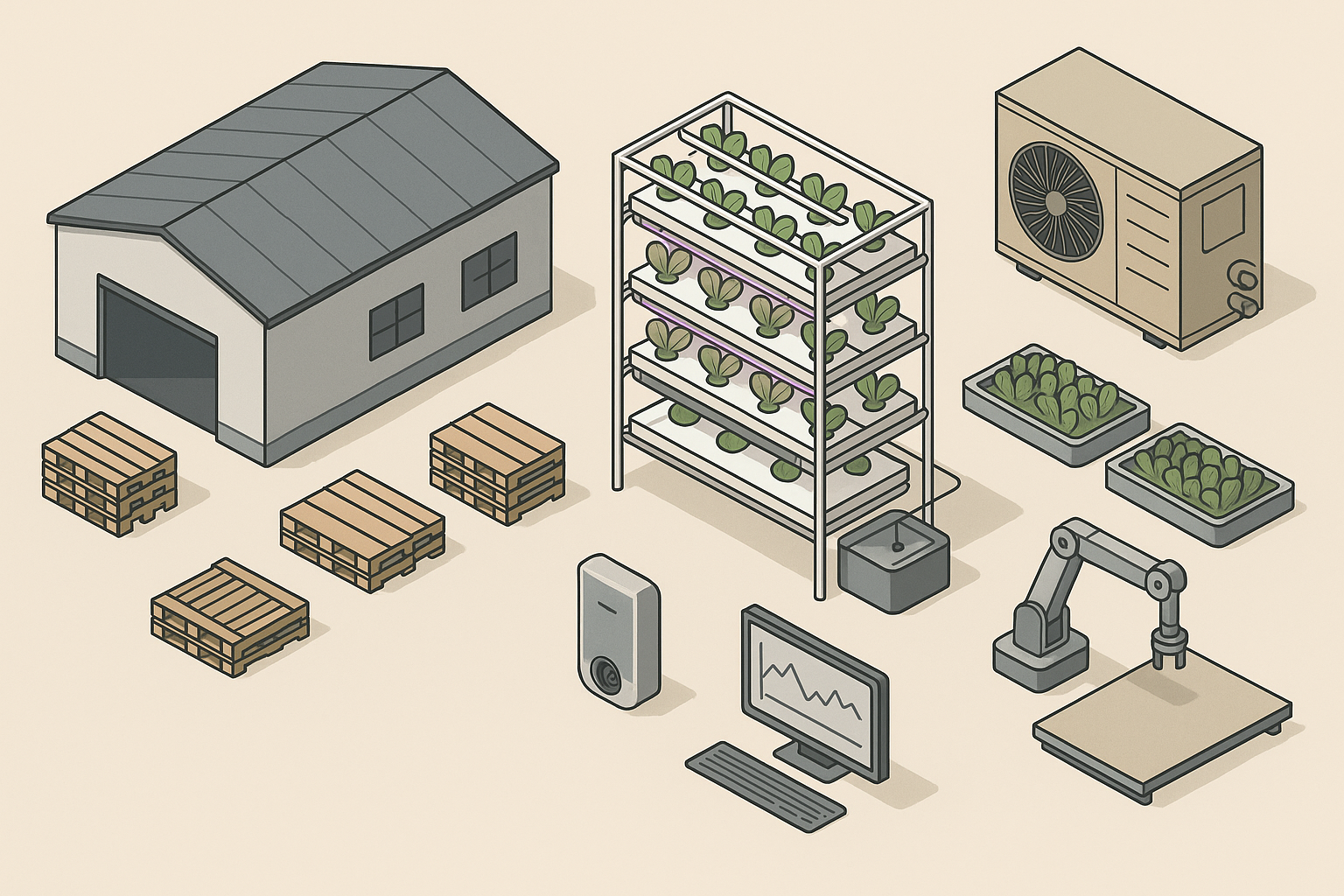
An effective minimum viable product vertical farm system needs to strike a balance between being simple enough to build quickly and affordable enough to de-risk the venture, while still complex enough to provide meaningful insights. This typically involves choosing modular components that can be adapted or scaled later. A few tiers of hydroponic channels, LED lighting units with adjustable spectra, and basic environmental sensors may suffice to begin with. Ventilation, humidity control, and energy monitoring are often included, since these parameters strongly influence crop outcomes and operational costs. The goal is not to design the perfect farm from the start but to create a platform where real data and experience can be gathered.
Learning from practice: crops, workflow, and markets
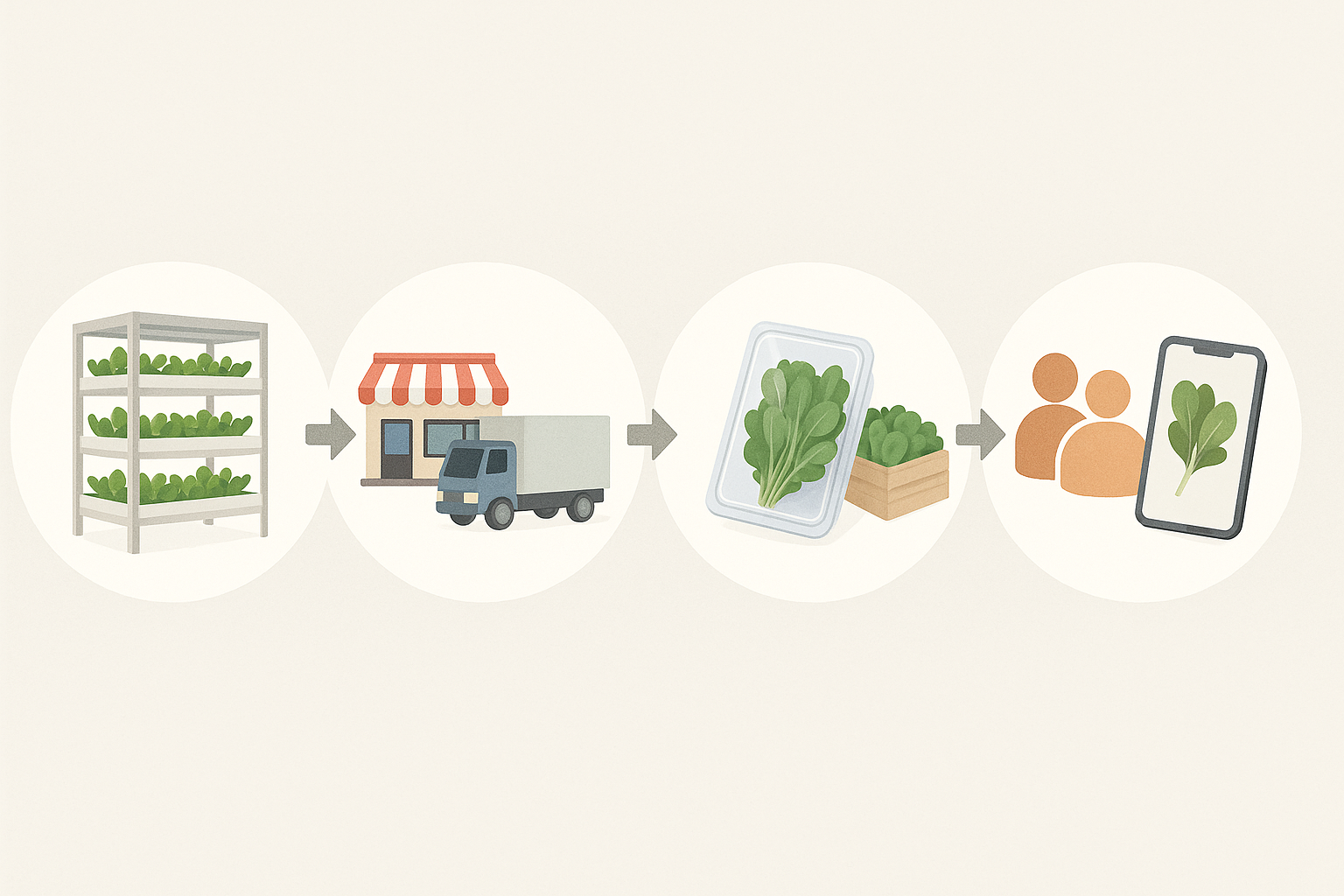
Running an MVP farm is as much about testing operational routines as it is about growing crops. Harvesting, seeding, and cleaning cycles need to be rehearsed at manageable scale. Labour input per unit yield can be measured, providing essential benchmarks for later scaling. The selection of crops is also significant. Many growers choose fast-growing salad greens or herbs because these deliver results quickly and provide early market feedback. Others may trial strawberries, speciality herbs, or niche crops to test potential premium markets. Selling a modest volume of produce to local restaurants, farm shops, or direct consumers can provide early evidence of market acceptance and willingness to pay.
Financial considerations and risk management
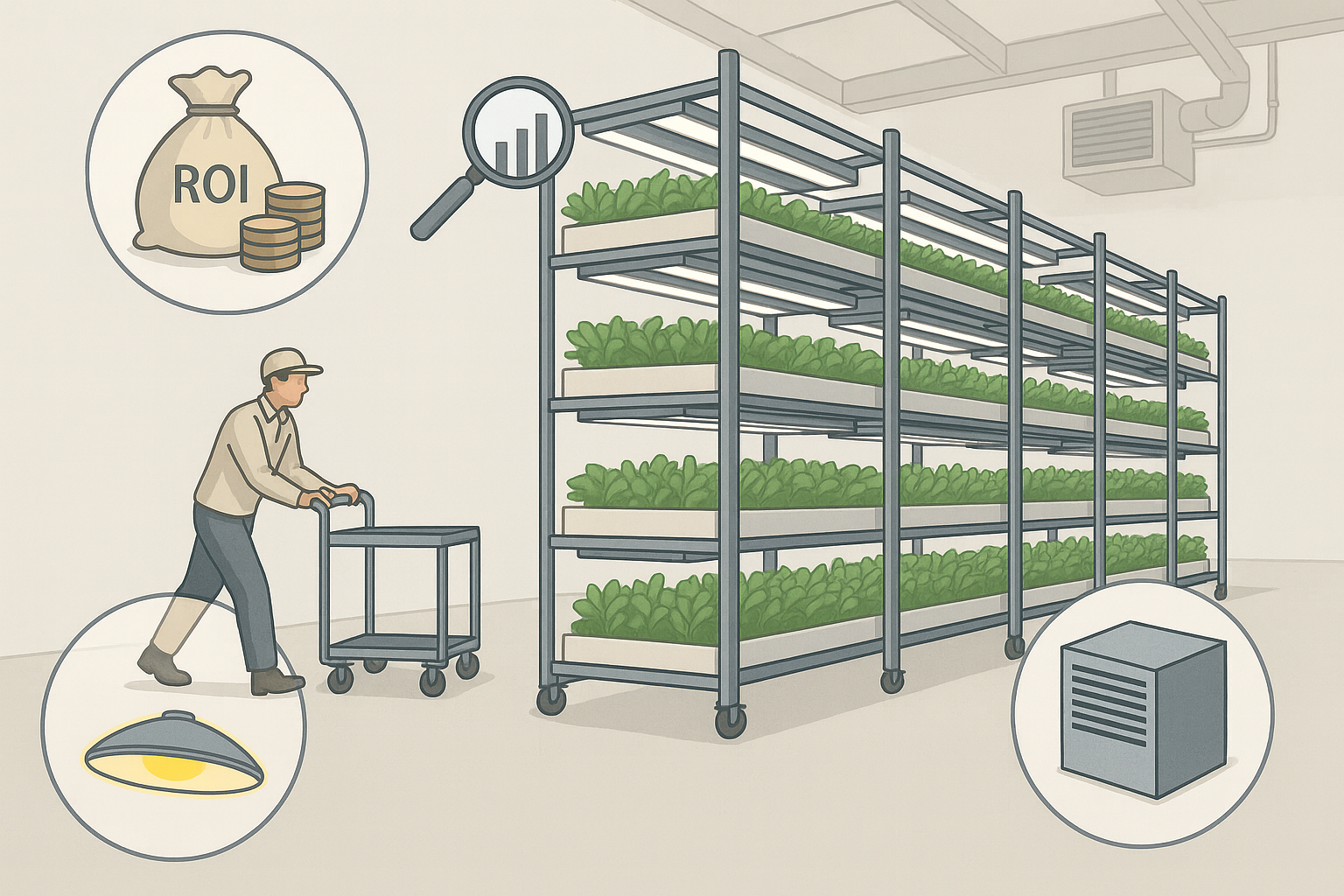
An MVP vertical farm does not escape financial scrutiny. Even a small system requires investment in infrastructure, equipment, and consumables. However, the initial outlay is far smaller than for a fully commercial facility, which can require several million pounds. An MVP unit may cost tens of thousands, depending on design. This creates a lower barrier for entry and allows early-stage businesses or community groups to experiment without jeopardising long-term financial stability. It also helps reveal hidden costs, such as energy consumption or nutrient wastage, which are often underestimated in theoretical business plans. Investors tend to value these early insights, since they ground projections in actual operating data.
Policy and research perspectives
For researchers and policy-makers, MVP vertical farms represent valuable testbeds. They provide opportunities to study plant physiology, energy efficiency, or novel technology integration under controlled conditions, without the expense of a full commercial build. In the UK and Europe, small demonstration farms are often linked to universities, research institutes, or publicly funded innovation programmes. They also serve as educational platforms, helping students and communities engage with food production technologies that may shape the future of sustainable urban agriculture.
Scaling up: from MVP to commercial farm
The ultimate purpose of an MVP farm is to inform decisions about scaling. Once the system demonstrates technical feasibility, identifies suitable crops, and confirms some level of market acceptance, the grower can decide whether to expand. Scaling does not necessarily mean simply replicating the MVP at larger scale; the lessons learned may suggest different layouts, alternative technologies, or revised crop strategies. For example, a grower may learn that labour efficiency is the limiting factor and therefore invest in automation. Alternatively, they may discover that local demand for microgreens is quickly saturated, prompting a pivot towards more diverse crops.
Conclusion: the case for building small first
A minimum viable product vertical farm system is not the end goal but the beginning of an iterative process. By starting small, growers gain the confidence to make informed decisions about technology, finance, and markets. They reduce exposure to risk while building a knowledge base grounded in real practice. For investors, researchers, and policy-makers, MVP farms provide evidence rather than speculation. While the temptation may be to launch directly into large commercial projects, the MVP approach demonstrates that small can indeed be beautiful: it allows for learning, adaptation, and ultimately, more sustainable pathways to scaling vertical farming.