Selecting the right growing system is one of the most significant decisions for anyone developing a controlled environment agriculture (CEA) facility. Growing systems for CEA and vertical farming define how crops are supported, nourished, and managed; they shape the efficiency of production, determine energy and water use, and influence both capital and operating costs. For new entrants, the range of technical terms and options can appear daunting, yet understanding these systems is essential for making informed decisions that align with business goals, site conditions, and regulatory obligations.
Why Growing Systems Matter
Unlike traditional agriculture, where soil is both the growth medium and the source of nutrients, indoor farms rely on carefully designed systems that deliver water and nutrients in precise amounts, and allow roots access to oxygen. The choice of system affects crop quality, yield, and consistency, but it also defines the complexity of operations. A system that is too basic may limit scalability and efficiency; one that is overly complex may introduce unnecessary risks and costs. For growers, researchers, and investors, the ability to compare and evaluate growing systems is therefore central to assessing the viability of any vertical farm.
Soil, Soilless, and Hydroponic Approaches
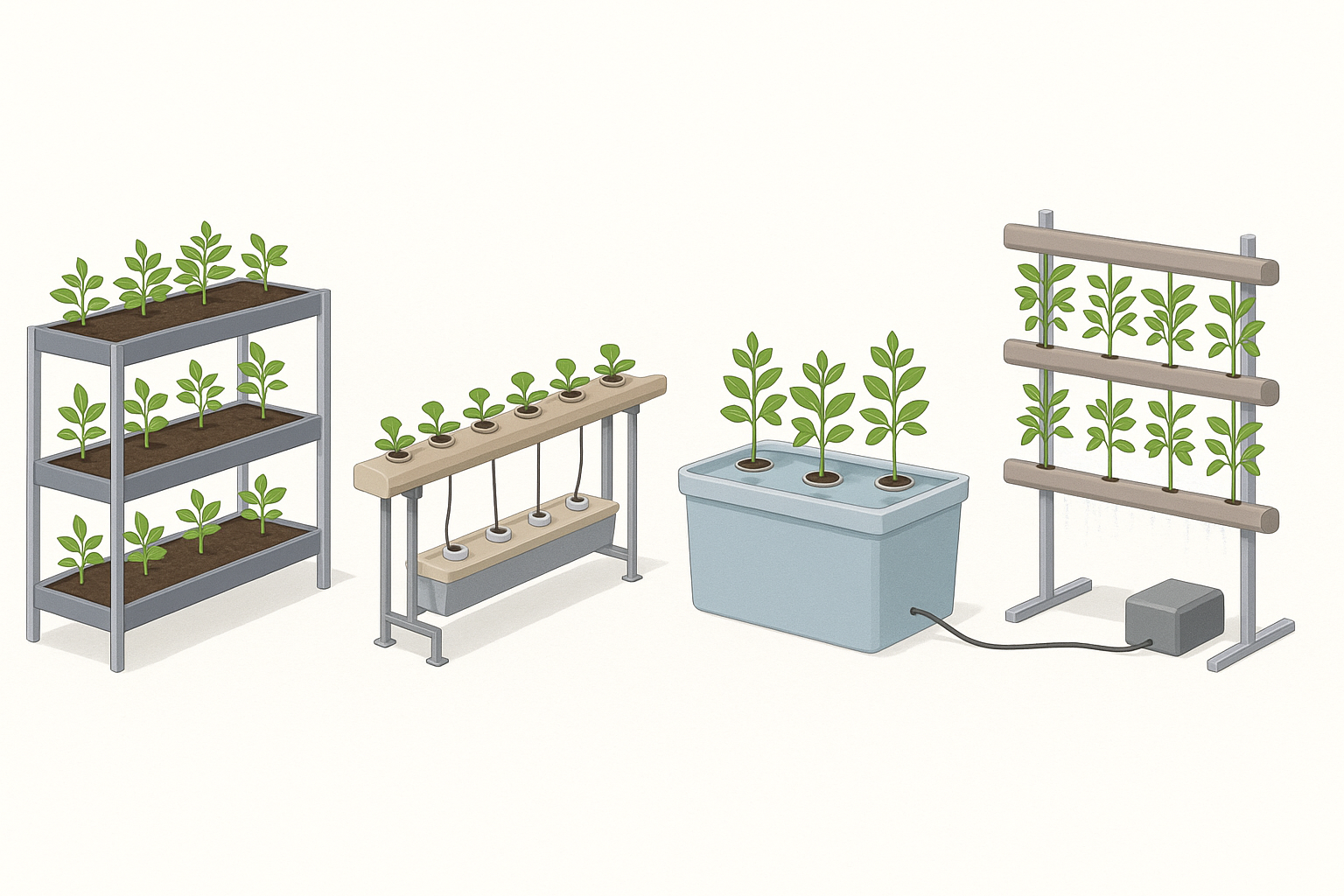
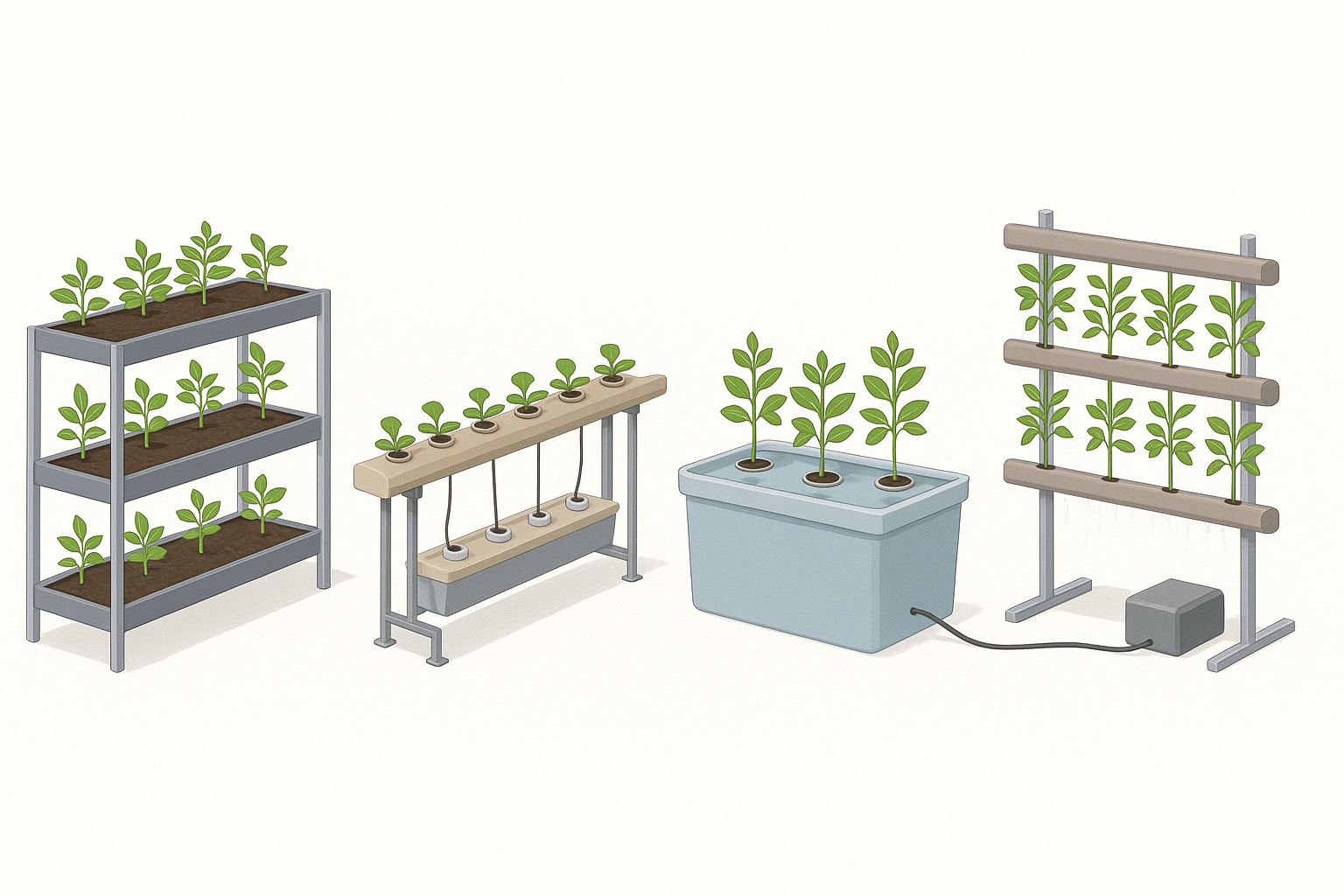
Most indoor farms operate without soil. Instead, they employ soilless substrates such as rockwool, coir, or perlite, or they bypass substrates entirely with hydroponic systems where roots are suspended in nutrient-rich solutions. Hydroponics is a broad term covering several approaches: nutrient film technique (NFT), deep water culture (DWC), ebb and flow (flood and drain). Each has specific benefits and trade-offs. For instance, NFT is efficient and suited to leafy greens, but it can be vulnerable to pump failure. DWC offers stability and high productivity but demands careful oxygenation. Additionally, fogponics or aeroponics are systems where roots are misted with nutrient solution that can maximise oxygen availability, but this requires advanced technical management.
Soil-based indoor farms do exist, often in hybrid greenhouses or research facilities, where soil biology is part of the study. However, in commercial vertical farms, soil is rare: it complicates biosecurity protocols, increases weight and handling requirements, and is less compatible with stacked-layer systems.
Balancing Efficiency and Risk
A growing system is not only about yields; it is also about resilience. Indoor farms operate as closed environments where pumps, sensors, and climate systems must work together. A failure in irrigation or oxygenation can lead to crop loss within hours. Simpler systems, such as ebb and flow benches, may offer robustness at the cost of resource efficiency, while more advanced aeroponic systems provide high performance but demand constant technical oversight.
In practice, many farms adopt a pragmatic balance: they select systems that optimise water and nutrient use while minimising operational risk. Redundancy in pumps and monitoring systems, as well as training for staff in routine maintenance, becomes as important as the design of the system itself.
Cost and Scale Considerations
Capital expenditure varies widely between systems. Systems that require less technology, such as flood and drain or drip irrigation, will typically cost less than more advanced approaches such as fine misting aeroponics. Operational expenditure also differs: aeroponics can reduce water use but increase electricity demand for high-pressure pumps, while DWC requires energy to maintain cooled-water conditions and dissolved oxygen levels.
Scalability is a further dimension. A small community farm may find low-tech hydroponics sufficient, while a commercial-scale vertical farm supplying supermarkets may justify investment in advanced automation and highly engineered systems. Investors will look at system choice as a proxy for long-term viability and return on investment, weighing operational reliability against potential yields.
Sustainability and Regulation
The environmental performance of growing systems is now under scrutiny. Regulators and funding bodies are increasingly concerned with energy use, water consumption, and nutrient discharge. Systems that can demonstrate circular practices, such as recirculating nutrient solutions with minimal waste, are likely to align with sustainability standards and consumer expectations. In the UK, environmental regulations under the Environment Act 2021, along with local water abstraction and waste discharge permits, may influence system design. For farms seeking certification such as LEAF Marque or organic status (though most hydroponics cannot qualify as organic under current UK rules), system selection will affect compliance routes.
Looking Ahead
As technology develops, the distinction between system types is becoming less rigid. Hybrid models that combine aspects of hydroponics and aeroponics are emerging, alongside digital integration where sensors and artificial intelligence adjust nutrient delivery in real time. For growers, this underlines the need not only to understand current options but also to anticipate future adaptability.
Conclusion
Choosing a growing system for CEA and vertical farming is not a matter of selecting a single best option: it is about aligning crops, resources, and business objectives with the strengths and limitations of each system. The decision will affect capital and operational costs, sustainability performance, and market positioning. By approaching the choice with an informed perspective, growers and investors can build resilient indoor farms that deliver both productivity and long-term value.