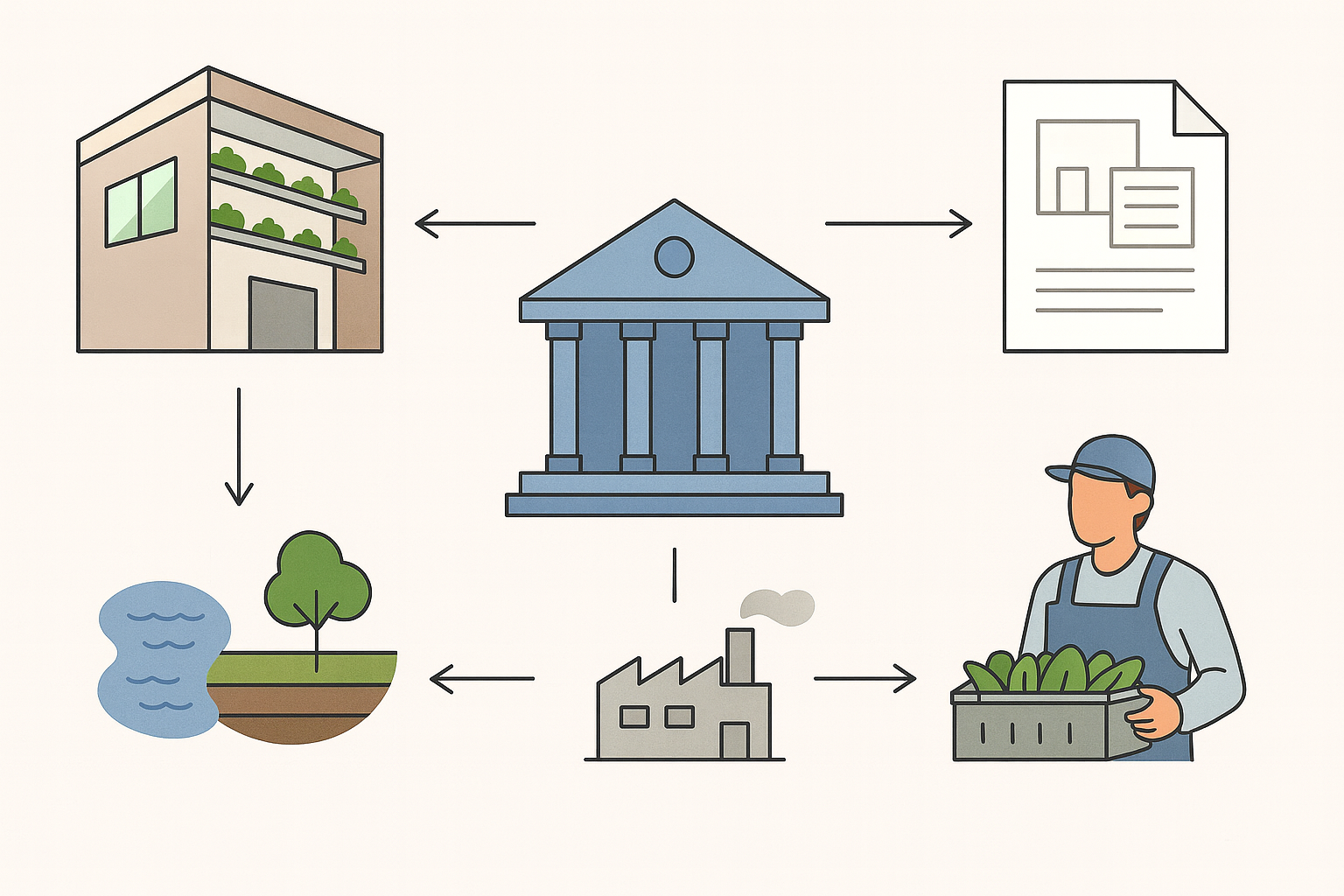
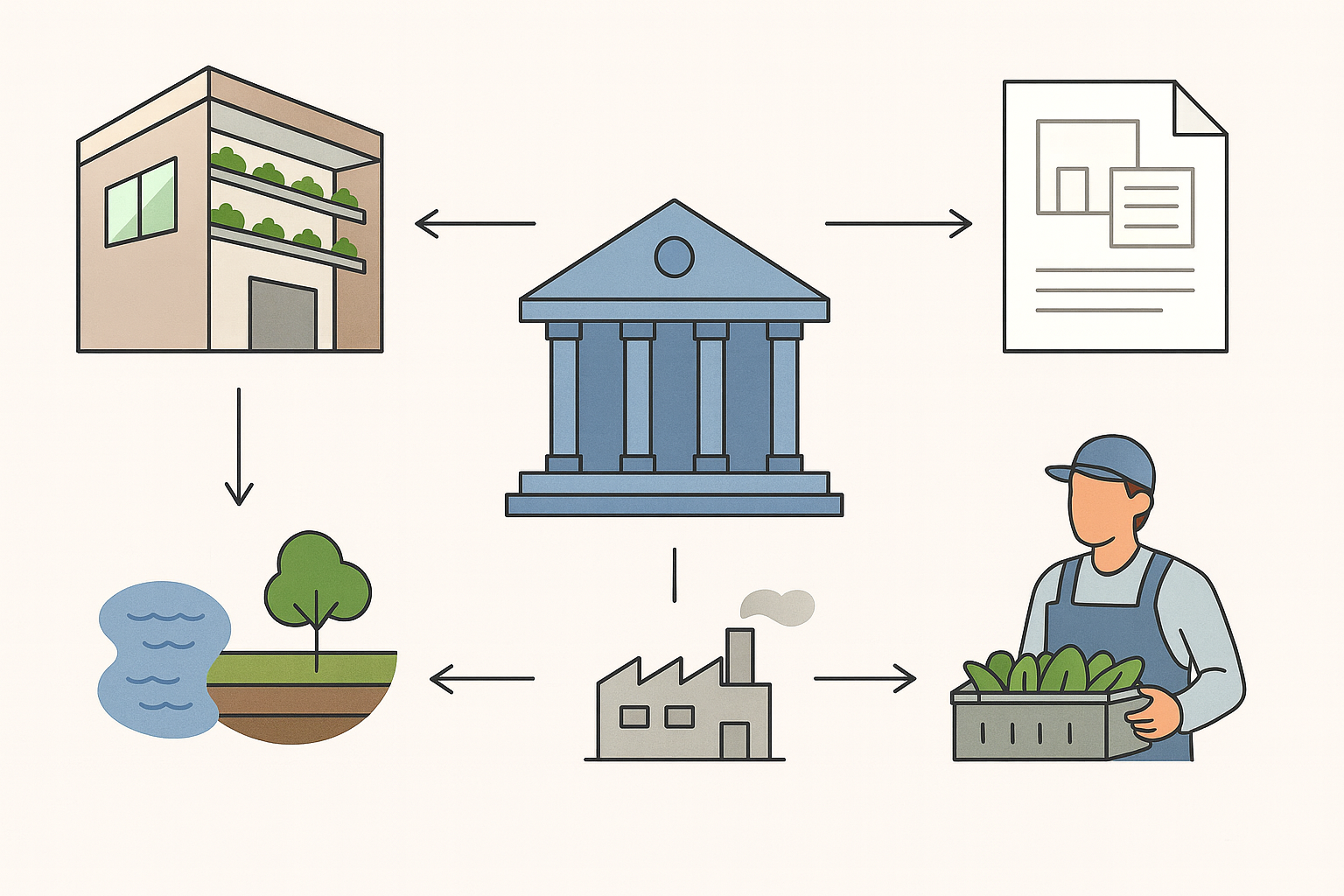
The development of controlled environment agriculture (CEA) and vertical farm systems is often portrayed primarily as a technical or commercial challenge: growers must consider crop selection, lighting systems, energy costs and customer demand. Yet the success of any venture depends just as heavily on navigating the complex legal and regulatory framework that governs where and how these facilities can operate. Understanding the regulatory considerations for CEA systems is therefore an essential aspect pf effective business management and planning, since compliance shapes both the feasibility and long-term sustainability of a project.
The planning landscape for indoor farms
Indoor farming ventures in the UK are subject to planning rules that vary according to the scale, location and intended use of the facility. A container farm in an industrial park will raise different issues to a multi-storey vertical farm within a city centre or a retrofitted agricultural barn in rural Wales. Local planning authorities must assess such projects against national and local planning policy. In England, this includes the National Planning Policy Framework (NPPF); in Wales, Planning Policy Wales (PPW) and the Future Wales national development plan. The classification of an indoor farm can be complex: depending on design, it may be considered agricultural, industrial or sui generis (a unique category requiring specific permission).
This classification matters because it affects the likelihood of gaining planning approval, the potential need for environmental impact assessment, and the applicable building regulations. For example, a facility in an urban location may need to demonstrate that it does not generate unacceptable levels of noise, light pollution or traffic. In rural areas, issues such as the loss of best and most versatile (BMV) agricultural land, visual impact, and effects on local biodiversity are scrutinised closely.
Building regulations and operational compliance
Beyond planning permission, indoor farms must comply with the Building Regulations 2010 in England and Wales, or equivalent devolved legislation in Scotland and Northern Ireland. These rules set out minimum standards for structural safety, fire safety, ventilation, insulation and energy efficiency. A vertical farm with multi-tiered growing racks, irrigation systems and dense electrical installations is a high-specification environment that must be designed and certified accordingly. Compliance also extends to health and safety requirements under the Health and Safety at Work Act 1974, covering employee welfare, machinery safety and safe handling of chemicals such as nutrient solutions.
Food safety legislation adds another layer of regulatory oversight. Growers must meet requirements under the Food Safety Act 1990 and the retained EU Regulation (EC) No 852/2004 on the hygiene of foodstuffs, which applies to primary production and handling. Many commercial buyers will expect additional certification, such as Red Tractor, GlobalG.A.P., or SALSA, which provide assurance of traceability, hygiene and sustainability standards.
Environmental legislation and sustainability obligations
CEA systems are often promoted as resource-efficient, yet they remain subject to environmental regulations that control waste, water and energy use. Facilities that discharge wastewater may require an environmental permit from the Environment Agency (England) or Natural Resources Wales. Installations above certain thresholds of energy demand, refrigerant storage or chemical use may fall under the Environmental Permitting (England and Wales) Regulations 2016.
Sustainability reporting obligations are also tightening. Large businesses must comply with the Streamlined Energy and Carbon Reporting (SECR) framework, and some farms may be drawn into these requirements through their supply chain commitments. Indoor farms seeking public funding or contracts with retailers are increasingly expected to demonstrate alignment with the UK’s net zero targets and the Environment Act 2021.
Rights of way, heritage and local sensitivities
Location-specific considerations also influence planning outcomes. Where a vertical farm is proposed in a historic building, listed building consent may be necessary. Development near public rights of way, such as footpaths or bridleways, must account for amenity and access rights under the Highways Act 1980. Proposals within conservation areas, national parks or Areas of Outstanding Natural Beauty face additional scrutiny, often requiring landscape and visual impact assessments.
Community consultation is strongly encouraged. Planning authorities often look favourably on projects that engage with local stakeholders, demonstrate social benefits such as educational outreach, or provide local food access. Conversely, lack of transparency or disregard for community concerns can delay or derail applications.
Why regulatory awareness is essential
Many new entrants to the sector underestimate the time, expertise and financial resources needed to navigate these processes. Regulatory considerations for CEA systems are not intended to be obstacles to innovation; rather, they provide assurance that facilities are safe, sustainable and socially acceptable. An investor will not fund a project that risks planning refusal, nor will a retailer contract with a supplier who cannot demonstrate compliance with food safety standards. By embedding regulatory awareness into project planning, indoor farms strengthen their business case and reduce risk.
Looking ahead
Policy frameworks are evolving as governments recognise the potential of indoor farming to contribute to food security, urban resilience and climate goals. Planning guidance may adapt to classify CEA facilities more consistently, and future subsidy regimes such as the Sustainable Farming Scheme in Wales could potentially expand eligibility for controlled environment production systems. Until then, prospective growers must treat regulatory navigation as a core component of their strategy.
The regulatory environment is not static but dynamic: laws governing energy efficiency, building safety and agricultural production continue to shift in response to climate and social priorities. Those planning to establish CEA facilities should therefore keep abreast of policy updates, seek specialist planning advice where necessary, and consider compliance not as a box-ticking exercise but as part of building trust with customers, communities and regulators alike.