Controlled Environment Agriculture (CEA) offers a highly tailored approach to crop production, one where environmental conditions can be fine-tuned to optimise yield, resource efficiency, and quality. Central to this capability is the effective use of automation and control systems. As vertical farming and other CEA formats scale and diversify, interest in approaches for automation and control in CEA has intensified. These systems are not simply time or labour-saving enhancements, but the cornerstone of precision, scalability, and consistency in modern high-tech horticulture.
Defining Automation and Control in the CEA Context
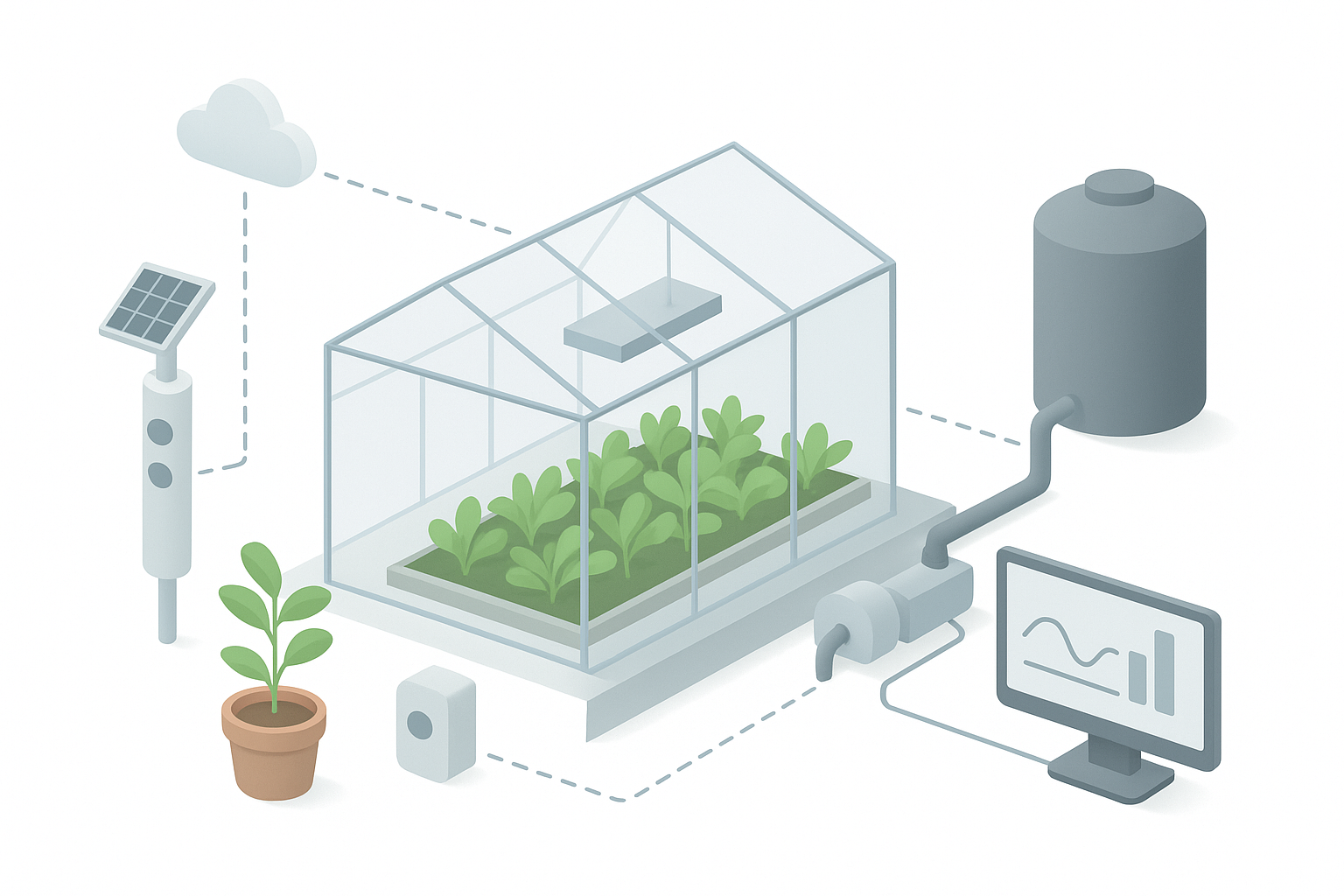
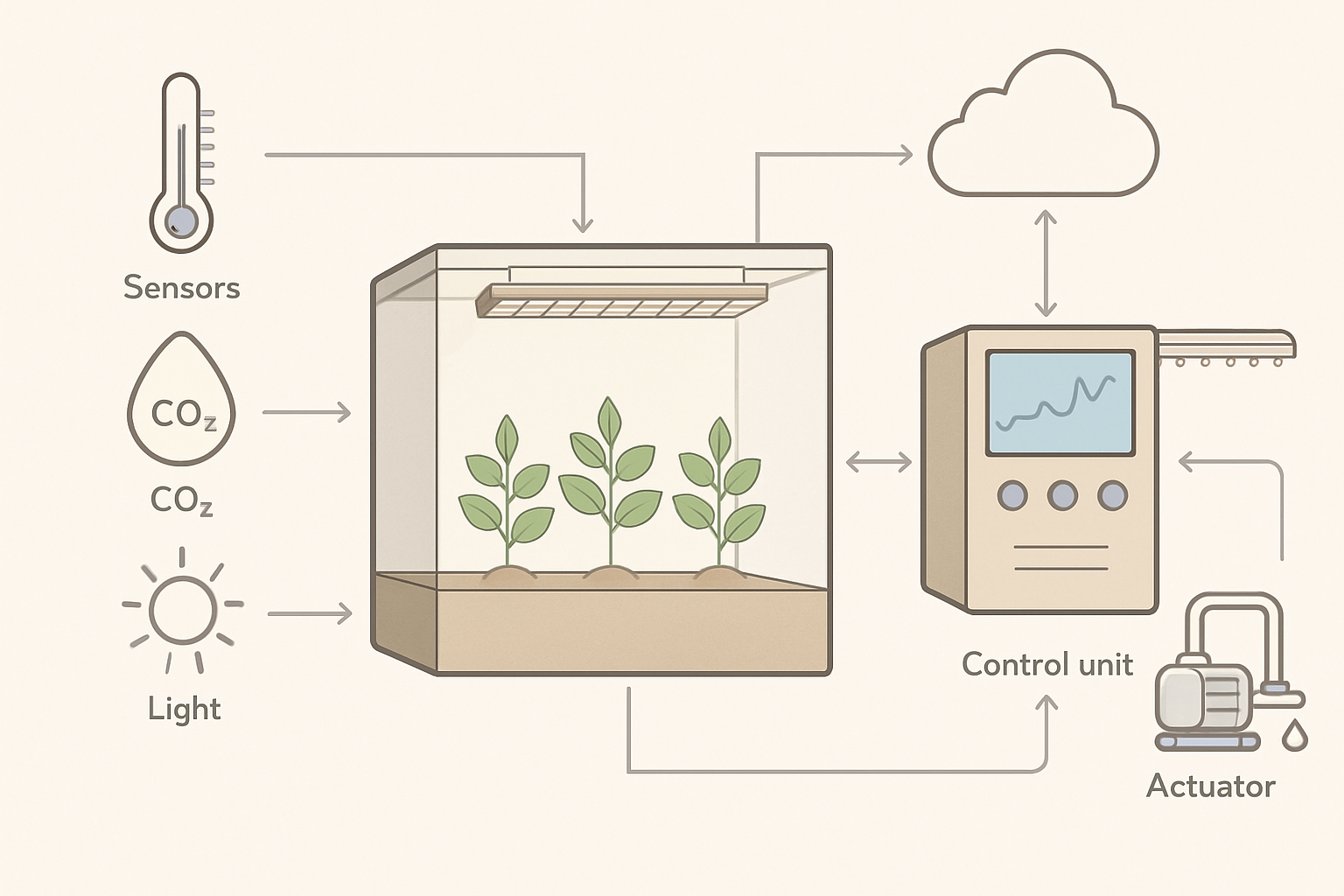
Automation and control systems in CEA refer to the integration of sensors, actuators, control algorithms, and management software to monitor and regulate key environmental and operational variables. These variables include air temperature, humidity, carbon dioxide concentration, light intensity and spectrum, irrigation cycles, nutrient dosing, and more. In a vertical farm, where the growing environment is often completely decoupled from outdoor weather conditions, such regulation is critical.
Automation can range from simple mechanical timers controlling light schedules, to sophisticated systems involving real-time sensor feedback and machine learning algorithms adjusting inputs continuously. Control systems, meanwhile, may be manual, semi-automated, or fully autonomous. The overall objective remains the same: to maintain conditions within predefined set points that support optimal plant growth and operational efficiency.
Historical Context and Evolution
CEA as a concept dates back to early greenhouse cultivation, but it is only in recent decades that digital automation has become integral. Early greenhouse systems might have used thermostats and manual ventilation. In contrast, contemporary vertical farms often rely on integrated building management systems (BMS) or dedicated agricultural control platforms that coordinate environmental parameters in real time.
The shift towards data-driven cultivation was driven by advances in sensor technology, cloud computing, and the proliferation of Internet of Things (IoT) devices. In effect, farms have become complex cyber-physical systems, combining biological processes with digital infrastructure. This evolution continues to reshape how growers interact with their crops and how facilities operate at scale.
Components and Infrastructure
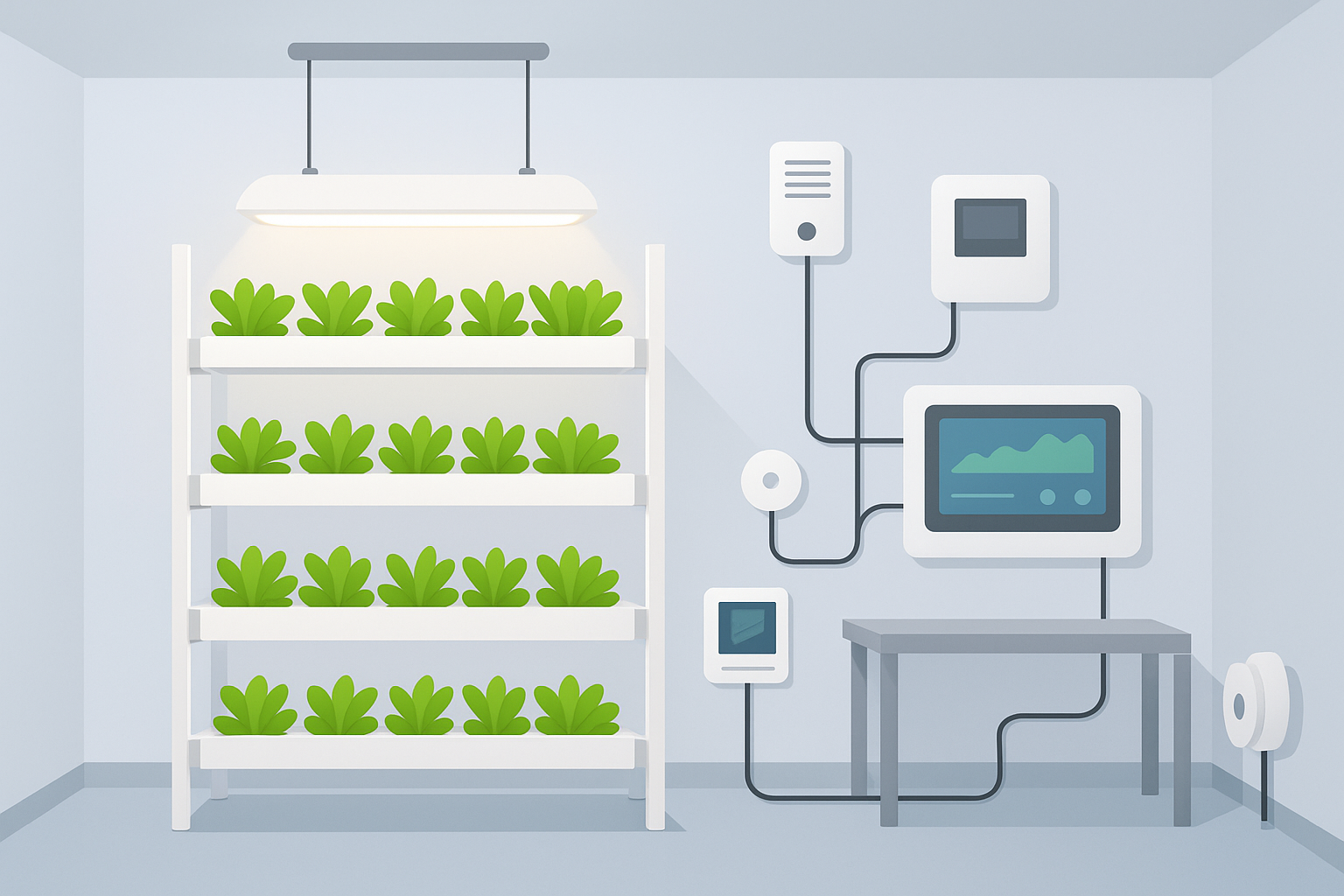
At the heart of any automated CEA system is a network of sensors. These devices monitor environmental variables (e.g. temperature, relative humidity, PAR levels), plant status indicators (e.g. transpiration rates, leaf temperature), and system performance metrics (e.g. pump pressures, nutrient flow rates). The data they generate is fed into a central control unit or cloud-based dashboard, where it can be analysed and acted upon.
Actuators respond to control signals by adjusting physical components: turning lights on or off; opening ventilation ducts; adjusting fertigation flow; or dosing pH buffers into the irrigation mix. The control logic that governs these actions may be rule-based (if X, then do Y), adaptive (based on trends or patterns), or predictive (using machine learning to forecast needs based on past data).
Some systems also integrate computer vision, allowing for non-invasive crop monitoring. Image analysis can detect growth stage, signs of stress, or disease onset earlier than the human eye. This data, in turn, can trigger changes in lighting schedules or nutrient composition, creating a responsive closed-loop system.
Levels of Automation and Degrees of Control
Approaches for automation and control in CEA vary widely depending on farm scale, crop type, and operator priorities. At the lower end of the spectrum, semi-automated setups might use programmable timers for lighting and basic feedback loops for heating and cooling. These are often sufficient for small-scale hobbyist systems or early-stage commercial trials.
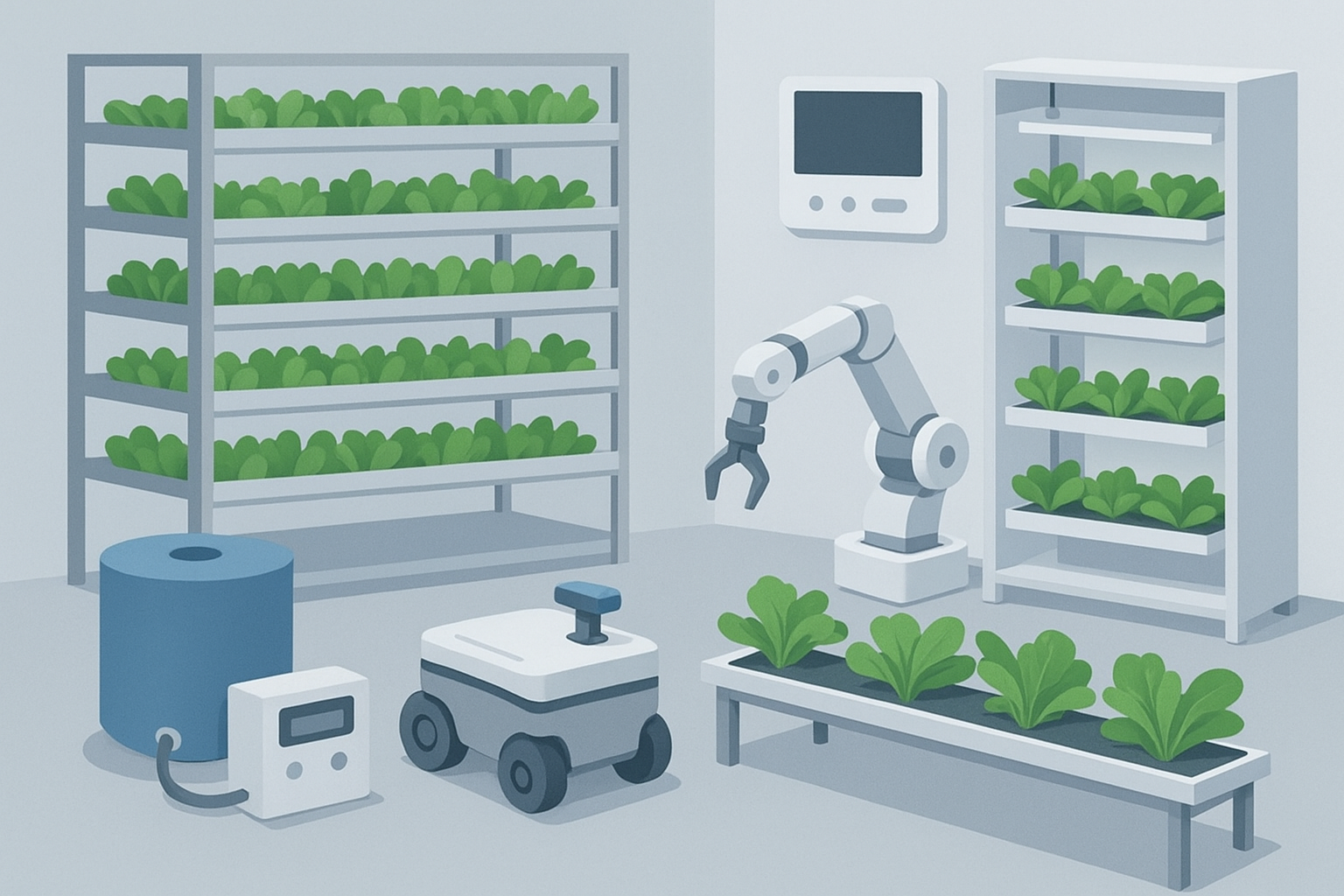
Fully automated systems, on the other hand, integrate across domains. For example, a vertical farm might synchronise lighting, irrigation, and HVAC systems to optimise energy use while maintaining plant health. Decisions may be guided by crop models that consider the cumulative effects of light, temperature, and nutrient availability on growth rate and morphology.
Autonomous control platforms can also incorporate external data sources: weather forecasts (for greenhouses), energy prices (for load-shifting in vertical farms), or even market trends (to influence harvest timing). The degree of control exercised depends on how interconnected the farm’s subsystems are and the extent to which decision-making is delegated to software.
Advantages and Operational Benefits
The value of automation in CEA lies in its potential to stabilise crop outcomes, reduce labour dependency, and improve resource use efficiency. Precise environmental control can reduce waste, prevent crop losses due to stress or disease, and support more consistent quality standards; an important factor for retail or pharmaceutical-grade produce.
Labour reduction is particularly significant. In high-density vertical farms, manual inspection and adjustment are impractical. Automating routine tasks such as irrigation, nutrient mixing, or lighting adjustments allows staff to focus on value-added activities such as crop planning, maintenance, or research.
Furthermore, integrated control systems facilitate better record-keeping and traceability. Continuous monitoring provides data logs that are essential for quality assurance, compliance, and retrospective analysis. This becomes crucial when operating at commercial scale or when seeking certifications for organic or pesticide-free status.
Challenges and Considerations
Despite the promise, automation is not without constraints. High capital expenditure remains a major barrier for small-scale operators. Sensor networks, control systems, and integration software represent a significant upfront investment. Moreover, systems require calibration, maintenance, and in some cases, skilled personnel for programming or troubleshooting.
There is also the risk of over-reliance on automation. A failure in one component, if not caught in time, can cascade into broader system failure. For instance, a stuck irrigation valve may go unnoticed without redundancy or alert protocols, risking crop loss.
Another concern is data management. Automated systems generate vast quantities of information. Without a coherent data strategy, this becomes noise rather than actionable insight. Effective use of automation demands a parallel investment in data analytics, visualisation tools, and operational decision support.
The Role of Standardisation and Interoperability
One of the ongoing challenges in CEA automation is the lack of standardisation across platforms and hardware. Proprietary protocols, fragmented interfaces, and non-interoperable devices hinder seamless integration. As the sector matures, efforts towards open standards and modular system design will be essential to lower costs, simplify setup, and future-proof investments.
Standardisation also underpins the development of digital twins and simulation environments, where virtual models of farms can be used to test strategies or train staff without risking live crops. These developments are already emerging in advanced facilities and are expected to become more accessible over time.
Looking Ahead: Towards Intelligent, Adaptive Systems
While current automation systems largely follow predefined rules, the trend is moving towards systems that can learn, adapt, and optimise themselves over time. Artificial intelligence, in particular, is being explored to manage multi-variable interactions that are too complex for traditional control logic. For example, balancing light quality, CO₂ enrichment, and nutrient concentrations to influence flavour profiles or nutrient density.
Long term, this could lead to fully autonomous farms capable of dynamic adaptation: tailoring production cycles not just to plant biology, but to shifting economic or climatic contexts. Although these systems remain in early development, pilot implementations are already demonstrating the feasibility of such approaches in tightly controlled environments.
Conclusion
Approaches for automation and control in CEA are rapidly becoming central to the success and scalability of modern horticulture. As vertical farms seek to compete on quality, consistency, and cost, automation offers a powerful set of tools to meet these demands. However, its implementation requires careful planning, investment in both hardware and expertise, and a commitment to continuous refinement. The coming decade will likely see a convergence of biology, engineering, and data science in CEA, reshaping how food is produced in built environments across the globe.