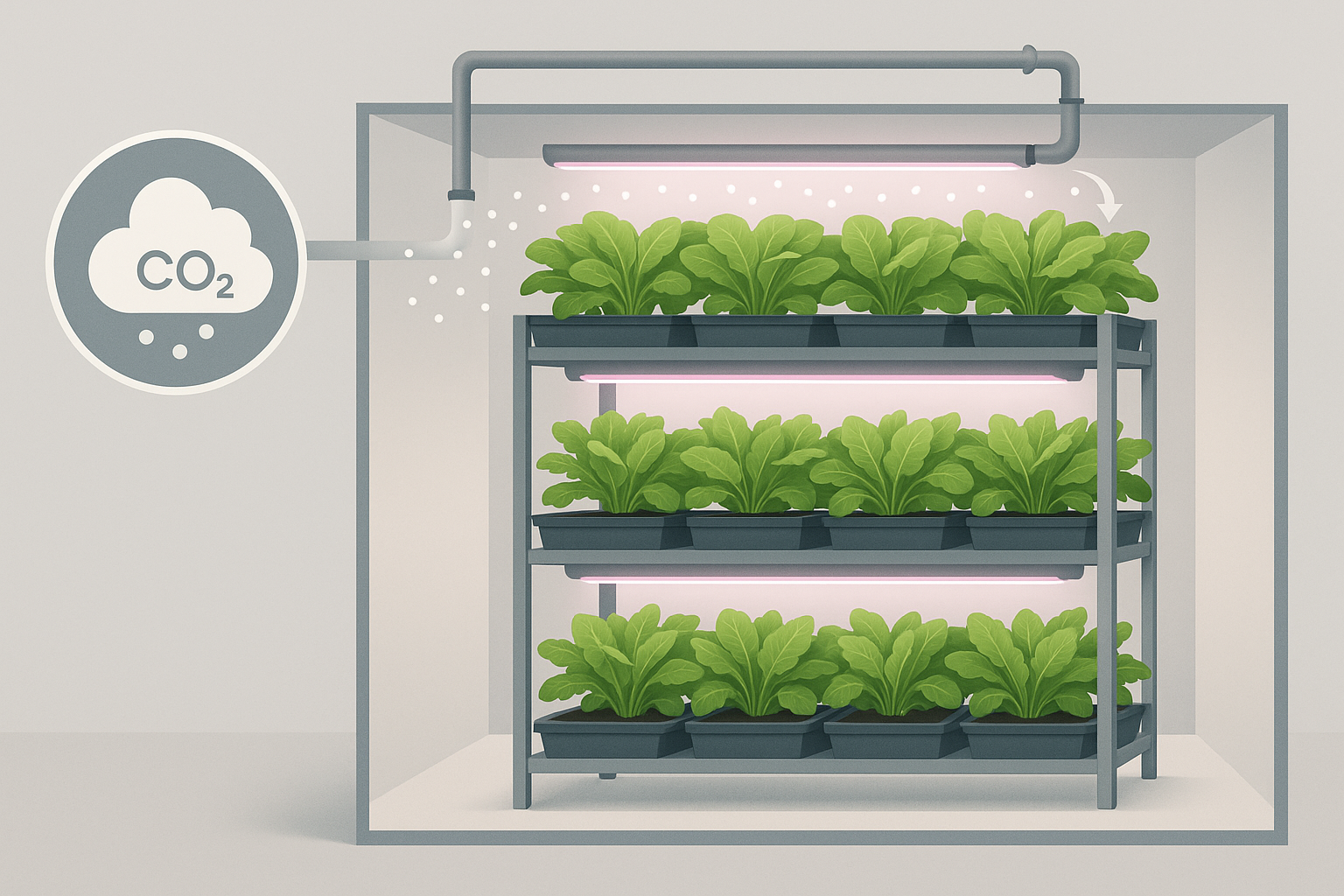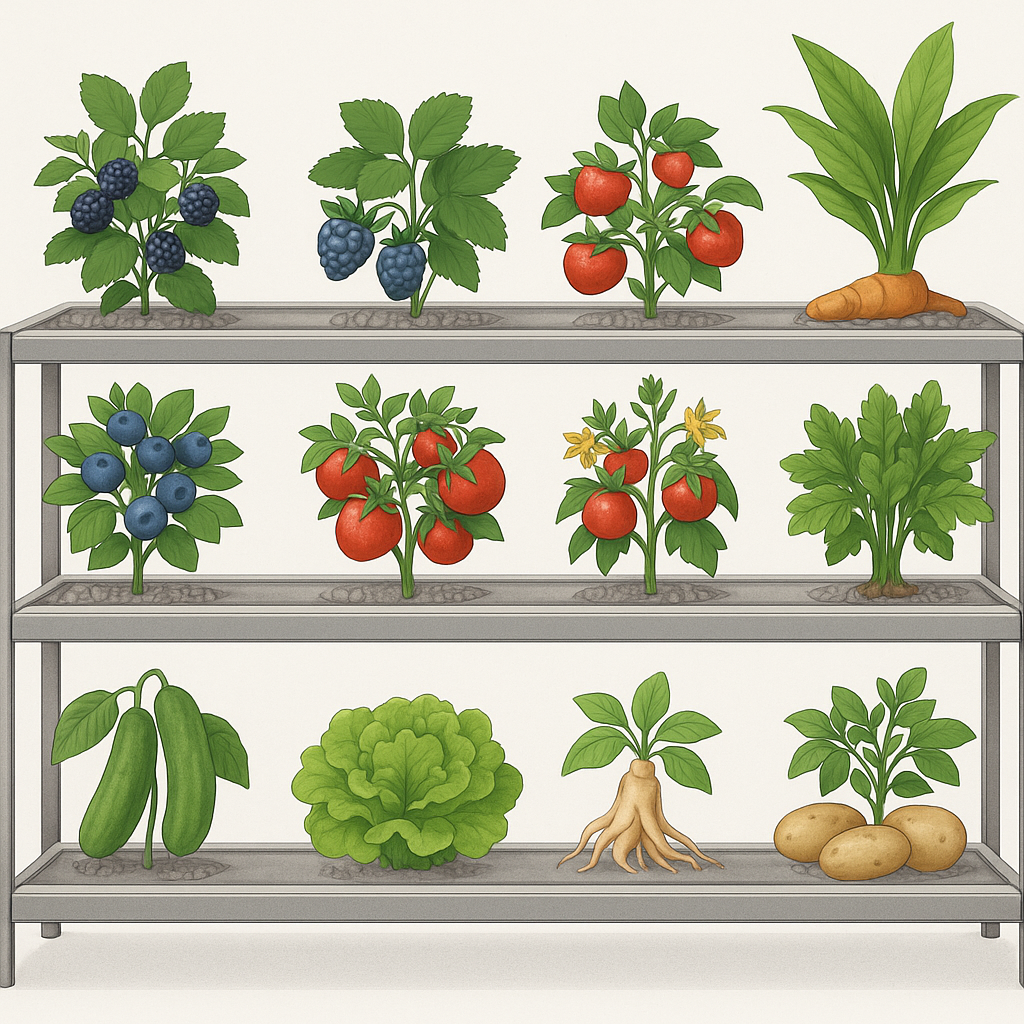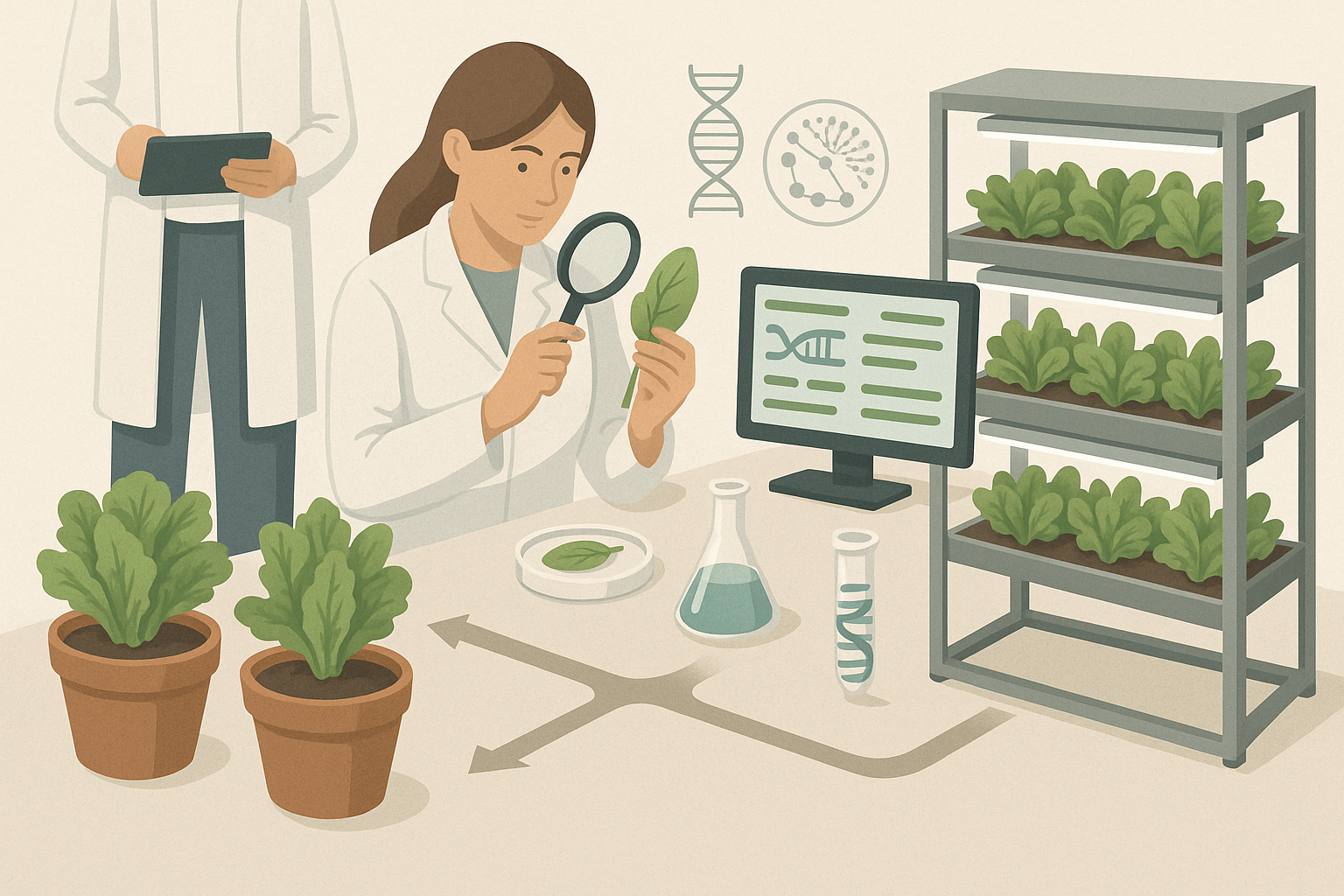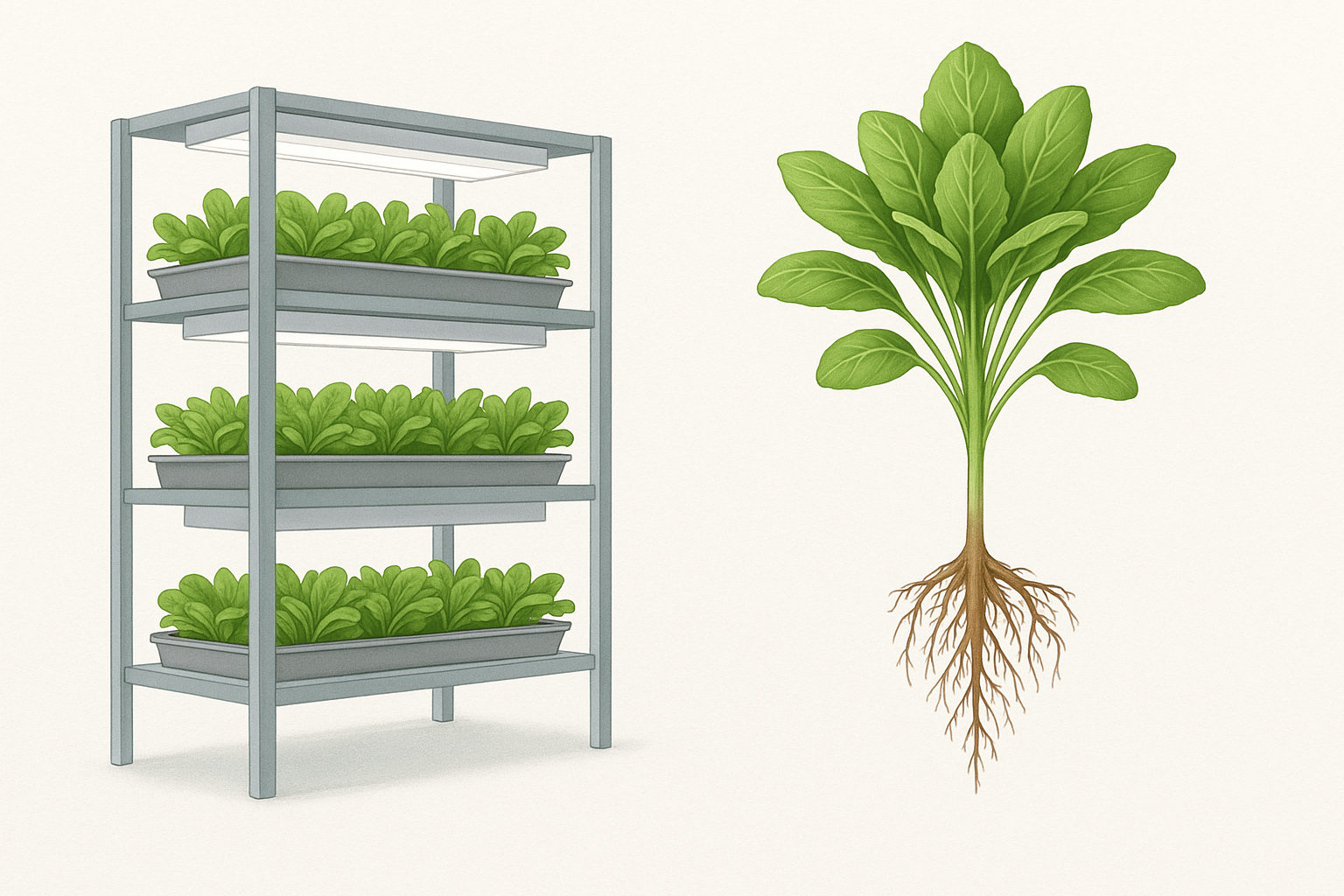
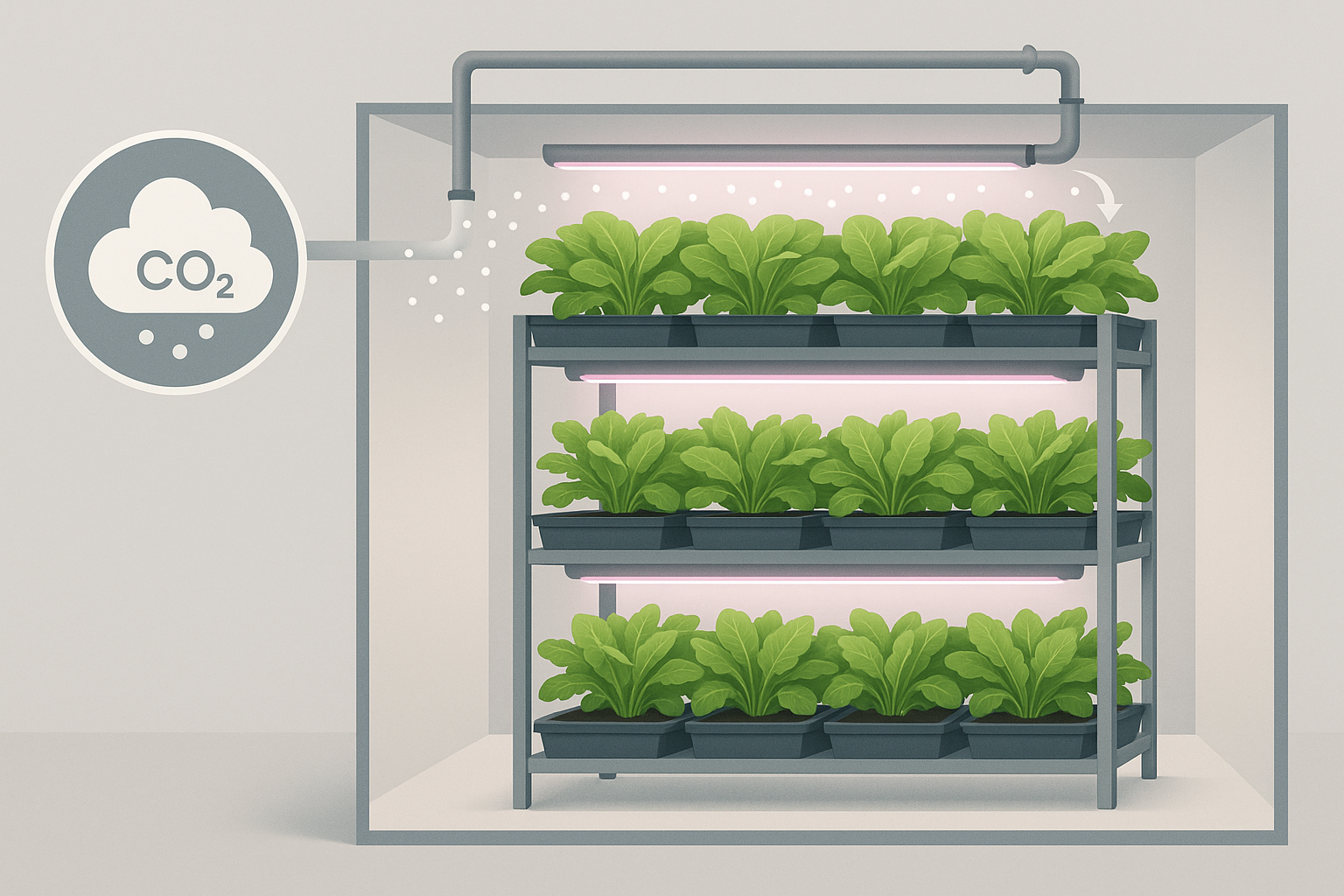
Carbon dioxide is central to plant growth and productivity, and its management is particularly relevant in controlled environment agriculture (CEA) systems. CO2 enrichment in CEA refers to the deliberate elevation of carbon dioxide concentrations within greenhouses, vertical farms, and other closed or semi-closed growing facilities. Because photosynthesis relies on carbon dioxide as the primary carbon source for carbohydrate synthesis, any modification of its availability can directly influence plant physiology, morphology, and yield outcomes. Indoor farms therefore treat CO2 not as an incidental background gas but as a controllable growth factor comparable in importance to light, temperature, and water.
Why CO₂ Matters in Controlled Environments
In the open field, ambient atmospheric CO2 is currently around 420 ppm (and rising). This concentration, although elevated relative to pre-industrial levels, is still sub-optimal for many crop species when it comes to maximising photosynthetic capacity. Research shows that photosynthesis rates in C3 plants such as lettuce, basil, and tomatoes increase significantly under concentrations of 800–1000 ppm, provided that light intensity and nutrient supply are sufficient. By contrast, C4 plants such as maize respond less dramatically, as they already possess physiological mechanisms to concentrate CO2 internally.
CEA offers the technical capability to manipulate the atmosphere in ways impossible outdoors. By enriching the growing space with additional CO2, growers can increase the rate of carbon fixation per unit of light captured, improve water-use efficiency through reduced stomatal conductance, and in many cases accelerate crop development and yield. This makes CO2 enrichment in CEA a critical management variable, rather than a passive environmental condition.
Photosynthetic Response and Growth Outcomes
The link between CO2 and photosynthesis is well established. The enzyme Rubisco, which catalyses the fixation of CO2, operates more efficiently at elevated concentrations. Under controlled light and temperature regimes, higher CO2 can delay the onset of photosynthetic saturation, meaning that plants are able to utilise more of the photons delivered by artificial lighting systems. In vertical farming, where LED lighting is a significant operational cost, maximising photosynthetic efficiency translates into improved returns on both capital and energy expenditure.
Studies have shown that lettuce yields can increase by 20–30% under enriched conditions compared with ambient levels, while tomato fruit set and quality are similarly improved. However, such responses are not uniform: species, cultivar, developmental stage, and environmental interactions all influence the degree of benefit. For instance, if light intensity is limiting, elevated CO2 may not produce significant gains because photosynthesis remains constrained by photon availability.
Interactions with Other Abiotic Factors
The effects associated with CO2 enrichment do not occur in isolation. The benefits depend on appropriate coordination with light, nutrient availability, humidity, and temperature. Stomatal conductance typically decreases as CO2 concentration rises, which can reduce transpiration and alter canopy microclimates. In hydroponic and aeroponic systems, nutrient formulations must be carefully balanced to match accelerated growth rates, otherwise deficiencies may arise. Temperature also modulates the effectiveness of CO2: photosynthetic efficiency under enrichment is most pronounced within optimal thermal ranges (usually 18–26 °C for many leafy greens).
The relationship between CO2 and water use is particularly important. By allowing stomata to remain more closed while still supplying sufficient carbon, plants conserve water. This effect is useful in semi-closed greenhouses or tightly sealed vertical farms, where water recycling is integral to system sustainability.
Practical Considerations in Indoor Farms
From an operational standpoint, CO2 enrichment requires careful management of concentration, distribution, and cost. Supply methods vary: bottled gas, liquid CO2 vaporisation, or on-site generation through burners. Distribution systems typically involve piping and fans to ensure even dispersal throughout multilayer rack arrangements. Monitoring is essential, as concentrations above 1500 ppm can reduce worker safety and in some cases inhibit plant development rather than enhance it.
Economic analysis is a further factor. CO2 supplementation increases input costs, yet the potential yield improvements and reduced time to harvest often offset the expense. The balance depends on crop value, energy efficiency, and the degree to which light and nutrient availability support the elevated photosynthetic capacity.
Wider Implications
Beyond productivity, CO2 enrichment in CEA connects to broader environmental debates. While the practice requires additional carbon inputs, many systems use captured industrial CO2 streams, thereby integrating indoor farming with carbon recycling. At the same time, energy use for lighting and climate control remains significant, so enrichment strategies must be evaluated within whole-system life cycle assessments to determine their genuine sustainability.
Conclusion
CO2 enrichment in CEA is not a marginal consideration but a foundational component of controlled crop production. By aligning carbon availability with optimised lighting, water, and nutrient regimes, growers can significantly increase efficiency and yield. The scientific basis is clear: photosynthesis is carbon-limited under ambient conditions, and indoor farms have the unique capacity to correct this limitation. Future research will refine crop-specific protocols, integrate dynamic CO2 dosing with sensor-driven control systems, and evaluate sustainability outcomes at scale. For anyone engaged in vertical farming or greenhouse management, understanding and managing CO2 enrichment is therefore essential to achieving both economic viability and environmental responsibility.