The practice of vertically stacking crops has become central to the design and operation of modern indoor farming systems. By arranging plants in multiple layers within controlled environments, growers are able to increase the productive capacity of limited spaces while maintaining close control over light, temperature, humidity, water, and nutrient delivery. This approach has gained prominence in urban agriculture, research facilities, and large-scale commercial vertical farms, where efficient use of space and resources is critical. Vertical stacking is not simply a matter of placing shelves one above another; it represents a set of architectural, technological, and biological decisions that determine both the viability and the efficiency of indoor farming.
Why Stack Crops Vertically
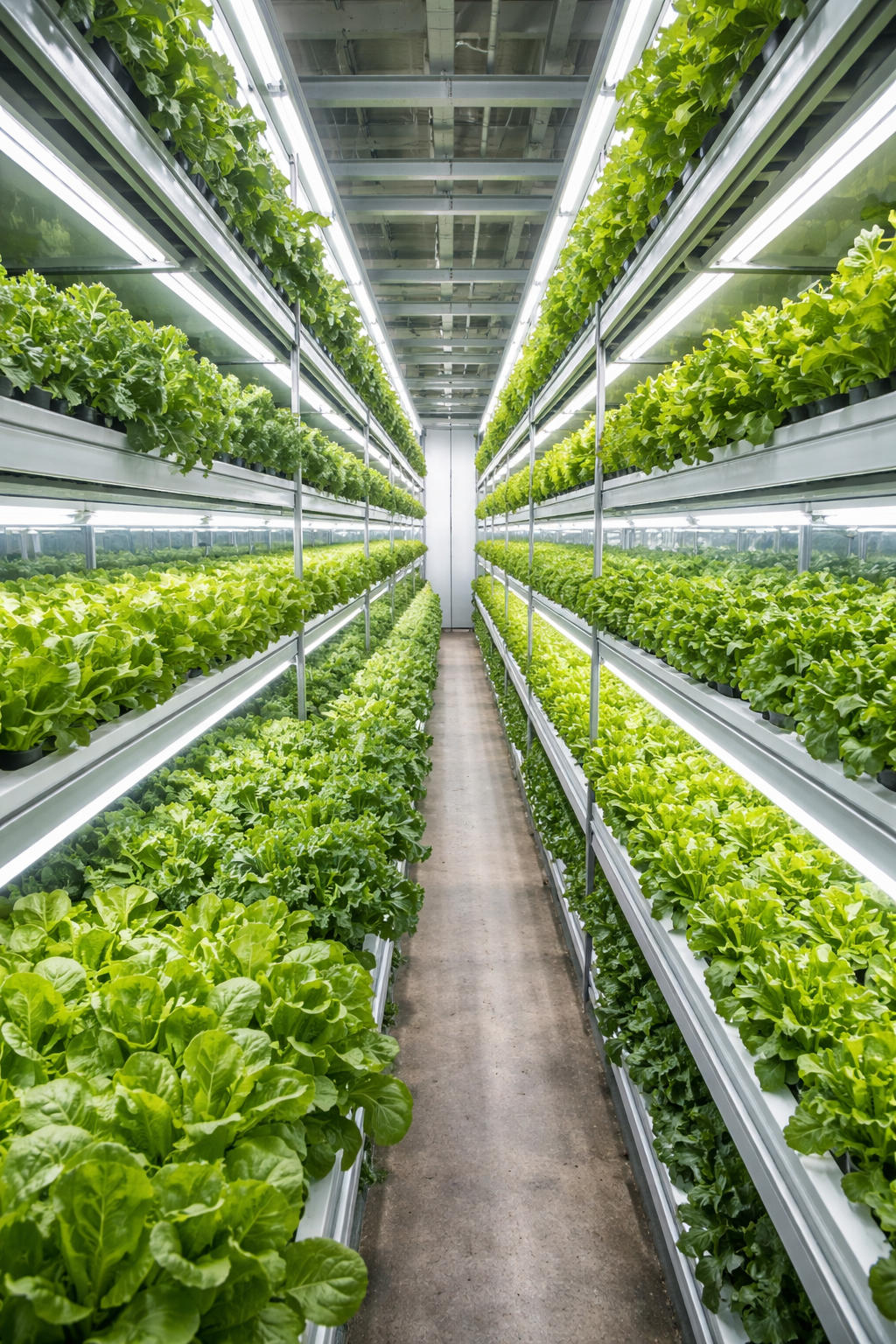
Conventional agriculture relies on horizontal fields that spread across land, but land availability is increasingly constrained in many regions. Indoor farming addresses this challenge by moving production indoors, and vertically stacking crops multiplies the effective growing area within the same building footprint. For example, a single warehouse of 2,000 square metres can, when fitted with ten tiers of growing racks, provide as much cultivated surface area as a 20,000 square metre greenhouse. This concentration of production supports urban food systems, reduces transport distances, and allows farms to be located closer to consumers.
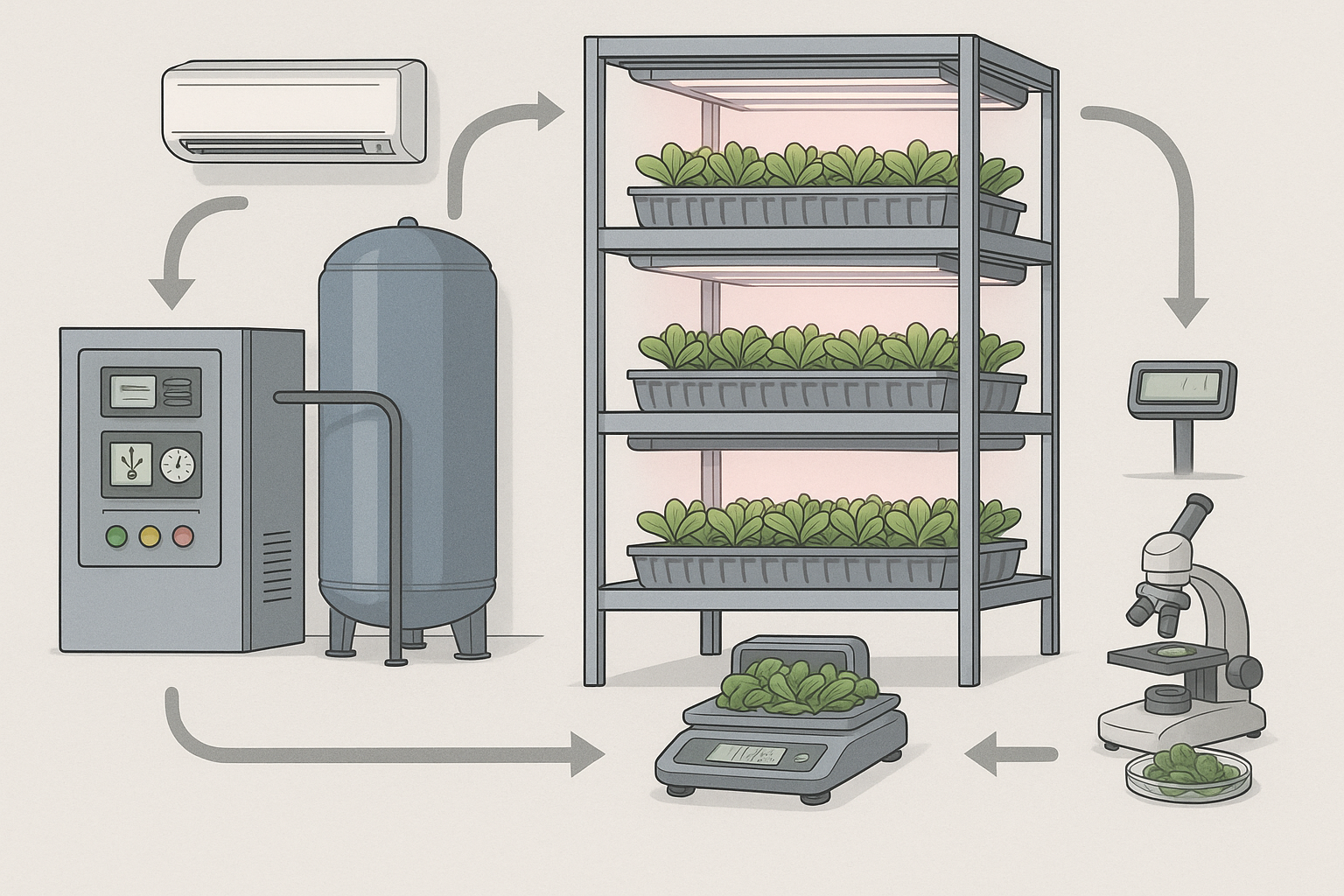
The significance of vertically stacked systems also lies in their compatibility with precision agriculture. Every tier can be fitted with LED lighting, irrigation lines, and environmental sensors, creating an array of uniform microclimates. This uniformity reduces variability in crop growth and enables standardised outcomes. The result is higher consistency in yield and quality, a feature that is highly valued by retailers and food service operators.
Technical Approaches to Vertical Stacking
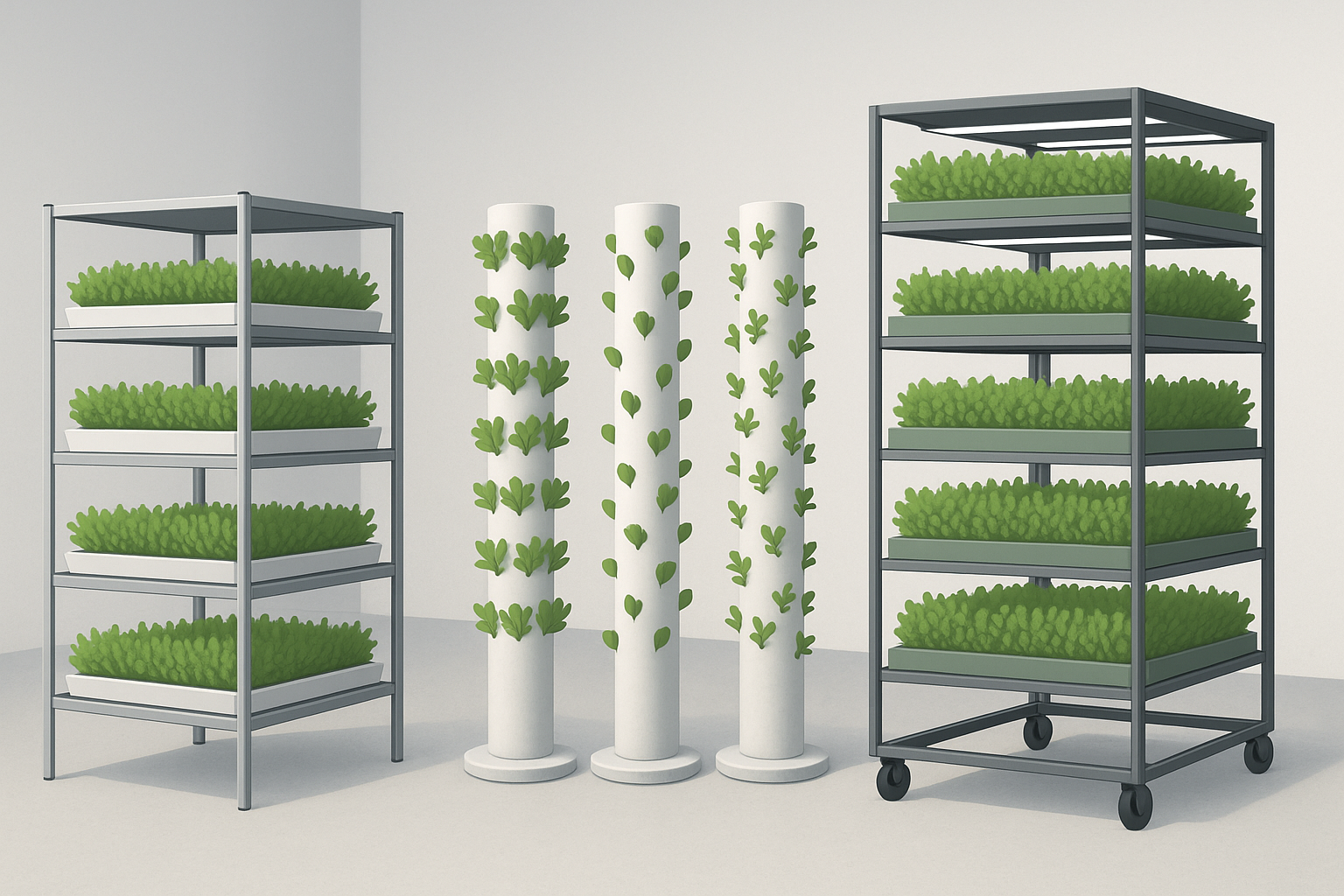
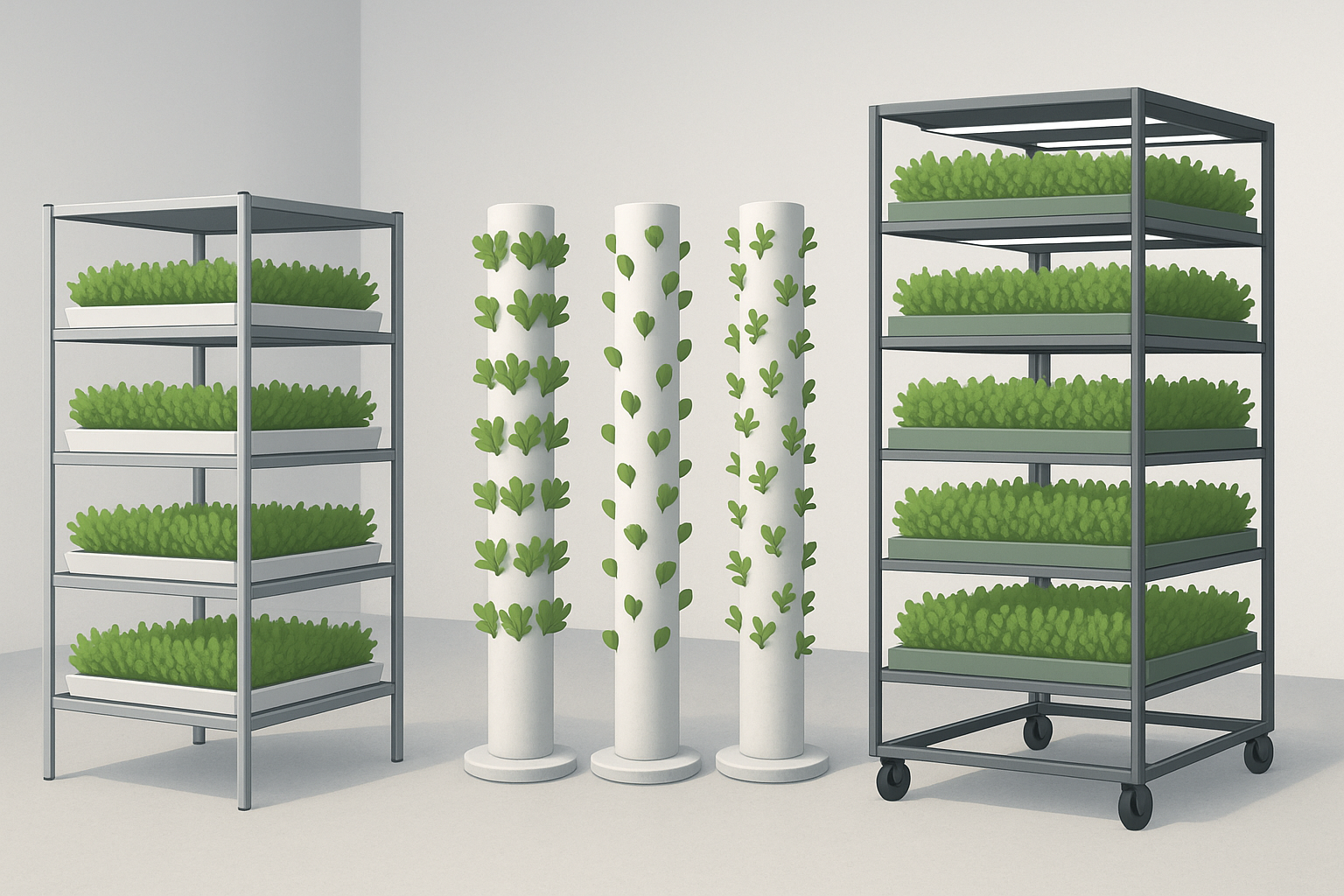
The methods of stacking vary depending on the crop, the production goals, and the financial resources of the operator. The simplest models involve fixed shelving units equipped with trays or gutters, often used for microgreens or leafy salads. More advanced facilities adopt mobile racking systems that can slide on rails, maximising space while still allowing access for planting, monitoring, and harvesting.
Hydroponic or aeroponic techniques can all be adapted to vertically stacked arrangements. In hydroponic stacking, trays or troughs are supplied with nutrient-rich solutions via recirculating pumps. Aeroponic towers deliver misted nutrients directly to suspended roots. Each method has different implications for water use, energy demand, and maintenance. The choice depends on factors such as the target crop, desired turnover speed, and operational complexity.
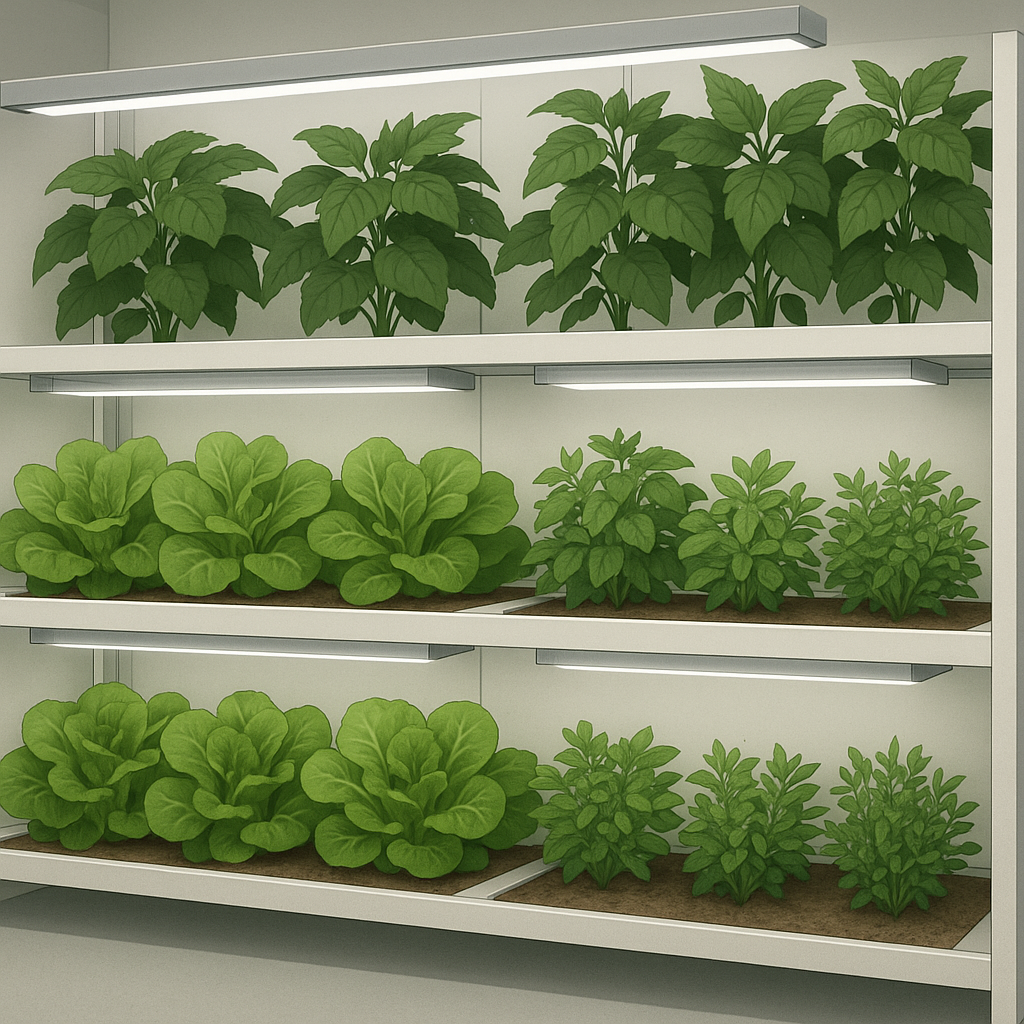
Lighting design is one of the most critical aspects. Because upper tiers can cast shadows on those below, dedicated artificial lighting is required for each level. LED systems with narrow spectra and low radiant heat are typically used to ensure uniform exposure without overheating plants. Similarly, vertical stacking demands careful air circulation planning. Fans, ducts, and HVAC systems must be configured so that heat and humidity do not accumulate at upper levels, which can otherwise lead to disease pressure or uneven growth.
Benefits of Vertical Stacking
The primary benefit is spatial efficiency. Vertically stacking crops transforms volume into a productive dimension, enabling farms to deliver higher outputs per square metre of floor space. This can make urban farming more commercially viable, particularly in cities where real estate costs are high.
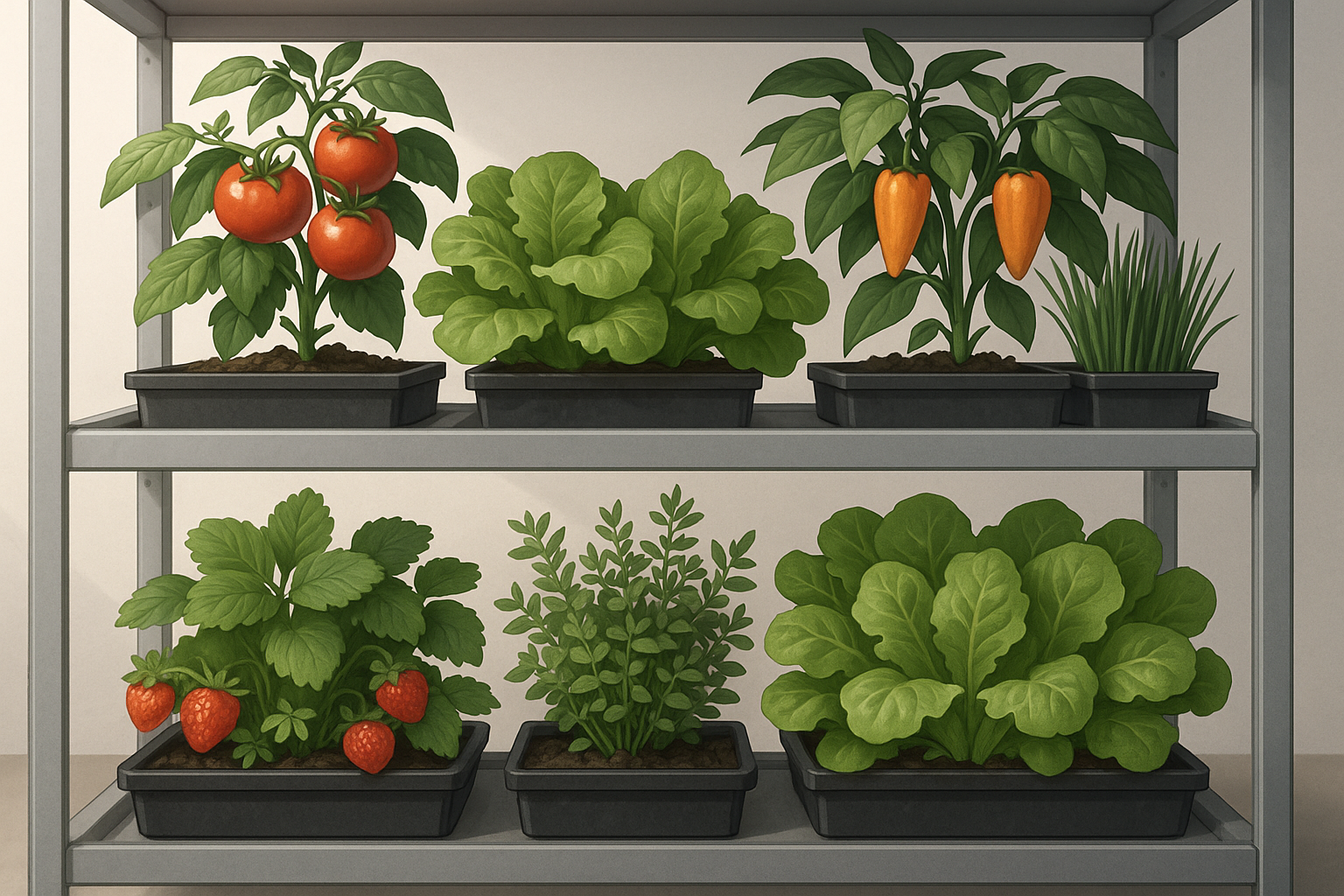
Another benefit is environmental control. Since each tier is part of a regulated system, environmental variables can be fine-tuned to the specific needs of the crop. Lettuce, herbs, strawberries, or young vegetable transplants can all be grown simultaneously in adjacent layers, each with its own lighting intensity or irrigation cycle. This flexibility supports diversification and shortens supply chains.
Resource efficiency is also improved. Vertical stacking in controlled environments typically uses far less water than field agriculture, since hydroponic and aeroponic systems recycle solutions. Fertiliser inputs can be delivered with precision, reducing waste. Moreover, production in vertically stacked farms can be decoupled from weather fluctuations and seasonal cycles, ensuring year-round availability.
Challenges and Considerations
Despite its advantages, vertical stacking is not without limitations. Energy consumption is substantial, particularly in relation to artificial lighting and climate control. Operators must balance the additional yield per cubic metre with the additional energy required per kilogram of produce. Heat build-up, access for labour, and the risk of disease spread across tiers are further considerations that require careful system design.
Economic factors are equally important. The capital costs of installing stacked systems can be high, and profitability depends on achieving consistent, high-value outputs. For this reason, vertically stacked farms often focus on crops with high market value per unit weight, such as microgreens, herbs, and speciality salads, rather than bulk staples.
Future Directions
Research is exploring how vertical stacking can be optimised through robotics, automation, and digital twin modelling. Automated systems are being developed to plant, monitor, and harvest across multiple tiers with minimal human intervention, improving efficiency and safety. Advances in LED technology, particularly tunable spectra and energy-efficient diodes, promise to reduce operational costs. Meanwhile, architectural innovations such as modular stackable units or multi-storey farming facilities are expanding the possibilities of this approach.
From a societal perspective, vertically stacked farming systems could play a role in future urban food security strategies. As cities expand and land becomes scarcer, these systems provide a means of producing fresh, perishable crops close to population centres. At the same time, they present a way of experimenting with new crop species, plant traits, and production strategies that may eventually support a broader transformation of agriculture.
Conclusion
Vertically stacking crops represents one of the most defining features of modern indoor farming. It is not only a practical method of using space more effectively, but also a framework for integrating technology, biology, and design into coherent production systems. While challenges remain in terms of energy use, cost, and system complexity, the benefits in spatial efficiency, resource control, and crop quality make it an area of growing importance. For growers, researchers, investors, and policy-makers alike, understanding the benefits and methods of vertical stacking is central to appreciating both the potential and the limitations of indoor farming.