Understanding the effect of light spectrum on crop production is central to the optimisation of Controlled Environment Agriculture (CEA), particularly within vertical farming systems. Light is not only the energy source for photosynthesis but also a critical environmental signal that regulates plant morphology, physiology, and metabolism. By manipulating light quality and quantity (specifically the spectral composition) indoor growers can significantly influence crop outcomes. This introduction explores how variations in spectral input affect plant development, yield, and nutritional quality, and why this knowledge is fundamental to the advancement of sustainable and high-efficiency food production under artificial lighting.
What is Meant by ‘Light Spectrum’?
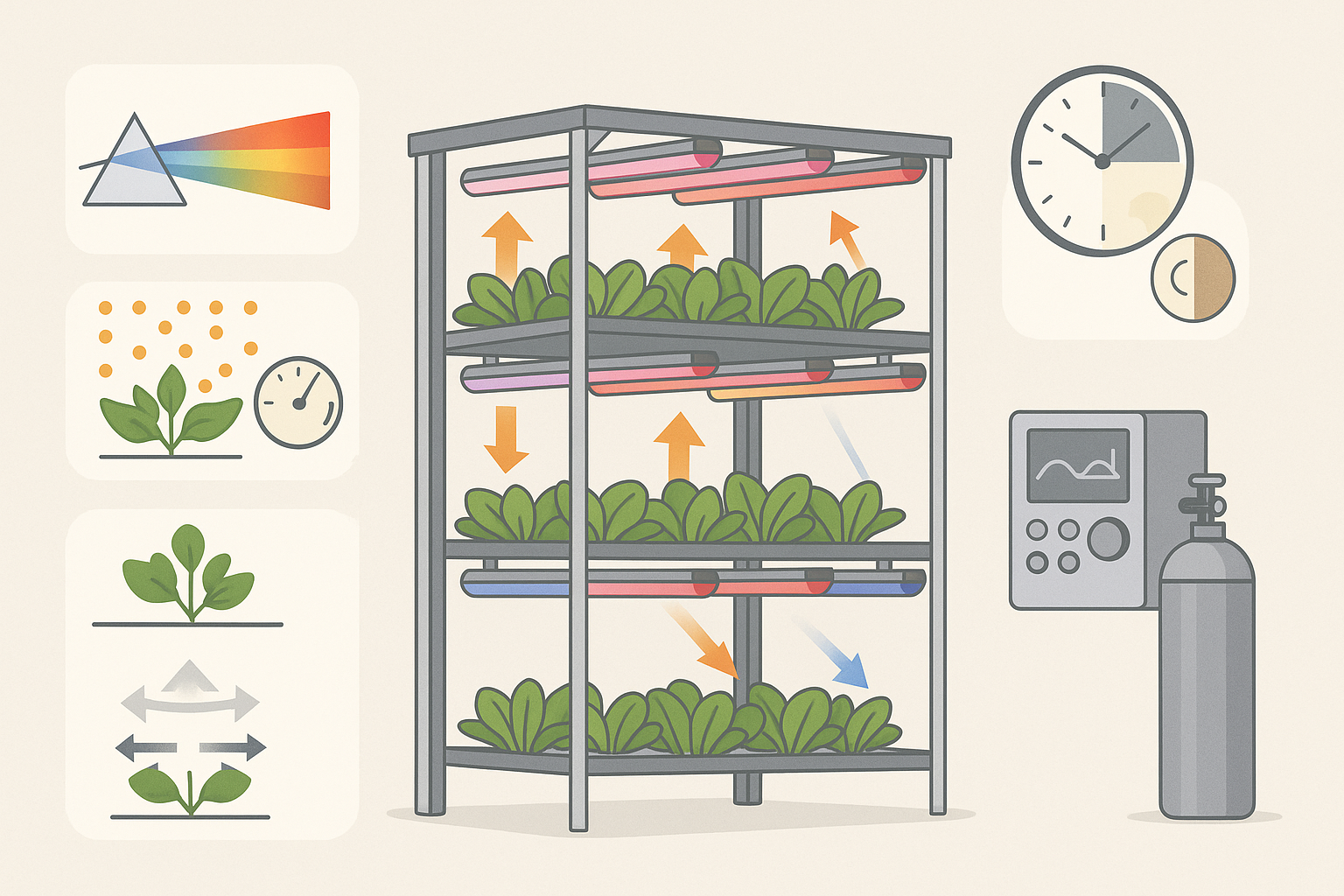
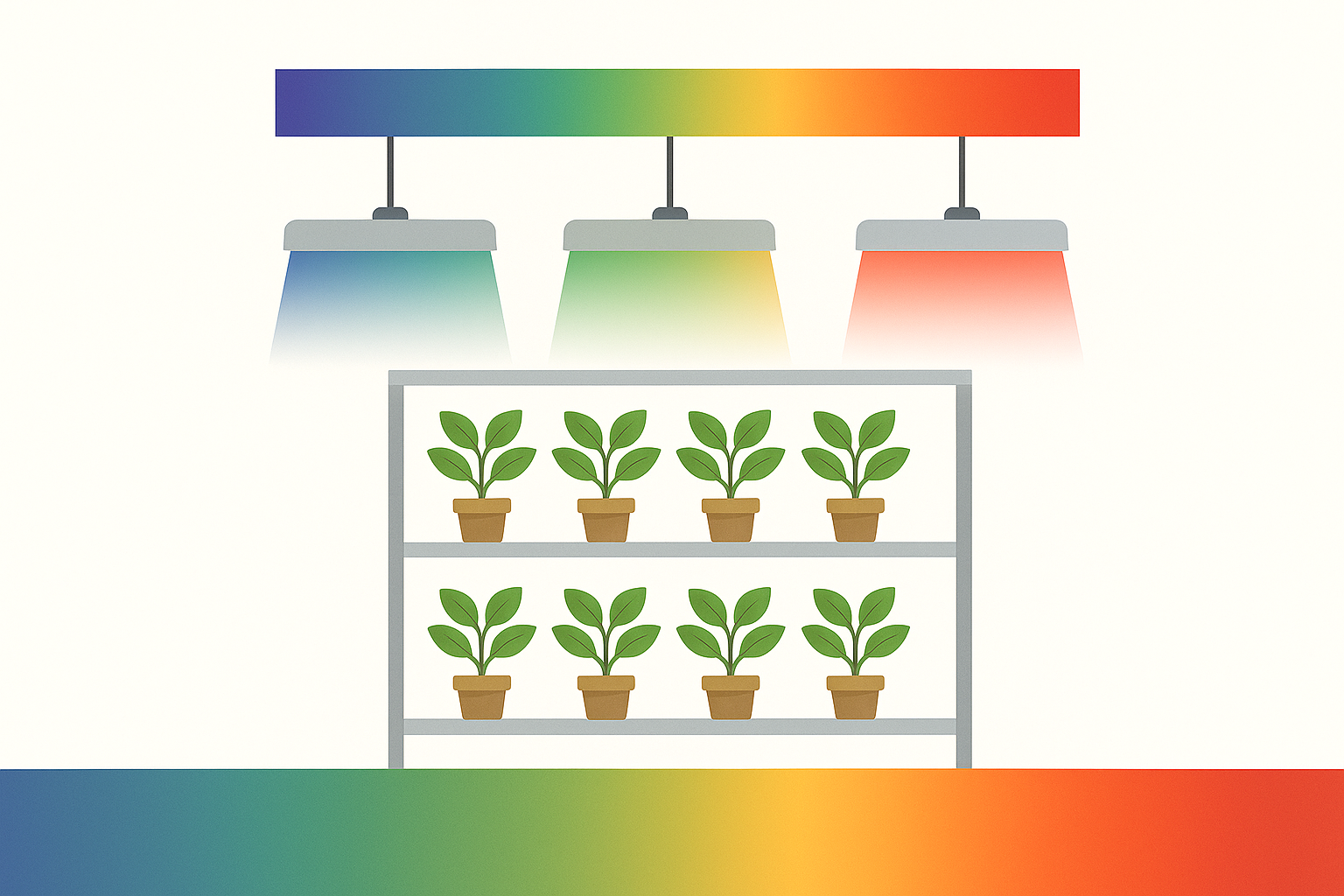
The term 'light spectrum' refers to the distribution of electromagnetic radiation across various wavelengths, typically within the photosynthetically active radiation (PAR) range of 400 to 700 nanometres (nm). Within this range, light is perceived by plants as discrete bands of colour: blue (approximately 400–500 nm), green (500–600 nm), red (600–700 nm), and far-red (just beyond 700 nm). Each region of the spectrum triggers specific photoreceptors in plants, such as phytochromes, cryptochromes, and phototropins, which regulate diverse physiological responses. Artificial lighting systems in CEA can be fine-tuned to provide specific spectral compositions, allowing growers to engineer plant environments with a level of control that is impossible in open-field agriculture.
Influence of Light Spectrum on Plant Morphology
One of the most immediate and visually observable impacts of spectral variation is on plant architecture. Blue light typically promotes compact growth, thicker leaves, and enhanced stomatal development, making it important during the seedling stage and for leafy green crops. Red light, by contrast, is highly efficient for driving photosynthesis and promotes stem elongation and leaf expansion. Far-red light interacts with red through the phytochrome system to influence photoperiodic responses such as flowering and shade avoidance. A high red:far-red ratio, for example, can signal to the plant that it is in an open, unshaded environment, encouraging leaf development over stem elongation.
Studies have demonstrated that the inclusion of far-red light can increase biomass accumulation in some crops by enhancing light capture through altered leaf orientation and size. However, excessive far-red can reduce plant density and compromise structural integrity. Similarly, while blue light enhances photomorphogenic control and antioxidant activity, it must be balanced with red to avoid suppressing overall photosynthetic efficiency.
Effects on Yield and Biomass Accumulation
The relationship between light spectrum and crop yield is complex and crop-specific, but clear trends have emerged from controlled trials. Red light, due to its absorption by chlorophyll and high quantum efficiency, contributes most directly to photosynthetic output and biomass accumulation. When used as a dominant spectral component, it tends to result in higher dry matter yields, particularly in fruiting crops like tomatoes and peppers.
Nonetheless, red light alone is insufficient. Supplementing red with blue and a proportion of green light typically results in better canopy penetration, improved light distribution, and more balanced growth. Green light, once considered redundant due to its lower absorption rate, has now been shown to penetrate deeper into plant canopies and support lower-leaf photosynthesis, indirectly boosting overall yield.
LED systems tailored to optimise spectral distribution for specific crops have demonstrated measurable increases in productivity. For instance, lettuce grown under a red:blue:green mix in controlled trials has consistently produced higher fresh weights than under red and blue alone. However, these results vary significantly between cultivars, indicating the importance of species-specific light recipes.
Enhancing Nutritional and Sensory Quality
Beyond yield, spectral quality also affects the chemical composition of crops. Blue light exposure is particularly effective in stimulating the synthesis of secondary metabolites, including flavonoids, anthocyanins, and phenolic compounds, many of which contribute to antioxidant capacity. These compounds not only enhance the nutritional value of crops but also improve taste, shelf-life, and colour.
Far-red and ultraviolet-A (UV-A) light, while less often incorporated into standard lighting systems, have shown potential to modulate phytochemical profiles further. For example, controlled UV-A exposure can increase the concentration of desirable compounds such as vitamin C and glucosinolates in leafy vegetables, though care must be taken to avoid inducing stress or photodamage. Spectral tailoring can also influence sugar content, acidity, and aromatic profiles in fruits, offering opportunities to improve both market appeal and consumer satisfaction.
Applications and Implications in Vertical Farming
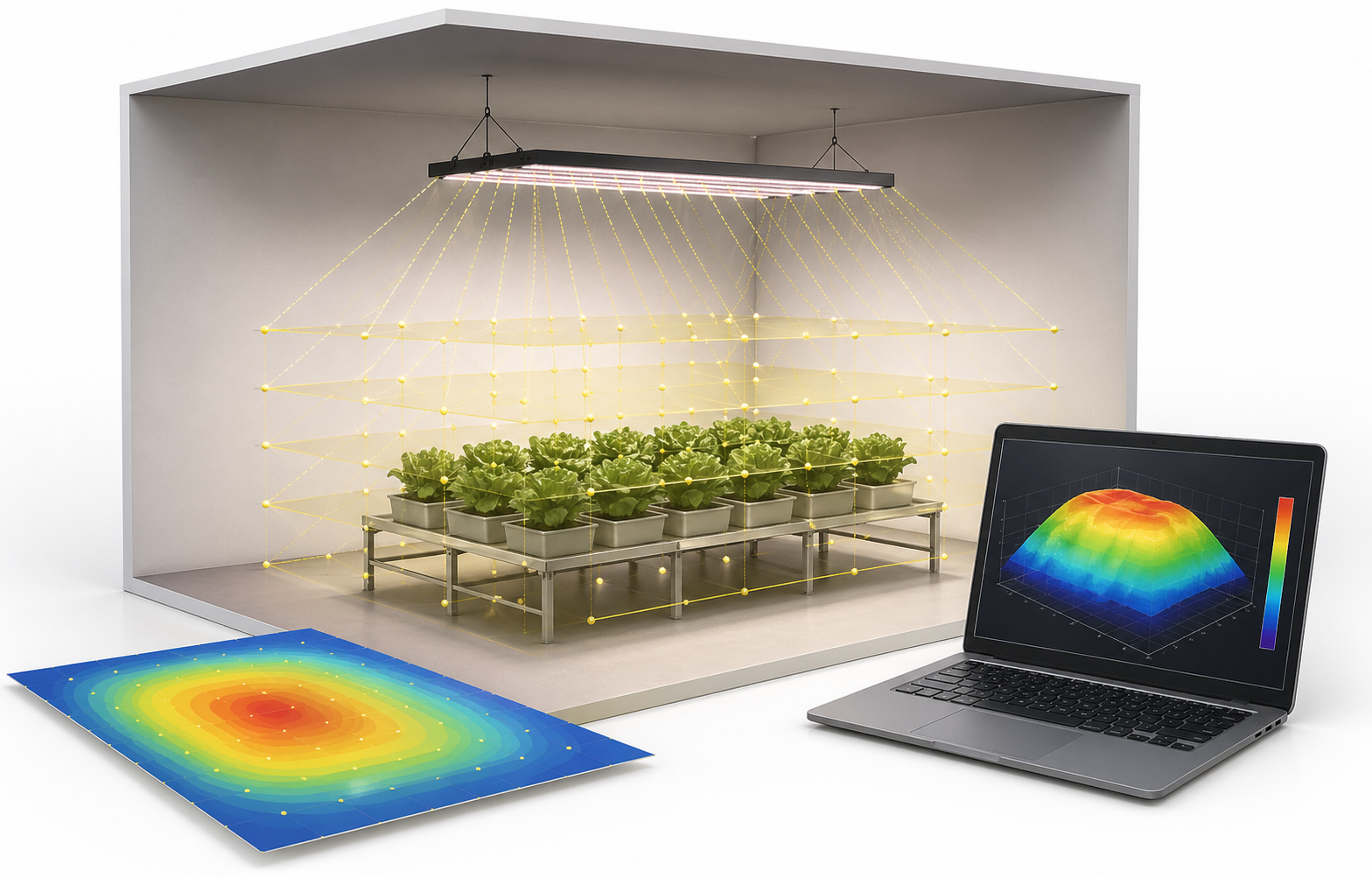
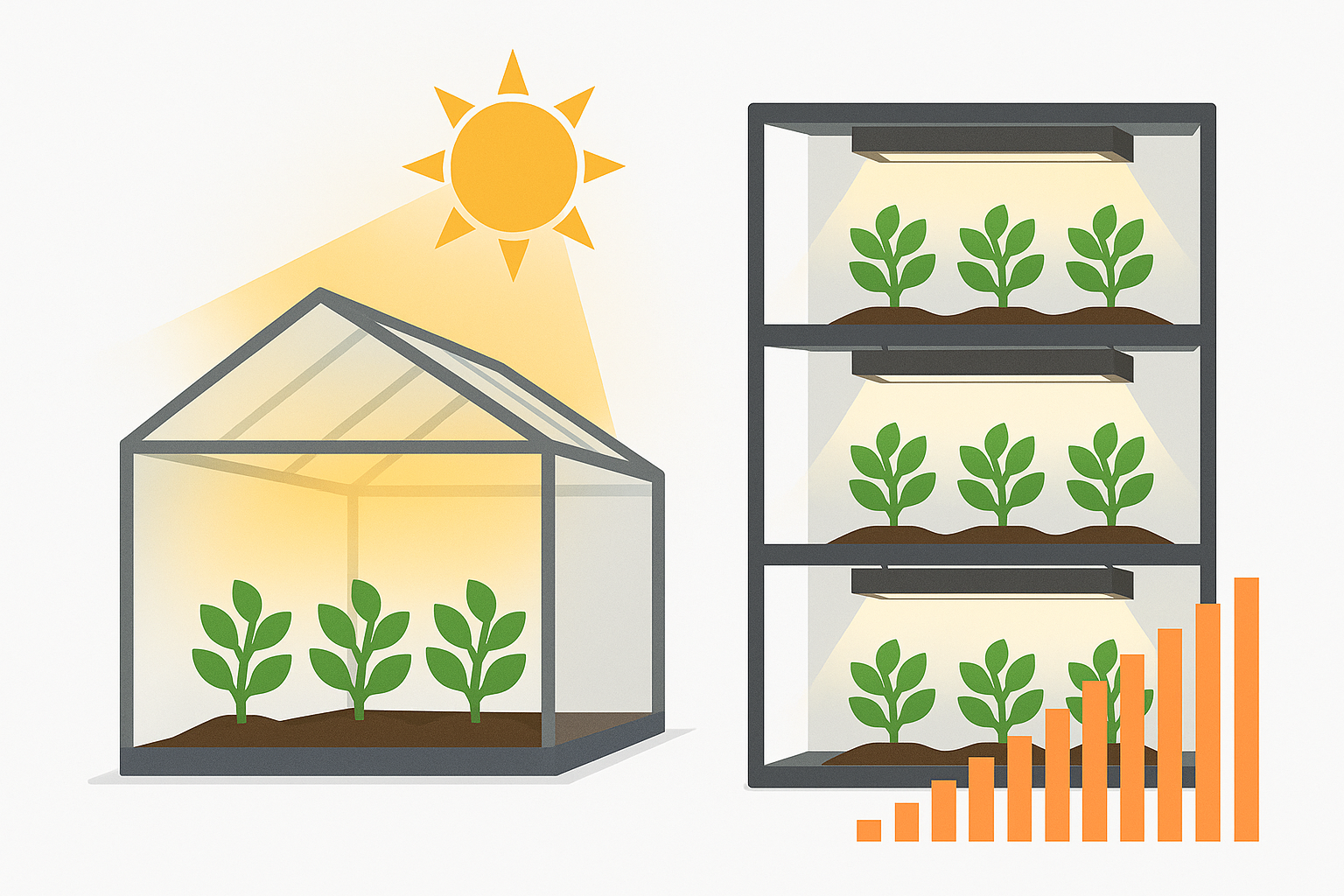
In vertical farming, where growing space and resource efficiency are paramount, the ability to manipulate spectral inputs represents a powerful agronomic tool. Spectral optimisation can reduce crop cycle times, enhance energy-use efficiency, and tailor plant products to market demand. For example, red-dominant spectra may be used during the vegetative stage to drive rapid biomass accumulation, followed by a shift to blue-enriched light to enhance nutritional quality prior to harvest.
The implications extend beyond horticultural performance. Light spectrum manipulation is also a means of responding to broader goals in food security, public health, and environmental sustainability. As energy remains one of the most significant operational costs in vertical farms, the development of spectral strategies that deliver high yields and quality at minimal energy input is critical.
Research Landscape and Future Directions
Research into the effect of light spectrum on crop production continues to evolve, with current studies increasingly focused on dynamic lighting strategies. Rather than static spectral compositions, researchers are exploring real-time adjustments based on crop growth stage, physiological feedback, and energy availability. Machine learning and sensor-driven systems are enabling precision lighting environments that adapt to the plant’s needs, potentially transforming productivity and resource use.
Moreover, spectral interactions are now being studied in conjunction with other environmental variables such as CO₂ enrichment, nutrient supply, and temperature, to understand their combined influence on crop performance. These multifactorial studies are essential to the development of robust, scalable solutions for commercial indoor agriculture.
Conclusion
The light spectrum is not merely a source of illumination but a finely tuneable input that determines how crops grow, develop, and deliver nutritional value. The ability to control spectral quality in CEA systems offers unparalleled opportunities for enhancing both yield and produce quality, provided it is based on sound agronomic principles and crop-specific evidence. As vertical farming continues to evolve, the strategic manipulation of light will remain at the heart of its scientific and commercial success.